Nullam dignissim، ante scelerisque هو euismod vermentum odio دائمًا ما يكون عصرًا، وهو فيوجيات ليو أورنا إيجيت إيروس. دويس اينيان خطر غير صحي.
Nullam dignissim، ante scelerisque هو euismod vermentum odio دائمًا ما يكون عصرًا، وهو فيوجيات ليو أورنا إيجيت إيروس. دويس اينيان خطر غير صحي.
 مؤلف
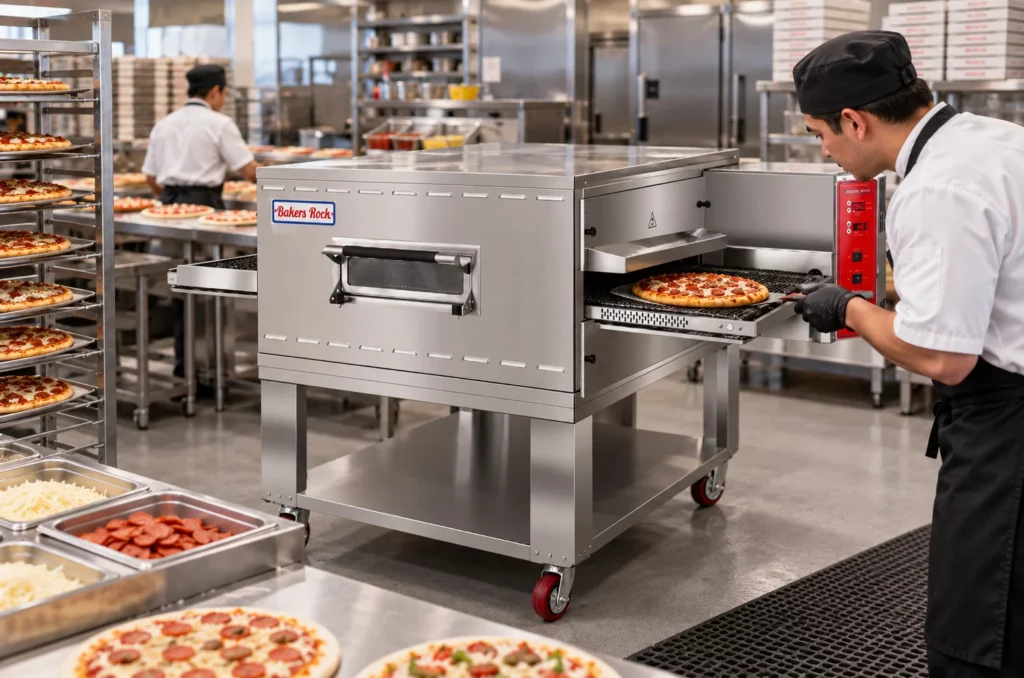
For a new pizza line or multi-store rollout, the useful question is not whether an oven is branded XLT or made in China. The useful question is whether the proposed system can reproduce the required bake, fit the site, and remain supportable across its planned life. An XLT unit may be the right choice when an operator values a familiar installed base and documented service path. A Chinese conveyor oven may be the better fit when a manufacturer can prove the same operating envelope, provide the required utilities and documentation, and support a repeatable rollout. The decision should be made from comparable evidence, not country of origin or purchase price alone.
Before requesting quotations, freeze the conditions that every supplier must answer. Record the largest product diameter and height, crust and topping load, target bake time, peak-hour volume, menu mix, available floor space, electrical or gas service, ventilation constraints, and the skill level of the operating team. A conveyor pizza oven is a process tool: belt width, chamber length, airflow, heat zones, belt speed, and control logic work together. A quotation that lists only a headline temperature or belt size cannot prove that the line will deliver the required product.
For a chain, also define the rollout standard. The standard should include the same test recipe, loading pattern, finished-product criteria, utility assumptions, cleaning routine, training checklist, and acceptance documents at every store. This turns a brand comparison into a controlled procurement exercise and makes later service conversations far easier.
When XLT is the incumbent or benchmark, treat the installed oven as a reference process rather than an automatic winner. Measure the actual result: throughput during the busiest window, bake time by product, recovery after loading, belt loading tolerance, cleaning labor, common wear parts, and the time required to restore production after a fault. Ask the incumbent team for the model-specific manual, utility schedule, recommended maintenance intervals, and current parts path. Those documents are more useful than a generic comparison claim.
The same discipline protects the buyer from over-reading a new quotation. A new Chinese conveyor pizza oven should be compared against the measured XLT process using the same dough, pan or screen, product weight, topping load, belt position, and acceptance criteria. If the supplier proposes a different heat-transfer method, such as air impingement or a stone belt, require a side-by-side bake trial or a documented explanation of how the process will be normalized.
“Made in China” is a sourcing description, not a performance specification. The relevant variable is the capability of the selected manufacturer and its support network. Request evidence in six areas:
A supplier that answers these questions clearly can be evaluated on evidence. A supplier that responds only with a low price or a maximum temperature has not yet reduced procurement risk.
Many conveyor ovens use forced hot air, while stone-belt designs use a heated stone surface to influence the bottom bake. Neither approach is universally correct. Air impingement can suit standardized menus that prioritize repeatable time and labor-efficient operation. A stone conveyor can be attractive when the product brief depends on a particular bottom texture or hearth-style result. The buyer should compare the actual product outcome, not a label.
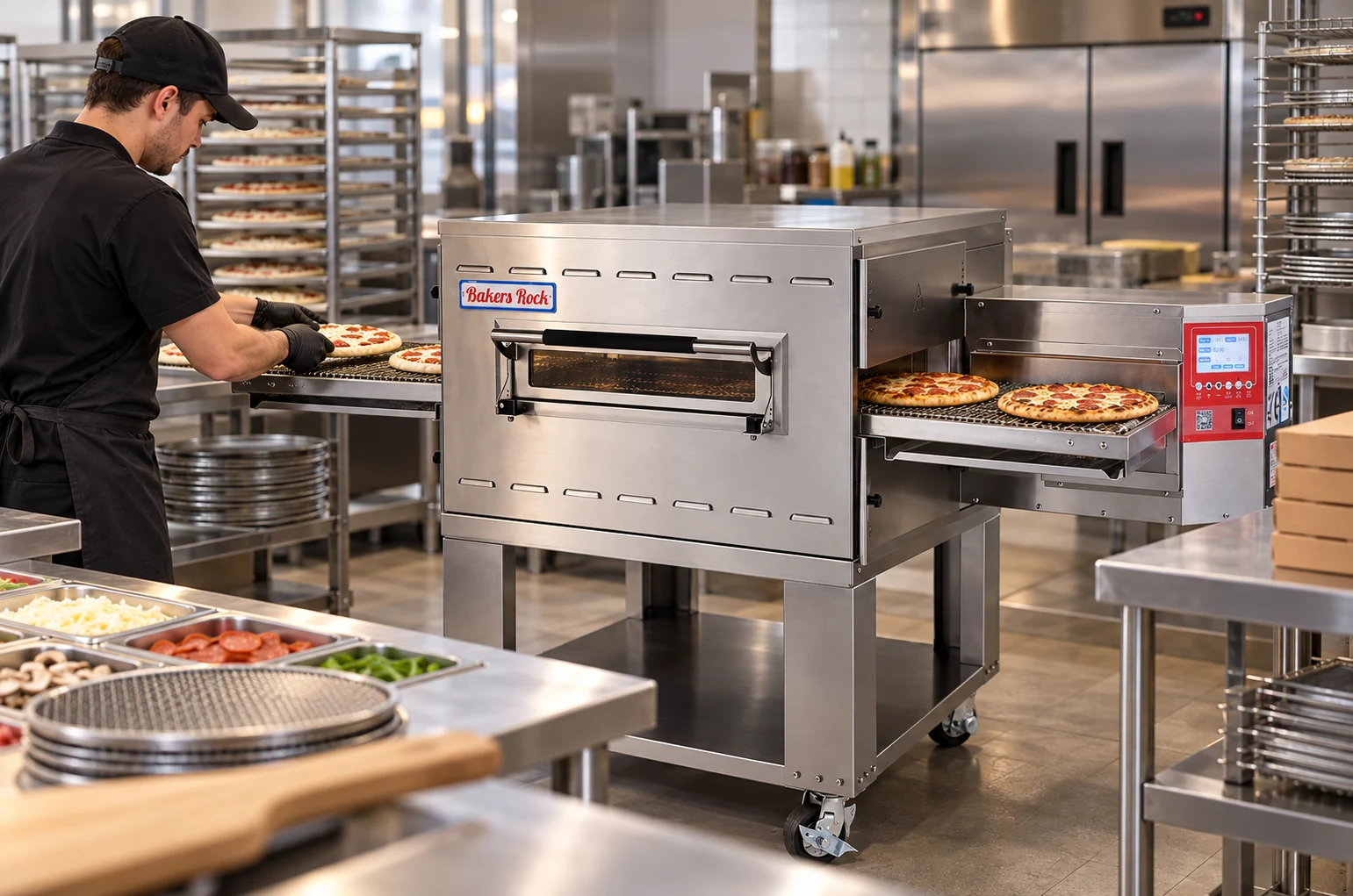
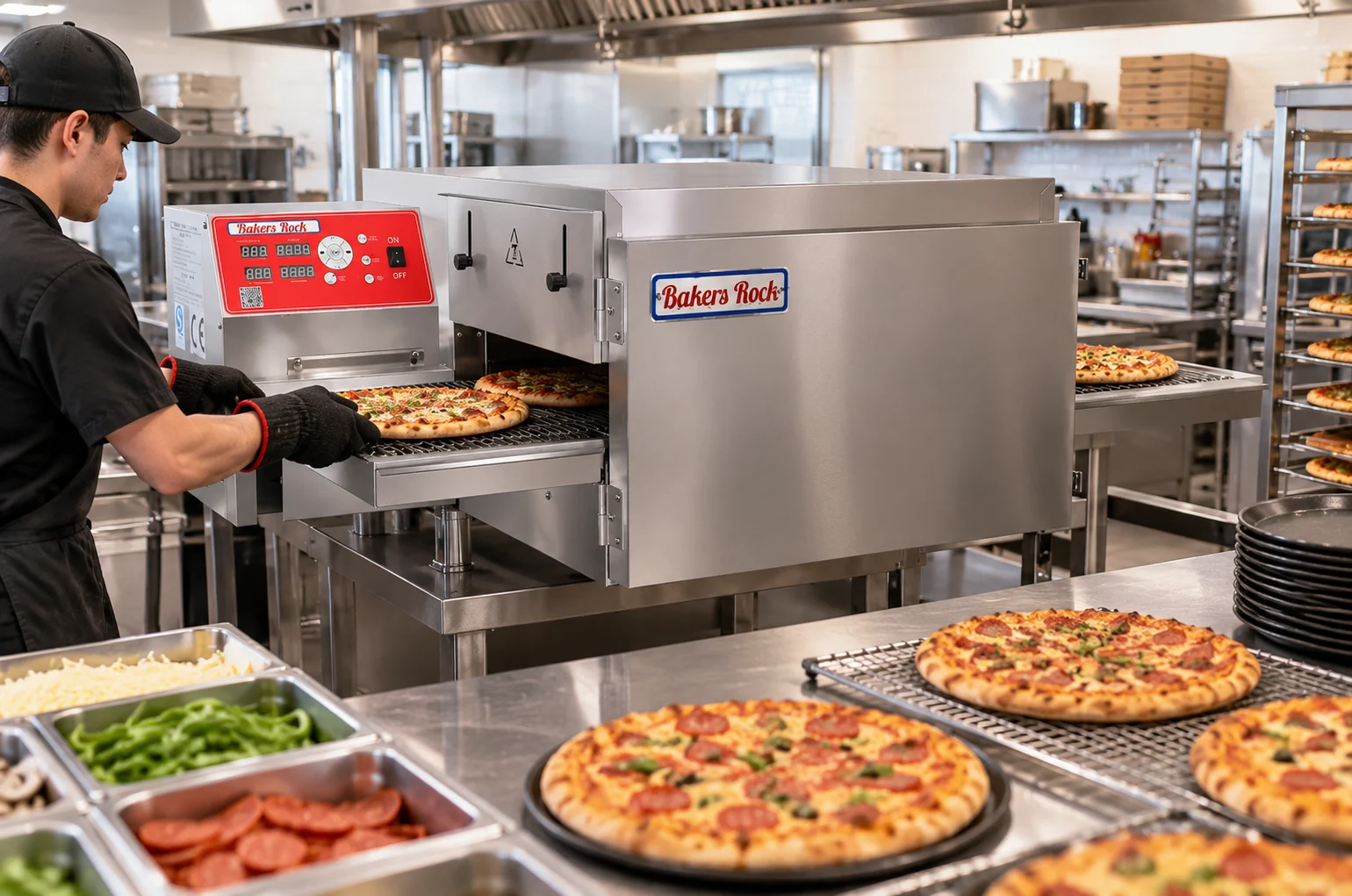
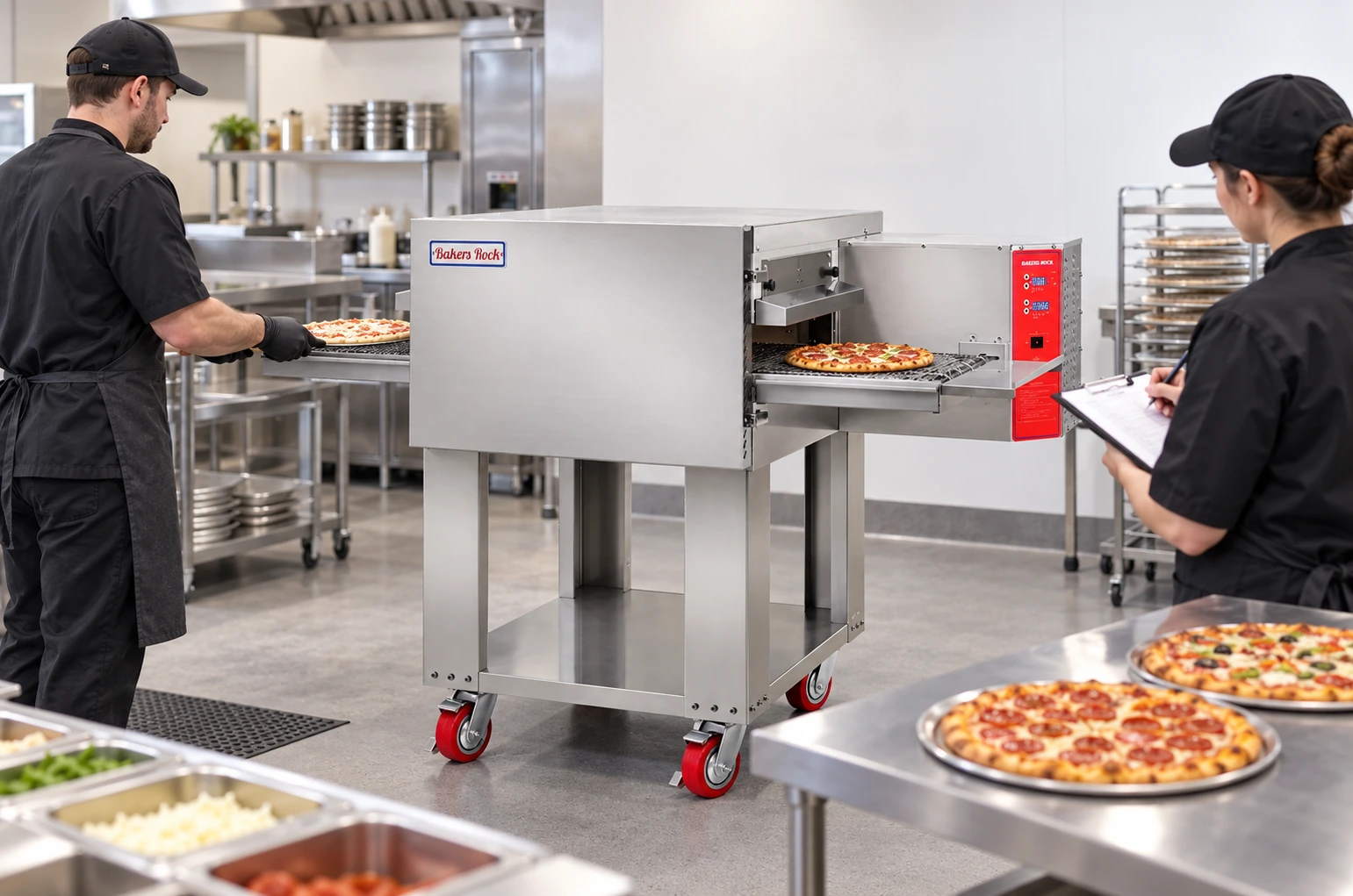
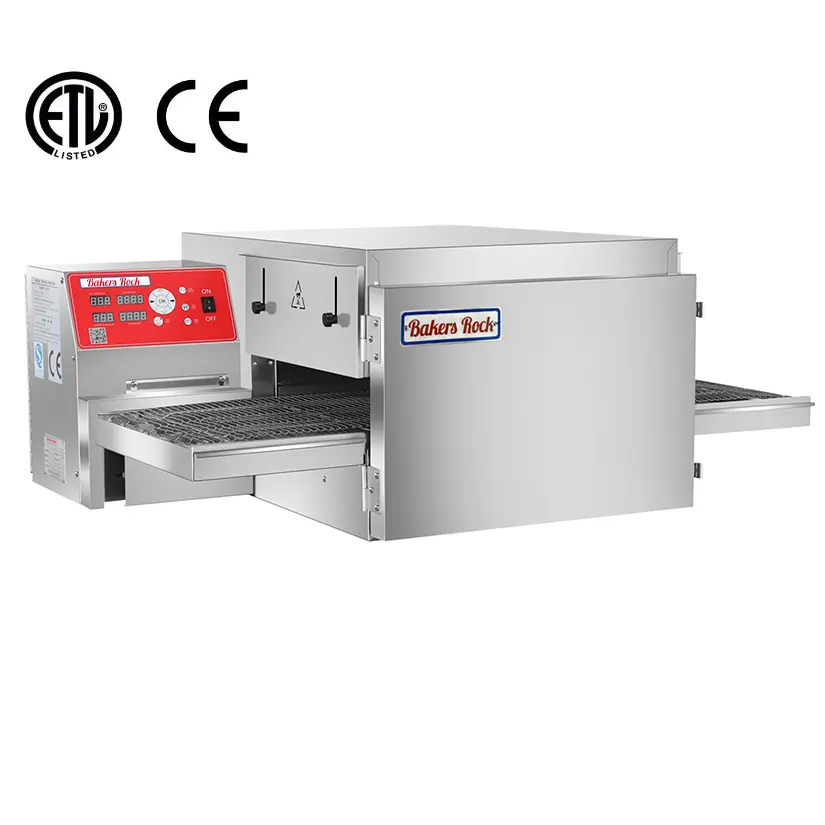
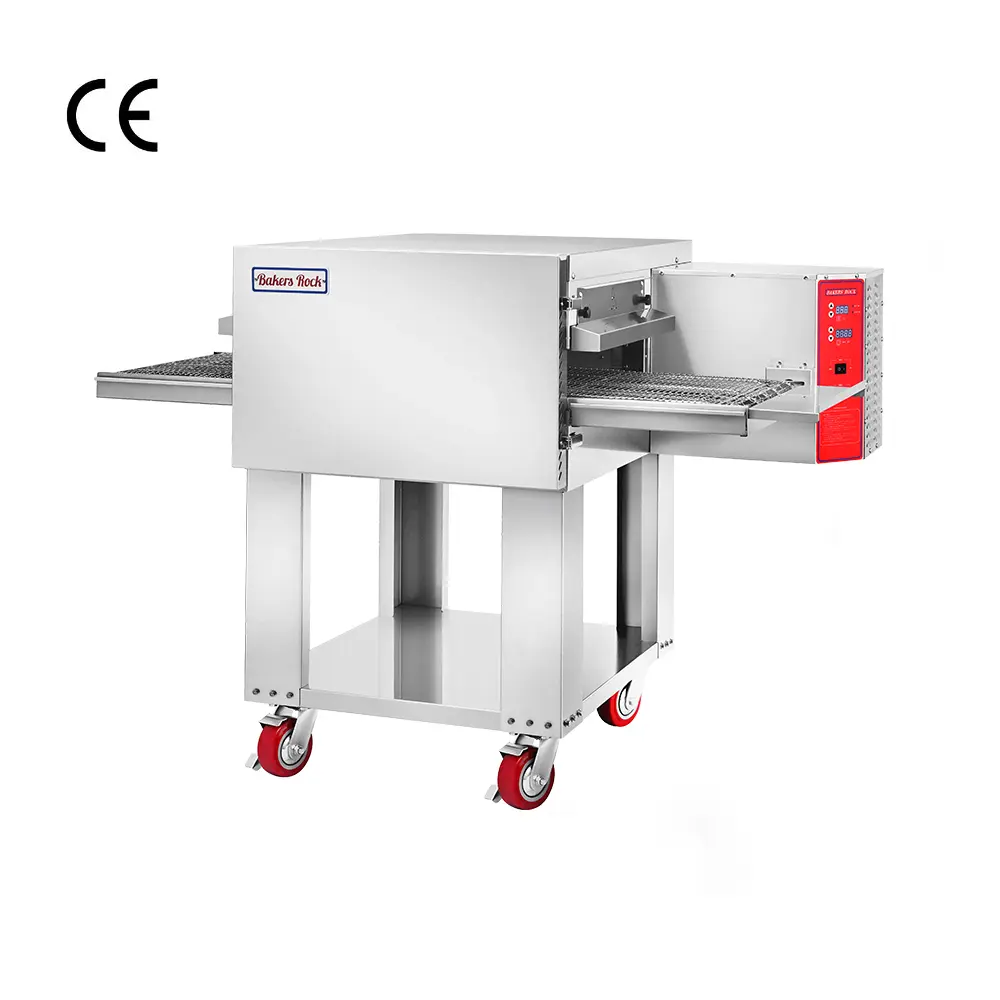
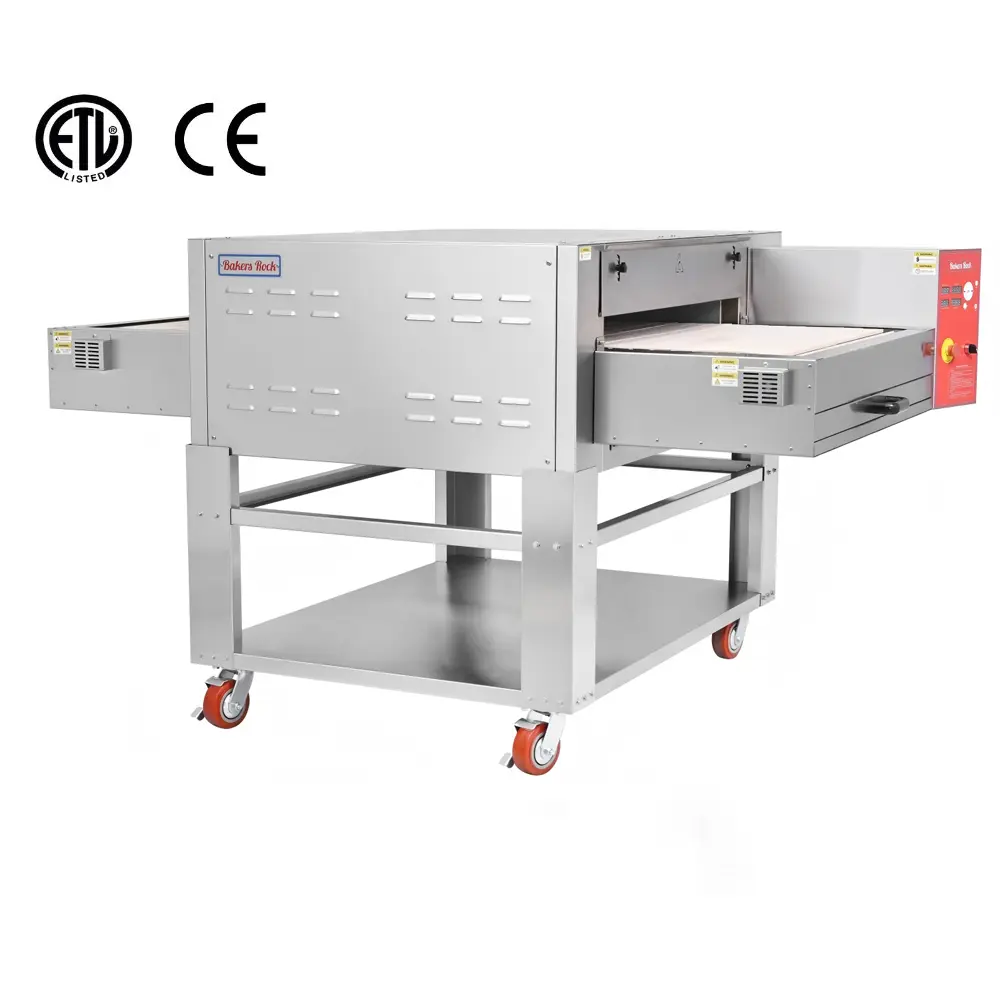
Bakers Rock presents both a gas impingement oven range and a stone conveyor oven range. The gas page identifies gas-powered hot-air impinger conveyor ovens and shows 20-inch and 32-inch product options. The stone page identifies high-temperature stone-belt conveyor ovens and shows 18-inch and 32-inch options. These pages establish product families, not a substitute for a project-specific specification. Confirm the final belt, chamber, temperature, utility, and installation details against the quotation and technical documents.
A purchase-price comparison is incomplete. Build a five-year or seven-year model that separates one-time and recurring costs: oven price, freight and insurance, duties and brokerage, installation, ventilation or gas work, electrical upgrades, commissioning, training, planned maintenance, wear parts, energy, cleaning labor, downtime exposure, and resale or replacement assumptions. Use the same production forecast for both options. A lower purchase price can disappear if the line needs more labor, more frequent intervention, or a longer recovery period after a fault.
For a new rollout, also price the cost of variation. If each store needs a different workaround, the chain pays through training, recipe drift, and service calls. A slightly higher equipment cost may be rational when it buys a stable configuration, clear documentation, and a supplier that can repeat the same acceptance test across locations. Keep that conclusion conditional on the evidence supplied for the specific model and contract.
A practical rollout has four gates:
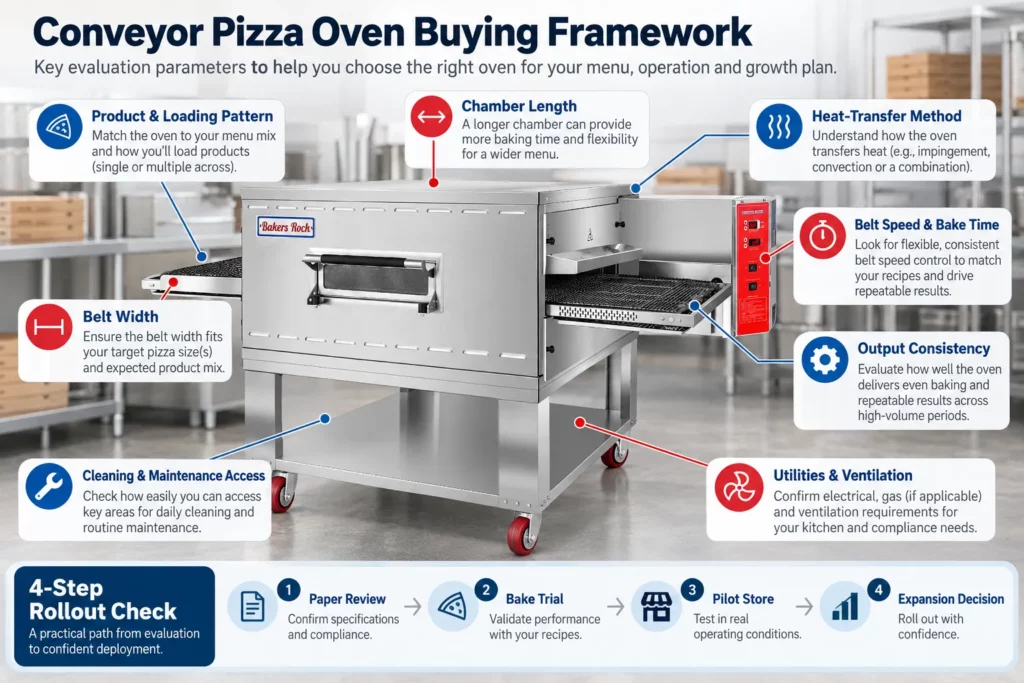
The manufacturer should receive the same brief for every site. Bakers Rock describes its business as serving medium and large pizza chains, small pizzerias, restaurant groups, and institutional food service. Its company profile also describes conveyor-oven solutions and after-sales support. Those statements make the company a relevant candidate for a fit check, but they do not remove the buyer’s need to verify the model, configuration, local compliance, and service arrangement.
Ask every bidder to answer the same questions in the same order: Which model and configuration meets the brief? What is the confirmed usable belt width and chamber length? What product and loading assumptions support the proposed bake time? Which utilities and ventilation conditions are required? What documents will be supplied before shipment? What is included in commissioning and training? Which parts are stocked regionally, and how are urgent faults escalated? What changes require buyer approval? These questions make the comparison auditable and expose gaps before a purchase order is issued.
XLT versus a Chinese conveyor pizza oven is best treated as a documented process comparison. Use the XLT benchmark to define the result you need, then require the new supplier to prove product fit, repeatability, utilities, compliance, serviceability, and total cost under the same conditions. If the project needs gas impingement or stone-belt capability, compare the specific configuration rather than a country label. For a disciplined new-equipment rollout, the winner is the option that can be accepted, duplicated, and supported at every planned site.
For a project-specific fit check, contact the Bakers Rock technical team with the model or incumbent reference, product dimensions, target volume, utilities, kitchen drawing, destination market, and planned quantity.
No. Country of origin does not prove performance. Compare the manufacturer’s test evidence, documentation, controls, service plan, compliance file, and installed support for the exact configuration.
Use them as benchmark data, not as universal settings. The new oven’s heat-transfer method, belt, chamber, product load, and controls may require a witnessed test and a new operating profile.
The answer depends on site utilities, ventilation, energy economics, local rules, menu, and production schedule. Require both options to be evaluated against the same rollout brief.
Test the buyer’s real product at the intended load and record belt speed, bake time, finished-product criteria, recovery, cleaning effort, utility readings, and operator steps during a representative peak period.
Send the largest product size, product weight and toppings, target output, kitchen dimensions, available gas or electrical service, ventilation limits, destination market, required documents, and rollout quantity.