Nullam dignissim, ante scelerisque the is euismod fermentum odio sem sempre o is erat, a feugiat leo urna eget eros. Duis Enean um risco imperdieto.
Nullam dignissim, ante scelerisque the is euismod fermentum odio sem sempre o is erat, a feugiat leo urna eget eros. Duis Enean um risco imperdieto.
 autor
autor
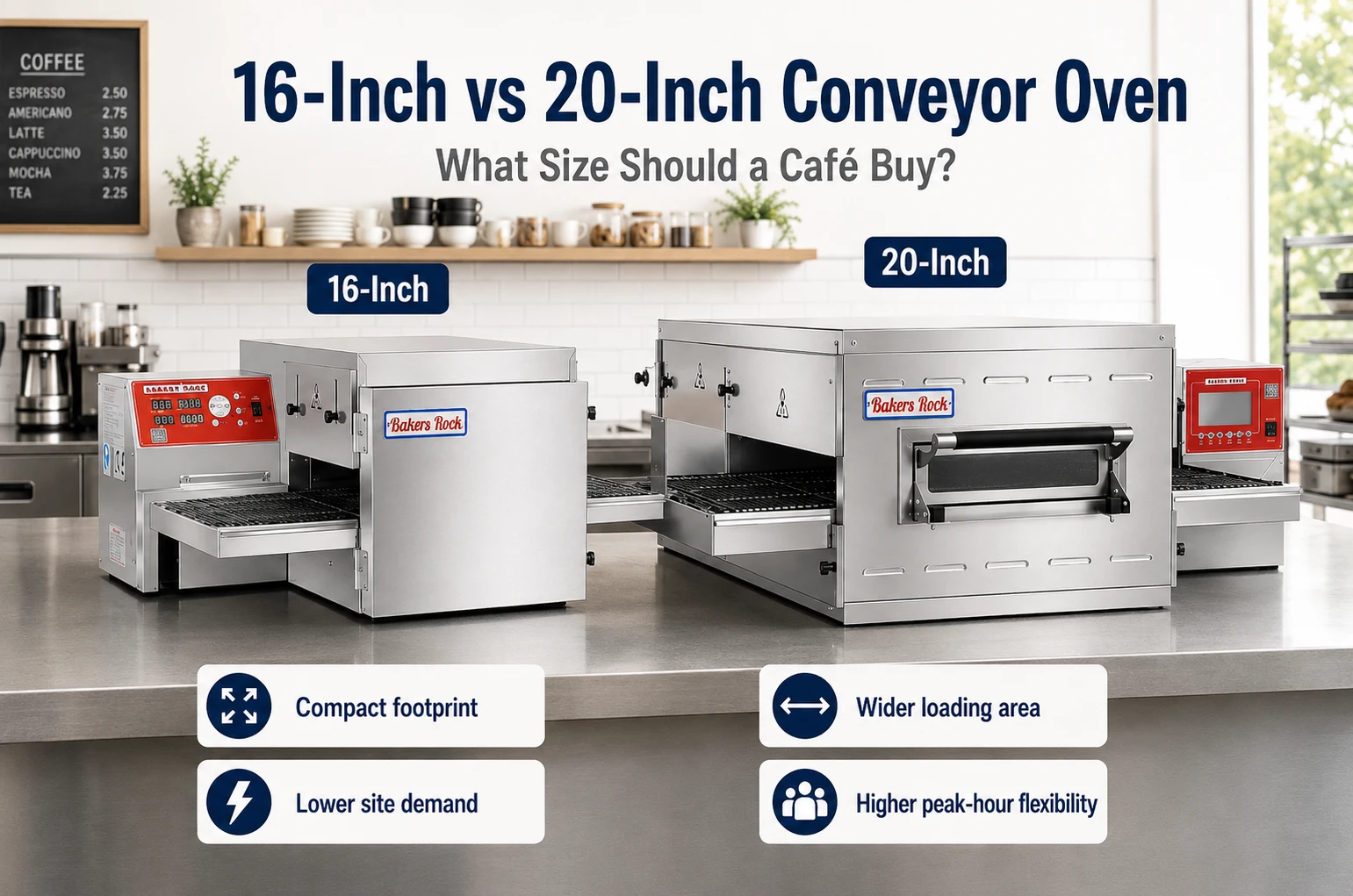
For a café, choosing between a 16-inch and 20-inch conveyor oven is not simply a question of buying the wider model. The right size depends on the largest pizza on the menu, loading pattern, peak-hour demand, available counter space, connected electrical load, and plans for future growth.
A 16-inch conveyor oven may suit a compact café with a focused menu and limited utilities. A 20-inch conveyor oven may be more practical when wider loading, larger products, or higher peak-hour output creates a measurable production advantage. The decision should be based on the café’s actual workflow rather than belt width alone.
| Evaluation point | 16-inch conveyor oven | 20-inch conveyor oven |
|---|---|---|
| Typical advantage | Compact working area and lower site demand | Wider loading area and more flexibility |
| Suitable scenario | Smaller cafés, limited menus, tighter counters | Higher demand, larger products, wider loading patterns |
| Key question | Can the belt handle the largest product comfortably? | Will the added width improve real peak-hour production? |
| Main risk | Insufficient room for future demand | Paying for capacity and utilities that are not used |
| Purchase focus | Menu fit, counter space, power availability | Loading pattern, output target, space, and connected load |
Belt width is only one part of a commercial conveyor oven comparison. Heating length, belt speed, temperature control, product spacing, and operating procedures also affect practical output.
A 16-inch conveyor oven is worth considering when the café’s menu is based mainly on smaller pizzas, snacks, sandwiches, or other products that fit comfortably within the usable belt width. It may also be appropriate when the kitchen has limited counter depth, restricted electrical capacity, or narrow access routes.
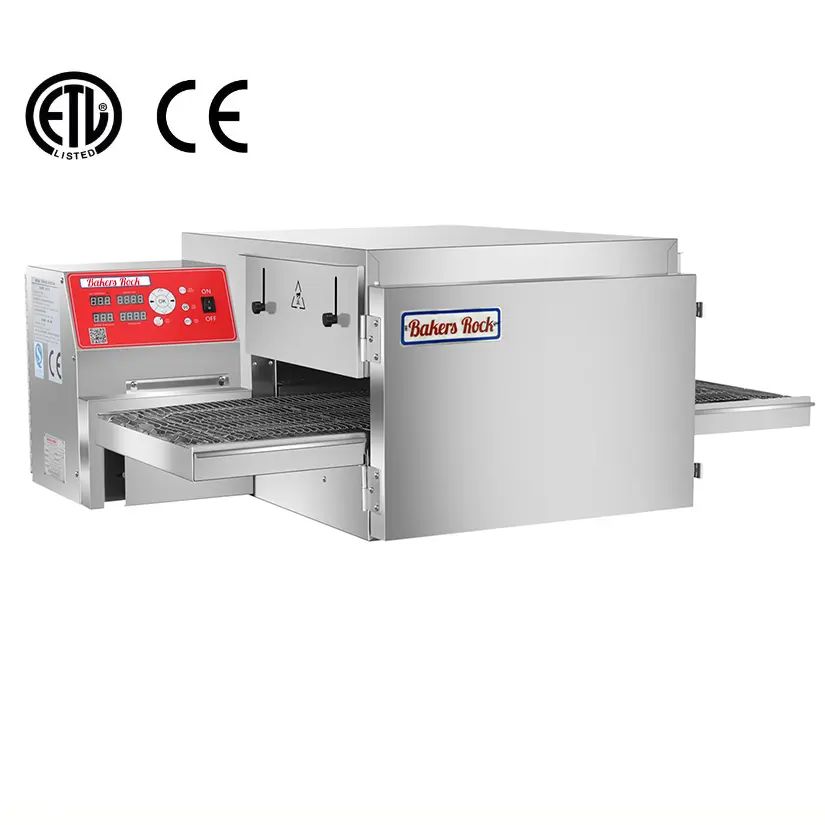
Bakers Rock’s published H1624Pro information lists a 16 × 24-inch baking area, 6.8 kW rated power, and a published floor-space requirement of 1.36 m². The listed applications include small pizzerias, cafés, food trucks, buffets, and snack bars.
These figures should be checked against the actual installation. A café should measure the oven body, extension trays, ventilation clearance, operator access, and service area. The available counter may need to accommodate more than the oven footprint alone.
A 16-inch model may not be suitable if the largest pizza nearly fills the belt, if operators need to load products side by side, or if the café expects a major increase in peak-hour demand. In those cases, the narrower belt may create a capacity constraint even when the oven fits the counter.
For detailed product information, review the 16-inch countertop conveyor oven page before requesting a quotation.
Average daily sales can hide the real production problem. A café may sell a manageable number of pizzas over a full day but face a sharp rush during lunch, evening service, or delivery periods.
Before choosing a 16-inch commercial pizza oven, calculate:
If a 16-inch conveyor oven must operate continuously at its practical limit during every rush, the space saving may not justify the risk of slow service or inconsistent results.
A 20-inch conveyor oven becomes more relevant when the café needs wider loading flexibility, larger products, or a higher-volume workflow. The extra width can be useful when products are loaded side by side or when operators need more clearance around larger pizzas and pans.
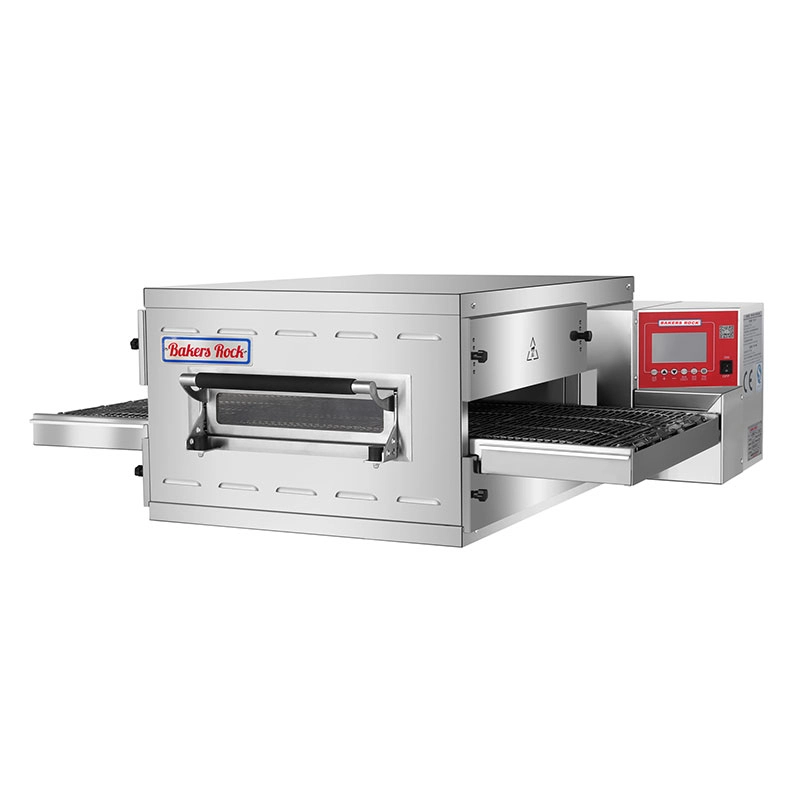
Bakers Rock’s published H2024 information lists a 20 × 24-inch baking area, 10.2 kW rated power, and a published floor-space requirement of 1.7 m². Its product information states that the working width can accommodate two 9-inch pizzas under the stated loading conditions.
That does not mean every café should choose 20 inches. A café that normally bakes one small pizza at a time may gain little from the additional belt width while still accepting higher power and space requirements.
The correct question is not “Is a 20-inch oven better?” It is:
Does the wider working area improve the café’s actual loading pattern, peak-hour output, or menu flexibility?
If the answer is no, the extra size may not provide a useful return.
For model-specific details, review the 20-inch countertop conveyor oven page and compare its requirements with the café’s site conditions.
A café may choose a 20-inch conveyor oven when expansion is already planned, such as adding larger pizzas, increasing delivery volume, or supplying nearby offices and events. Future growth should be supported by a realistic operating plan rather than a general assumption that demand will increase.
The buyer should confirm:
Buying excess capacity can tie up capital and space. Buying too little capacity can create a replacement problem later. The best choice depends on the timing and certainty of the café’s growth plans.
The difference between a 16-inch and 20-inch conveyor oven is not limited to four inches of belt width. Practical capacity also depends on the usable baking length, belt speed, temperature recovery, product spacing, loading direction, and the operator’s ability to work safely.
A wider belt may help when:
A wider belt may not help when:
Use a conveyor oven temperature and belt-speed guide when building a repeatable test process. Belt speed should be evaluated with the actual product, load, and target bake result.
A café should not test only its easiest product. The evaluation should include the largest pizza, the heaviest topping load, the busiest production pattern, and any snacks that may share the oven.
Record:
This information makes it easier to compare a 16-inch conveyor oven and a 20-inch conveyor oven using the same assumptions.
Countertop conveyor ovens require more space than the main cabinet dimensions suggest. The café should measure the oven body, extension trays, loading and discharge areas, ventilation clearance, electrical access, and service space.
Access routes also matter. Doorways, elevators, stairs, counter height, and final positioning should be checked before delivery planning. A machine that fits the counter may still be difficult to move, install, or maintain.
The electrical supply should be checked against the selected model’s voltage, phase, frequency, and rated power. The installation may also depend on local ventilation, exhaust, clearance, and safety requirements.
A café should not assume that a 16-inch oven automatically fits any small electrical service or that a 20-inch oven can be installed without additional site work. The supplier should confirm the applicable technical requirements for the exact model and destination.
If the café is considering different heating sources, Bakers Rock also publishes commercial conveyor pizza ovens across electric, gas/LPG, and stone conveyor categories. The heating source should be selected after reviewing site utilities and menu requirements.
A useful quotation request should include:
Ask the supplier to separate the oven, accessories, optional equipment, shipping, installation support, and after-sales services. This makes it easier to compare quotations that may use different assumptions.
Bakers Rock publishes electric impingement, gas/LPG impingement, and stone conveyor oven categories for commercial foodservice applications. Its product range includes countertop conveyor oven options in different working widths.
Shanghai QiangAn FoodService Equipment Co., Ltd., the company behind the Bakers Rock brand, was established in 2001. Published company information describes pre-shipment inspection, product inspection reports, selected spare parts supplied with equipment, and online voice or video after-sales guidance.
For a café project, the relevant evaluation should remain model-specific. Belt width, rated power, dimensions, applications, certification scope, warranty terms, and delivery conditions should be confirmed in the quotation.
The right conveyor oven size for a café depends on the largest product, peak-hour demand, loading pattern, counter space, utilities, and future operating plans.
A 16-inch model may suit a compact café with a focused menu and limited site capacity. A 20-inch model may be justified when wider loading or higher production demand creates a clear operational benefit. Neither size should be selected from belt width alone.
A café preparing an RFQ should provide product dimensions, target output, site measurements, utility information, and representative samples. Bakers Rock can then evaluate the relevant configuration and product category. The next step is to request a conveyor oven quotation with the café’s actual operating details.
It can be suitable when the café’s largest products fit comfortably within the usable belt width and peak-hour demand remains within the tested capacity. Menu size, loading pattern, and future growth should be reviewed first.
It may be worthwhile when the wider belt supports larger products, side-by-side loading, or higher peak-hour output. If the café normally loads one small product at a time, the extra space and power may provide limited benefit.
The main difference is usable belt width, but the purchase decision should also consider power, footprint, loading pattern, heating length, belt speed, and service access.
It may be possible under specific product sizes and loading conditions. The supplier should confirm the tested pizza dimensions, spacing, bake time, and operating configuration.
Provide the largest product size, product weight, target output, bake time, counter dimensions, electrical or gas conditions, ventilation information, delivery location, and any available samples or product photos.