Nullam dignissim, ante scelerisque the is euismod fermentum odio sem semper the is erat, a feugiat leo urna eget eros. Duis Enean un riesgo de imperdieta.
Nullam dignissim, ante scelerisque the is euismod fermentum odio sem semper the is erat, a feugiat leo urna eget eros. Duis Enean un riesgo de imperdieta.
 autor
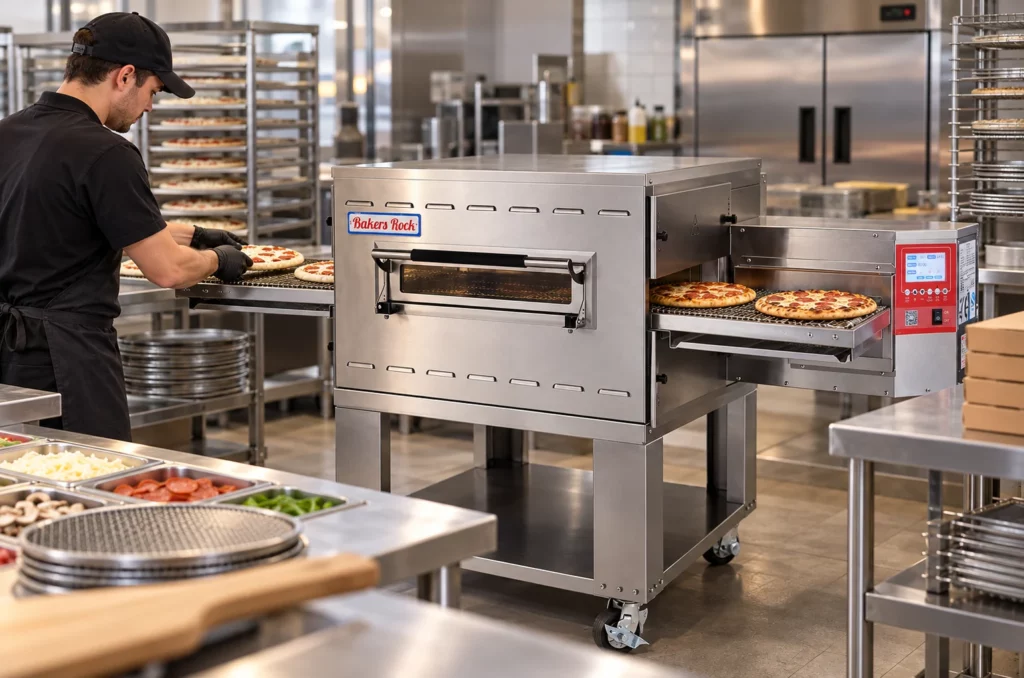
A franchise network does not achieve consistent pizza by sending every store the same temperature number. It achieves consistency by controlling the complete bake profile: product specification, belt time, temperature, airflow, loading pattern, and the way each store verifies results. When those variables are documented and checked in the same order, a conveyor oven becomes a repeatable production system rather than a machine that each shift adjusts by instinct.
This guide gives pizza chains and distributors a framework for creating one approved profile, transferring it to stores, and correcting drift without rewriting the recipe for every complaint.
Before anyone changes an oven setting, define the product outcome in measurable terms. A profile should state the dough portion, diameter, thickness, sauce and topping load, pan or screen, target color, crust texture, and acceptable internal result. If the product entering two stores is different, identical oven settings cannot create identical output.
Create a one-page master profile for every core SKU. Record the oven model and chamber length, belt direction, belt time, top and bottom temperatures, airflow or air-finger arrangement where applicable, preheat condition, product spacing, and number of passes. Add °C or °F and the electrical or gas configuration so a setting is never copied without context.
Select a pilot location that represents normal ingredients, staffing, and peak-hour load. Start with the highest-volume pizza or the item most sensitive to variation. Run several consecutive batches after stabilization, not one attractive sample, and record product condition before baking and at the exit.
Tune one variable at a time. Belt speed controls residence time; temperature changes the available heat; airflow changes how heat reaches the top and bottom surfaces; loading density changes how much energy the chamber must deliver. If two variables are changed together, the team may reach a good-looking result without learning which setting actually solved the problem.
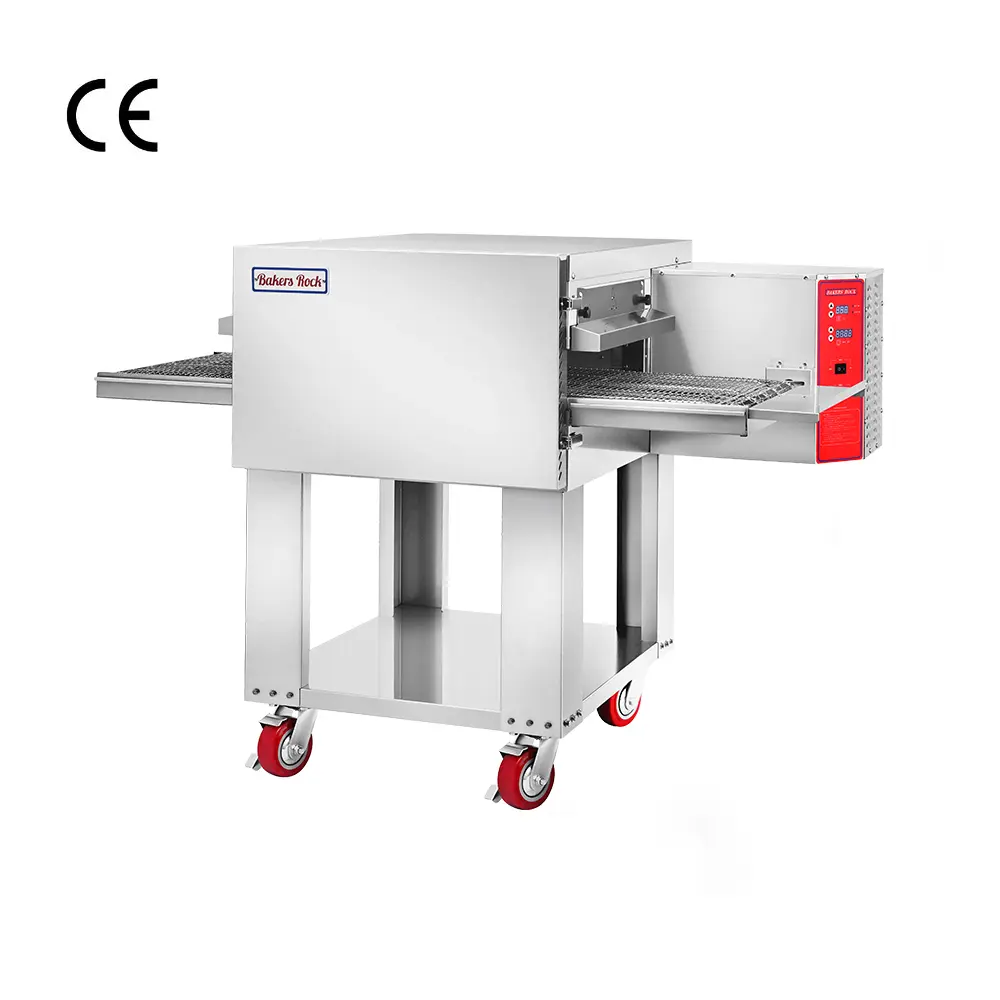
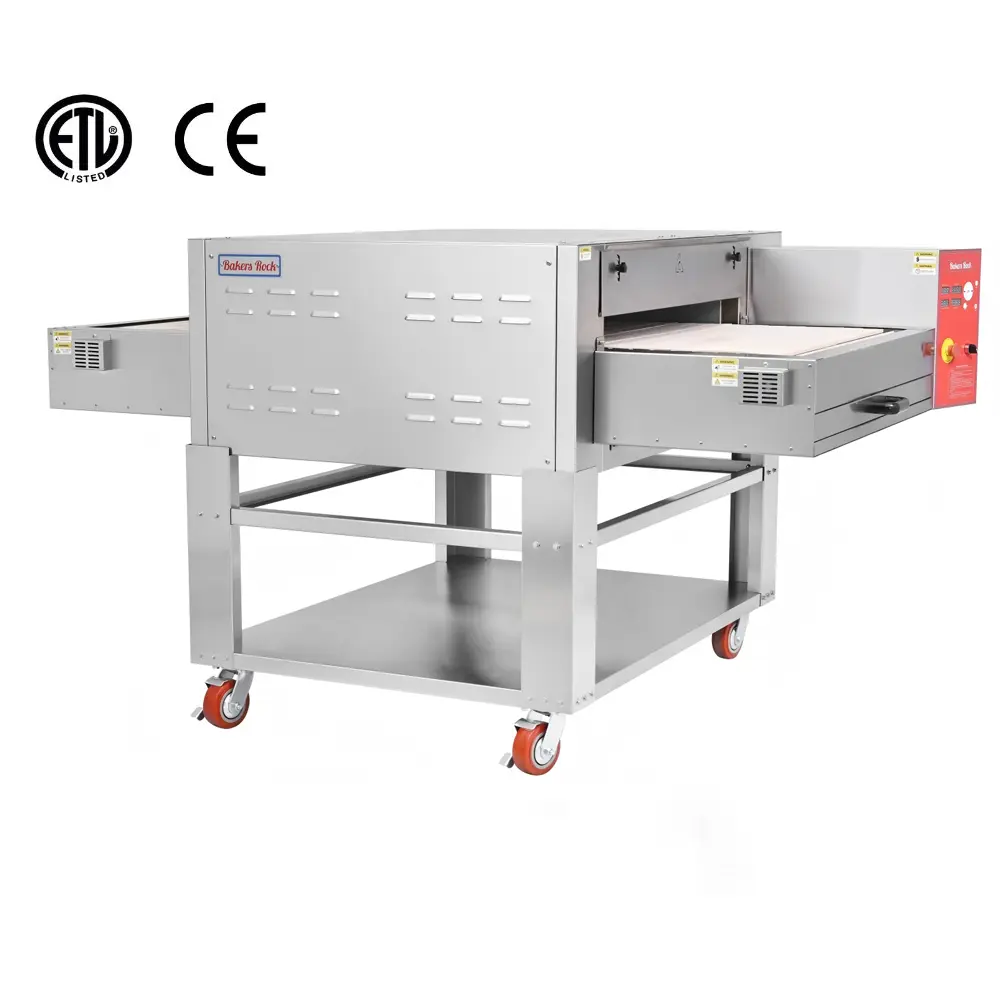
For impingement equipment, document physical air-finger or panel positions as well as controller values. Bakers Rock’s commercial range includes electric and gas impingement conveyor ovens, and the product information describes independent top and bottom temperature control on selected models. The exact settings remain model- and product-dependent, so the approved profile should always be tied to a specific equipment configuration.
A controller setpoint is not the same as the temperature and airflow experienced by a pizza in the chamber. Use a calibrated temperature profiler or another approved method to capture the product path. Test left, centre, and right belt positions when permitted, and compare the start, middle, and exit zones.
The objective is not to create a complicated laboratory report. It is to identify whether the oven delivers a repeatable heat curve and whether a store is operating inside the same envelope as the pilot site. If one side browns faster, if the top is done while the base is pale, or if the exit result changes during a peak run, investigate airflow, loading, belt tracking, cleanliness, and recovery before rewriting the recipe.
Keep the profiler record with the master profile. A dated baseline gives the chain a reference for commissioning new stores, checking a replacement oven, and deciding whether a deviation is caused by equipment, ingredients, or operator practice.
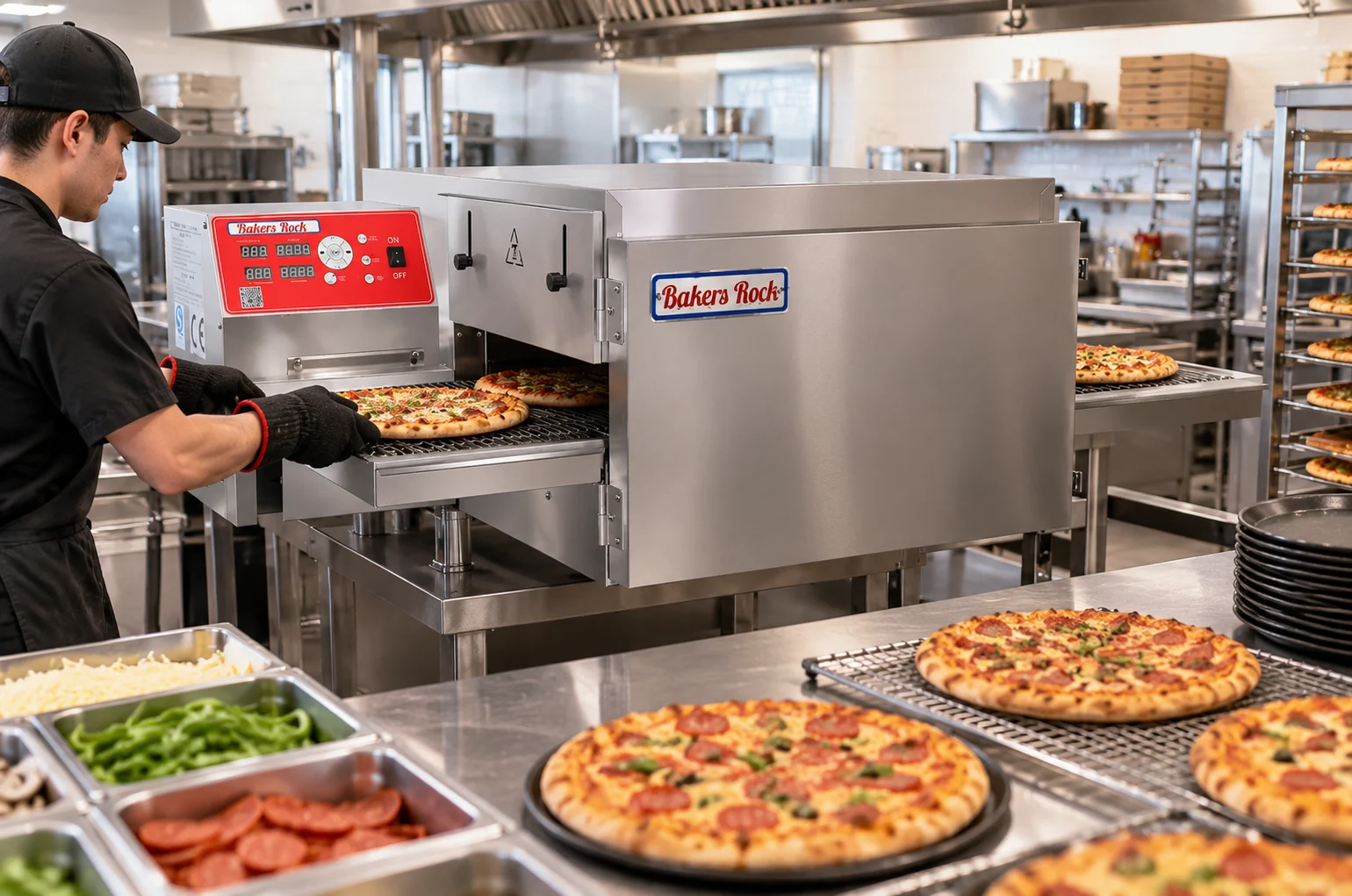
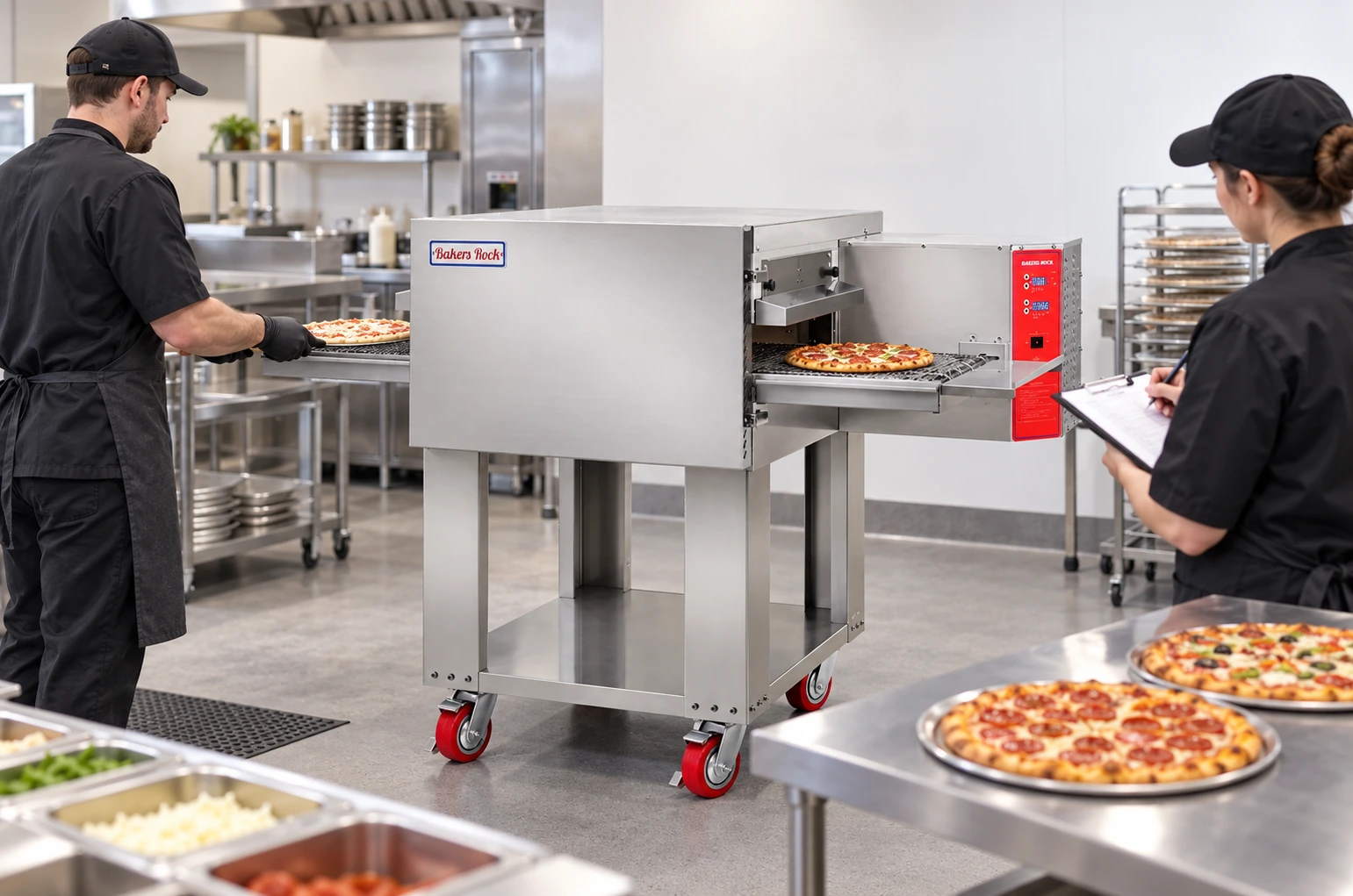
The store SOP should fit on the work line and use the same sequence at every location. A useful format is: pre-operation checks, approved settings, loading rules, exit-quality checks, and escalation triggers. Include photographs or simple diagrams for product placement, but do not rely on a photo alone when the key control is a number or a physical configuration.
If the equipment has programmable controls, use locked recipes or access permissions where available. Bakers Rock describes intelligent LCD control, ECO operation, and standardized production; verify exact functions on the selected model before writing them into an SOP.
One profile should not be copied blindly across different chamber lengths, belt widths, heating methods, or stack arrangements. Electric and gas ovens can require different utility checks and recovery observations. Stone conveyor ovens also transfer heat differently from air-impingement systems. A chain can preserve the product target while maintaining separate approved profiles for each equipment family.
Group stores by like-for-like configuration before rollout. Validate the first store in each group against the pilot profile. Record voltage and phase, gas type and pressure where relevant, ventilation requirements, belt direction, opening height, and ambient conditions. Regional units may need different temperature units, plugs, language settings, or compliance documents; verify these without changing the product target unless testing supports it.
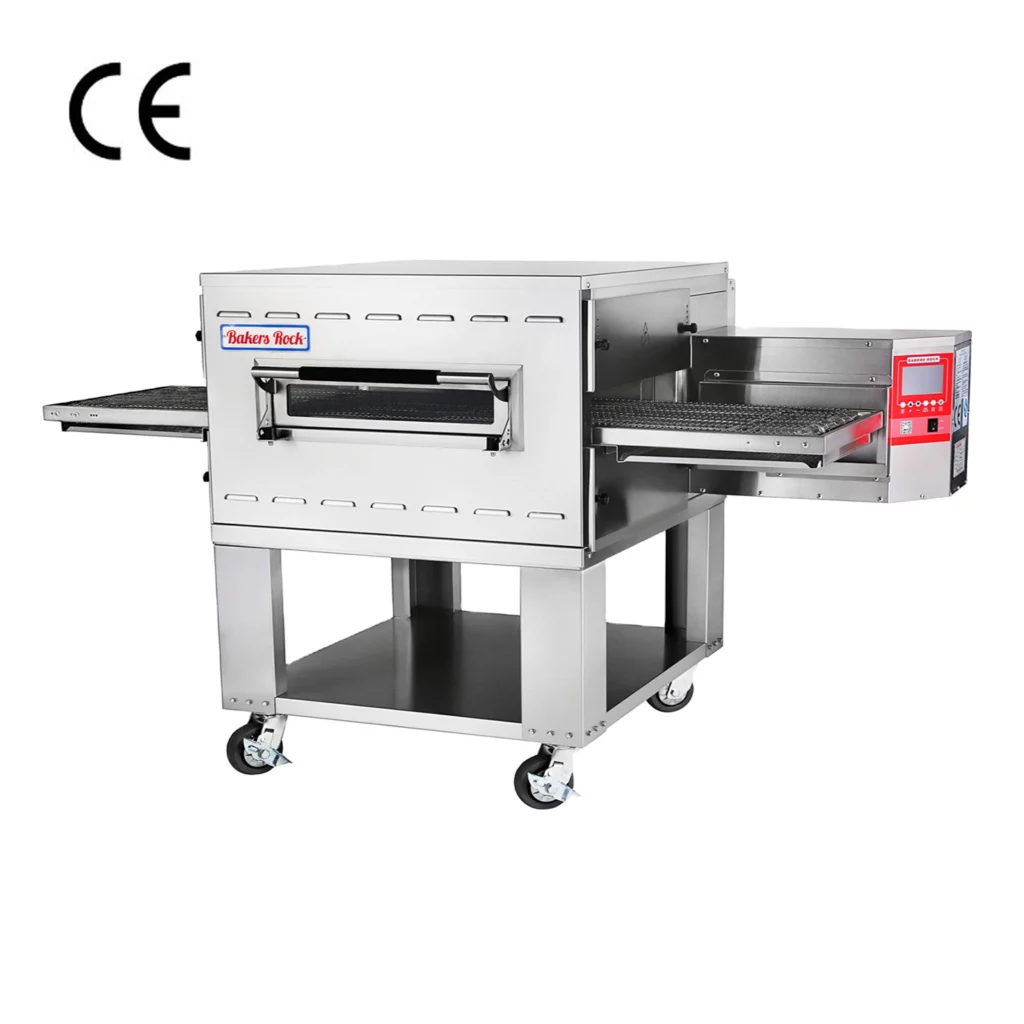
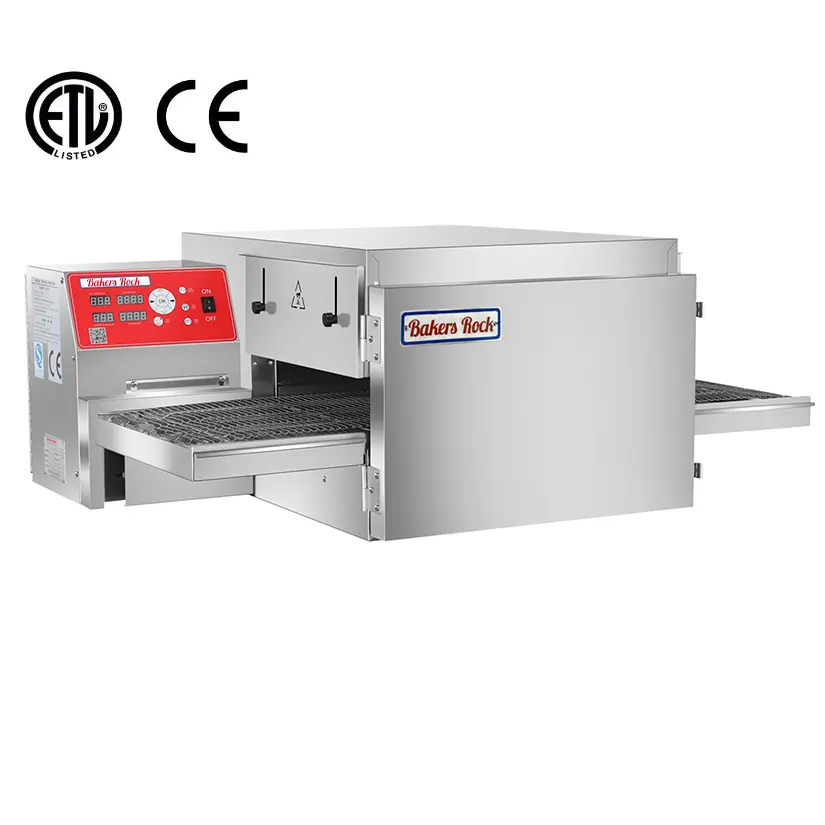
El Bakers Rock H1832 electric conveyor pizza oven provides an example of a commercial oven configuration that franchise operators can evaluate when establishing standardized bake profiles. Its 18 × 32-inch baking area and computer-controlled baking time and temperature should be validated against the chain’s approved recipes, production requirements, and site conditions.
For a new purchase or replacement project, review the electric impingement oven range, the gas impingement oven range, and the stone conveyor oven range against the network’s bake profile and site constraints. A distributor should supply the comparison sheet with the quotation so the buyer can see which profile family the proposed equipment is intended to support.
Standardization is maintained through sampling, not a one-time commissioning visit. Audit after installation, major maintenance, recipe or ingredient changes, and at a recurring interval. Compare the current profile with the master record and document every approved change.
Use a simple deviation log with five fields: store and oven ID, product and batch, observed defect, checks completed, and corrective action. Patterns become visible quickly. Under-baked centres may point to loading density or belt speed; dark tops may point to upper airflow or temperature; inconsistent bases may point to bottom heat, belt condition, or product placement. The log keeps managers from treating every symptom as a new recipe problem.
Assign one owner for the master profile and one local owner for execution. The central owner controls revisions; the store owner confirms training and daily checks. This prevents uncontrolled edits during busy service.
Bakers Rock is the overseas brand of Shanghai QiangAn FoodService Equipment Co., Ltd., a commercial pizza oven manufacturer founded in 2001. Its portfolio covers electric and gas impingement, stone conveyor, deck, and dome ovens. The company states that it serves pizza chains, restaurant groups, pizzerias, and institutional food service, with products exported to more than 100 countries and regions.
Those facts make supplier fit a process question, not a slogan. Ask for a product test using your dough, topping load, pan or screen, target output, and store utilities. Request the proposed profile sheet, commissioning method, spare-parts plan, training scope, and the assumptions behind any capacity recommendation. For a chain or distributor, the company profile provides background, while the technical team can confirm whether the requested profile is suitable for a specific model and site.
A standardized conveyor oven bake profile is a controlled operating document, not a single temperature. Define the product, establish a gold-standard batch, measure the heat path, document the configuration, and validate by equipment family and store conditions. Protect it with an SOP, deviation log, and scheduled audits.
When requesting a fit check, share the model or target chamber size, product dimensions, dough and topping details, desired output, available power or gas, ventilation constraints, and the regions where the ovens will operate. You can contact the Bakers Rock technical team for a model-specific review.
At minimum, record the product specification, belt time, temperature, airflow or air-finger configuration, loading pattern, preheat condition, and quality acceptance criteria. Include the exact oven model and utility configuration.
Only when the ovens, ingredients, utilities, and operating conditions are sufficiently comparable. Otherwise, keep one product target but create validated profiles for each equipment family or site condition.
Recheck after installation, major maintenance, ingredient or recipe changes, and any recurring quality deviation. A scheduled audit interval should be set by the chain’s quality owner.
They should follow the deviation SOP first. Check loading, cleanliness, belt condition, airflow, and utilities before making an approved setting change.
Include the proposed model, usable bake area, utility requirements, profile assumptions, test-bake method, commissioning, training, spare-parts support, and store-validation requirements.