Nullam dignissim, ante scelerisque the is euismod fermentum odio sem sempre o is erat, a feugiat leo urna eget eros. Duis Enean um risco imperdieto.
Nullam dignissim, ante scelerisque the is euismod fermentum odio sem sempre o is erat, a feugiat leo urna eget eros. Duis Enean um risco imperdieto.
 autor
autor
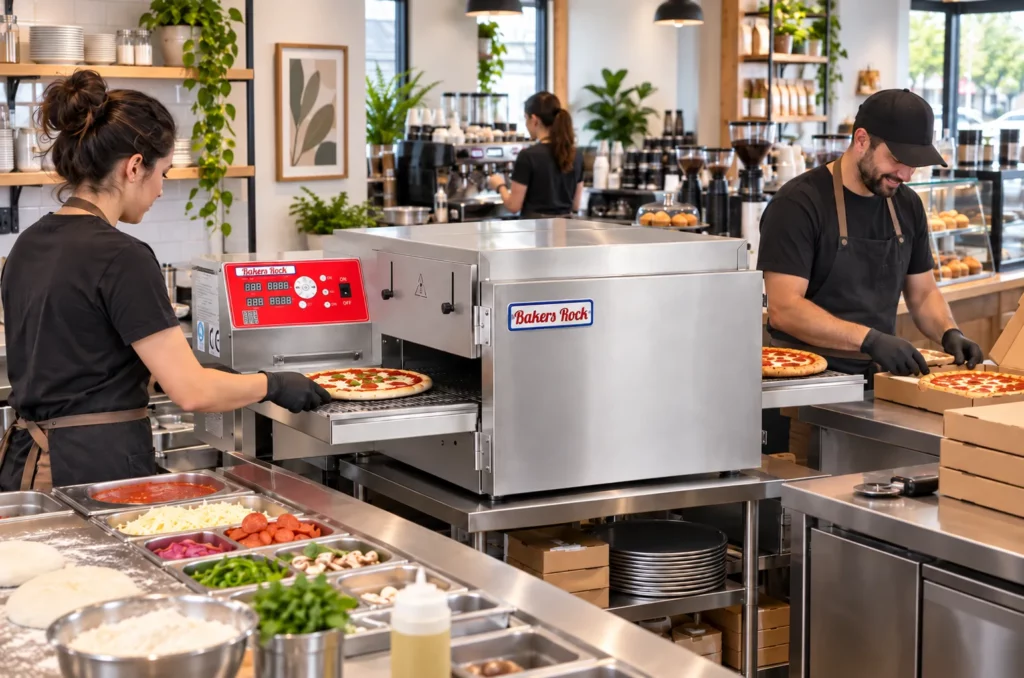
A cafe adding pizza should choose a countertop conveyor oven only after confirming three things: the menu can be standardized, peak demand justifies continuous production, and the site can support the oven’s full installed requirements. Countertop describes where the appliance sits; it does not mean the oven is light-duty, plug-and-play, or suitable for every counter.
Start with the cafe’s service model, then compare belt width, chamber opening, bake-time range, temperature range, electrical configuration, ventilation, landing space, cleaning access, and real tested output.
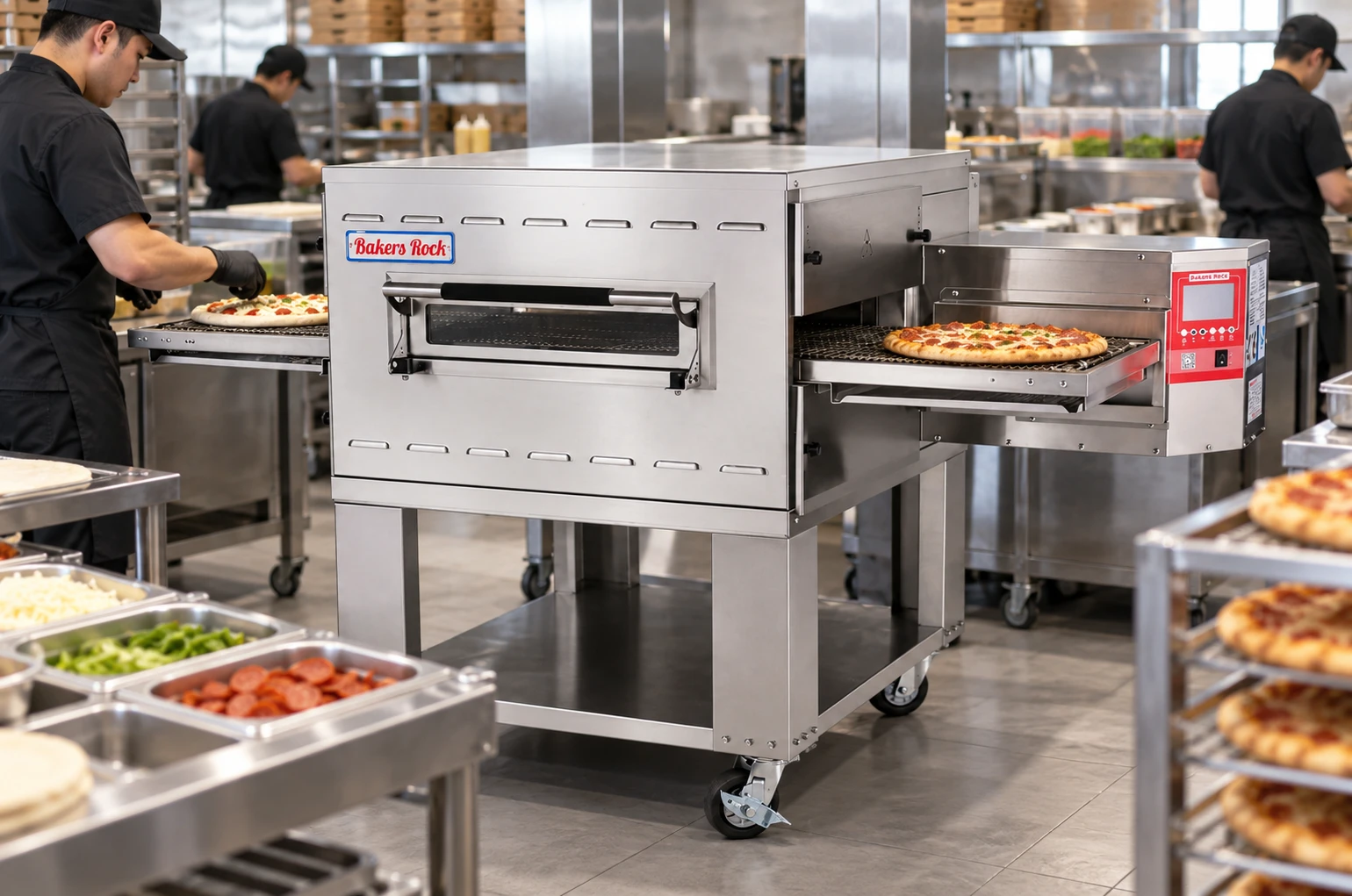
A conveyor oven works best when products follow repeatable recipes. Once time, temperature, dough condition, topping load, and product position are validated, staff can load pizzas at one end and collect them at the other with less active bake handling. That consistency can help a cafe train a cross-functional team rather than rely on one dedicated pizza specialist.
The same operating logic can be restrictive when the menu changes constantly. Different dough thicknesses, frozen and fresh products, or heavy and light toppings may require incompatible settings. Frequent adjustments can slow the line. Before buying, group the proposed menu into products that can share a program.
Do not size a cafe pizza oven from daily sales alone. Record expected pizzas during the busiest 15-minute and 30-minute periods, including the number ordered together. A lunch rush of twelve pizzas in twenty minutes is a different production problem from twelve pizzas spread across an afternoon.
Test the intended pizza diameter, dough, toppings, screen or pan, and consecutive loading pattern. Count acceptable finished pizzas, not the number of bases that physically fit on the belt. Published throughput should always be checked against its test conditions because output may vary with product size, bake time, loading gap, temperature, and configuration.
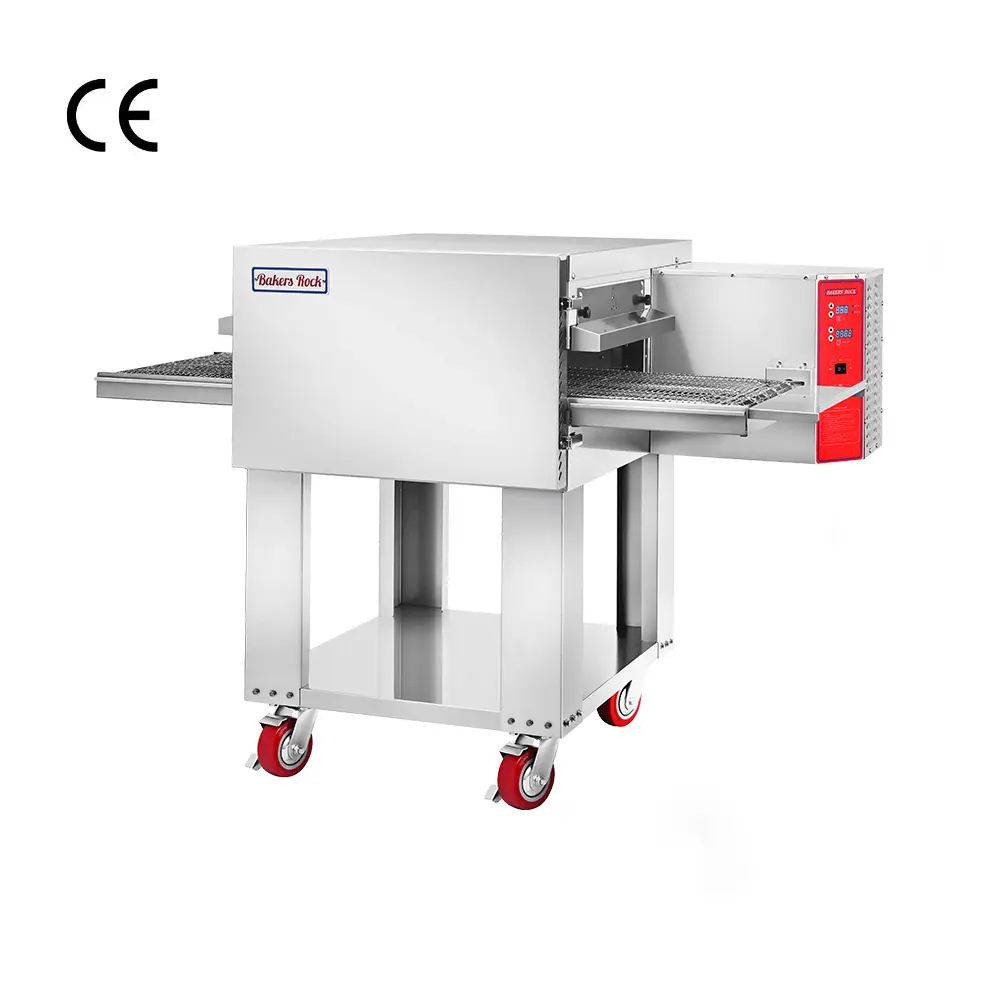
The oven body is only part of the space claim. Add the entrance and exit trays, required clearances, loading and landing surfaces, ventilation provisions, cable routing, disconnect access, and service access. A unit that fits the counter may still block drink preparation or leave no safe landing space.
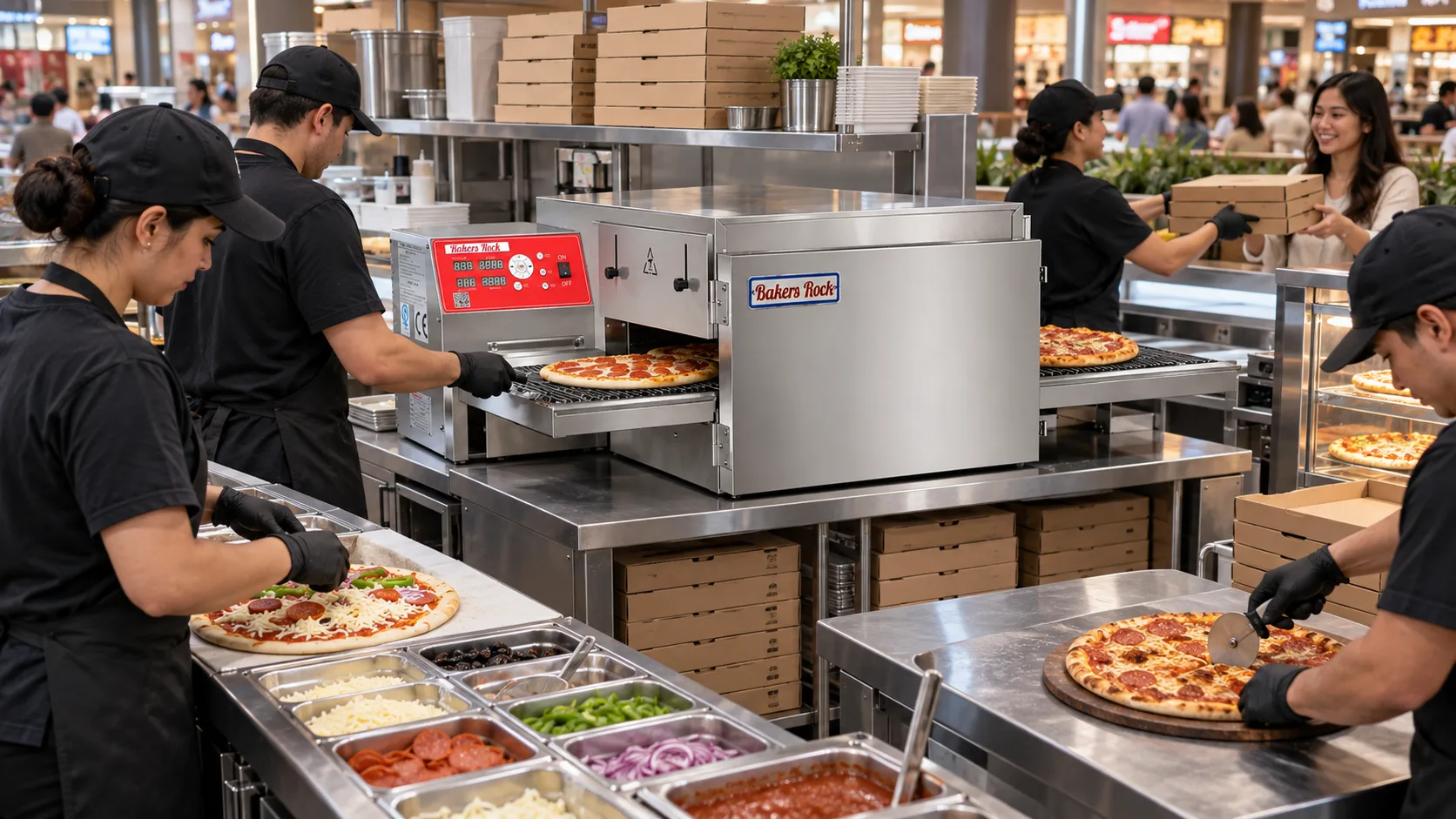
Plan a one-direction path: cold storage and portioned ingredients, base preparation, topping, oven loading, discharge, cutting, boxing, and pickup. Keep hot-food movement away from espresso, cold drinks, pastry display, and delivery collection. The right compact commercial pizza oven should reduce crossing paths rather than create a second queue inside the cafe.
Electrical voltage alone is not enough. Confirm phase, frequency, rated input, circuit capacity, connection type, and the building’s available load. A 220 V or 380 V label does not by itself establish compatibility with a particular site. Europe, North America, the Middle East, and Southeast Asia contain different utility practices and approval processes, so the exact configuration must be matched to the destination before ordering.
Ventilation requirements can depend on the appliance, food, installation, local authority, landlord, insurer, and fire-safety rules. Obtain written approval before fabricating the counter or signing off the kitchen plan. Also account for heat released toward staff and adjacent refrigerated or beverage equipment.
A cafe team needs settings that are easy to repeat across shifts. Ask how bake time and upper and lower heat are controlled, whether programs can be protected from accidental changes, and how the oven recovers after consecutive loads. The useful control system is the one staff can operate accurately during a mixed beverage and food rush.
Review the cleaning route before purchase. Crumb collection, removable trays, belt access, exterior surfaces, filters, and service panels should be reachable without dismantling the cafe line. Ask which tasks are daily, weekly, or technician-only, and how long the oven must cool before cleaning. Easy maintenance is an uptime requirement, not a cosmetic feature.
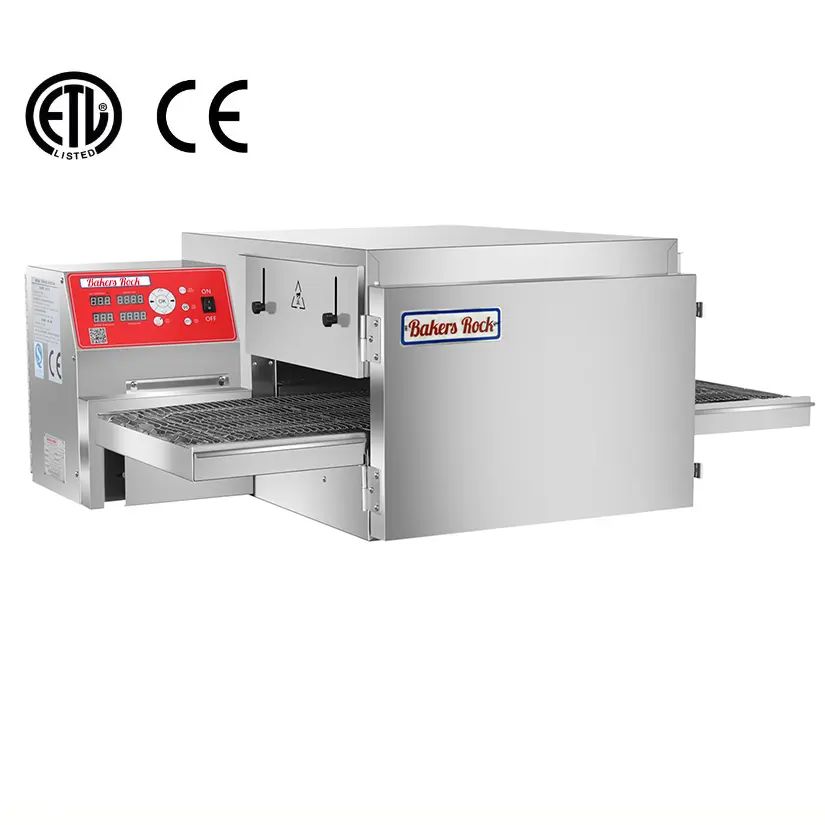
Use a specification sheet to eliminate models that cannot accept the intended product or site conditions, then verify performance with a bake test. Bakers Rock’s 16 Inch Countertop Conveyor Oven lists a 16 x 24-inch heating area, main dimensions of 1215 x 850 x 481 mm, dimensions of 1600 x 850 x 481 mm with extension trays, 6.8 kW rated power, 220/380 V variants, an adjustable 1.5-15 minute setting time, and a maximum temperature of 320 ℃.
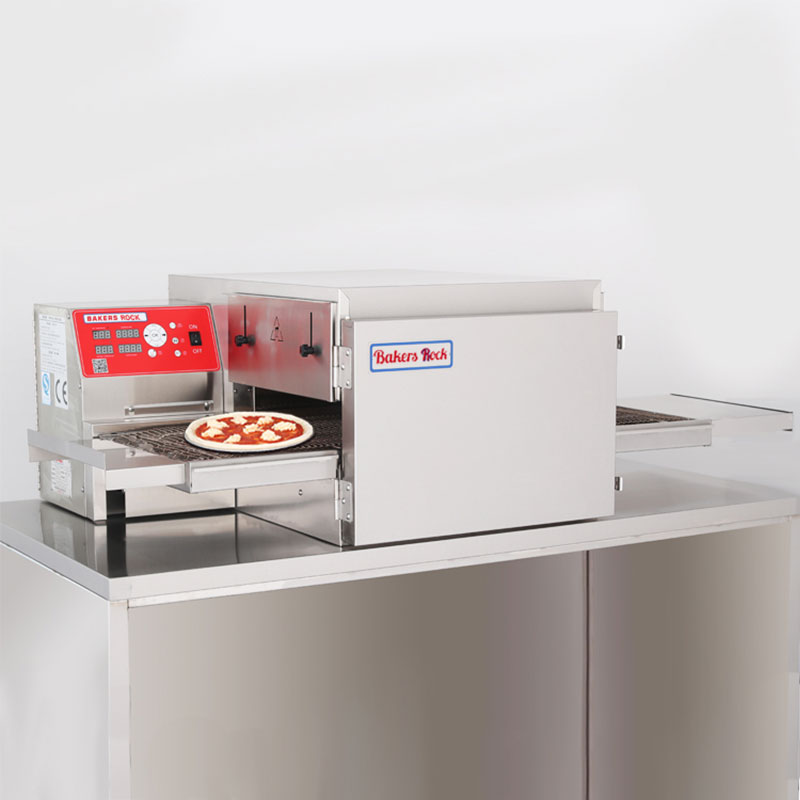
Those figures are screening inputs, not a throughput promise. Compare the 16-inch format with the cafe’s pizza diameter, cookware, loading gap, counter depth, landing space, and available electrical service. The product page also describes separate upper and lower temperature control, an ECO mode, entrance and exit trays, button controls, easy-maintenance features, and stackability. Stacking, ventilation, and clearances still need approval for the exact installation.
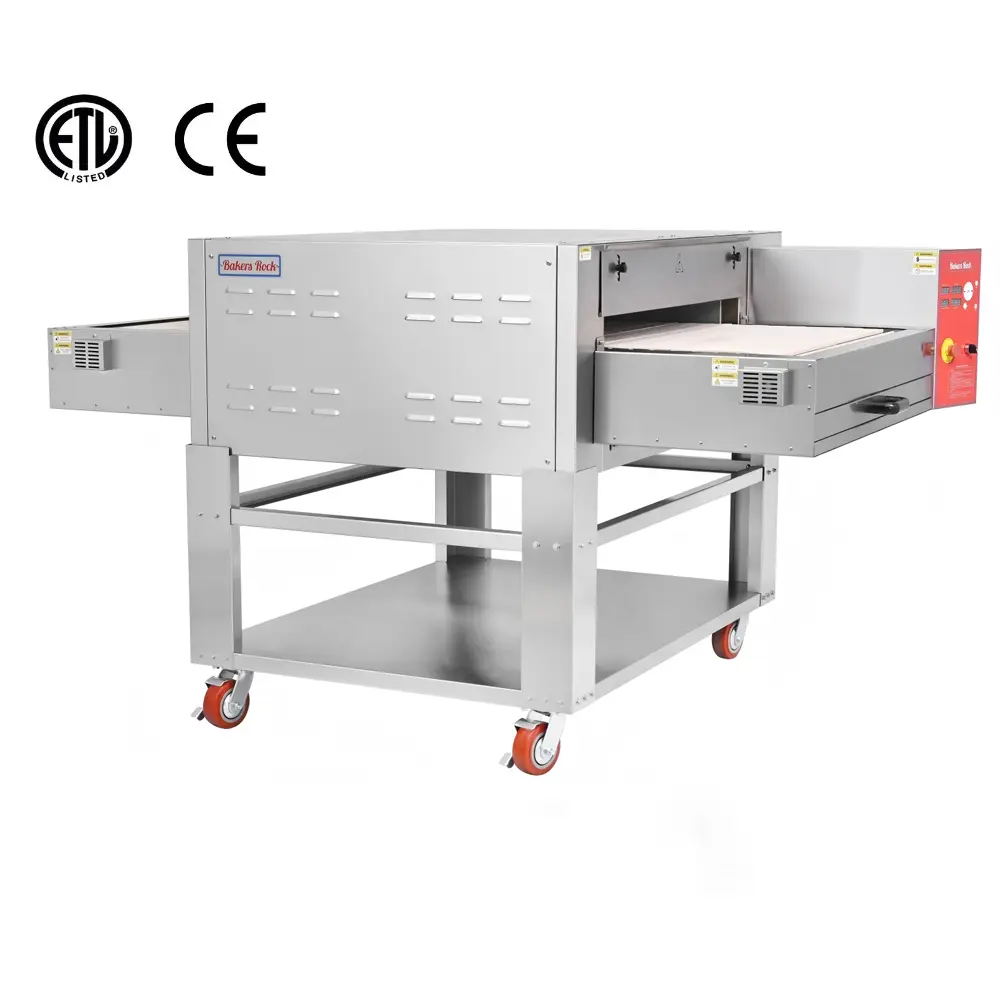
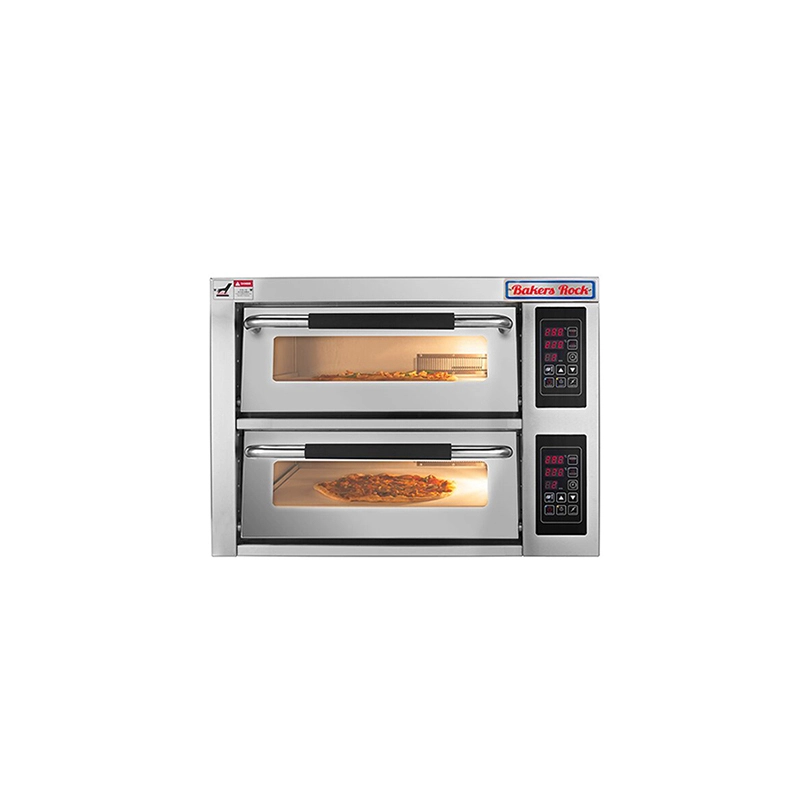
For a broader explanation of belt size, controls, and model screening, use the countertop conveyor oven buying guide. The cafe decision should remain tied to an existing beverage-led workflow, a limited launch menu, and the site’s real utility constraints. Buyers comparing related formats can also review the electric impingement oven range without assuming that every model suits a countertop installation.
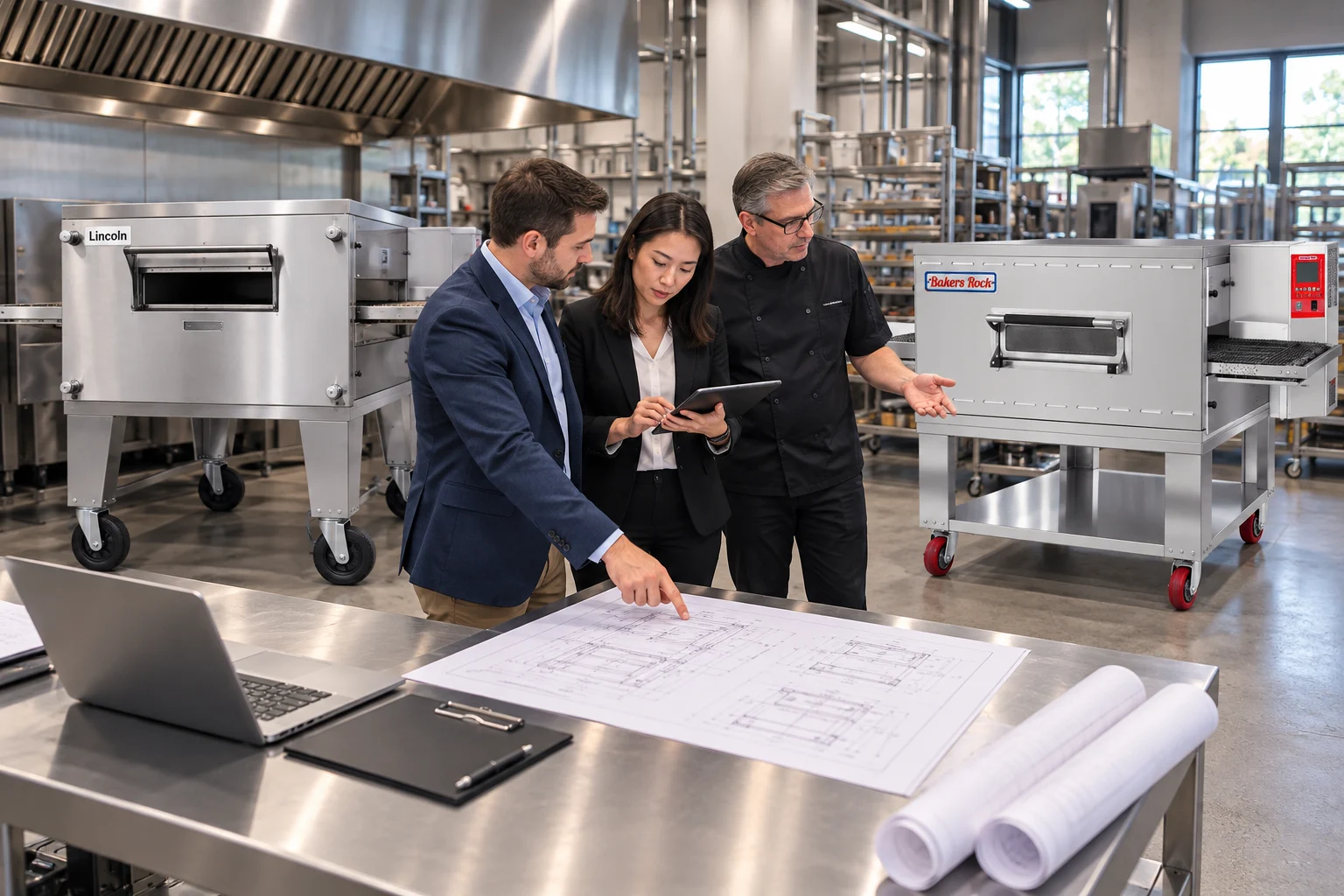
A useful supplier trial recreates the cafe’s operating conditions. Send the pizza diameter, dough state, topping weight, cookware, target finish, expected peak quantity, and allowable bake time. Ask the supplier to document the settings and loading pattern used. If several products will share the oven, test the highest-volume item and the hardest item to bake consistently.
Evaluate the whole cycle, including warm-up, consecutive loads, recovery, unloading, and cleaning. A fast bake is not valuable if assembly cannot feed the belt or if cutting and boxing block the exit. A short launch menu often makes the first weeks easier to control; new products can be added after the team has measured actual demand and queue behavior.
The best pizza oven for a cafe is not simply the smallest countertop model. It is the oven that can reproduce the launch menu at the required peak rate while fitting the complete workspace, utilities, ventilation plan, staffing model, and cleaning routine. Validate the menu first, test with real products, and approve the installed layout before committing to equipment.
It can be when the menu is standardized and orders arrive often enough to justify the operating model. Compare warm-up, energy use, counter space, and peak output with the cafe’s actual demand rather than assuming that countertop size means low capacity.
Only when products have compatible dough, thickness, topping load, cookware, and finish requirements. Test each recipe group and avoid a menu that requires constant time or temperature changes during peak service.
Reserve space for the full oven configuration, entrance and exit trays, manufacturer-required clearances, loading and landing zones, ventilation provisions, cable routing, cleaning, and service access. Use an approved installation drawing, not body dimensions alone.
Provide the destination market, pizza diameter and recipe details, target peak output, counter layout, utility limits, ventilation information, quantity, and required schedule. Include the products to be tested and ask for written test conditions.
For a model fit check, send those details and the cafe layout when you request an application fit check from Bakers Rock. Final suitability should be confirmed against the selected model’s current specification and the site’s local approval requirements.