Nullam dignissim, ante scelerisque - это euismod Fermentum Odio sem semper the is Erat, a feugiat leo urna eget eros. Дуис Энеан непреодолимый риск.
Nullam dignissim, ante scelerisque - это euismod Fermentum Odio sem semper the is Erat, a feugiat leo urna eget eros. Дуис Энеан непреодолимый риск.
 автор
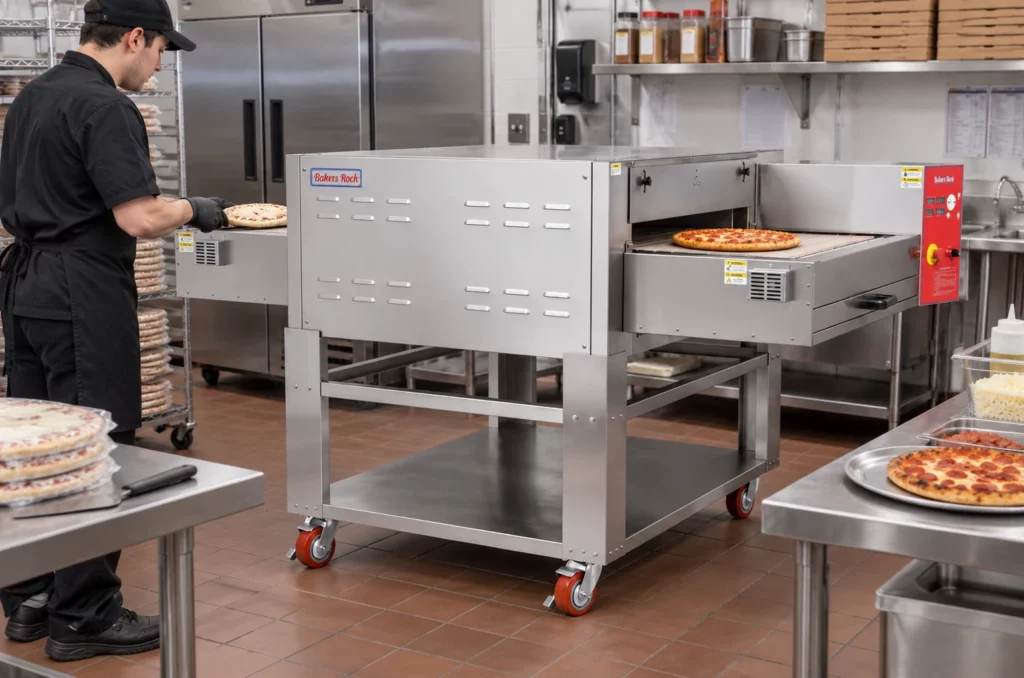
Specify a conveyor pizza oven for frozen pizza around a validated product, bake process, and store acceptance test. Belt speed, temperature range, and footprint belong in the specification, but approval should depend on the actual frozen SKU meeting center-doneness, crust-color, and peak-output requirements together.
For a quick-service restaurant (QSR) chain, one successful demonstration pizza is insufficient. A burned base with an undercooked center may indicate a mismatch between heat delivery and residence time. Differences between stores may also come from product handling, loading, or equipment condition. The purchasing brief must separate these variables before rollout.
Start with a controlled SKU sheet. Record diameter, thickness, weight tolerance, topping load, and whether the product contains raw dough, a par-baked base, or fully cooked ingredients. Include the approved screen, tray, or direct-belt arrangement. These products should not inherit one cooking program simply because their diameters match.
Define the permitted starting condition: frozen storage requirements, maximum time outside controlled storage, and the loading sequence. Do not introduce partial thawing to improve a trial unless the food supplier and food-safety team approve that process.
Set acceptance criteria before testing. Use the food supplier’s cooking instructions and applicable local requirements to establish the safety endpoint and measurement method. Separately define acceptable bottom color, center texture, topping finish, and quality after the intended service hold. Brown cheese alone does not establish center doneness.
A belt-speed setting is meaningful only when its relationship to time in the heated chamber is understood. At a steady speed, nominal residence time equals heated travel length divided by belt speed. Total conveyor length includes exposed loading and unloading sections and should not be substituted for heated length.
Confirm what the controller’s time display represents. During commissioning, time a fixed reference point on the belt from the defined chamber entrance to exit, using the same reference method at every store. Keep this measured chamber transit time distinct from the interval between a pizza’s leading edge entering and trailing edge leaving.
A slower belt increases residence time; it does not independently correct the heat balance. Extending the bake can darken an already overcolored base. For operating adjustments, use the temperature and belt-time guide alongside the SKU test record. Specify enough time adjustment range and suitable top/bottom heat control to explore a workable recipe, then verify both on the quoted configuration.
When the bottom burns before the center reaches its approved endpoint, first confirm the starting temperature, thickness, topping distribution, and bake support match the test specification. Compare the defective pizza with the approved sample before changing the oven.
Where independent bottom-heat adjustment is available, test reducing bottom heat while holding other settings constant. If the center still needs longer, test a longer residence time and reassess the full product. Record each change separately before evaluating a combined recipe. A stone belt changes the baking surface; it is not an automatic remedy for excessive bottom browning.
When results vary between stores, compare actual belt time, preheat practice, loading position, product handling, and cleaning or maintenance condition. Stop serving product that fails the approved safety criteria and follow the chain’s corrective-action procedure. An improvised second pass should not replace a validated cooking process.
Agree on a written test plan before approving a model or order. Send representative production samples with controlled transport and storage conditions. Identify the exact oven configuration, software or recipe version where relevant, bake support, settings, and product batch so the result can be repeated.
The test should cover the operating range the chain actually intends to allow:
Measure acceptable output at the validated bake time. A faster belt may raise theoretical throughput while reducing the number of saleable pizzas. Record loading pattern, run duration, total pieces, and rejects together. Set the required run duration and repeat count in advance; one attractive photograph is not a capacity acceptance test.
Attach the agreed pass/fail record to the equipment specification. A useful acceptance statement identifies the SKU, starting condition, support, settings, measured belt time, loading pattern, required output, and quality/safety limits. If the test fails, revise the product or equipment proposal and repeat it before chain deployment.
Commission each store against the approved sample and test method. Identical numbers on control panels do not prove identical results. Check the installed configuration and actual belt time, then repeat the agreed product checks under representative loading before releasing the store for service.
Keep the store SOP brief enough to use during a shift. It should identify the product code and recipe version, frozen handling limits, preheat readiness, approved loading diagram, control settings, and first-product checks. Add the scheduled verification method, cleaning requirements, and a clear response to unacceptable color or center results.
Define who may change recipes and how changes are logged. If a store needs settings outside the approved operating window, escalate for investigation rather than creating an undocumented local recipe. Revalidate changes to pizza supplier, thickness, topping load, bake support, oven model, or configuration when they could affect the validated result.
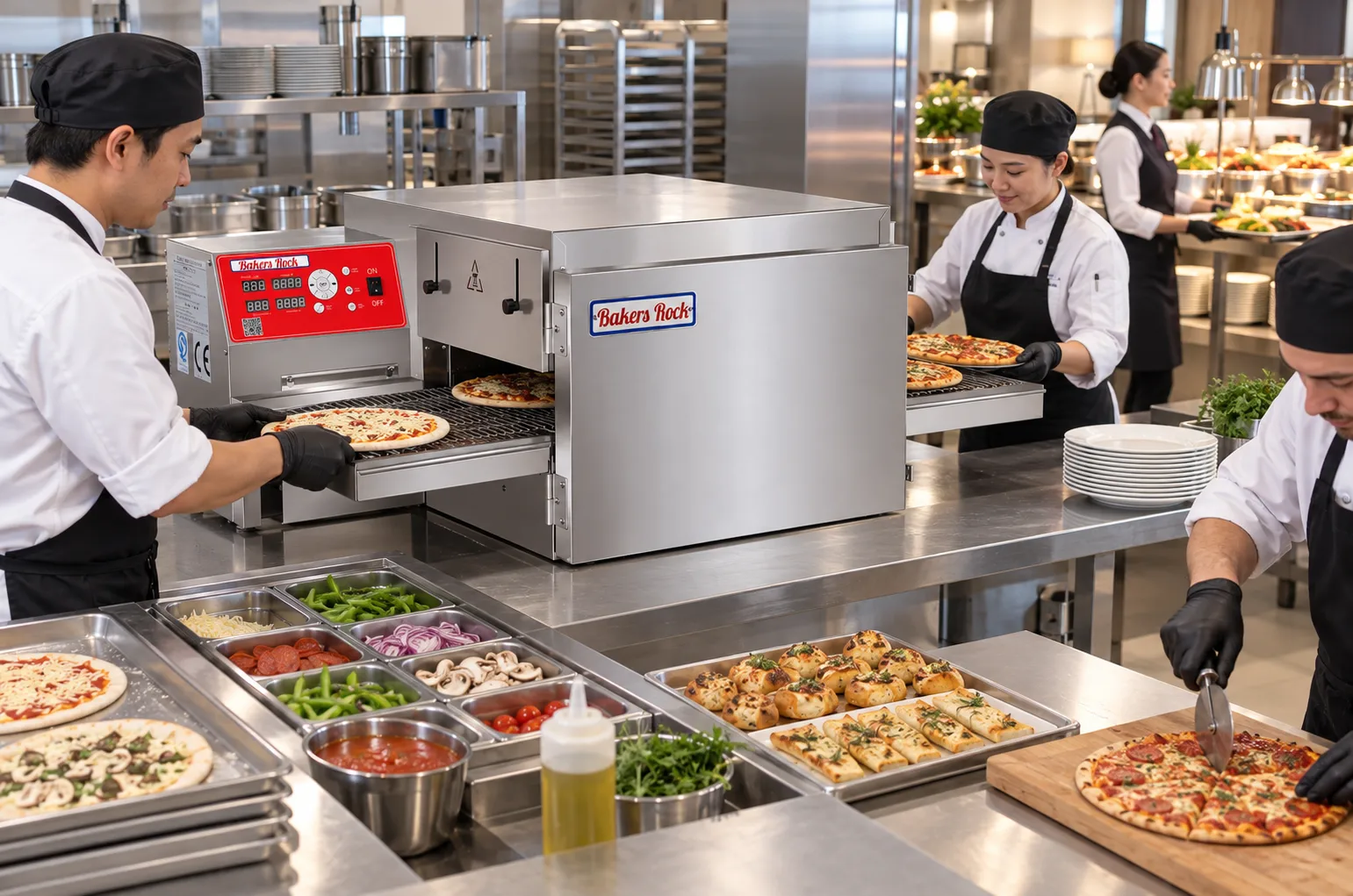
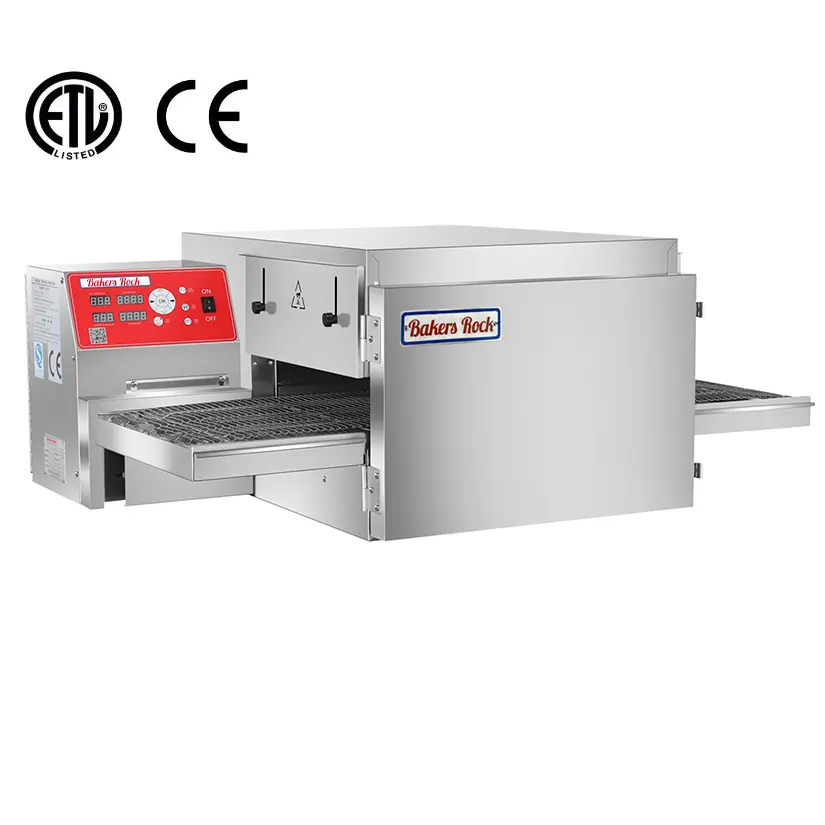
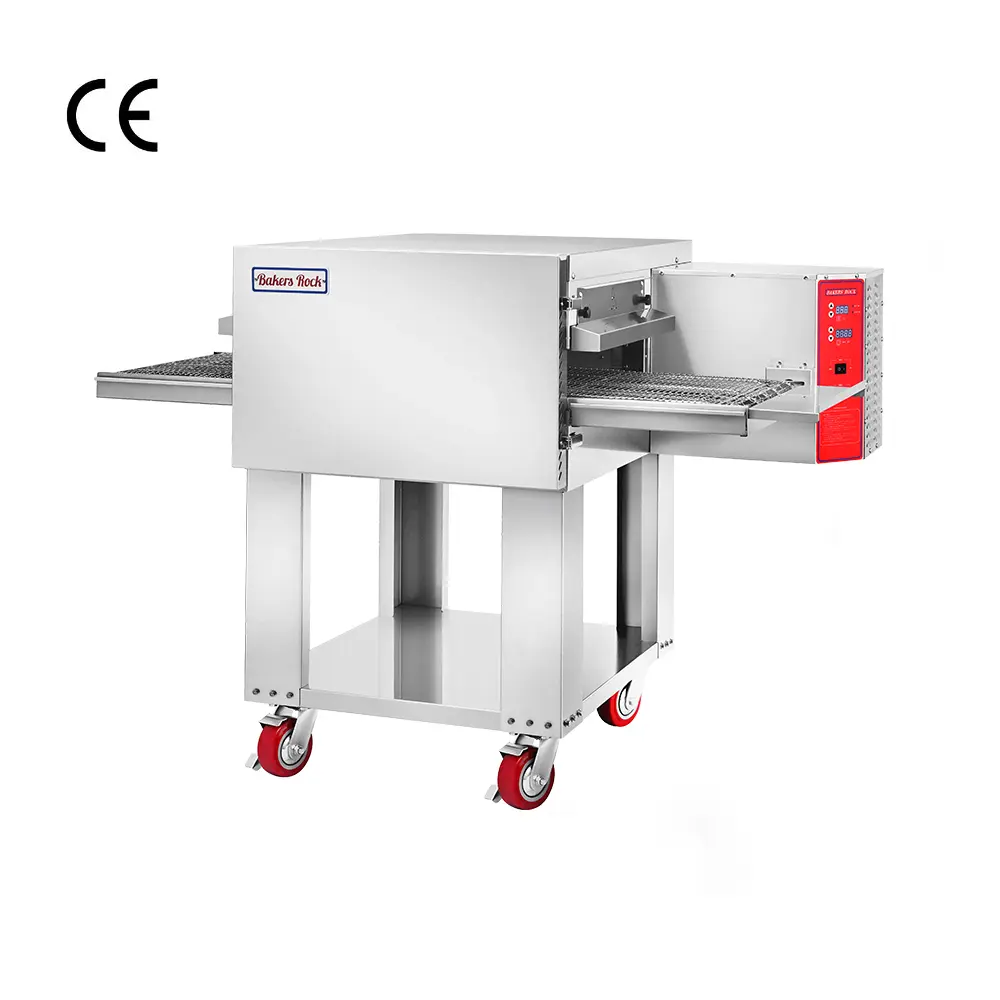
Бейкерс-Рок H1624Pro countertop conveyor oven offers adjustable conveyor time from 1.5 to 15 minutes and independent top/bottom temperature control. Its suitability for a particular frozen SKU still depends on the sample results, usable loading arrangement, and required output.
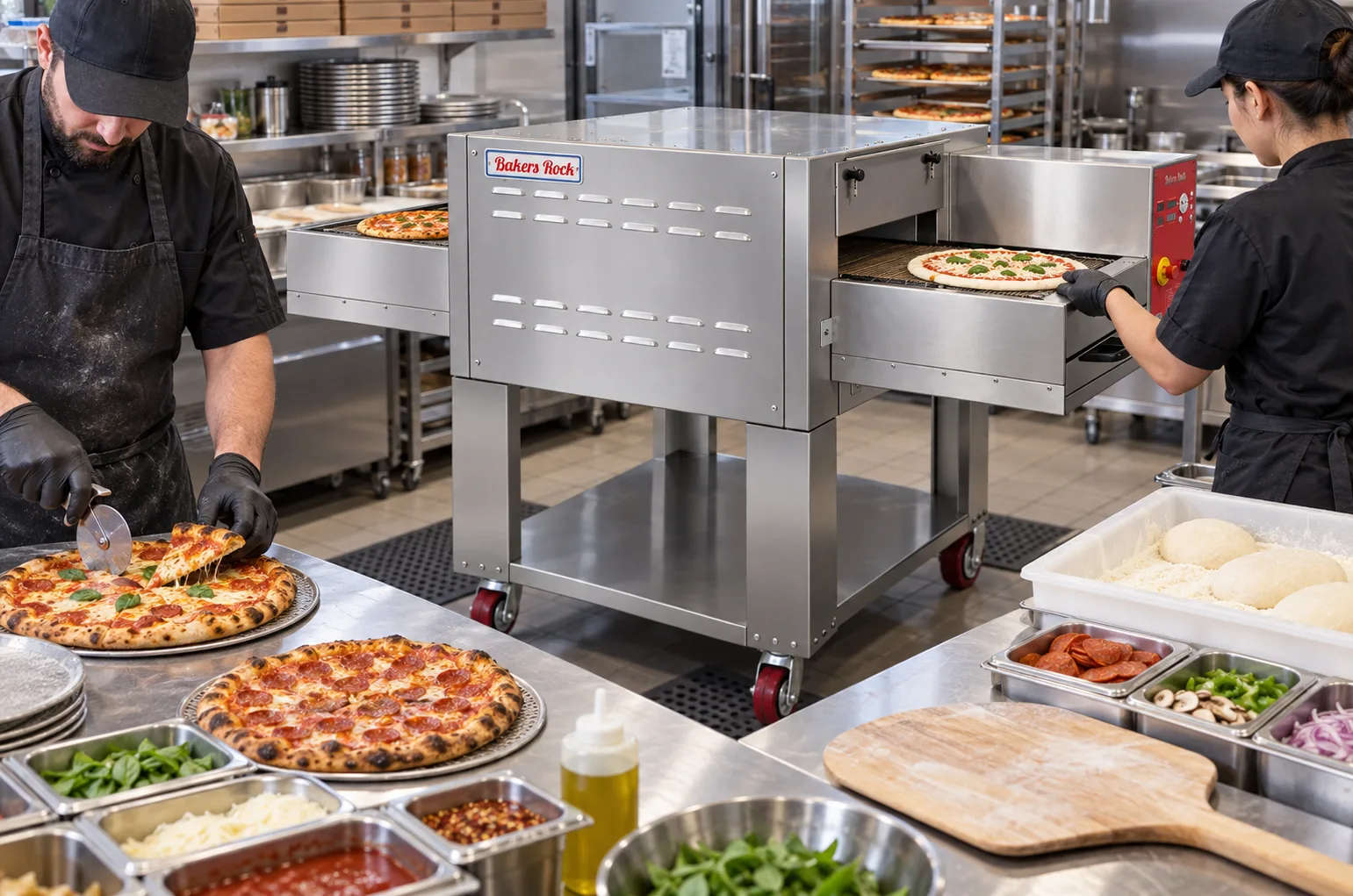
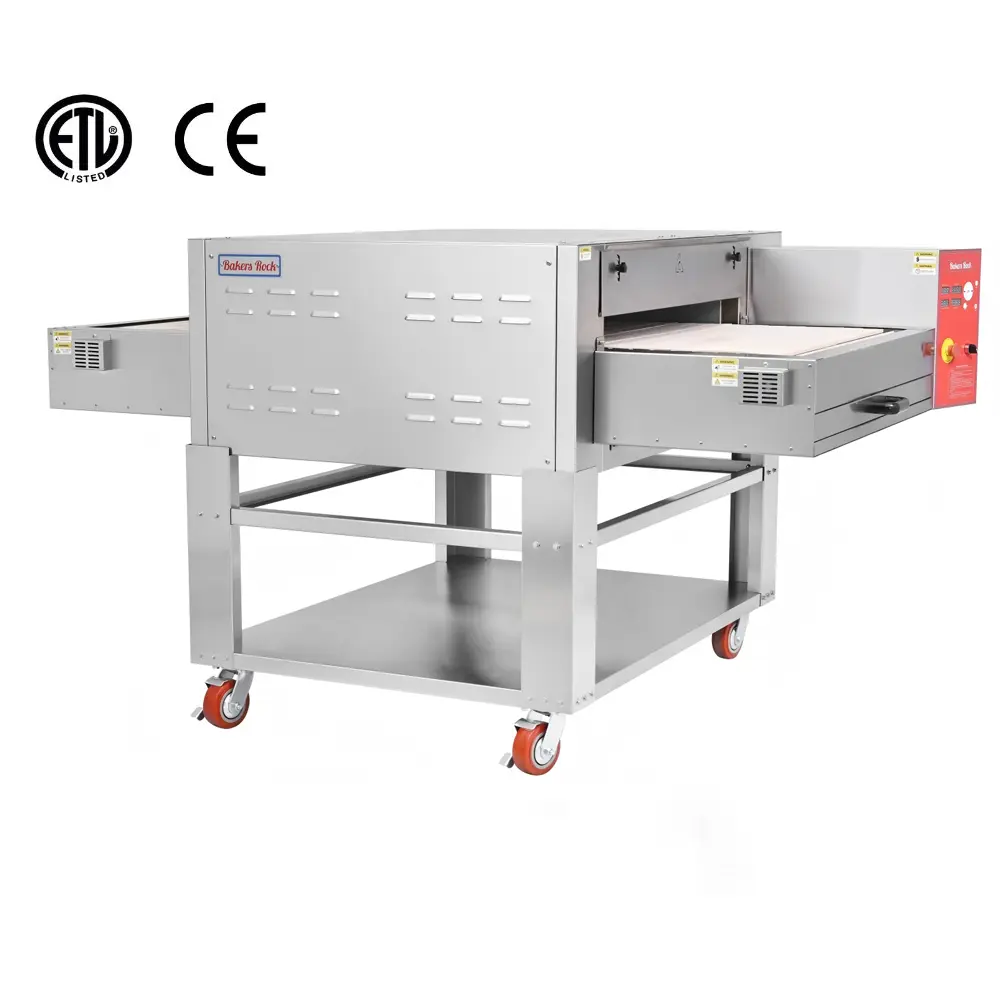
The Bakers Rock S3240 stone-belt conveyor oven lists frozen pizza among its applications and offers adjustable time from 1.5 to 18 minutes. Compare its stone baking surface with the alternative using the same acceptance criteria. Neither an application listing nor a wider adjustment range establishes a successful recipe for every frozen pizza.
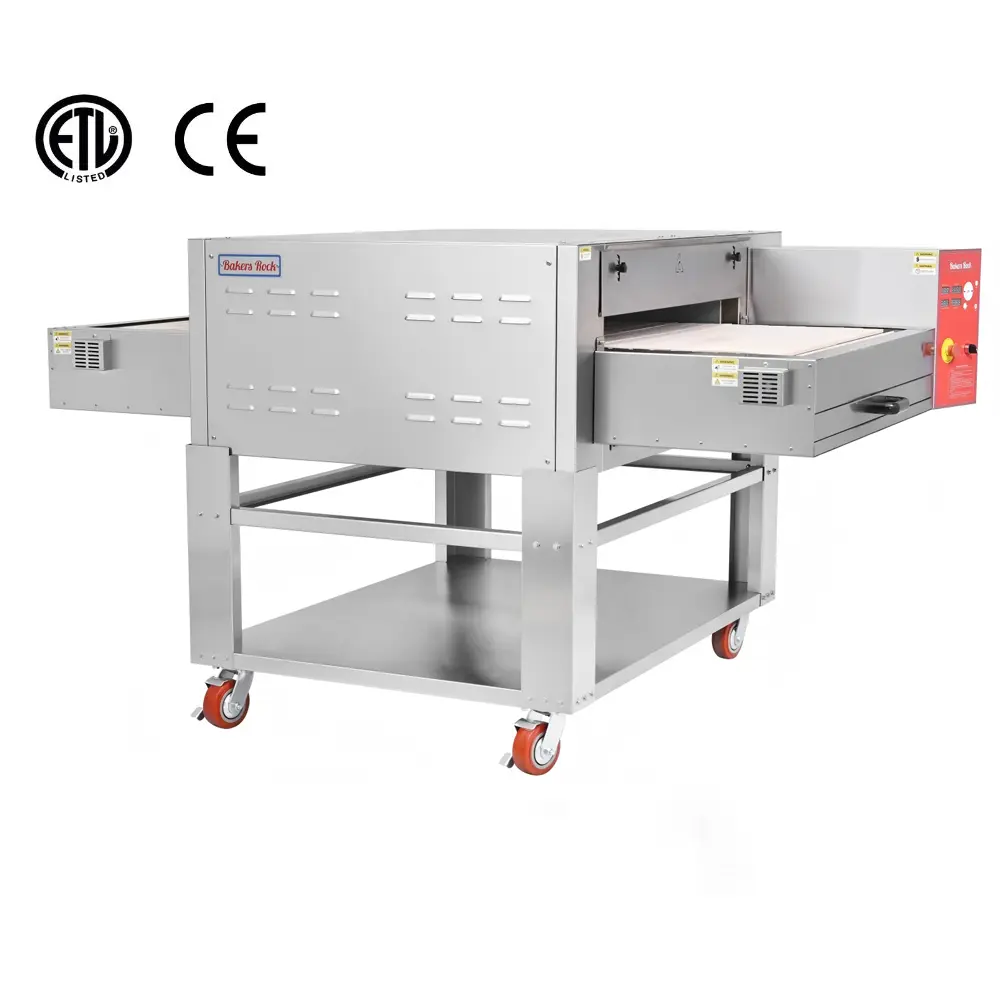
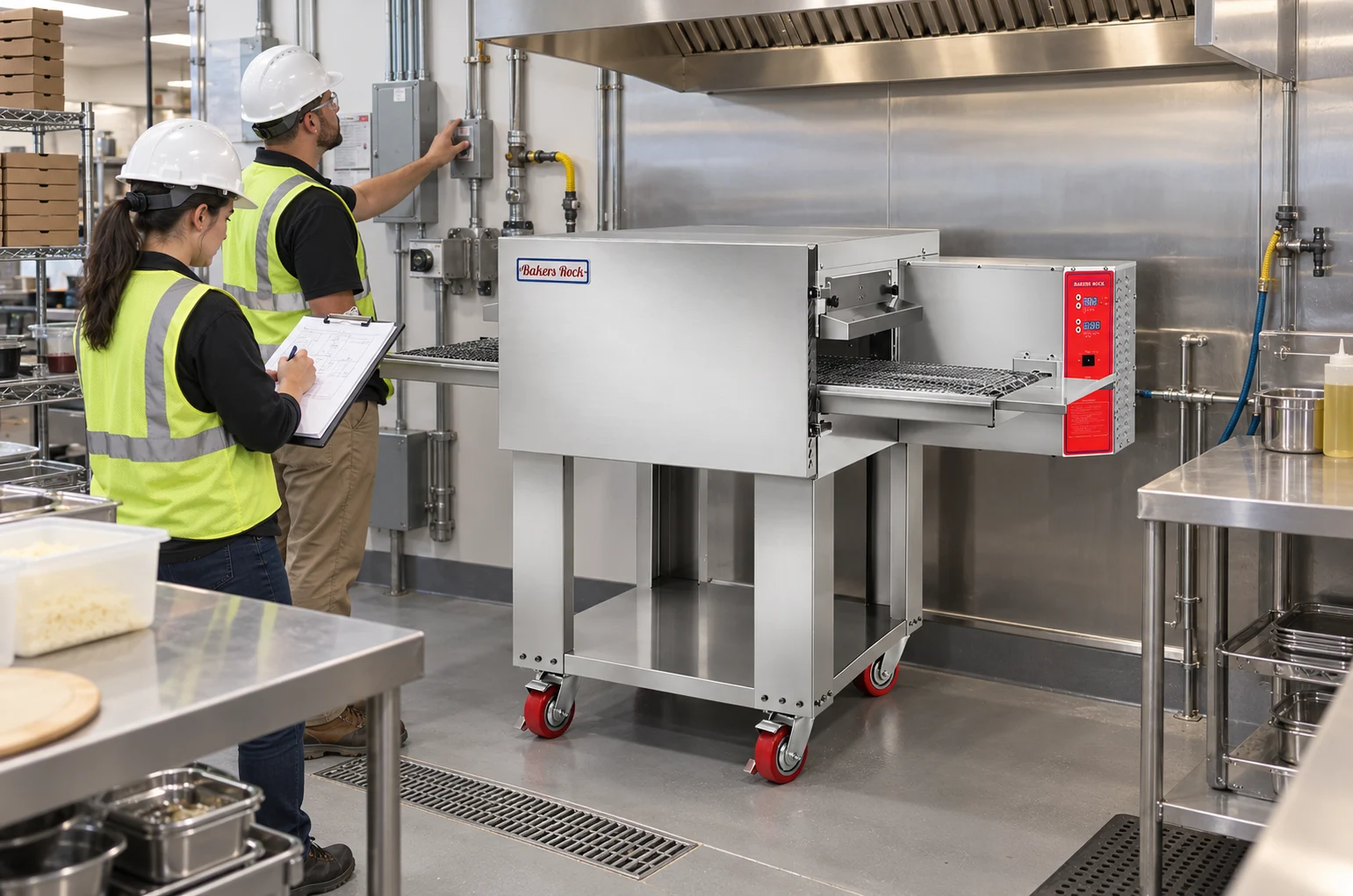
For stores across Europe, North America, the Middle East, and Southeast Asia, specify utilities by site and country. Obtain written confirmation of voltage, phase, frequency, connected load, clearances, extraction needs, and applicable installation requirements for the exact configuration. Also confirm cleaning access, available recipe permissions, commissioning documents, and the parts/service arrangements offered for each destination.
A useful conveyor oven specification links one defined frozen product to a repeatable bake and a measurable store acceptance process. Choose equipment after the sample test demonstrates acceptable centers, crusts, and output together. Then control the handling, loading, and recipe changes that could undermine those results across the chain.
There is no universal setting. Establish the required chamber transit time through testing, then verify how the quoted controller expresses it.
Use the validated recipe as the baseline, but confirm each installation through timed belt checks and product acceptance testing.
No. Check the center using the approved method and safety criteria for that product; appearance is a separate quality check.
Reassess changes that affect heating, including the frozen SKU, support, loading pattern, or oven configuration, and repeat validation where necessary.
To assess fit with Bakers Rock, request a sample bake test. Share the SKU sheet, cooking instructions, frozen handling process, sample condition, target peak output, store countries, and available utilities. Include photographs of current bake defects so the test can address the specific acceptance problem.