Pas de dignité, devant le scélérisque c'est la haine euismod fermentum sem sempre l'is erat, a feugiat leo urna eget eros. Duis Énée Une coupe de cheveux pour rire.
Pas de dignité, devant le scélérisque c'est la haine euismod fermentum sem sempre l'is erat, a feugiat leo urna eget eros. Duis Énée Une coupe de cheveux pour rire.
 auteur
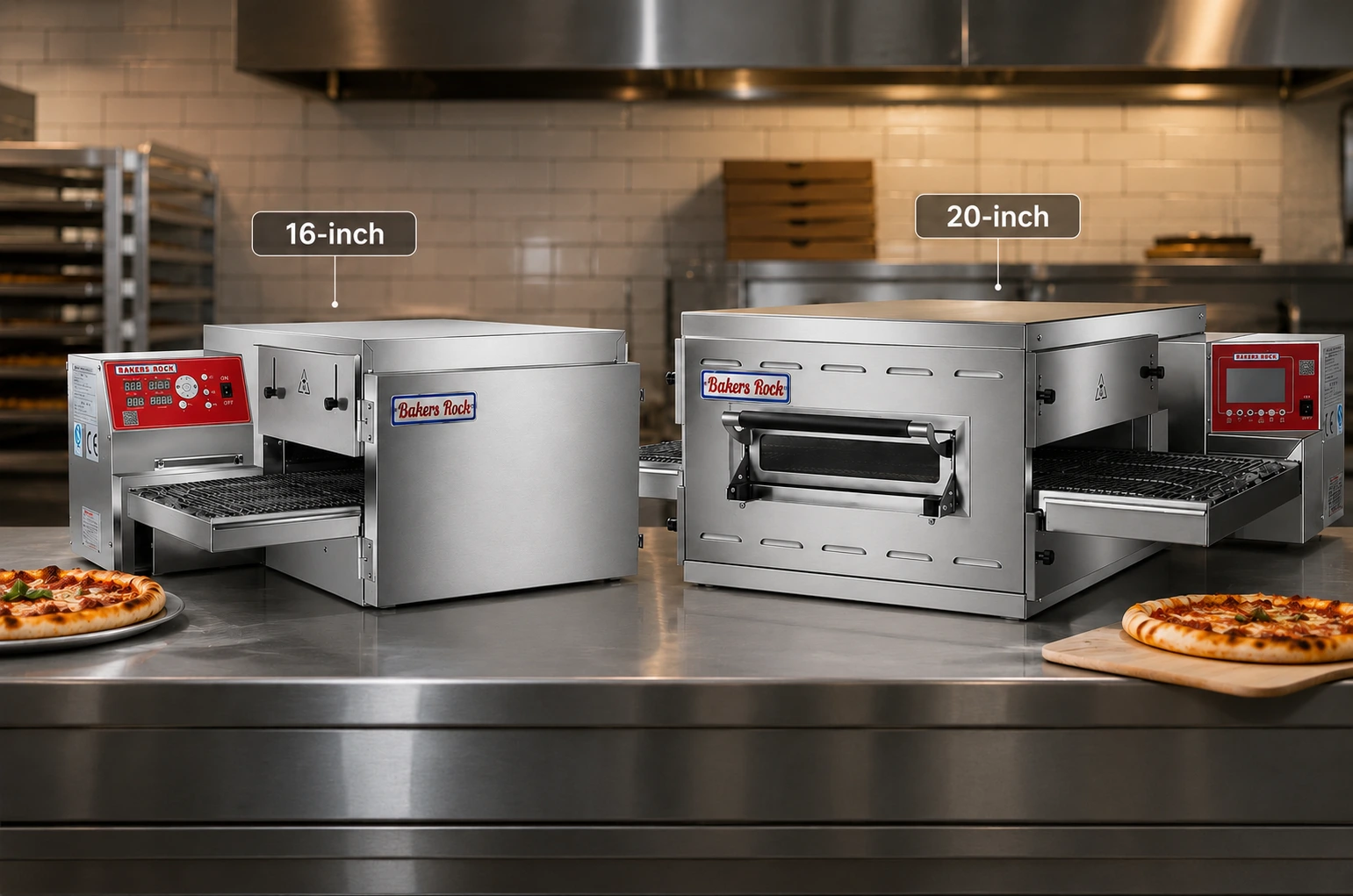
Choisir entre un four à pizza à convoyeur de comptoir de 40 cm et un de 50 cm ne se résume pas à acheter le plus grand pour une production supérieure. La taille idéale dépend du diamètre des pizzas, du rythme de chargement, de la demande aux heures de pointe, de l'espace disponible en cuisine et de la capacité électrique.
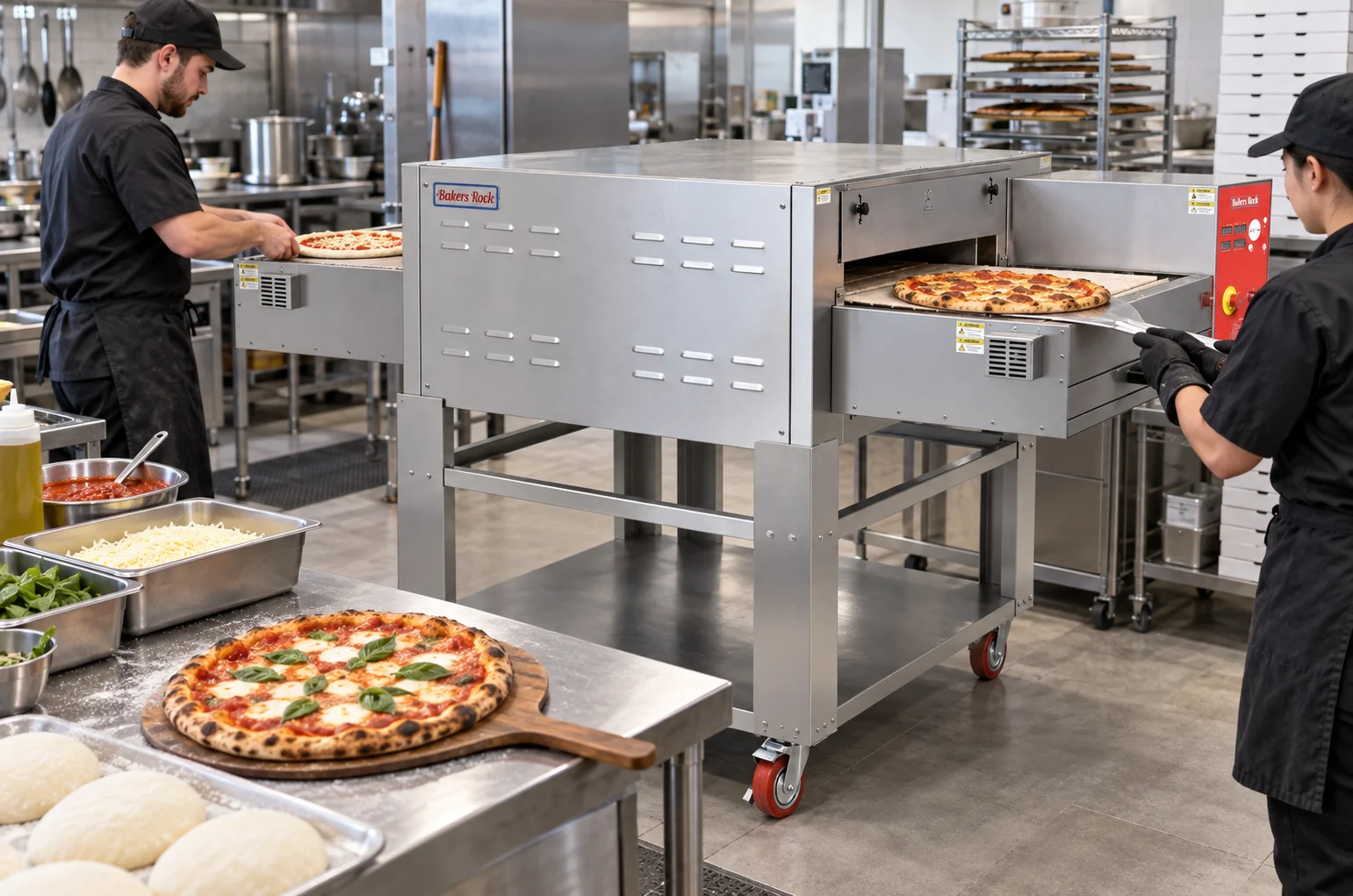
Pour une petite pizzeria, un café, un service de livraison ou un restaurant qui remplace son équipement, la question essentielle est pratique : quelle largeur de convoyeur permet de gérer le menu et la charge de travail aux heures de pointe sans engendrer de contraintes d’installation inutiles ? Une comparaison pertinente doit donc aller au-delà de la largeur nominale du convoyeur et examiner l’ensemble des conditions de fonctionnement qui influent sur la production.
Un four à convoyeur de comptoir de 40 cm (16 pouces) est généralement adapté aux espaces restreints ou aux contraintes électriques, et lorsque le menu ne nécessite pas la largeur de chargement supplémentaire d'un modèle de 50 cm (20 pouces). Un modèle de 50 cm (20 pouces) devient plus intéressant lorsque des configurations de chargement plus importantes ou côte à côte peuvent tirer parti de la largeur de cuisson supplémentaire.
Pour les modèles H1624Pro et H2024 de Bakers Rock, les spécifications publiées indiquent que le passage de 16 à 20 pouces modifie bien plus que la surface de cuisson. La puissance, la profondeur, l'espace au sol requis, le poids et l'utilisation prévue diffèrent également.
| Spécification | H1624Pro 16 pouces | H2024 20 pouces |
|---|---|---|
| Espace de cuisson | 16 × 24 in. | 20 × 24 in. |
| Température maximale | 320°C | 300 °C |
| Temps de cuisson réglable | 1,5 à 15 min | 1,5 à 20 min |
| Puissance nominale | 6,8 kW | 10,2 kW |
| Dimensions générales | 1215 × 850 × 481 mm | 1165 × 1049 × 477 mm |
| Avec plateaux d'extension | 1600 × 850 × 481 mm | 1634 × 1049 × 477 mm |
| Surface au sol publiée | 1.36 m² | 1.7 m² |
| Poids net | 120 kg | 140 kg |
| Applications publiées | Petites pizzerias, cafés, food trucks, buffets, snacks | Pizzerias à emporter, restaurants, chaînes de supermarchés |
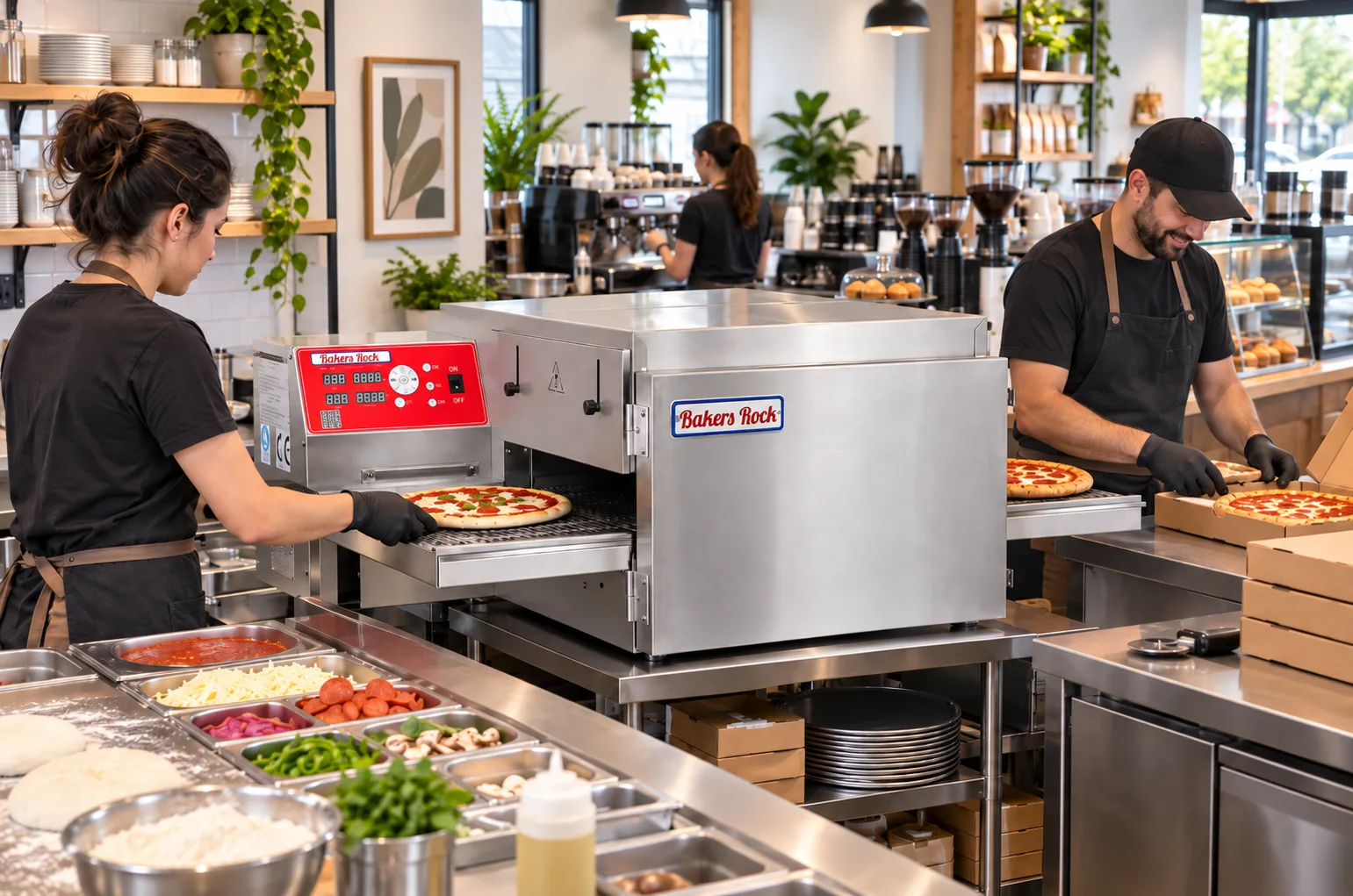
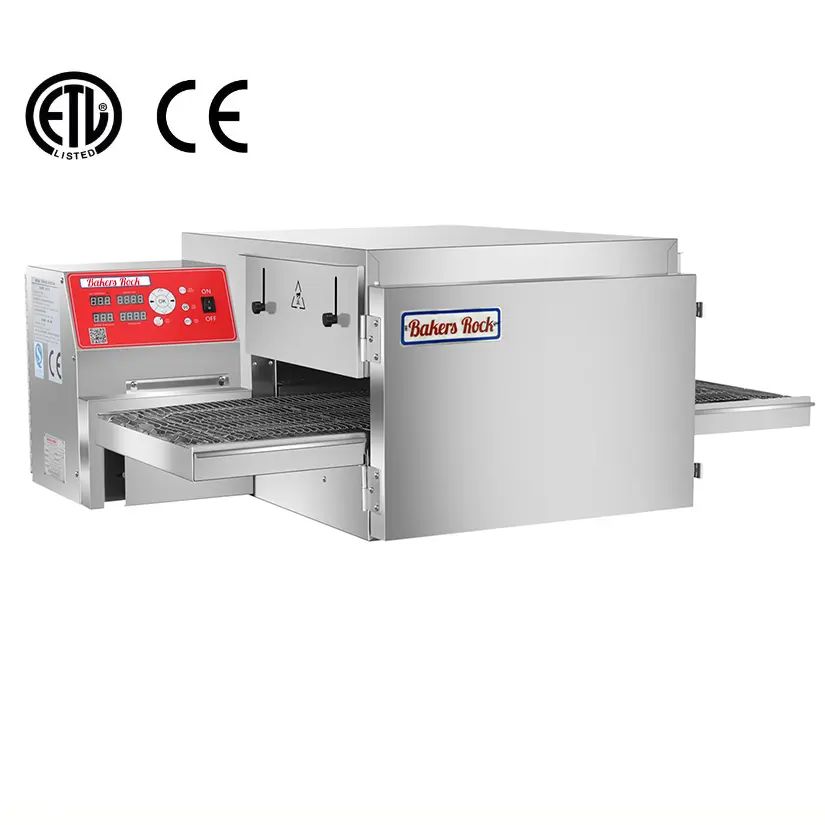
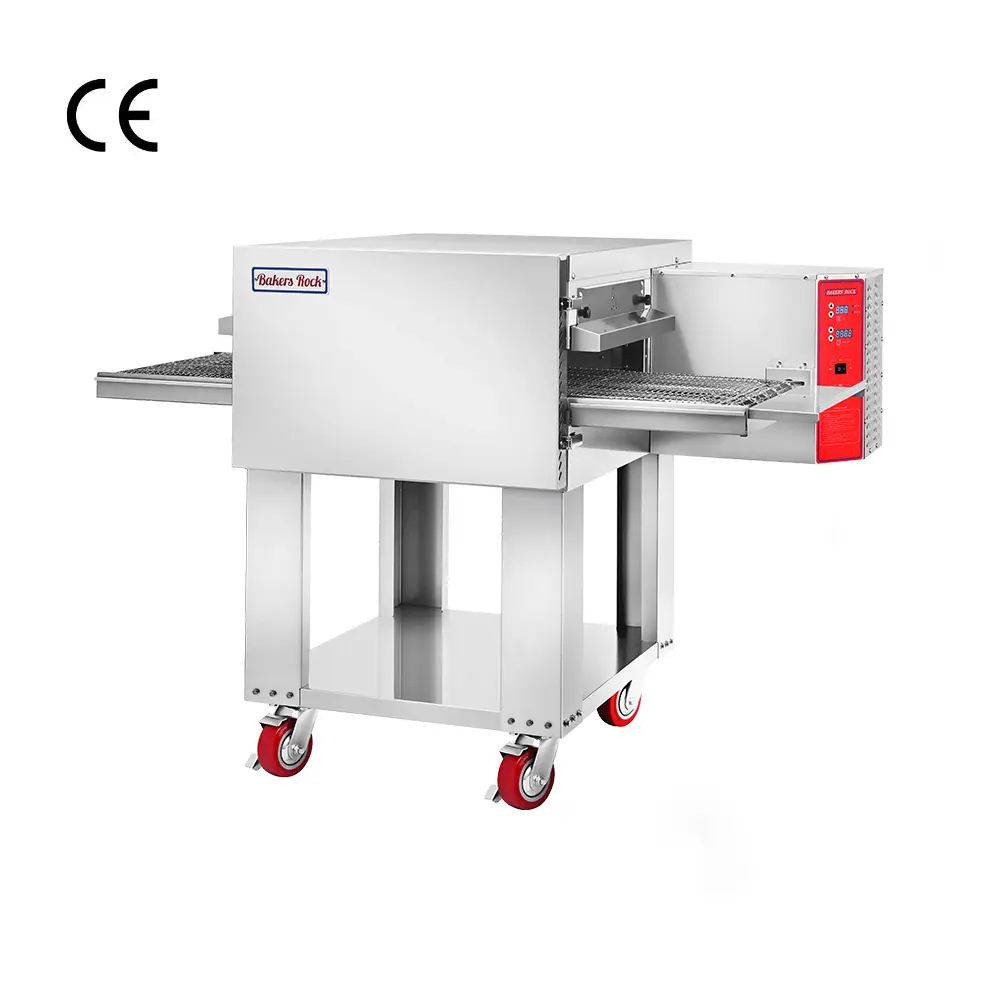
Un four à pizza à convoyeur de 40 cm (16 pouces) est à privilégier lorsque le menu est adapté à une surface de cuisson réduite et que l'activité repose sur un équipement compact. Le modèle H1624Pro possède une surface de chauffe de 40,6 x 61 cm (16 x 24 pouces), une puissance nominale de 6,8 kW et nécessite une surface au sol de 1,36 m². Bakers Rock le destine notamment aux petites pizzerias, cafés, food trucks, buffets et snacks.
Cela ne signifie pas pour autant que chaque petit restaurant doive systématiquement opter pour un four de 40 cm (16 pouces). Il est essentiel de vérifier le diamètre maximal des pizzas, le rythme de chargement réel, le nombre de pizzas nécessaires par heure et la demande future. Si le four doit fonctionner en continu à pleine capacité lors des pics d'activité, un encombrement réduit pourrait ne pas justifier le risque lié à la capacité.
Spécifications détaillées pour le Four à convoyeur de comptoir de 16 pouces Il convient de vérifier le menu et les conditions du site avant de prendre la décision d'achat finale.
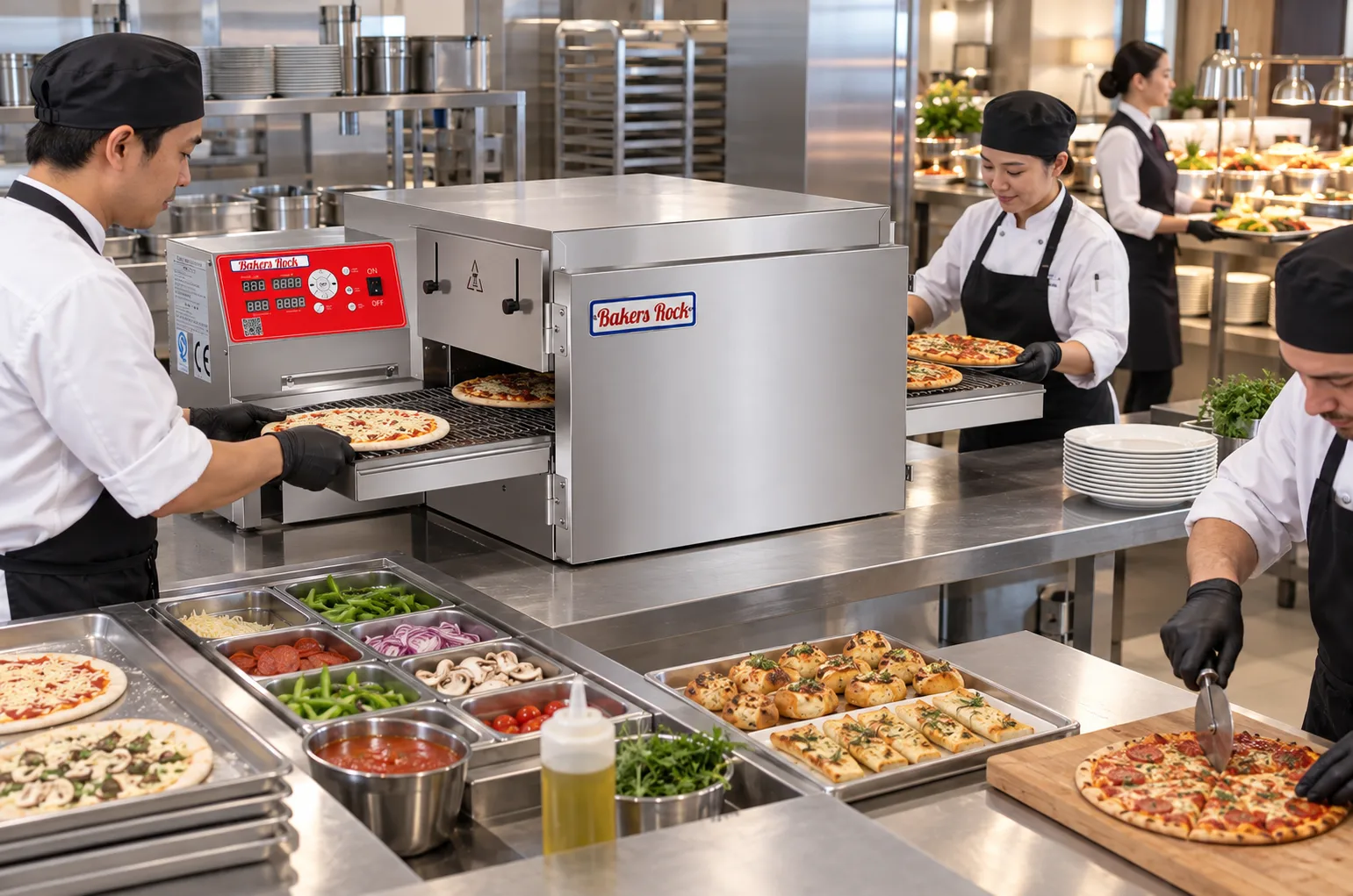
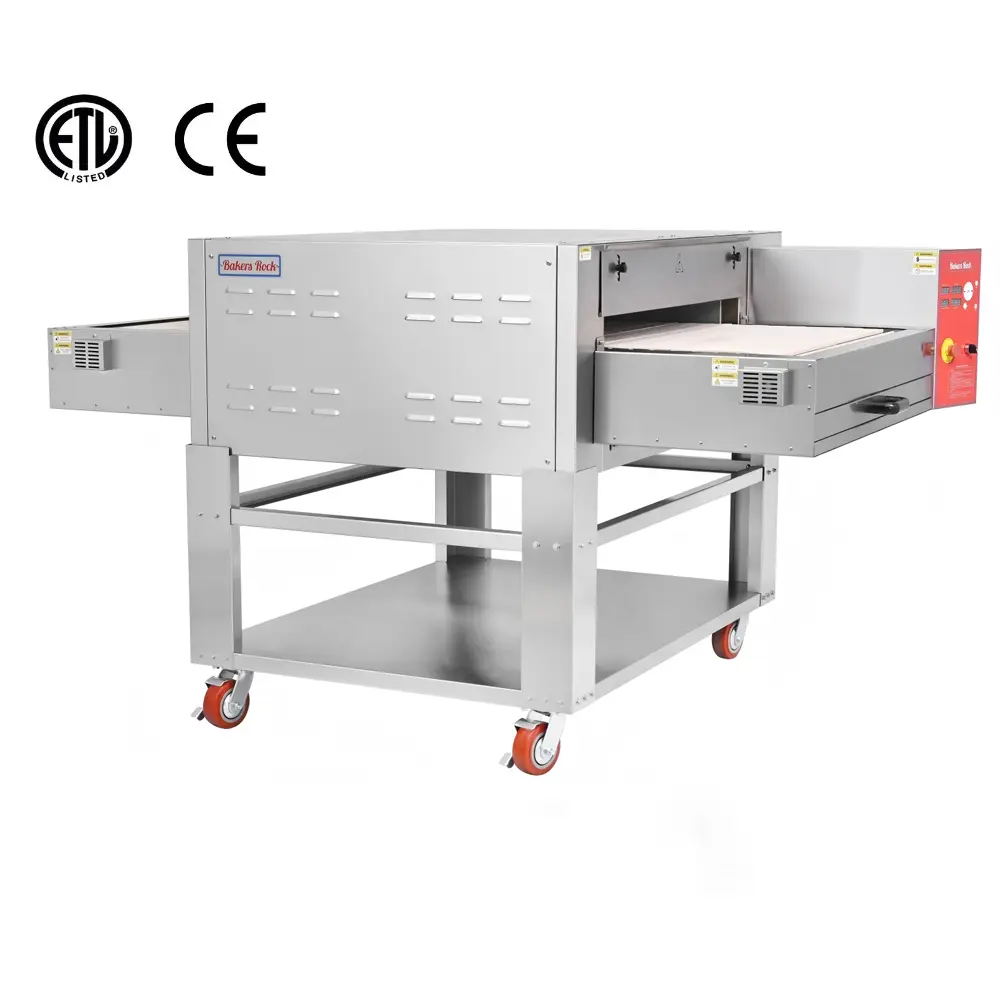
La principale raison de choisir un four à convoyeur de 50 cm (20 pouces) devrait être la flexibilité de chargement, et non l'idée que « plus grand est forcément mieux ». Le H2024 offre une surface de chauffe de 50 x 60 cm (20 x 24 pouces) et sa fiche technique précise que sa largeur permet d'y enfourner deux pizzas de 23 cm (9 pouces). Sa puissance nominale est de 10,2 kW et son encombrement au sol est de 1,7 m².
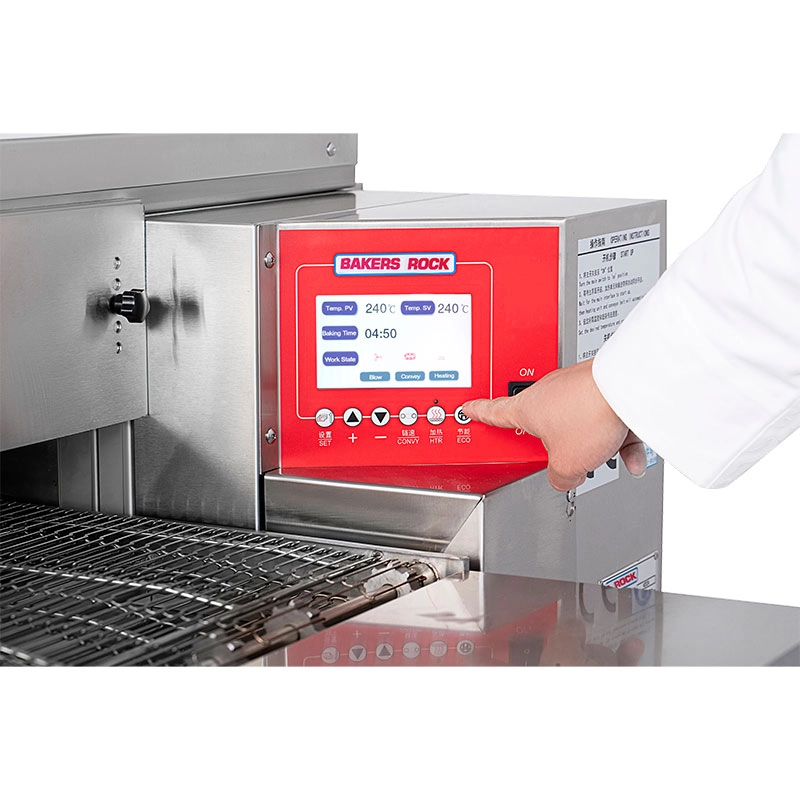
Une pizzeria ou un restaurant axé sur la livraison peut tirer profit d'un tapis roulant plus large, adapté aux dimensions et au rythme de chargement des pizzas lors des pics d'activité. En revanche, un établissement qui ne prépare généralement qu'une petite pizza à la fois n'aura que peu d'intérêt à élargir son tapis, tout en supportant des besoins accrus en énergie, en espace et en capacité de charge.
Le Four à convoyeur de comptoir de 20 pouces Elle est donc particulièrement pertinente lorsque son champ d'action plus large permet de résoudre une contrainte de production spécifique.
La plupart des erreurs de dimensionnement ne proviennent pas des spécifications du four, mais d'une description incomplète de son fonctionnement.
Un acheteur peut connaître les ventes quotidiennes de pizzas, mais pas le nombre de pizzas produites pendant les 30 ou 60 minutes les plus chargées. Un autre peut comparer les largeurs nominales des convoyeurs sans vérifier si le menu permet réellement un chargement côte à côte. Les exigences d'installation ne sont parfois prises en compte qu'après avoir déjà choisi le modèle.
Les ventes journalières moyennes peuvent masquer d'importants pics de production. Un restaurant vendant 200 pizzas par jour peut avoir des besoins en équipement très différents si la moitié de ces commandes arrivent pendant le coup de feu du soir.
La capacité des fours à pizza à convoyeur commerciaux doit donc être adaptée à la demande de pointe plutôt qu'au seul volume journalier. Selon les recommandations de Bakers Rock, le diamètre des pizzas, le temps de cuisson, la configuration du convoyeur, l'état des produits et le flux de travail aux heures de pointe sont des variables importantes pour déterminer la capacité de production utilisable.
Avant de comparer un modèle de 40 cm et un de 50 cm, notez le nombre maximal de pizzas par heure dont vous avez réellement besoin, la durée de ce pic et vérifiez si le personnel de préparation peut alimenter le tapis roulant en continu. Si ce dernier est régulièrement vide, l'achat d'un four plus grand ne résoudra peut-être pas le véritable problème.
La largeur nominale ne donne pas une image complète de la capacité. Le diamètre des pizzas influe sur le nombre de pizzas pouvant être placées sur la surface chauffée utile, tandis que le temps de cuisson détermine la vitesse à laquelle les rangées successives défilent dans la chambre de cuisson.
Un convoyeur plus large peut offrir une capacité utile nettement supérieure lorsqu'on peut charger deux produits côte à côte. En revanche, cette même augmentation de largeur peut s'avérer bien moins avantageuse si les grandes pizzas sont toujours acheminées sur une seule rangée. L'espacement des produits est également important, car un dégagement suffisant peut être nécessaire autour des plaques, des grilles ou des pizzas.
Lorsqu'un fournisseur indique le nombre de pizzas par heure, demandez-lui le diamètre des pizzas, le temps de cuisson, l'état des produits et le mode de chargement utilisés. Les chiffres de capacité, sans conditions de test comparables, ne doivent pas servir de seul critère de choix entre deux fours.
Cette différence de quatre pouces n'a d'importance que si le menu peut l'utiliser.
Commencez par le format de pizza, de plaque ou de grille le plus grand qui sera régulièrement enfourné, et non pas simplement le format le plus vendu. Assurez-vous que le convoyeur choisi offre une largeur et un dégagement suffisants pour ce produit.
Pour un menu proposant des pizzas de différents diamètres, établissez un plan de chargement standard en période de pointe. Déterminez si les pizzas seront acheminées une par une, côte à côte ou selon une autre configuration validée. Le diamètre maximal recommandé et l'espace libre requis doivent être vérifiés dans les spécifications du produit et non déduits de la largeur nominale du convoyeur.
Ceci est particulièrement important pour les acheteurs qui remplacent un four existant. Une nouvelle machine peut avoir des dimensions extérieures similaires, mais utiliser une largeur de bande transporteuse ou une géométrie de chambre différentes ; il convient donc de vérifier les plaques et le flux de travail existants avant de passer commande.
Le chargement côte à côte peut modifier la rentabilité d'un convoyeur plus large lorsque les deux produits restent dans la zone chauffée utilisable. Bakers Rock propose une configuration pour deux pizzas de 23 cm de large avec le convoyeur H2024, ce qui en fait une option pertinente pour les établissements dont le menu et le flux de production aux heures de pointe le permettent.
Cependant, la configuration physique ne garantit pas automatiquement un rendement horaire précis. Le temps de cuisson, l'état de la pâte, les garnitures, l'espacement et le flux de travail peuvent tous influencer la production réelle. Des tests continus avec des produits représentatifs sont plus utiles que le calcul de la capacité à partir des seules dimensions du tapis roulant.
Le dimensionnement correct d'un four à pizza à convoyeur de comptoir dépend de quatre facteurs : le nombre maximal de pizzas par heure, le diamètre des pizzas, le temps de cuisson requis et la disposition du chargement.
Une méthode de dimensionnement utile consiste à établir la demande de pointe, à identifier le nombre de pizzas pouvant raisonnablement occuper chaque rangée de chargement, à estimer l'intervalle de chargement requis, puis à prévoir une marge de manœuvre opérationnelle raisonnable pour les flux de commandes irréguliers et les retards de flux de travail.
Pour un calcul plus détaillé, calculateur de capacité de four à pizza à convoyeur explique comment la largeur du tapis roulant, le diamètre de la pizza, le temps de cuisson, les espaces de chargement, l'état du produit et les configurations empilées affectent le rendement théorique et pratique.
Évitez de reproduire la capacité maximale publiée par un fournisseur sans comprendre ses conditions de test. Si les pizzas du restaurant sont plus grandes, plus froides, plus épaisses ou plus garnies que le produit testé, la capacité réelle peut différer.
Un four à convoyeur adapté aux objectifs de production peut néanmoins s'avérer un mauvais achat s'il n'est pas adapté au site.
Les dimensions des fours à convoyeur de comptoir doivent être évaluées avec les plateaux d'entrée et de sortie installés. Le modèle H1624Pro mesure 1215 × 850 × 481 mm sans les plateaux et 1600 × 850 × 481 mm avec les plateaux d'extension. Le modèle H2024 mesure 1165 × 1049 × 477 mm et 1634 × 1049 × 477 mm avec les plateaux d'extension.
Cela signifie que le modèle 20 pouces n'est pas simplement une version légèrement plus large. Il est nettement plus profond et plus lourd, avec un poids net annoncé de 140 kg contre 120 kg pour le H1624Pro. Avant de confirmer l'encombrement, les acheteurs doivent tenir compte du comptoir ou du support, de l'accès pour le chargement et le déchargement, des équipements environnants, des déplacements du personnel et de l'accès pour la maintenance.
Le modèle H1624Pro affiche une puissance nominale de 7,7 kW, tandis que le H2024 affiche 10,2 kW. Les deux fiches produits mentionnent également des options 220/380 V, mais il convient de vérifier la configuration électrique exacte pour le marché de destination avant tout achat.
Ne présumez pas qu'un four à pizza à convoyeur de comptoir commercial puisse être branché sur une prise de courant standard. La tension, la phase, la fréquence, l'intensité, la capacité du circuit et les exigences d'installation locales doivent être vérifiées pour la configuration spécifique indiquée.
Ce contrôle permet d'éviter une situation coûteuse où le four sélectionné répond aux exigences de production mais nécessite des travaux électriques imprévus avant sa mise en service.
Un modèle de 40 cm (16 pouces) est idéal pour une petite pizzeria, un café, un food truck ou un établissement de restauration rapide, à condition que le menu soit adapté à la largeur de cuisson et que la demande de pointe reste compatible avec la capacité requise. Bakers Rock propose des applications pour le modèle H1624Pro.
Un modèle de 50 cm (20 pouces) mérite d'être davantage considéré lorsqu'une plus grande capacité de chargement est nécessaire, notamment pour les services de livraison et les restaurants où le convoyeur doit traiter simultanément un plus grand nombre de produits. Bakers Rock cite les pizzerias, les restaurants et les chaînes de supermarchés parmi les applications du modèle H2024.
Le type d'établissement doit être considéré comme un point de départ plutôt que comme une règle de dimensionnement. Un petit restaurant connaissant un pic d'activité lié aux livraisons peut nécessiter une capacité de production supérieure à celle d'un restaurant plus grand proposant une carte de pizzas restreinte. À l'inverse, l'achat d'un four plus large pour un café à faible volume d'activité peut engendrer des coûts d'installation supplémentaires sans pour autant résoudre un véritable problème opérationnel.
Avant de publier une demande de prix, rassemblez quatre groupes d'informations.
Premièrement, définissez le produit : diamètre, épaisseur, état initial, type de cuisson (plateau ou grille) et finition souhaitée. Deuxièmement, indiquez la demande de pointe plutôt que les moyennes journalières. Troisièmement, mesurez l’espace disponible pour l’installation, en prévoyant suffisamment de place pour les plateaux, le chargement, le déchargement et l’accès pour la maintenance. Quatrièmement, vérifiez la disponibilité de l’alimentation électrique.
Ces données permettent d'identifier rapidement les risques de dimensionnement courants. Si la taille des pizzas est inconnue, le choix du tapis roulant est impossible. Si la demande de pointe est inconnue, la capacité ne peut être adaptée avec précision. Si les services publics ne sont pas confirmés, les coûts d'installation restent incertains.
Lorsque l'on prévoit une croissance future des ventes, il convient d'inclure cette exigence dans la discussion relative à la sélection plutôt que de dimensionner uniquement en fonction de la demande moyenne actuelle.
Un fournisseur de fours commerciaux devrait être capable d'adapter les spécifications du produit au menu et au site de l'acheteur plutôt que de recommander une taille uniquement en fonction du type de restaurant.
Demandez quelles conditions de produit et de charge permettent d'atteindre la capacité indiquée. Vérifiez les dimensions exactes avec les accessoires, la tension, la phase, la fréquence, le courant requis, les limites d'espace libre et la documentation fournie avec la configuration proposée. Si le débit est essentiel, demandez des informations de fonctionnement basées sur un cahier des charges similaire à celui du menu prévu.
Bakers Rock est la marque internationale de Shanghai QiangAn FoodService Equipment Co., Ltd., fabricant de fours à pizza professionnels basé à Shanghai. Sa gamme de produits comprend des fours de comptoir et des fours à convoyeur de plus grande capacité destinés à la restauration commerciale. Avis des acheteurs Fours à pizza à convoyeur commerciaux Bakers Rock Les spécifications du produit peuvent servir de point de départ, mais le choix final doit tout de même être basé sur les conditions de fonctionnement spécifiques à l'application.
Le choix entre un four à pizza à convoyeur de comptoir de 16 pouces et un de 20 pouces devrait se résumer à quatre questions : quels produits doivent pouvoir être placés sur le convoyeur, quel débit est requis en période de pointe, de quel espace de travail est disponible et quelle alimentation électrique le site peut-il supporter ?
Un modèle de 40 cm (16 pouces) peut s'avérer pratique lorsque le menu et la demande correspondent à une surface de cuisson réduite et que l'espace ou la capacité de charge est limité. Un four de 50 cm (20 pouces) devient plus utile lorsque sa largeur de tapis plus importante offre un avantage significatif en termes de chargement et que le site peut accueillir ses exigences d'installation plus élevées.
Pour une recommandation de modèle, une demande de devis doit inclure le diamètre des pizzas, leur état, la capacité de production maximale cible, l'espace disponible, les caractéristiques électriques, le marché de destination et la croissance prévue de la demande. Ce sont les mêmes types de données que Bakers Rock utilise pour évaluer la capacité des fours à convoyeur. Les acheteurs qui disposent de ces informations peuvent Contactez Bakers Rock pour discuter de la configuration à évaluer.
C'est possible, mais la taille du restaurant à elle seule ne suffit pas. Il faut tenir compte du diamètre maximal des pizzas, du rythme de préparation, du temps de cuisson et du nombre de pizzas par heure nécessaires aux heures de pointe. Une petite pizzeria connaissant un pic d'activité important pour les livraisons peut avoir besoin d'une capacité supérieure à ce que sa superficie laisse supposer.
La principale différence réside dans la largeur de cuisson utile, mais les modèles diffèrent également en termes de puissance, d'encombrement, de poids et de flexibilité de chargement. Le H1624Pro offre une surface de cuisson de 40,6 x 61 cm (16 x 24 pouces) et une puissance nominale de 6,8 kW, tandis que le H2024 propose une surface de 50,8 x 61 cm (20 x 24 pouces) et une puissance nominale de 10,2 kW.
Cela dépend de la taille des pizzas et de l'espace nécessaire pour le chargement. Bakers Rock indique que la largeur du H2024 permet d'accueillir deux pizzas de 23 cm (9 pouces). Le rendement horaire réel dépend toutefois du temps de cuisson, de l'état des produits, de l'espacement et de l'organisation du travail.
Pas automatiquement. Des tapis roulants plus larges peuvent accroître la flexibilité de chargement, mais la capacité utile dépend aussi du diamètre des pizzas, de la vitesse du tapis, du temps de cuisson, du schéma de chargement, de l'état des produits et de l'organisation du travail en cuisine. Il convient de choisir un four plus large parce que le menu peut tirer parti de cette largeur supplémentaire, et non parce que la largeur seule garantit un débit de production précis.
Veuillez indiquer le diamètre et l'épaisseur des pizzas, leur état, le nombre maximal de pizzas par heure visé, le résultat de cuisson souhaité, l'espace disponible pour l'installation, les caractéristiques électriques, le marché de destination et la croissance prévue de la demande. Ces informations permettent au fournisseur d'adapter la configuration du four à vos besoins spécifiques, plutôt que de vous recommander un équipement basé sur une capacité générique.