Pas de dignité, devant le scélérisque c'est la haine euismod fermentum sem sempre l'is erat, a feugiat leo urna eget eros. Duis Énée Une coupe de cheveux pour rire.
Pas de dignité, devant le scélérisque c'est la haine euismod fermentum sem sempre l'is erat, a feugiat leo urna eget eros. Duis Énée Une coupe de cheveux pour rire.
 auteur
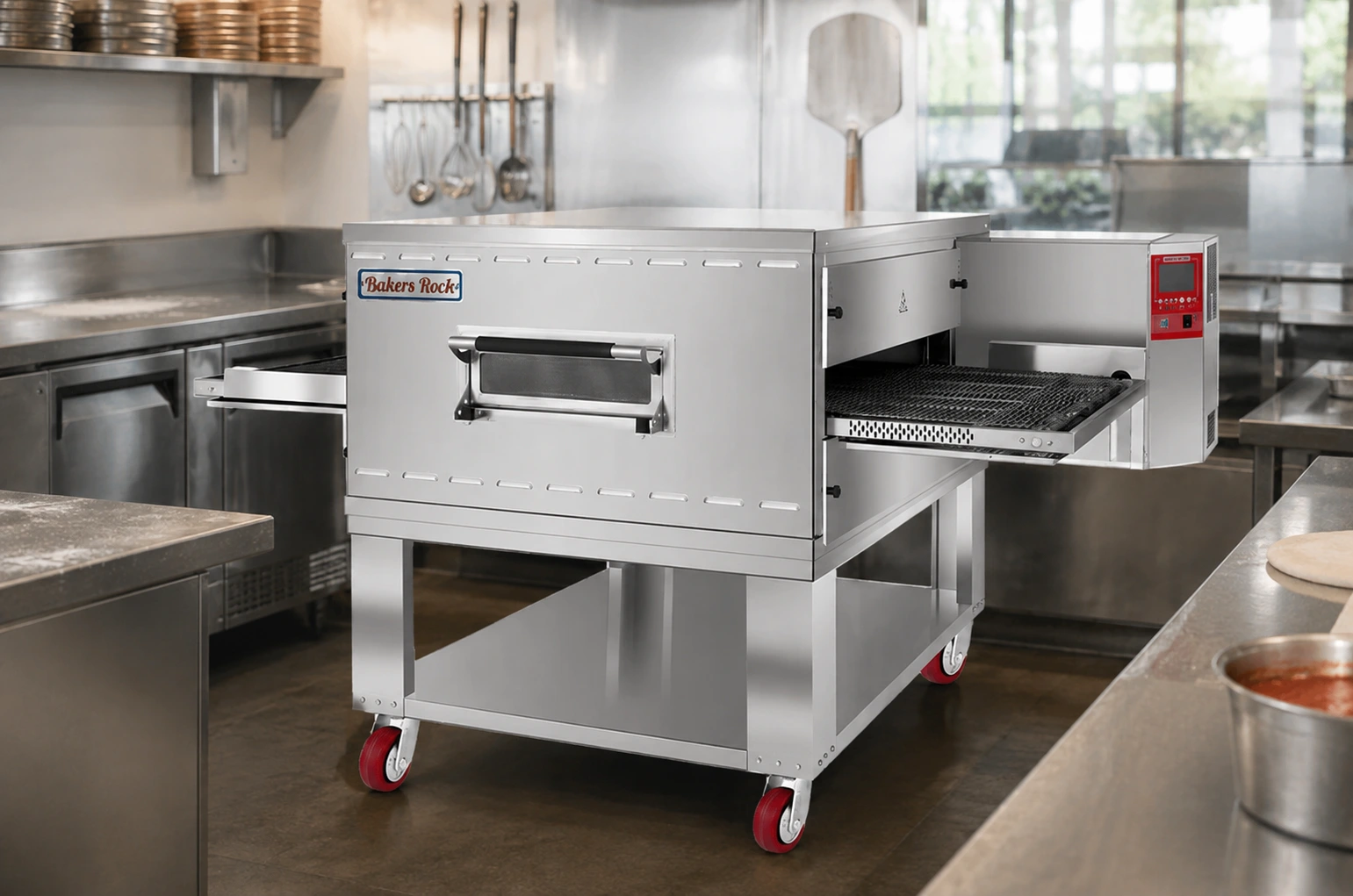
Le choix d'un four à pizza à convoyeur professionnel doit se faire en fonction des besoins réels de l'établissement, et non en fonction du modèle le plus imposant, du tapis le plus large ou du nombre maximal de pizzas par heure annoncé. La taille des pizzas, la demande aux heures de pointe, le temps de cuisson, l'état des produits, le rythme de chargement, l'espace disponible en cuisine et les équipements sont autant de facteurs qui influencent le choix du modèle de four standard adapté.
Pour les pizzerias, les cafés, les services de livraison et les restaurants, l'objectif n'est généralement pas de concevoir une largeur de convoyeur ou une longueur de chambre sur mesure. Il s'agit plutôt de comparer les modèles de fours commerciaux disponibles et de choisir la configuration capable de gérer le menu et les périodes de forte affluence sans engendrer de contraintes d'installation ou d'exploitation superflues.
Commencez par analyser le produit et le flux de travail aux heures de pointe, comparez les tailles standard disponibles, puis vérifiez que le modèle sélectionné convient à la fois à la cuisine et au rythme de production requis.
Le choix d'un four à pizza à convoyeur professionnel adapté se base d'abord sur les heures de pointe plutôt que sur la moyenne des ventes journalières. Un restaurant peut vendre un nombre raisonnable de pizzas sur toute la journée, mais se retrouver confronté à un important engorgement lors des pics d'activité du midi ou du soir.
Consignez le nombre maximal de pizzas par heure visé, le rythme de production normal, la croissance probable et la marge de capacité raisonnable. Ces données permettent d'établir une base de comparaison commune pour les modèles de fours standard.
Le produit lui-même est tout aussi important. Définissez le diamètre et l'épaisseur de la pizza, l'état de la pâte, la quantité de garniture, le type de plaque ou de grille à utiliser, la température initiale, le temps de cuisson souhaité et le résultat final acceptable. Les pizzas fraîches, réfrigérées, surgelées et celles très garnies ne doivent pas être considérées comme ayant la même capacité. La logique de production initiale demeure essentielle : l'état du produit et les exigences de fonctionnement doivent être établis avant toute comparaison de la taille du four.
Pour une première estimation, un calculateur de capacité de four à pizza à convoyeur Cela permet de prendre en compte le diamètre des pizzas, le temps de cuisson, la largeur utile du tapis roulant, le schéma de chargement et le nombre de piles avant même qu'un acheteur ne compare des modèles commerciaux spécifiques. Les prévisions de capacité actuelles de Bakers Rock mettent également l'accent sur la demande de pointe, le diamètre des pizzas, le temps de cuisson et les conditions du site, plutôt que sur les seules enseignes de restauration.
Un chiffre de capacité publié n'est utile que si les conditions sous-jacentes correspondent au menu et au fonctionnement réels du restaurant.
Un chiffre basé sur des pizzas plus petites, des garnitures plus légères, un temps de cuisson plus court ou un chargement rigoureusement contrôlé peut ne pas être reproductible avec un produit plus grand, plus froid ou plus garni. Dans la réalité, les cuisines connaissent également des temps morts de préparation, un flux de commandes irrégulier, des retards au déchargement, des changements de recettes et des produits parfois refusés. L'article original identifiait à juste titre ces facteurs comme raisons de l'écart entre la production nominale et la production utile.
Lorsque le rendement réel semble trop faible, commencez par identifier le goulot d'étranglement. Un convoyeur qui tourne constamment à vide peut indiquer un problème de préparation ou de chargement plutôt qu'une capacité de four insuffisante. Un convoyeur plein qui produit des croûtes pâles, des cœurs froids ou des garnitures irrégulières peut indiquer que le profil de cuisson sélectionné ou la capacité de four disponible ne sont pas adaptés au produit.
Cette distinction évite à un restaurant d'acheter un modèle plus grand alors que la véritable limitation se situe ailleurs dans la cuisine.
Les fours à convoyeur commerciaux doivent être comparés en fonction de leur surface de cuisson utile et de la disposition des produits, et non uniquement de leurs dimensions extérieures.
La largeur du tapis influe sur le nombre de pizzas pouvant être traitées simultanément. La durée de chauffe et le temps de convoyage déterminent le temps de cuisson des produits dans un environnement contrôlé. Ces facteurs doivent être évalués conjointement, mais l'objectif est de choisir parmi les modèles disponibles plutôt que de concevoir un tapis ou une chambre sur mesure. La relation établie dans l'article original entre la largeur utile, le temps de chauffe et la taille des produits reste valable pour le choix d'un modèle standard.
La largeur nominale du tapis roulant ne doit pas être automatiquement considérée comme la largeur utile pour le chargement des pizzas. Les plaques, les grilles, le débordement des produits, le dégagement en bordure et l'espacement entre les produits peuvent réduire la surface disponible pour un chargement pratique.
Par exemple, on ne peut supposer que deux pizzas peuvent être placées côte à côte que si le modèle et la configuration de chargement permettent l'espace nécessaire. Une comparaison pertinente devrait tenir compte du diamètre réel des pizzas du restaurant et, le cas échéant, du diamètre réel du plat ou de la grille.
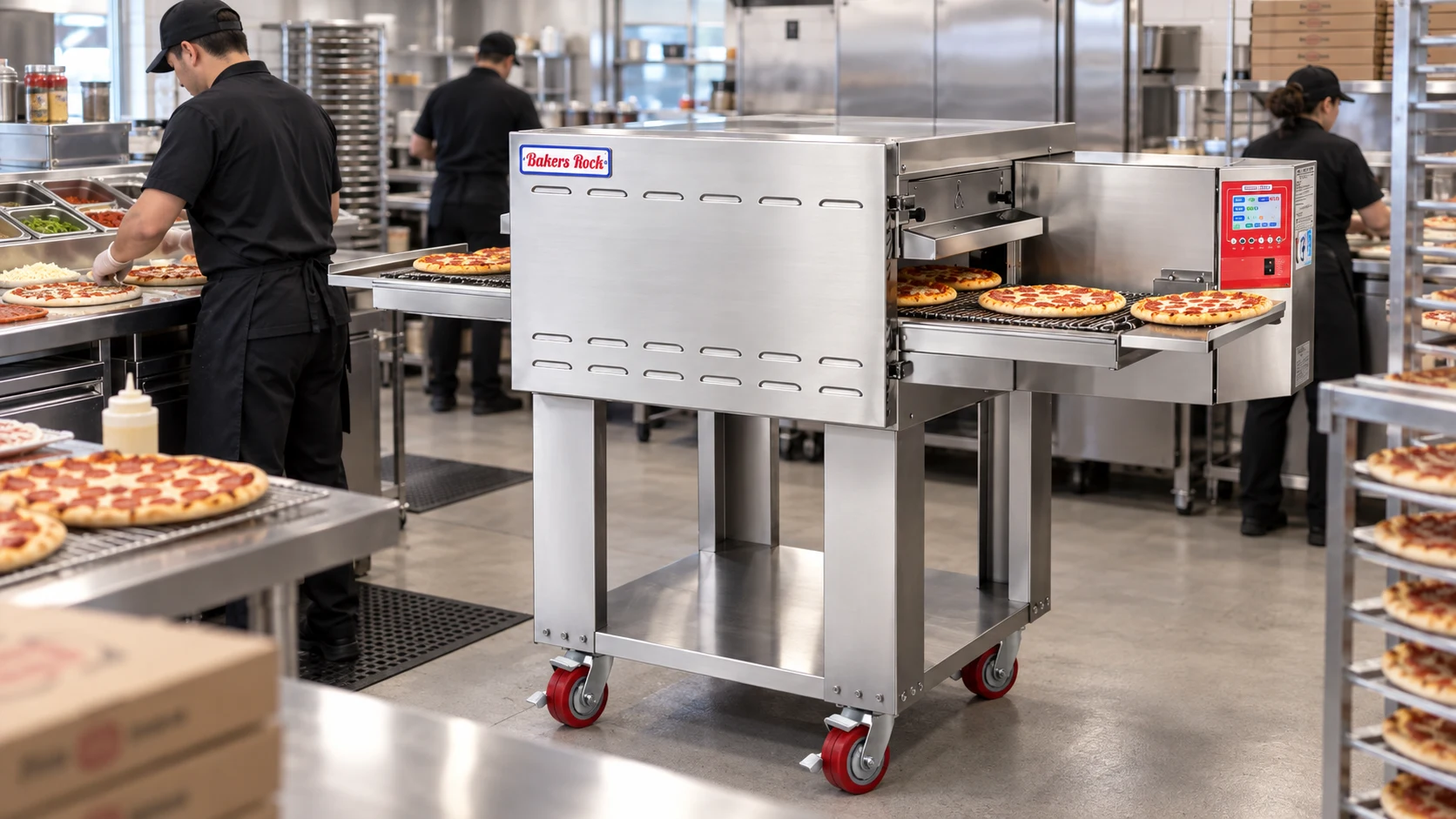
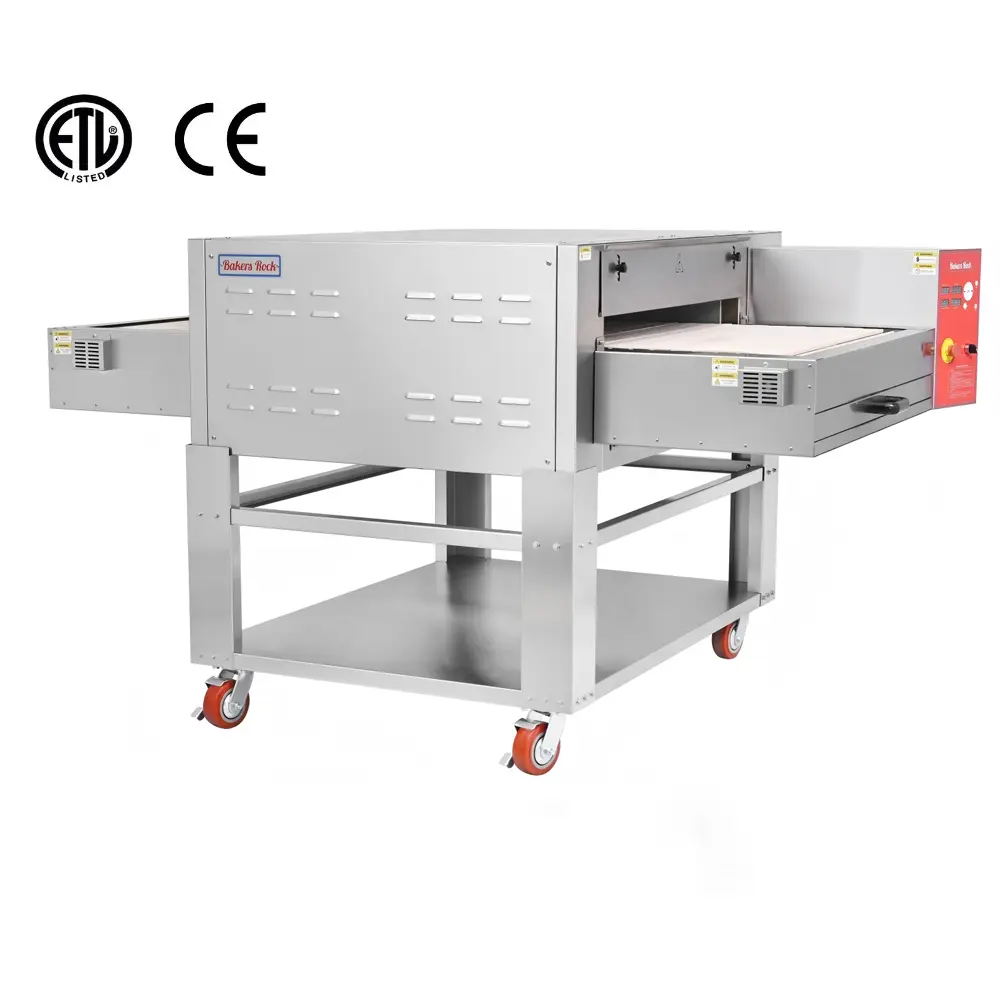
Bakers Rock's Four à convoyeur haute capacité de 32 pouces Ce modèle standard est présenté à titre d'exemple. Sa surface de chauffe annoncée est de 32 × 40 pouces, et les informations produit indiquent une utilisation pour deux pizzas de 15 pouces de large. Il convient de considérer cette information comme une référence spécifique à ce modèle et non comme une règle générale applicable à tous les fours à convoyeur de 32 pouces.
Pour les cafés et les petites pizzerias, un tapis roulant beaucoup plus large peut s'avérer peu utile si les produits sont généralement acheminés un par un. Dans ce cas, un modèle de comptoir sera plus adapté à l'espace disponible et aux besoins de production.
Une vitesse de convoyeur plus élevée réduit le temps de cuisson des pizzas. Cela n'apporte un gain de production significatif que si le produit fini répond toujours aux critères requis : couleur de la croûte, texture à cœur, taux d'humidité et finition de la garniture.
Un réglage plus rapide du convoyeur qui produit des pizzas inacceptables n'augmente pas la capacité utile du restaurant.
Lors de la comparaison des modèles existants, vérifiez les plages de temps et de température de cuisson réglables indiquées dans le menu. Différents modèles standard de fours à convection électrique Bakers Rock sont proposés, avec différentes largeurs de bande, dimensions de chambre et capacités de production, y compris des modèles de comptoir et des configurations de plus grande capacité.
Le restaurant devrait donc demander :
Ces questions sont plus utiles que de demander si le fabricant peut modifier les dimensions du four pour un projet unique.
Une fois le produit et la demande de pointe définis, l'acheteur peut comparer les configurations de comptoir, de plus grande capacité et empilables.
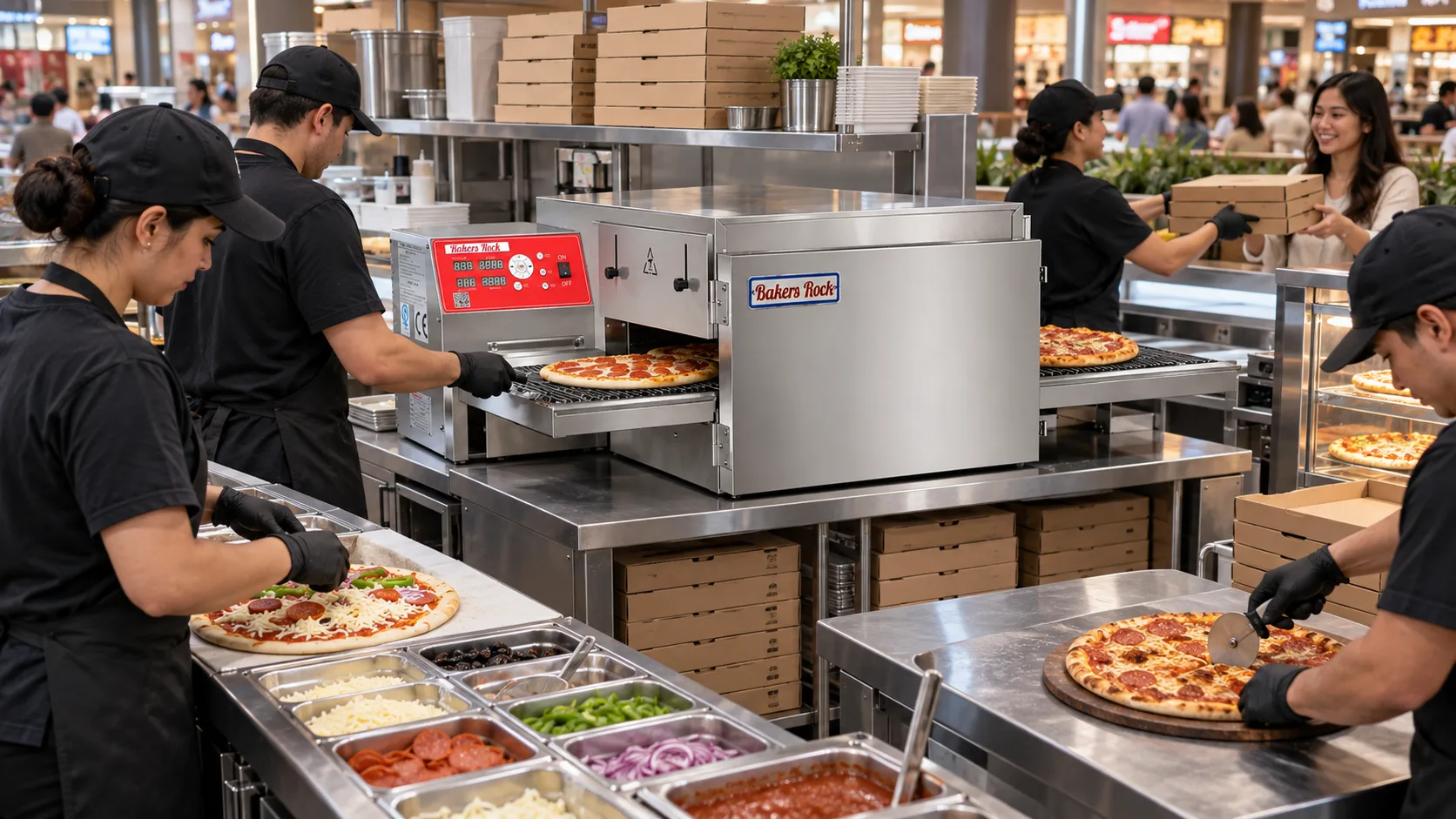
Un four à convoyeur de comptoir peut constituer un point de départ pratique pour un café, une petite pizzeria, un service de livraison, un commerce de restauration rapide ou un restaurant disposant d'un espace cuisine limité.
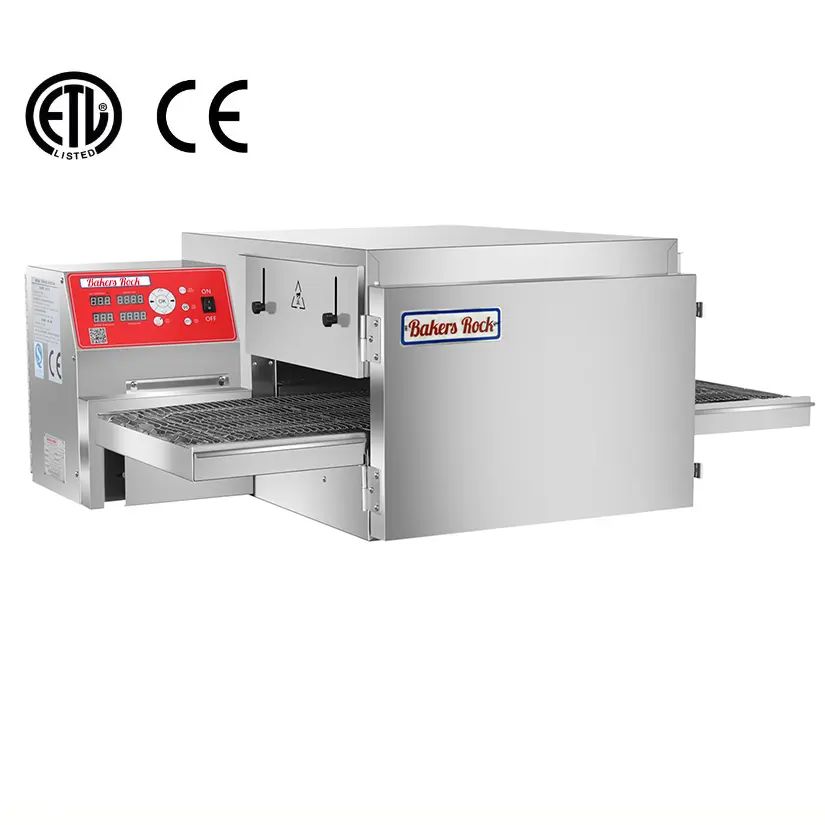
Bakers Rock propose actuellement des fours à convection électrique de comptoir de 40 et 50 cm, ainsi que des modèles plus grands. Le H1624Pro est un four à convoyeur de comptoir de 40 x 60 cm, tandis que le H2024, avec sa surface de cuisson de 50 x 60 cm, est destiné aux pizzerias à emporter, aux restaurants, aux supermarchés et aux chaînes de pizzerias.
Le choix optimal dépend toujours de la taille des pizzas, des pics de demande, des équipements et de la configuration du chargement. Il ne faut pas opter pour un four de comptoir plus grand uniquement parce qu'il offre une largeur supplémentaire.
Les opérations connaissant des pics d'activité plus importants aux heures de pointe peuvent nécessiter un four à convoyeur standard plus grand ou une configuration empilable.
Un modèle plus large permet de cuire des pizzas plus grandes ou de faciliter le chargement côte à côte lorsque les dimensions des produits le permettent. Un agencement empilable peut augmenter la capacité du four lorsque la largeur au sol est limitée, à condition que la cuisine puisse supporter la hauteur, la charge électrique, la ventilation, l'accès et la circulation du personnel.
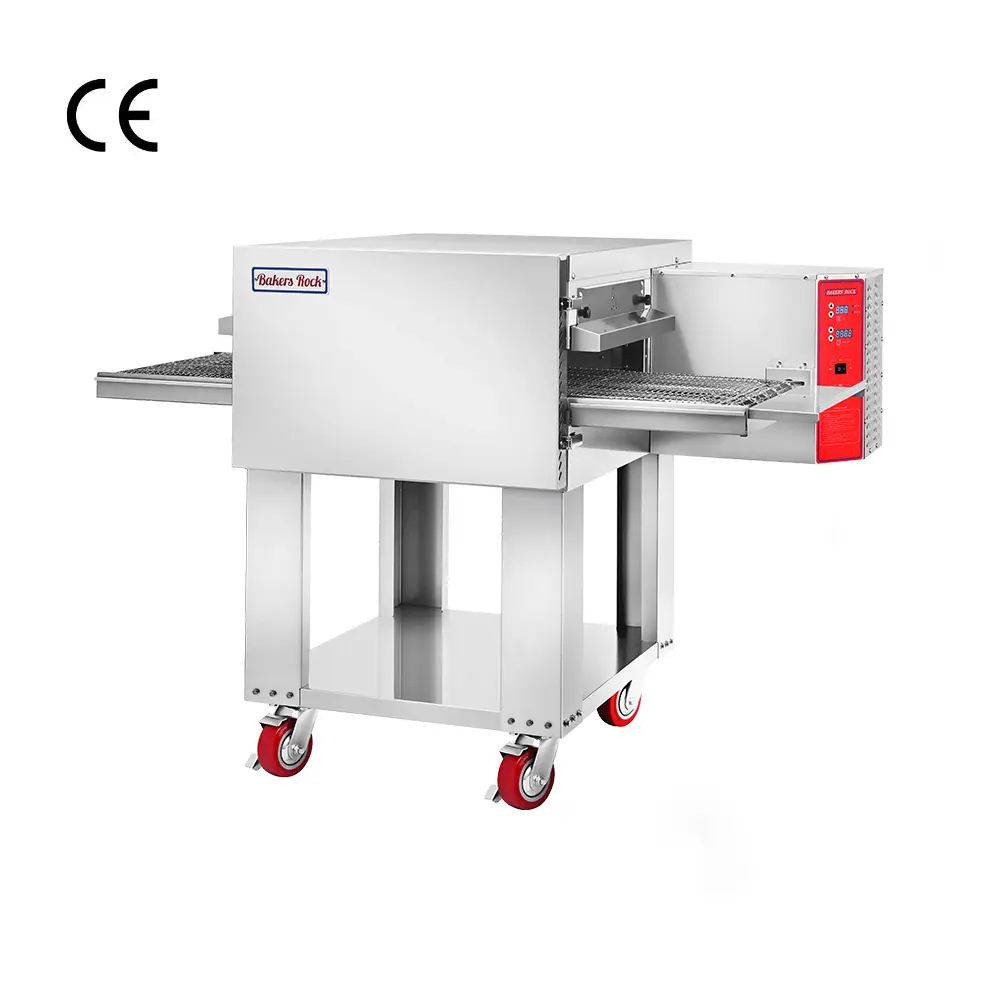
Bakers Rock's Four à convoyeur empilable de 26 pouces, par exemple, possède une zone de chauffe publiée de 26 × 40 pouces, peut accueillir deux pizzas de 12 pouces sur le tapis roulant et est proposé en configurations empilables à deux ou trois étages.
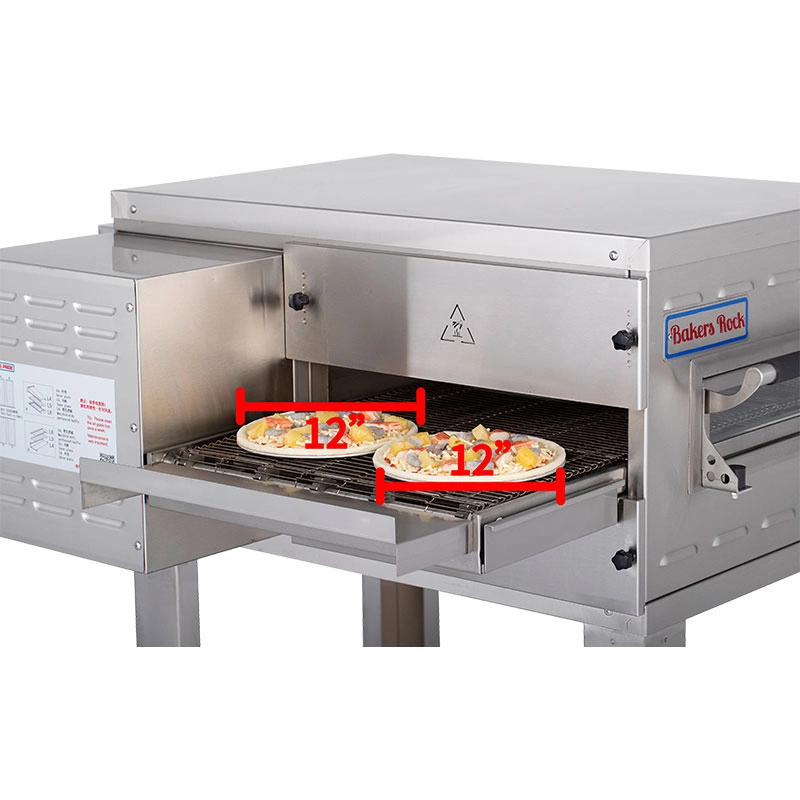
L'empilement ne doit pas être interprété comme une multiplication automatique de la production réelle d'un restaurant. La rapidité de préparation, le chargement et le déchargement, les services publics, la ventilation et la main-d'œuvre peuvent constituer des facteurs limitants. L'article original établissait déjà cette distinction importante entre la capacité théorique du four et la production réelle.
Le choix doit donc se faire parmi les configurations standard disponibles et adaptées au site, plutôt que d'ajouter de la taille ou de la complexité sans besoin opérationnel défini.
Un four à pizza à convoyeur professionnel ne convient pas simplement parce que sa surface de cuisson correspond au menu. Il doit aussi être adapté au restaurant.
Pour les équipements électriques, vérifiez la tension, la phase, la fréquence, la puissance nominale, les exigences du circuit et les exigences d'installation locales du modèle exact. Ne généralisez pas les données électriques d'un seul modèle à toute une catégorie de produits.
Comparaison des acheteurs fours à convoyeur à impact électrique Vous pouvez consulter séparément les modèles de comptoir et les modèles de plus grande capacité, puis vérifier les caractéristiques électriques du modèle exact mentionné dans le devis. Bakers Rock propose actuellement des produits de 16, 20, 18 et 32 pouces dans cette catégorie.
Pour un modèle à gaz ou GPL, vérifiez le type de combustible spécifié, les conditions d'alimentation, la ventilation et les exigences locales applicables. Bakers Rock propose également une gamme de produits à impact de gaz standard distincte, au lieu de considérer le type de combustible comme une personnalisation sur site d'un modèle électrique.
Les dimensions d'une cuisine doivent inclure plus que le simple volume du four. Mesurez les zones d'entrée et de sortie du convoyeur, les plateaux, l'espace disponible sur le plan de travail ou le support, les commandes, les panneaux d'accès, le dégagement pour le nettoyage, l'accès pour la maintenance, les portes, les voies de livraison, la hauteur de travail et les équipements environnants. Ces vérifications sur site étaient déjà essentielles dans l'article initial et restent parfaitement pertinentes pour les installations de restauration commerciale.
Si les conditions requises en matière d'alimentation électrique, de ventilation ou d'installation n'ont pas été confirmées, veuillez régler ces points avant de commander le modèle.
Tous les restaurants n'ont pas besoin d'un programme de tests de réception formel. Pour les équipements commerciaux standard, la première étape consiste généralement à sélectionner un modèle dont les spécifications publiées correspondent au produit et à la charge de travail prévue.
Toutefois, des tests de produits supplémentaires peuvent s'avérer utiles lorsque l'application est moins typique, par exemple :
Si des tests de produit sont disponibles, documentez le diamètre de la pizza, le poids du produit, l'état de la pâte, la quantité de garniture, la température initiale, le type de plaque ou de grille, le temps de cuisson cible, le mode de chargement et la finition souhaitée.
L'article initial soulignait à juste titre que la comparaison des fournisseurs devait se faire dans des conditions de production similaires. Un résultat plus rapide obtenu avec une pizza plus petite ou plus simple ne témoigne pas d'une meilleure performance pour le menu réel du client.
Pour les équipements commerciaux standard, l'objectif n'est pas de concevoir un four unique spécifiquement pour le test, mais de déterminer si l'un des modèles disponibles peut satisfaire aux exigences dans des conditions représentatives.
La réussite d'une seule pizza démontre que le four peut la cuire dans des conditions données. Elle ne prouve pas sa capacité de cuisson soutenue aux heures de pointe.
Lorsque le débit est important, le chargement en continu est plus avantageux. Notez le temps de cuisson réel, le schéma de chargement, les intervalles vides sur le convoyeur, la consistance du produit et si le résultat évolue au fur et à mesure que plusieurs pizzas passent dans le four.
Si l'objectif ne peut être atteint, déterminez d'abord si la limitation provient de la pizza, des paramètres, du flux de chargement ou de la capacité du modèle disponible. Ensuite, décidez s'il convient d'évaluer un autre modèle standard ou une autre configuration.
Le choix final doit se baser sur le four commercial précis faisant l'objet du devis.
Comparer:
Un fournisseur devrait être en mesure d'expliquer quel modèle standard est recommandé et quelles hypothèses sous-tendent cette recommandation.
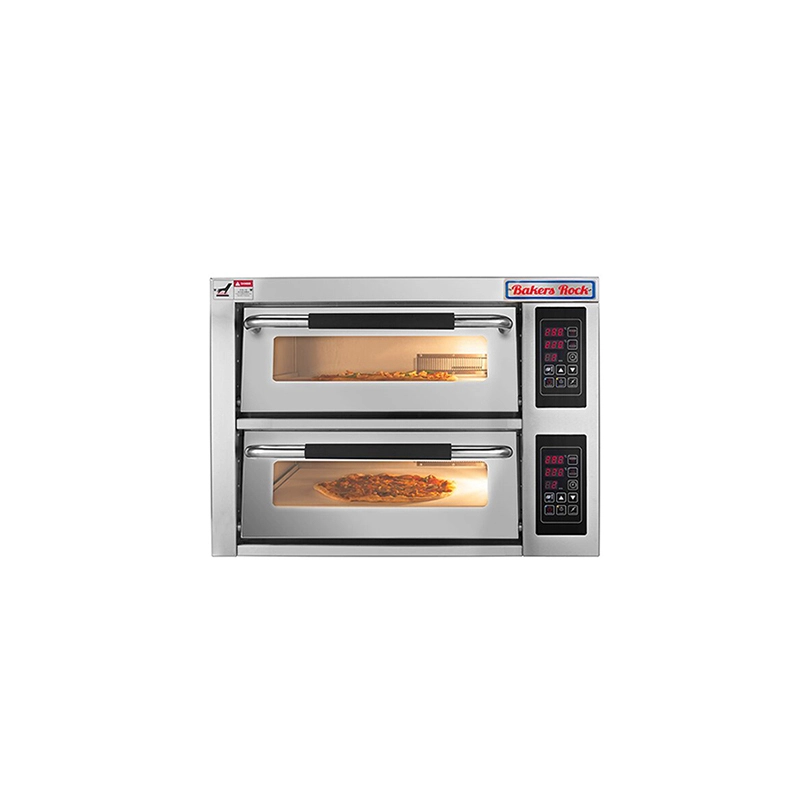
Bakers Rock propose actuellement des fours à convection électrique, à convection au gaz et à convoyeur en pierre, disponibles en plusieurs tailles standard pour répondre aux différents besoins des professionnels de la restauration. Son catalogue comprend des modèles compacts de comptoir ainsi que des configurations de plus grande capacité et empilables.
La configuration technique doit rester spécifique à chaque modèle. Si des exigences de personnalisation, telles que la personnalisation du logo, sont nécessaires, elles peuvent être confirmées séparément des dimensions standard du four et des spécifications de fonctionnement.
Une demande de renseignements utile ne nécessite pas de préciser la largeur du four ni la longueur de la chambre de cuisson. Il suffit de fournir les informations nécessaires à l'exploitation du restaurant afin qu'il puisse lui proposer un modèle disponible.
Inclure:
Pour les projets de remplacement, veuillez également fournir la plaque signalétique du four existant, les dimensions globales, les raccordements aux services publics, le goulot d'étranglement de la production actuelle et des photographies.
Cette approche est cohérente avec les éléments utiles de la demande de devis de l'article original (produit, demande de pointe, services publics, configuration, destination et quantité), mais elle déplace l'objectif de la rédaction d'une spécification d'équipement personnalisée vers la sélection d'un modèle commercial standard approprié.
Le choix d'un four à pizza à convoyeur commercial doit prendre en compte les spécificités de la pizza du restaurant, la demande aux heures de pointe, le rythme de chargement, le temps de cuisson, l'espace de la cuisine et les utilités, afin de trouver un modèle standard disponible.
Ne choisissez pas un équipement uniquement en fonction de sa puissance maximale et ne présumez pas qu'une courroie plus large soit forcément mieux adaptée. Commencez par examiner le produit, comparez sa capacité utile, vérifiez les exigences d'installation et évaluez les configurations (sur comptoir, grande capacité ou empilables) en fonction de l'utilisation réelle.
Bakers Rock propose des modèles de fours à convoyeur standard de différentes tailles commerciales et configurations énergétiques. Les acheteurs peuvent Contactez Bakers Rock avec les dimensions de la pizza, la production maximale cible, l'état du produit, les exigences de cuisson, l'espace disponible, les services publics, la destination et la quantité pour demander une recommandation de modèle approprié.
La taille idéale dépend du nombre maximal de pizzas cuites par heure, de leur diamètre, du temps de cuisson, du rythme de chargement et de l'espace disponible en cuisine. Le type de restaurant ne suffit pas à lui seul pour déterminer la taille du four. Comparez ces exigences avec la surface de cuisson utile et la plage de fonctionnement des modèles disponibles.
Un modèle de comptoir peut convenir lorsque l'espace est limité et que la taille des pizzas et la capacité de production maximale requises correspondent à la surface de cuisson utile du modèle. Bakers Rock propose actuellement des modèles de comptoir électriques à impact de 40 et 50 cm (16 et 20 pouces) pour les applications de restauration commerciale compactes.
Non. Des tapis plus larges peuvent permettre un chargement côte à côte plus utile, mais le rendement pratique dépend également du diamètre de la pizza, du temps de cuisson, de l'état du produit, des espaces de chargement, de la vitesse de préparation et du flux de déchargement.
Pas nécessairement. L'empilement augmente la capacité disponible du four, mais la production pratique d'un restaurant peut toujours être limitée par la préparation, le chargement, le déchargement, les services publics, la ventilation et le flux de travail du personnel.
Indiquez le diamètre des pizzas, leur état, le temps de cuisson souhaité, le nombre maximal de pizzas par heure, les dimensions de la cuisine, les informations relatives à l'alimentation électrique ou au gaz, la destination et la quantité. Les projets de remplacement doivent également inclure la plaque signalétique du four existant, les raccordements, le point de blocage actuel et des photos.