Pas de dignité, devant le scélérisque c'est la haine euismod fermentum sem sempre l'is erat, a feugiat leo urna eget eros. Duis Énée Une coupe de cheveux pour rire.
Pas de dignité, devant le scélérisque c'est la haine euismod fermentum sem sempre l'is erat, a feugiat leo urna eget eros. Duis Énée Une coupe de cheveux pour rire.
 auteur
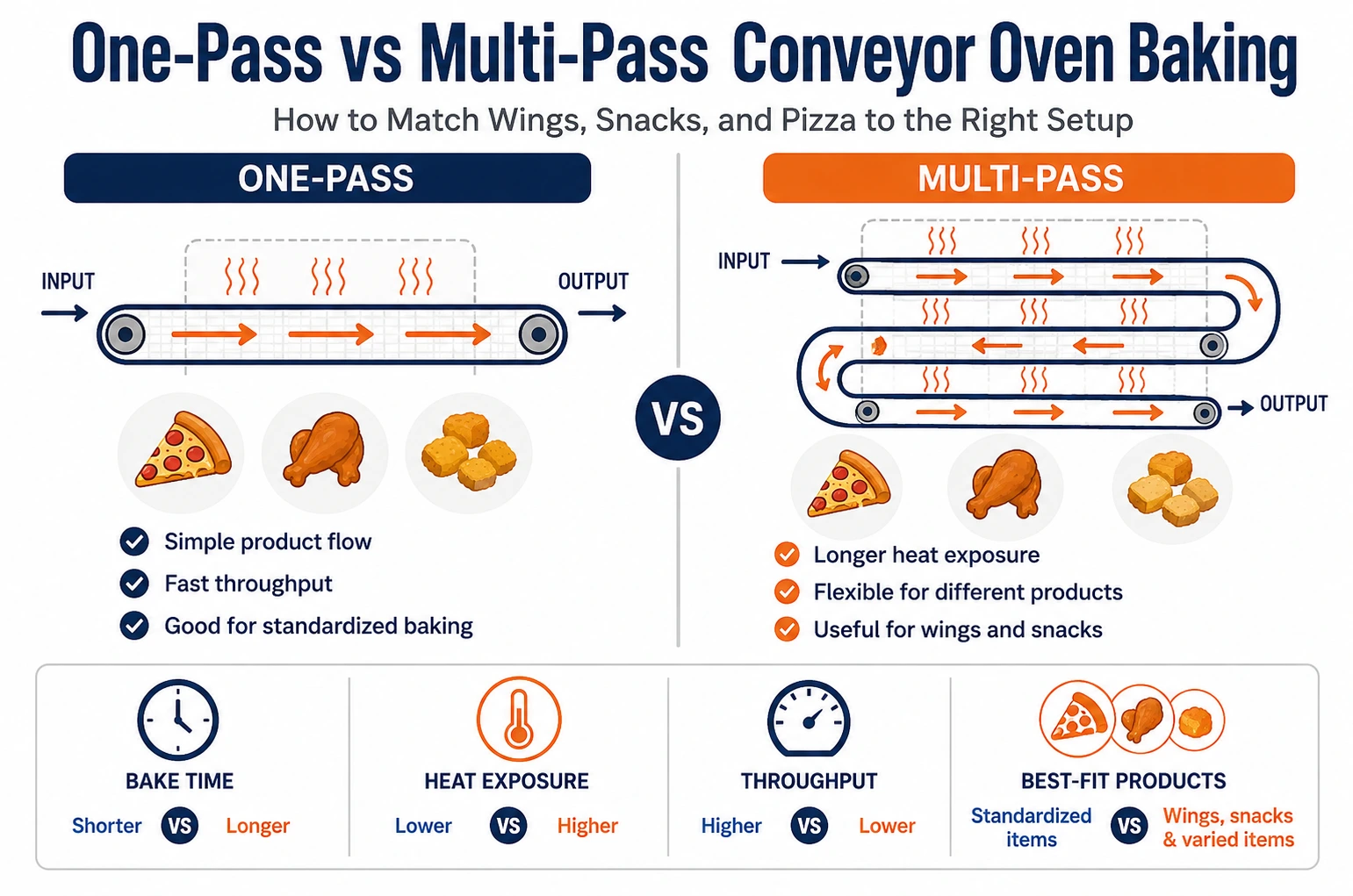
Choosing between one-pass and multi-pass conveyor oven baking is a process decision, not simply a choice between two equipment labels. The right setup depends on the product, target bake time, belt speed, usable heating length, throughput, and site conditions. A configuration that works for pizza may not produce the same result for chicken wings or snacks.
For commercial kitchens, central kitchens, and foodservice production lines, the key question is how each product moves through the heating zone and whether the selected conveyor oven can deliver repeatable results at the required volume.
A one-pass conveyor oven normally carries the product through the heating chamber once before discharge. The effective baking time is controlled by factors such as belt speed, heating-zone length, temperature, airflow, product spacing, and loading pattern.
A multi-pass arrangement exposes the product to additional heating travel. This may be achieved through a return route, a loop, a vertical arrangement, or another conveyor configuration. “1.5-pass” can describe a partial return or a specific product path, but the term is not universal. Each supplier should explain exactly how the pass count is measured.
For this reason, pass count should not be compared without reviewing the equipment drawing and operating assumptions. Two ovens described as multi-pass may have different usable heating lengths, belt paths, temperature zones, and maintenance requirements.
Before purchasing, request:
Additional passes can provide more heat exposure, but more heat exposure does not automatically produce better food. The result depends on product thickness, moisture, topping load, surface area, and the required finish.
For example, a thicker food product may need additional residence time to reach the target internal condition. A delicate snack may instead require controlled surface heating to avoid excessive drying. A pizza with a heavy topping load may need a different balance between top heat, bottom heat, and belt speed.
The practical comparison is therefore not “one pass versus more passes.” It is whether the complete heating path delivers the required result without creating excessive browning, drying, scorching, or unnecessary production complexity.
One-pass baking can be suitable when a pizza menu is relatively standardized and the product can reach its target condition within the available heating length. The decision should consider pizza diameter, crust thickness, dough weight, topping load, pan or screen use, and the required bake time.
A one-pass setup may fit a restaurant that needs straightforward operation, quick product flow, and consistent production during peak periods. It may be less suitable when the menu includes products with very different thicknesses or when the site cannot provide enough heating length for the required bake profile.
A supplier evaluation should include the exact test product and operating assumptions:
A general “pizza capacity” statement is not enough for a purchasing decision. The same oven may produce different results when the crust, toppings, or loading pattern changes.
Chicken wings and snacks often present different process requirements from pizza. Wings may require attention to internal doneness, surface color, moisture retention, and product spacing. Snacks may require a particular level of crispness, browning, or moisture reduction.
Different food products require different heating strategies. Pizza, chicken wings, and snacks should be tested with the actual recipe, loading pattern, belt speed, and target bake conditions.
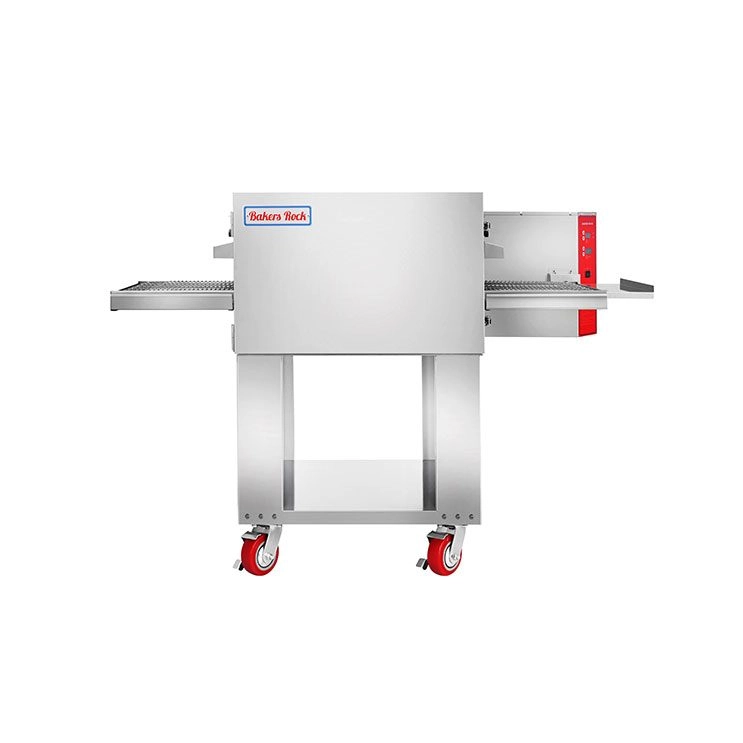
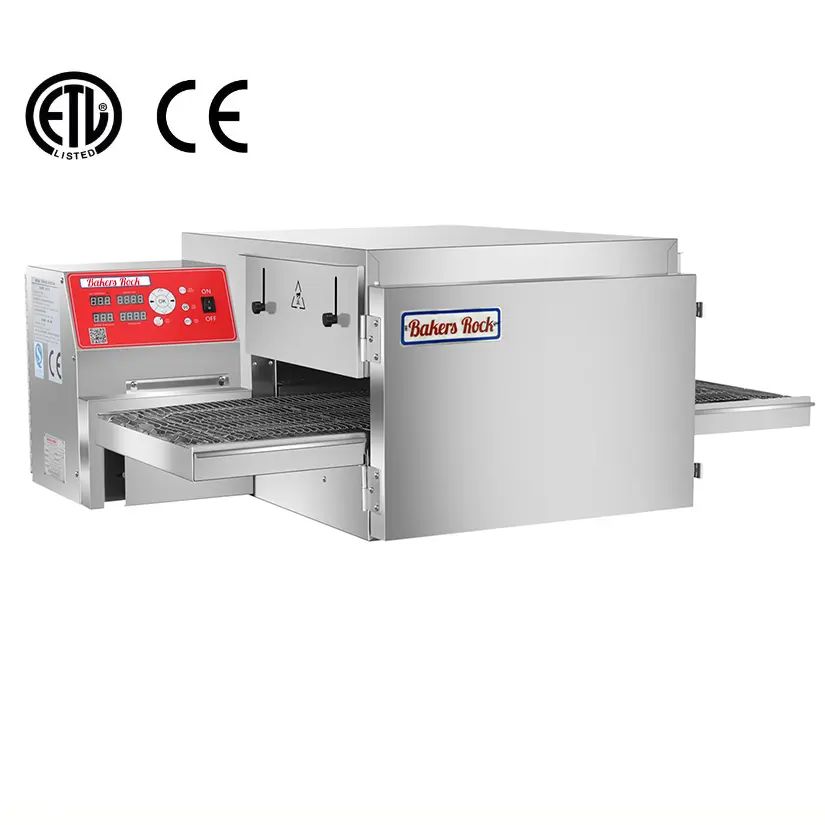
The Bakers Rock G2028 uses hot air impingement technology and adjustable baking controls, allowing operators to evaluate suitable settings for different menu items.
The Bakers Rock solution pages publicly show application examples for pizza, chicken wings, and vegetables, including one-pass and 1.5-pass settings. These examples demonstrate why food type matters, but they should not be treated as universal settings for every oven or recipe. The actual result depends on the selected model, product dimensions, loading pattern, and operating conditions.
A repeated pass may be considered when a product needs more residence time or a different heating sequence. It may be unsuitable when the additional exposure causes surface drying, excessive browning, or slower line flow. Sample testing is the safest way to determine whether the configuration fits the product.
Pass count is only one part of a conveyor oven specification. Effective heating length may matter more than the label because it determines how long the product remains exposed to heat at a given belt speed.
The evaluation should compare:
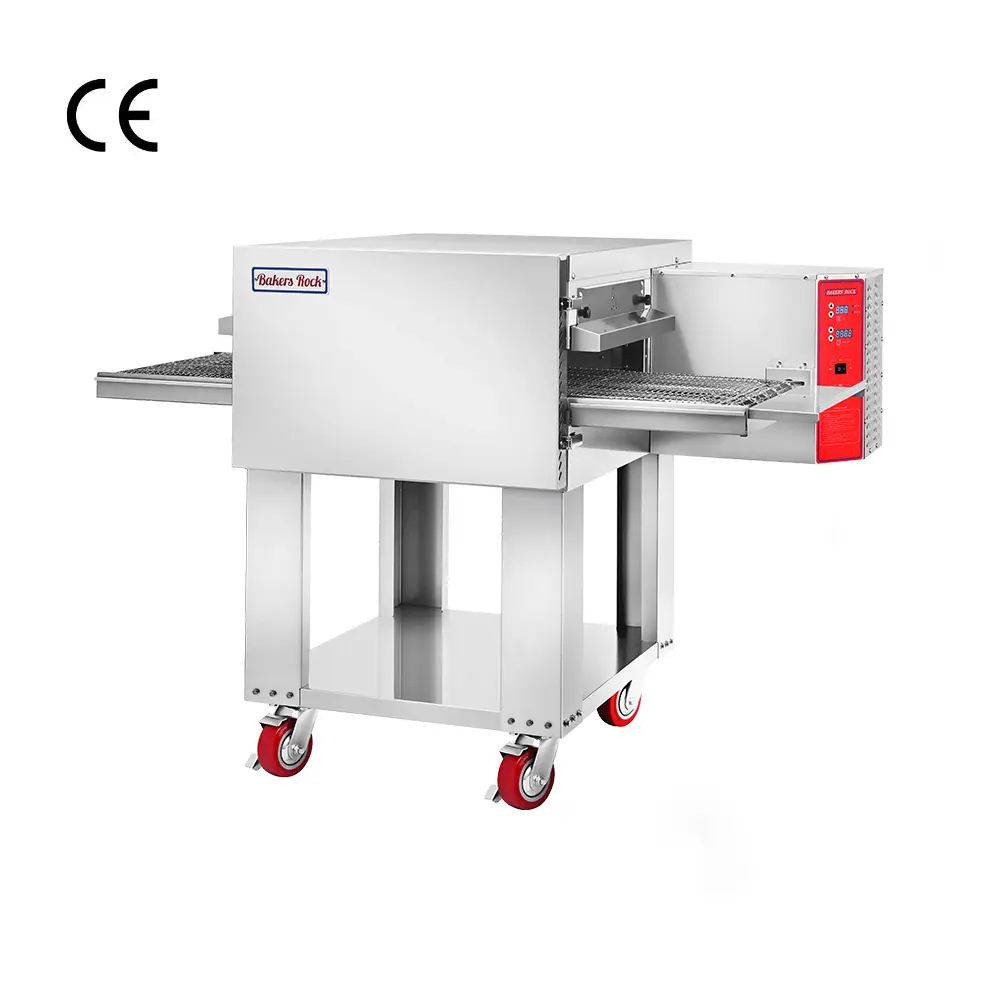
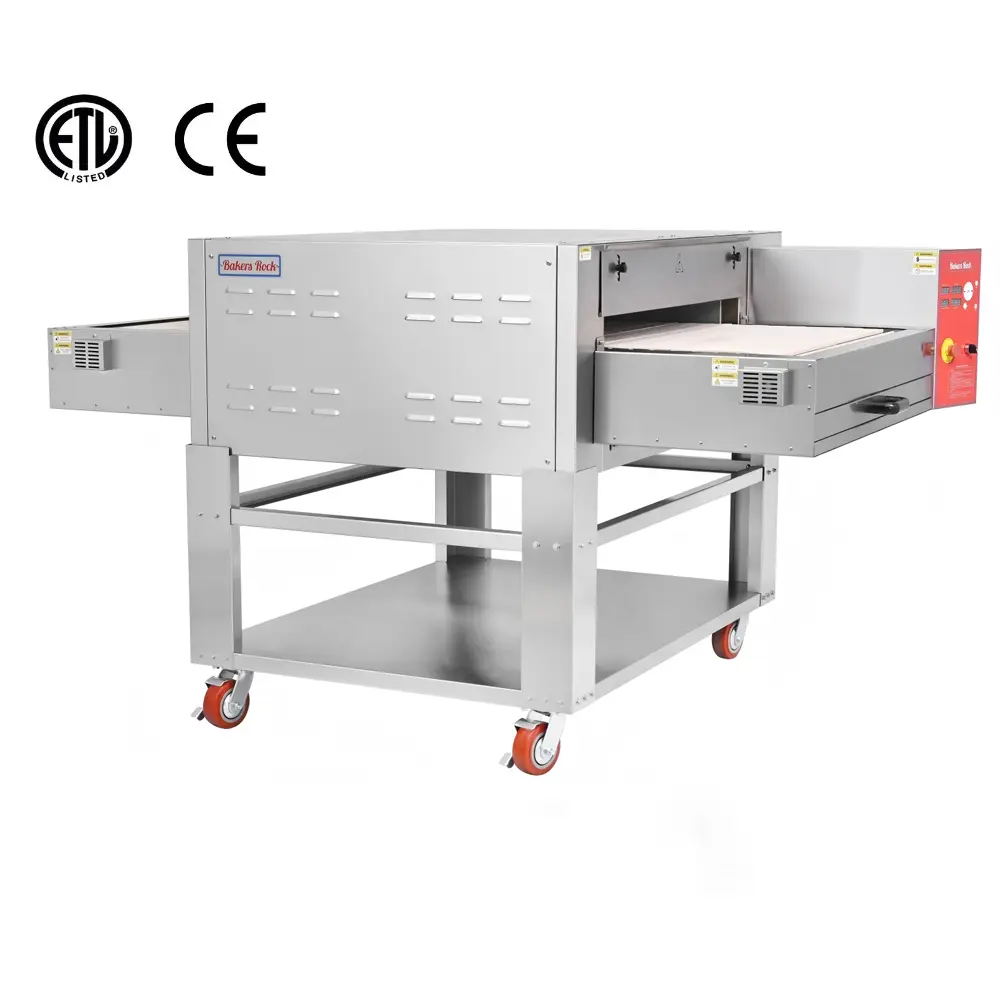
A longer route may support a slower belt speed, but it can also increase equipment footprint and service complexity. A compact one-pass oven may be easier to operate and maintain, while a multi-pass design may be considered where floor space, product residence time, or continuous production requirements justify the added structure.
Use a conveyor oven temperature and belt-speed guide when developing a repeatable test process, but verify every setting against the selected model and product.
A test matrix helps purchasing teams compare suppliers using the same evidence. It also shows whether one oven can support a mixed menu without frequent manual adjustments.
| Produit | Test information to record | Result to evaluate |
|---|---|---|
| Pizza | Size, dough weight, toppings, temperature, belt speed, pass count | Crust, topping color, bottom condition, bake consistency |
| Chicken wings | Piece size, load pattern, temperature, belt speed, pass count | Internal condition, surface color, moisture, uniformity |
| Snacks | Product shape, weight, spacing, temperature, belt speed, pass count | Crispness, browning, moisture, product damage |
The matrix should include both successful and unsuccessful trials. A supplier that documents only the preferred result may not provide enough information for production planning. Ask how changes in product load, belt speed, and temperature affect the outcome.
A restaurant usually prioritizes peak-hour output, simple controls, quick product changeover, and easy cleaning. A central kitchen may place greater emphasis on repeatability, batch planning, and standard operating procedures. A food factory may require continuous operation, documented process control, and integration with upstream and downstream equipment.
A complex multi-pass structure may suit a continuous production line, but it may not be appropriate for a small kitchen with limited space or frequent menu changes. A one-pass arrangement may suit a standardized product, but it may require additional testing when several product types share the same line.
The selection should reflect the actual operating environment rather than a general assumption that more passes provide greater value.
Pass configuration affects more than baking performance. It can influence equipment height, conveyor access, cleaning time, inspection points, and the number of components that require maintenance.
Site checks should cover:
For multi-product operations, cleaning procedures between recipes should also be documented. A configuration that produces good test results but is difficult to clean or service may create avoidable operating costs.
An RFQ should require the supplier to state how the recommended configuration was tested. Useful information includes:
The request should distinguish between tested data and engineering estimates. Terms such as “high capacity,” “multi-purpose,” or “suitable for snacks” should be supported by clear assumptions.
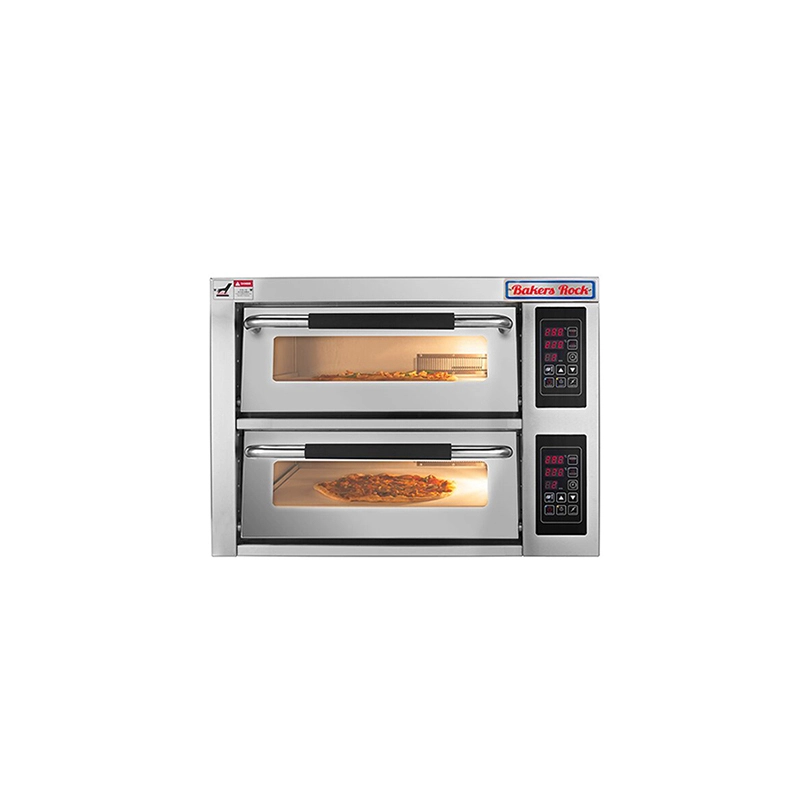
Bakers Rock provides commercial conveyor pizza ovens across its published product range. The correct model and configuration still depend on the application details supplied for each project.
Before approval, confirm whether the quotation includes operating instructions, cleaning procedures, spare-parts information, troubleshooting guidance, training, and after-sales communication.
For a multi-location rollout, consistent documentation can simplify staff training and maintenance. Warranty terms, exclusions, certification scope, delivery conditions, and service responsibilities should be confirmed for the specific model rather than assumed from a general product category.
Bakers Rock publishes electric, gas/LPG, and stone conveyor oven categories for commercial foodservice applications. Its solution content includes examples for American-style pizza, chicken wings, and vegetables, with pass settings shown for particular applications.
The company behind the brand, Shanghai QiangAn FoodService Equipment Co., Ltd., was established in 2001. Published company information also describes pre-shipment inspection, product inspection reports, selected spare parts supplied with equipment, and online voice or video after-sales guidance.
These points can support an initial supplier discussion, but the final evaluation should remain model-specific. Product dimensions, pass configuration, test conditions, certification scope, warranty terms, and delivery arrangements should be confirmed in the quotation.
For sites comparing electrical infrastructure and fuel options, review the available electric conveyor ovens and gas and LPG conveyor ovens before selecting a configuration.
The right conveyor oven setup is determined by the product, target output, effective heating length, belt speed, site conditions, cleaning requirements, and supplier test data—not by the number of passes alone.
A practical purchasing process should begin with representative samples and a clear test matrix. Provide product dimensions, weights, loading patterns, target bake time, utility conditions, layout information, and expected output. Bakers Rock can then evaluate the relevant equipment category and project requirements. To continue the discussion, request a conveyor oven quotation with the application details and test information available.
A one-pass oven carries the product through the heating zone once. A multi-pass configuration gives the product additional conveyor travel or heat exposure. The exact meaning should be confirmed with the supplier’s equipment drawing.
It may be suitable when pizza size, topping load, bake time, belt speed, and heating length are compatible. Sample testing is required before applying the same setting to every recipe.
The suitable configuration depends on wing size, loading pattern, target internal condition, surface color, and moisture requirements. A supplier should provide test conditions rather than relying on a generic product description.
A single oven may handle multiple products when temperature, belt speed, pass configuration, cleaning, and changeover requirements are compatible. Each product should be tested separately.
Not automatically. Consistency depends on the complete heating system, product preparation, loading pattern, belt speed, temperature control, and operating procedures.