Nullam dignissim, ante scelerisque adalah euismod fermentum odio sem semper itu erat, sebuah feugiat leo urna eget eros. Duis Aenean risiko imperdiet.
Nullam dignissim, ante scelerisque adalah euismod fermentum odio sem semper itu erat, sebuah feugiat leo urna eget eros. Duis Aenean risiko imperdiet.
 pengarang
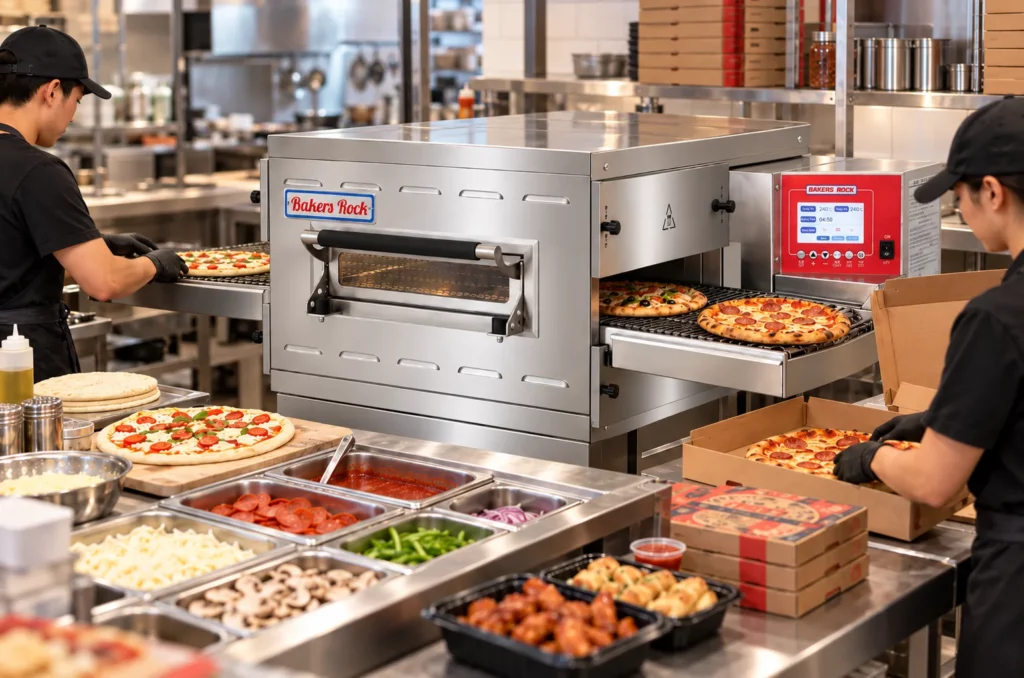
The delivery first kitchen is restricted in four ways simultaneously: it should fit into a small footprint, handle a spike in demand, cater to an extensive menu, and still be operable with very few staff on hand. And that is why it does not matter “What commercial conveyor oven is the best? ” What actually matters is what oven design will provide sufficient throughput for this particular store without interfering with preparations, packaging, and dispatch.
For pizza chains and distributors serving Europe, North America, the Middle East, and Southeast Asia, a repeatable selection method is more valuable than a generic capacity claim. Use footprint, throughput, and menu mix as the first screen, then confirm utilities, workflow, and rollout support.
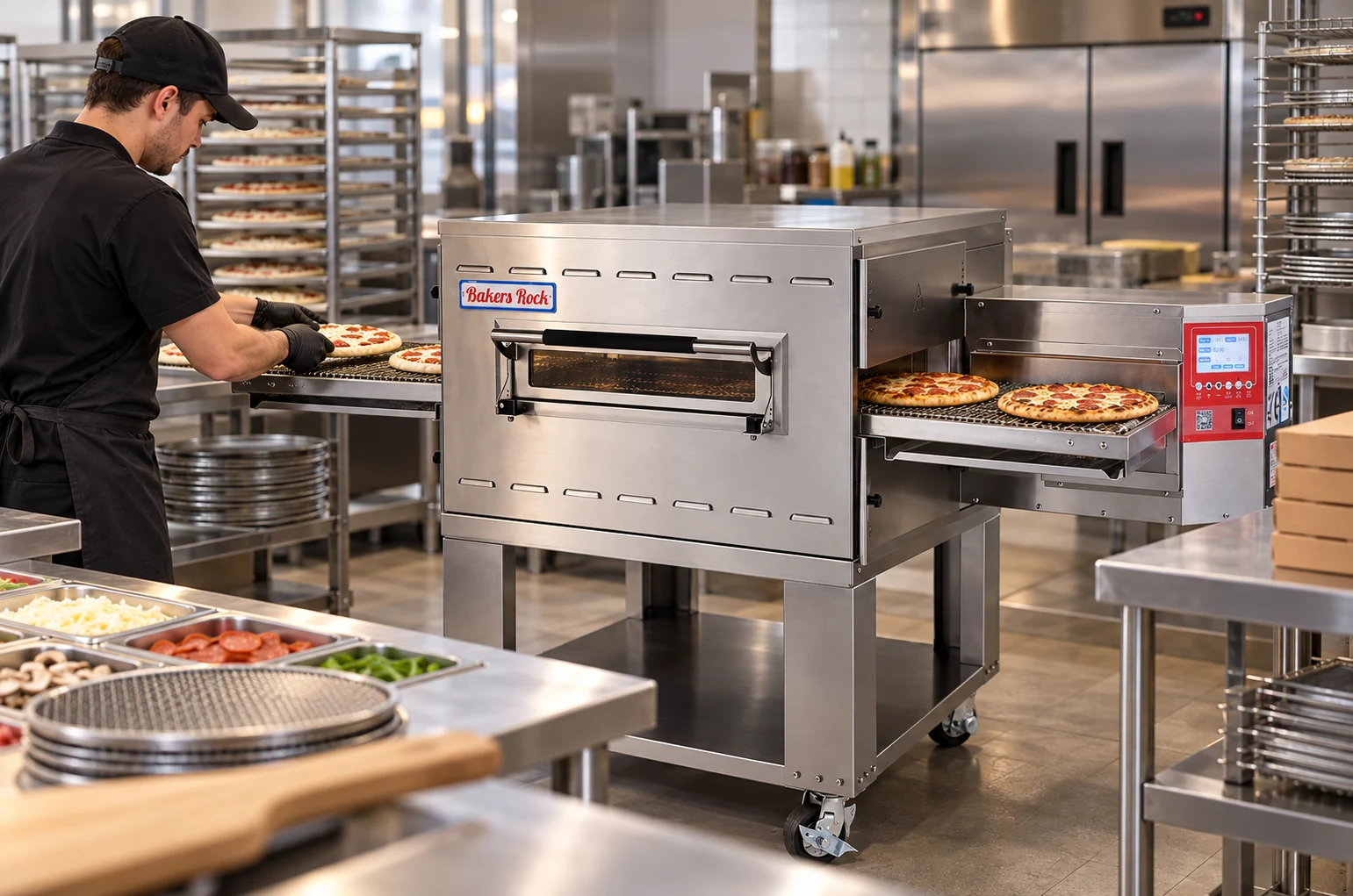
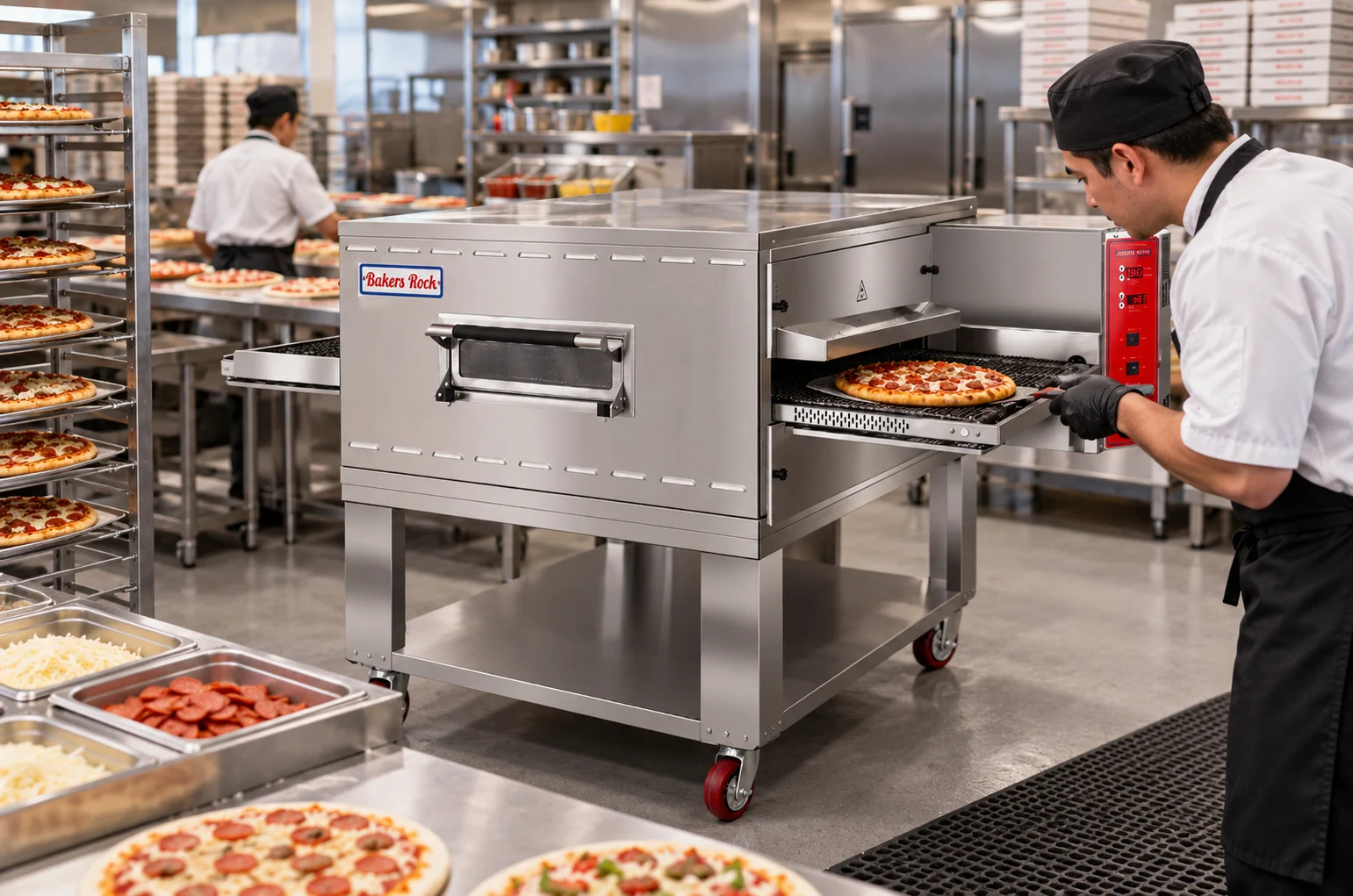
Measure more than the oven cabinet. A delivery kitchen needs an equipment envelope that includes the loading side, discharge side, extension trays, service access, ventilation or flue requirements where applicable, and a safe cleaning position. The usable footprint is the space that remains after the oven is installed and the team can still move a pizza from make line to bake line to packing bench.
Map the complete route on the floor before comparing models. Mark refrigeration doors, ingredient reach zones, shelving, hand-wash access, packaging storage, and the courier hand-off. A compact countertop unit can be a strong fit when it protects the make-and-pack flow; a wider oven may be better when multiple pizzas must enter side by side. Stacking can increase output vertically, but only if ceiling clearance, loading height, heat management, and service access are acceptable at the site.
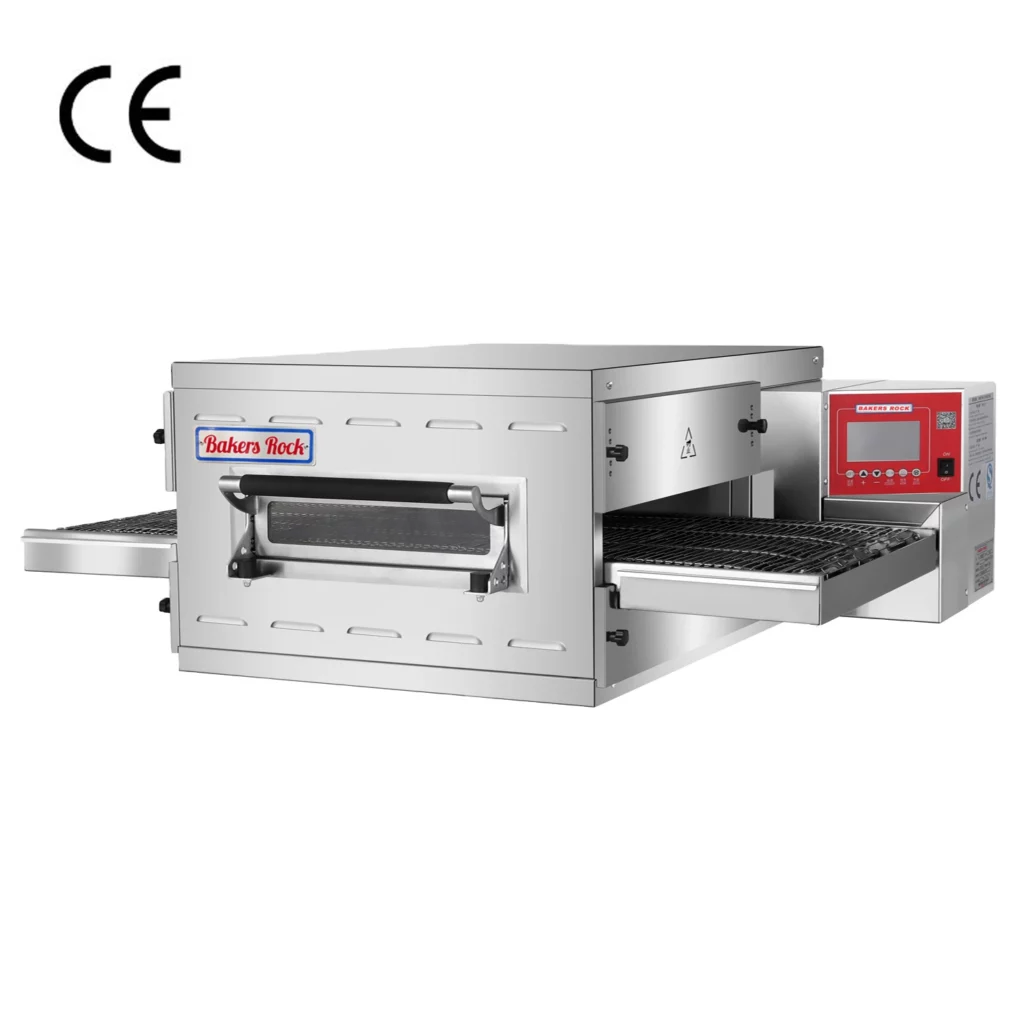
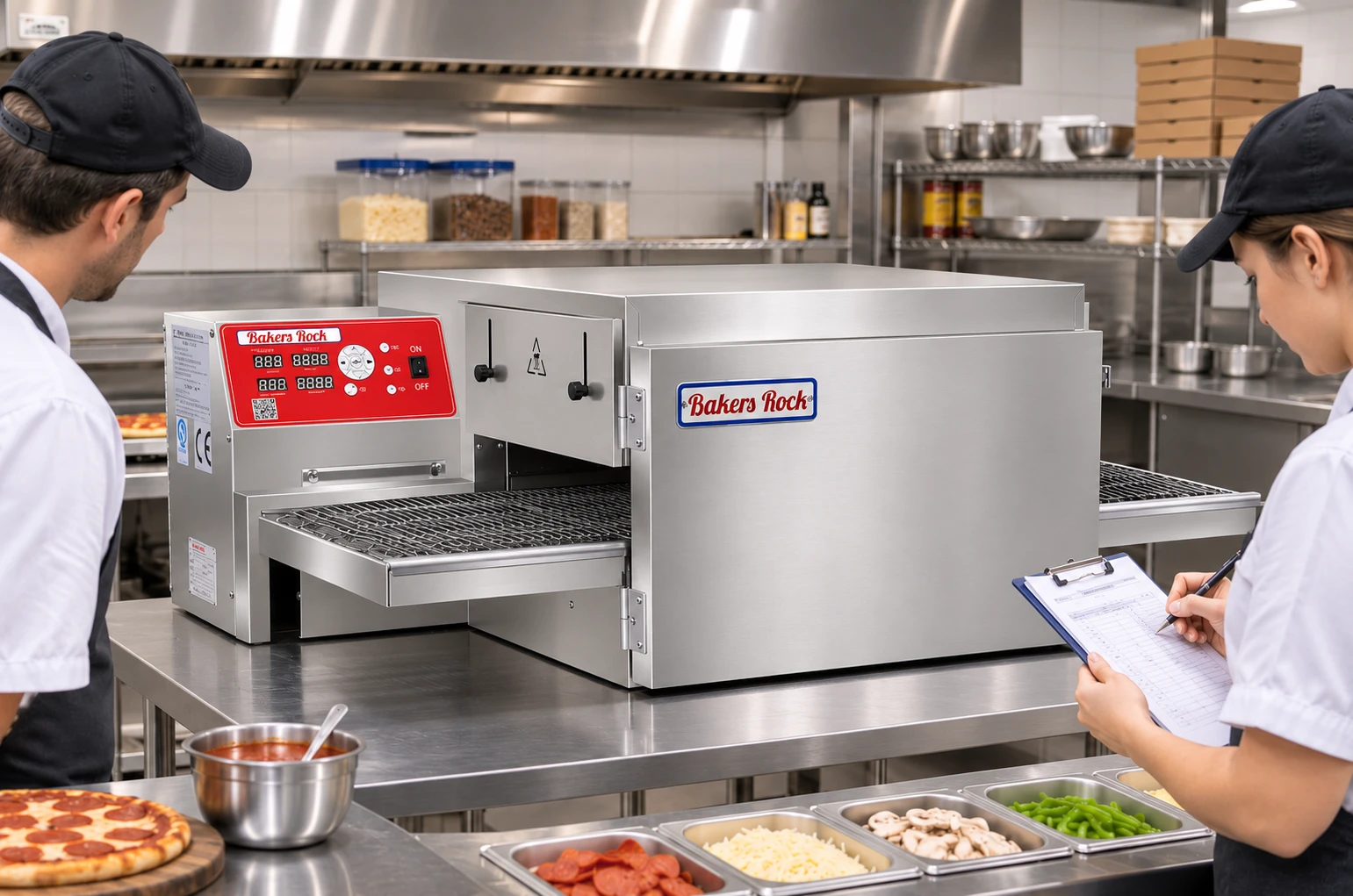
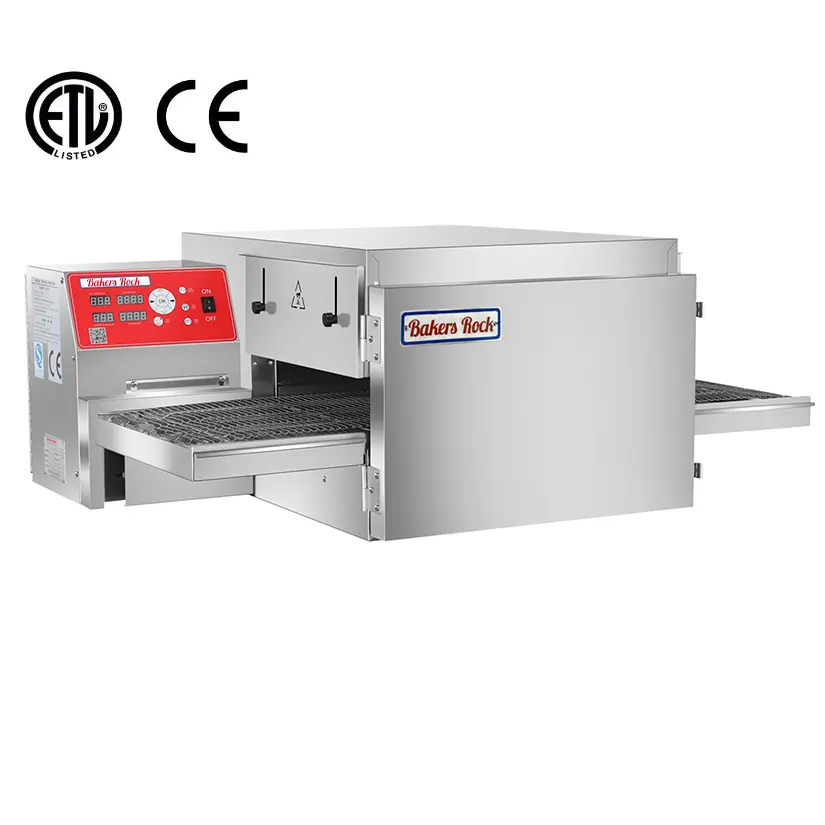
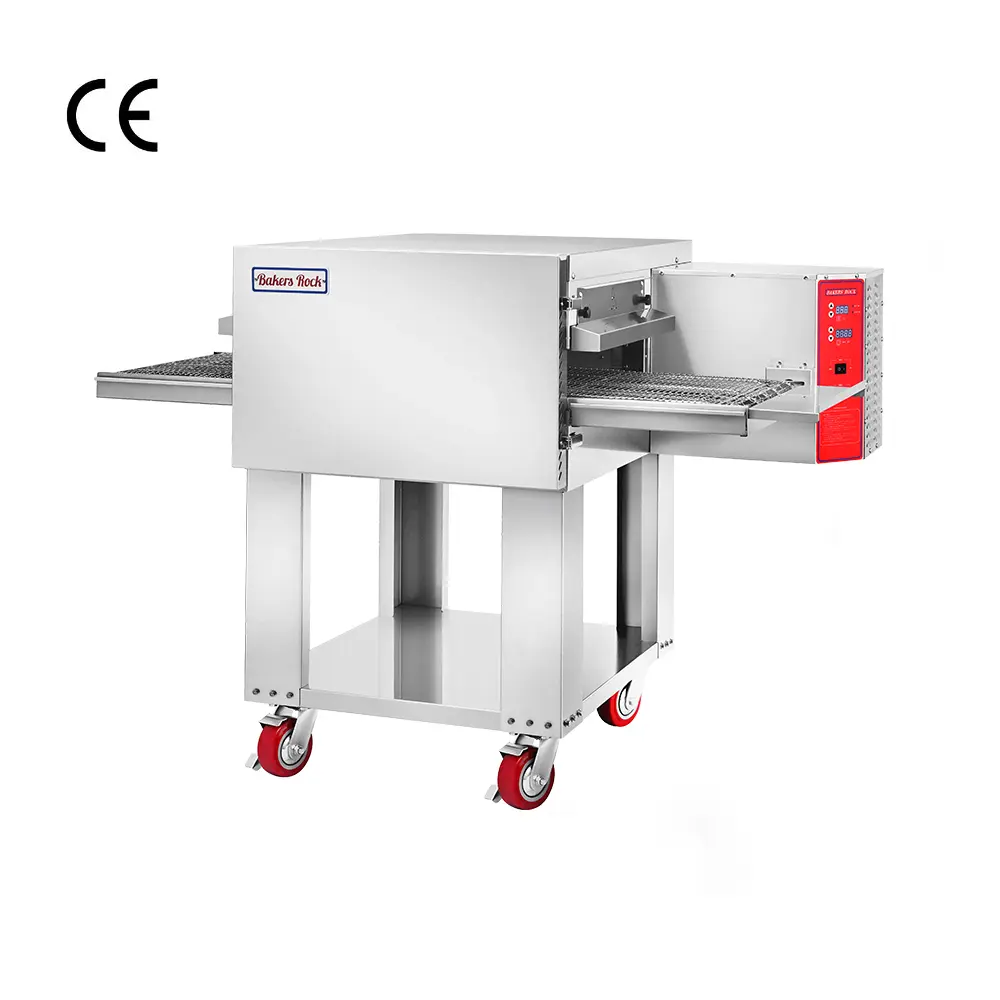
For delivery-first kitchens evaluating equipment footprint, the Bakers Rock H2024 20-inch countertop conveyor oven offers a useful configuration to assess. Its 20 × 24-inch baking area and countertop format should be evaluated alongside loading clearance, discharge space, peak-order demand, and the packing workflow.
As a practical screen, record three dimensions for every candidate: cabinet size, required working clearance, and total line length from loading to packing. Do not treat a catalogue width as the same thing as an installed footprint.
Throughput is not the number printed in a sales conversation. It is the number of saleable items the whole line can produce during the busiest 15- or 30-minute window, at the required quality. Calculate the peak demand by SKU, then test whether the oven can accept that mix without creating a queue at make-up or packing.
Start with a simple demand model: peak orders per hour × items per order × the share that uses the conveyor oven. Then adjust for product size, toppings, bake time, belt loading density, changeovers, and the recovery behaviour of the selected heating system. A store that sells 12-inch pizzas, loaded flatbreads, wings, and baked pasta does not have one uniform “pizza per hour” requirement.
Ask suppliers to demonstrate the busiest mix, not only an empty belt. Record the actual belt width, inlet height, usable bake length, temperature range, and time setting used in the test. A shorter bake time may increase theoretical output but can fail if operators cannot load quickly or if the packing station cannot keep up. Conversely, a larger chamber can be wasteful if the menu volume does not justify the floor space and utilities.
Menu structure determines what “flexible” means. A pizza-led store may prioritise a stable top-and-bottom bake across a narrow range of dough sizes. A multi-SKU delivery kitchen may need different temperatures, dwell times, inlet heights, and surface results for pizza, snacks, steak, baked rice or noodles, sandwiches, and desserts. The oven should be evaluated against the menu families that create the most scheduling conflict.
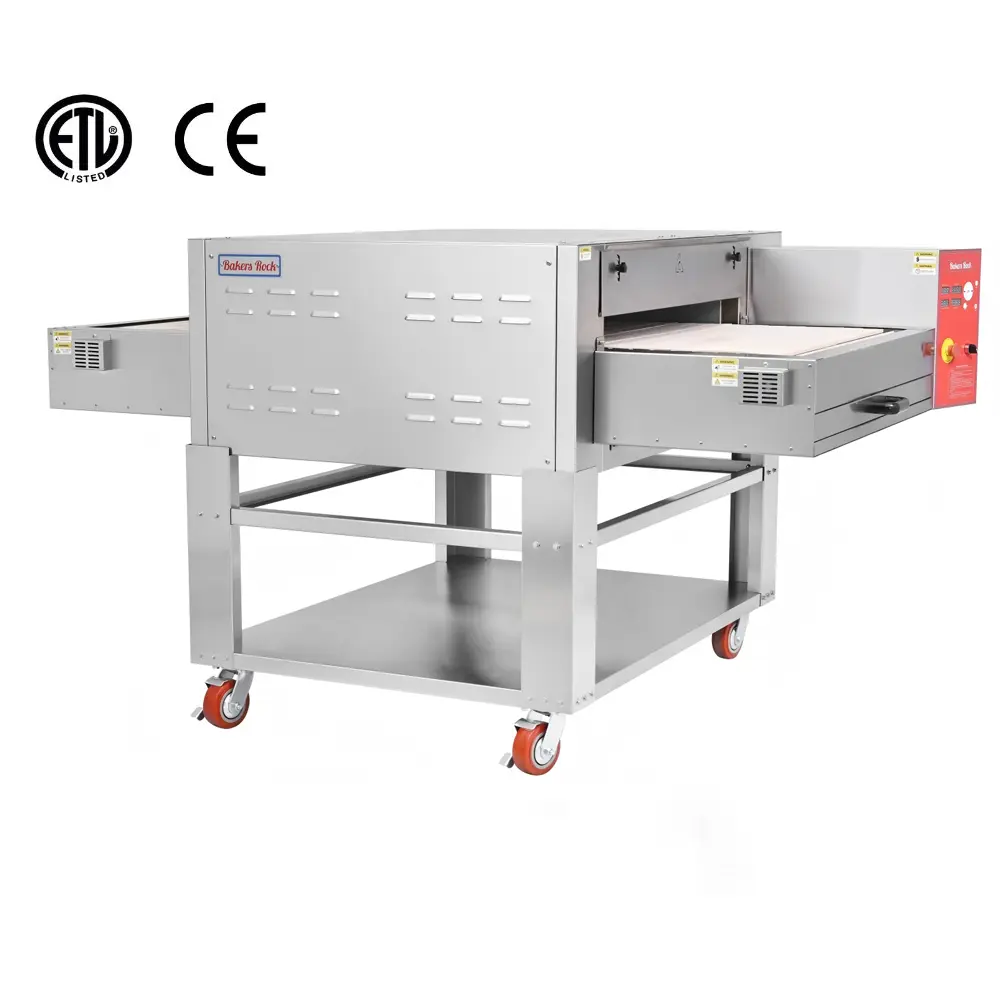
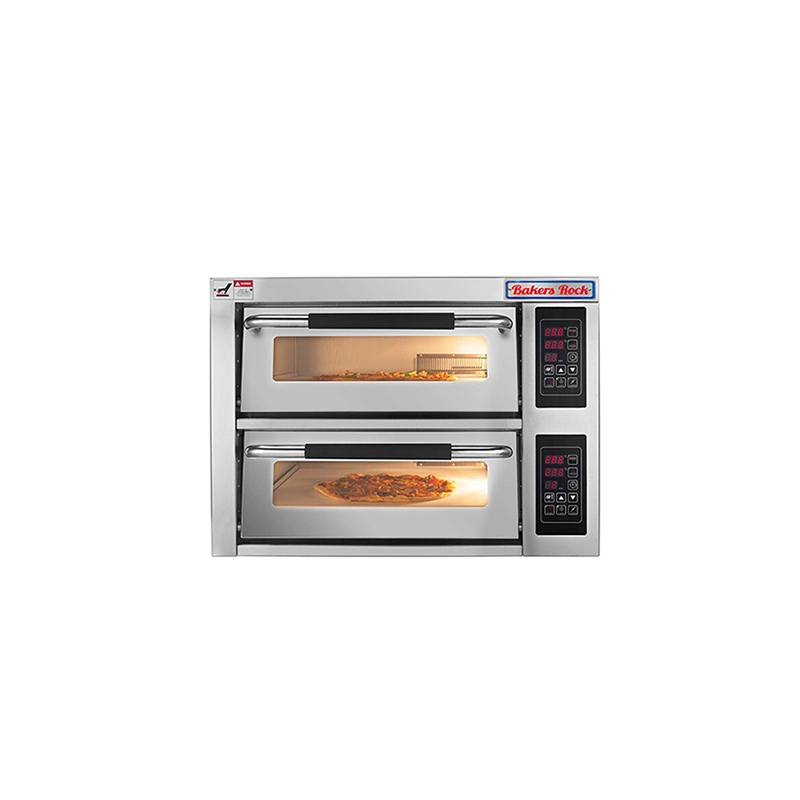
The Bakers Rock portfolio includes electric and gas impingement conveyor ovens as well as stone conveyor ovens. Its product information also describes applications beyond pizza, but every claim should be confirmed with the buyer’s own dough, tray, toppings, and packaging hand-off. A product that performs well in one menu family may still need a separate profile for another.
A delivery-first kitchen often has a short training window and a changing shift team. Select controls that make approved recipes easy to repeat, but do not confuse a simple interface with a complete operating system. The workflow should define who loads, who checks the exit product, who moves it to packing, and how an operator reports a deviation.
Use named menu presets where the equipment supports them, with a visible reference for product size, belt time, temperature, loading pattern, and acceptable finish. Keep the make line and oven line close enough to reduce hand-offs, but not so close that flour, sauce, or packaging debris compromises cleaning and service access. A clear loading rule—spacing, orientation, and maximum simultaneous items—often protects consistency more effectively than another controller feature.
For a multi-store purchase, score each candidate against the same facts. A useful matrix has five columns: footprint, peak-hour throughput, menu coverage, utilities, and rollout support. Add a sixth column for “evidence supplied,” so a promise is separated from a measured test.
For regional rollouts, keep the product target constant while validating local electrical, gas, language, ventilation, and compliance conditions. A distributor should submit the same test recipe and acceptance criteria with every quotation so stores are not compared using different assumptions.
Bakers Rock is the overseas brand of Shanghai QiangAn FoodService Equipment Co., Ltd., a manufacturer founded in 2001. The company describes a portfolio spanning electric and gas impingement, stone conveyor, deck, and dome ovens, serving pizza chains, pizzerias, restaurant groups, and institutional food service. These categories give buyers a starting point for matching equipment format to site and menu—not a reason to skip a product test.
Start with the electric impingement oven range, gas impingement oven range, and stone conveyor oven range. Then request a written fit check using your dimensions, peak order curve, menu mix, utility supply, region, and cleaning routine. The company profile can provide supplier background, while the tim kontak teknis can confirm model-specific assumptions.
For a small delivery outlet, a compact or shallow-depth configuration may protect the line more than a larger oven. For a chain with a repeatable high-volume menu, a wider or stackable family may be justified. The right answer depends on the measured bottleneck, not the model name.
Choose a commercial conveyor oven by connecting three realities: the footprint the kitchen can spare, the throughput the peak mix demands, and the menu structure the team must execute with limited labor. Confirm the result with a live test, utility review, workflow map, and rollout checklist. This process gives pizza chains and distributors a defensible recommendation that can be repeated across stores and regions.
When requesting a quotation, share the oven space, clearances, product sizes, peak orders, SKU mix, target finish, available power or gas, ventilation limits, delivery region, and packing layout. A supplier can then recommend a configuration and document what still needs to be validated on site.
Measure the complete installed envelope: cabinet, loading and discharge clearances, service access, extension trays, and any ventilation or flue space. Then map the route to packing.
Use the busiest 15- or 30-minute order window, split demand by SKU and product size, and test the real mix with the intended belt time, loading density, and packing workflow.
Neither is universally better. Compare available utilities, ventilation, local rules, heat-up and recovery needs, operating assumptions, and the cost of installation at each site.
It can when the heating format, inlet height, surface, and adjustable profiles suit the products. Validate the most different SKUs separately and define changeover and cleaning controls.
Include the model and footprint, tested menu mix, utility requirements, assumptions, commissioning method, training, spare-parts support, and the acceptance criteria for each store.