Nullam dignissim, ante scelerisque the is euismod fermentum odio sem semper the is erat, a feugiat leo urna eget eros. Duis Aenean un risus imperdibile.
Nullam dignissim, ante scelerisque the is euismod fermentum odio sem semper the is erat, a feugiat leo urna eget eros. Duis Aenean un risus imperdibile.
 autore
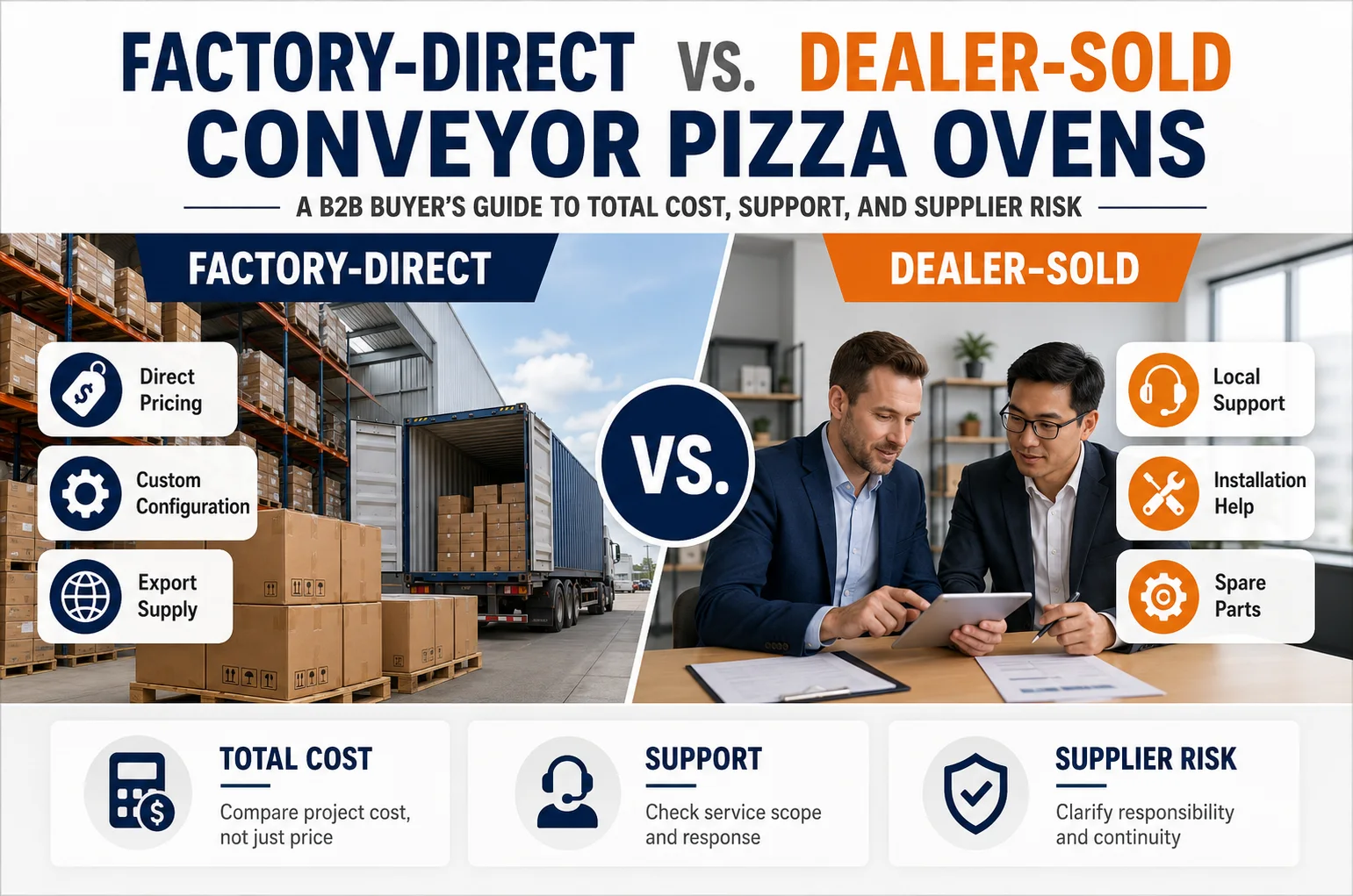
A factory-direct conveyor pizza oven may reduce channel layers, but it does not automatically create the lowest project cost. A dealer may add margin, yet that margin can include local coordination, installation support, inventory access, or a single point of responsibility.
For buyers sourcing commercial conveyor pizza ovens, the practical question is not simply “factory or dealer?” It is whether the selected channel clearly covers product fit, utilities, documentation, shipping, installation, warranty, spare parts, and acceptance. The right choice depends on the buyer’s technical capacity, project schedule, import experience, and tolerance for service risk.
The equipment line on a quotation is only one part of the purchase. A factory-direct quote may need to be evaluated together with freight, insurance, customs handling, inland delivery, installation, commissioning, inspection, spare parts, and possible downtime during startup.
A dealer quotation may combine some of these services, but the scope must be written clearly. Two suppliers can appear to offer different prices simply because one includes delivery or installation while the other lists only the oven.
| Cost or responsibility | Factory-direct purchase | Dealer purchase |
|---|---|---|
| Equipment configuration | Confirm directly with the manufacturer | Confirm with the dealer and original manufacturer |
| Freight and import | Often quoted separately | May be bundled or marked up |
| Installation | Buyer must assign a qualified installer | Dealer may coordinate local service |
| Warranty diagnosis | Confirm the contact and process | Confirm whether dealer or manufacturer handles the claim |
| Spare parts | Confirm ordering route and delivery time | Confirm local availability and pricing |
| Acceptance | Buyer may manage testing and inspection | Dealer may provide project coordination |
This is why the question “Is factory direct cheaper than buying from a dealer?” cannot be answered from the unit price alone. A landed-cost comparison is more useful than a catalog-price comparison.
Dealer purchasing can be suitable when the project requires local delivery, site coordination, installation, or support for several equipment categories. It may also be practical for a first-time importer that does not have an internal engineer or an established service contractor.
The added cost should correspond to specific services. Ask whether the dealer provides utility review, installation supervision, commissioning, operator training, warranty handling, and spare-parts coordination. These items should appear in the quotation rather than remain informal sales promises.
A dealer adds less practical value when it only forwards a product brochure and invoice while the manufacturer, importer, and local installer remain unclear. In that situation, the buyer may still carry most of the technical and acceptance risk.
Buying a conveyor pizza oven direct from a manufacturer requires a more complete technical brief. The buyer should provide the application, product dimensions, target output, belt width, heating method, available voltage, frequency, phase, gas type if applicable, ventilation conditions, installation space, and access route.
The manufacturer should then confirm whether the proposed configuration matches the product and site. A model that appears suitable online may not fit the required product height, electrical supply, gas connection, throughput, or operating environment.
For importers, the RFQ should also state the destination country and any required documentation. The final specification should identify the exact model, configuration, utilities, accessories, packing details, and agreed acceptance criteria. Product photos alone are not enough to freeze an order.
Before placing a deposit, request the final specification, utility requirements, operating instructions, wiring information, packing dimensions, spare-parts list, warranty terms, and inspection procedure. If product testing is required, confirm what will be tested, which sample will be used, and how the result will be recorded.
Warranty responsibility also needs to be explicit. A factory-direct pizza oven warranty may involve the manufacturer, a local service provider, or the buyer’s own technician. Ask who diagnoses the failure, who approves replacement parts, who pays freight, and whether wearing parts are excluded.
Bakers Rock’s published company information describes pre-shipment inspection, product inspection reports, spare-parts support, and online guidance for replacement and repair requests. The exact scope should still be confirmed for each model and quotation.
A standardized RFQ prevents buyers from comparing incomplete offers. Include:
The same RFQ should be sent to the manufacturer and dealer. Otherwise, a direct factory quote may exclude services that are automatically included in a dealer proposal.
Review every quotation for unclear terms such as “standard accessories,” “普通包装,” “commissioning available,” or “warranty included.” These phrases may not define what is actually supplied.
Confirm whether the quotation includes extension trays, exhaust connections, controls, replacement parts, inspection, operator instructions, and packaging suitable for the transport route. Also check whether the quoted model is the same model shown in the technical documents.
Before releasing the deposit, freeze the final configuration in writing. This reduces the risk of receiving a unit with a different belt width, utility configuration, control system, or accessory package than the one used for the original price comparison.
Factory-direct sourcing may suit an importer, distributor, chain operator, or OEM buyer with internal technical resources. It can be practical when the project involves repeated orders, custom configuration, standardized equipment across multiple locations, or direct communication with the production team.
The buyer should be able to review specifications, coordinate local installation, manage import documentation, and inspect the equipment before acceptance. A clear internal owner should be assigned for utilities, site preparation, commissioning, and warranty communication.
Factory-direct purchasing is less suitable when the buyer cannot verify electrical or gas requirements, has no qualified installer, cannot manage customs and delivery coordination, or requires a local party to assume responsibility for a complex installation.
A dealer may be more practical when local support, rapid access to standard equipment, or coordination across several kitchen systems is important. Dealers can be useful for projects with limited engineering resources, short installation windows, or a strong need for one commercial contact.
The buyer should still confirm what the dealer actually controls. Ask whether it provides installation, commissioning, operator training, warranty diagnosis, emergency service, and spare-parts access. Also confirm whether the dealer can provide the original manufacturer’s technical documents.
A dealer should not be selected only because it is nearby, and a factory should not be selected only because it advertises a lower price. The stronger channel is the one with the clearest responsibility matrix.
Supplier evaluation should focus on evidence that can be attached to the quotation or contract:
For a broader review of manufacturing quality, documentation, and service questions, see the Commercial Conveyor Pizza Oven Manufacturer Audit Checklist. That resource should support the supplier-audit process, while this article focuses on the purchasing-channel decision between factory-direct and dealer-sold equipment.
The buying channel should be selected separately from the oven configuration. Electric, gas/LPG, and stone conveyor ovens can serve different applications, but the correct choice depends on available utilities, product profile, capacity, site conditions, and operating requirements.
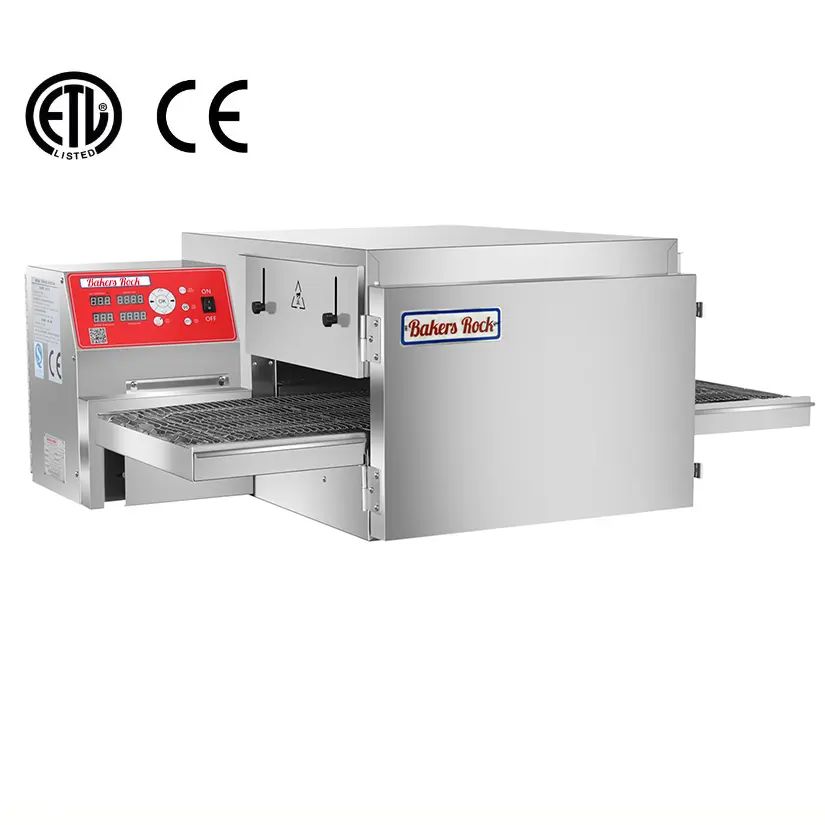
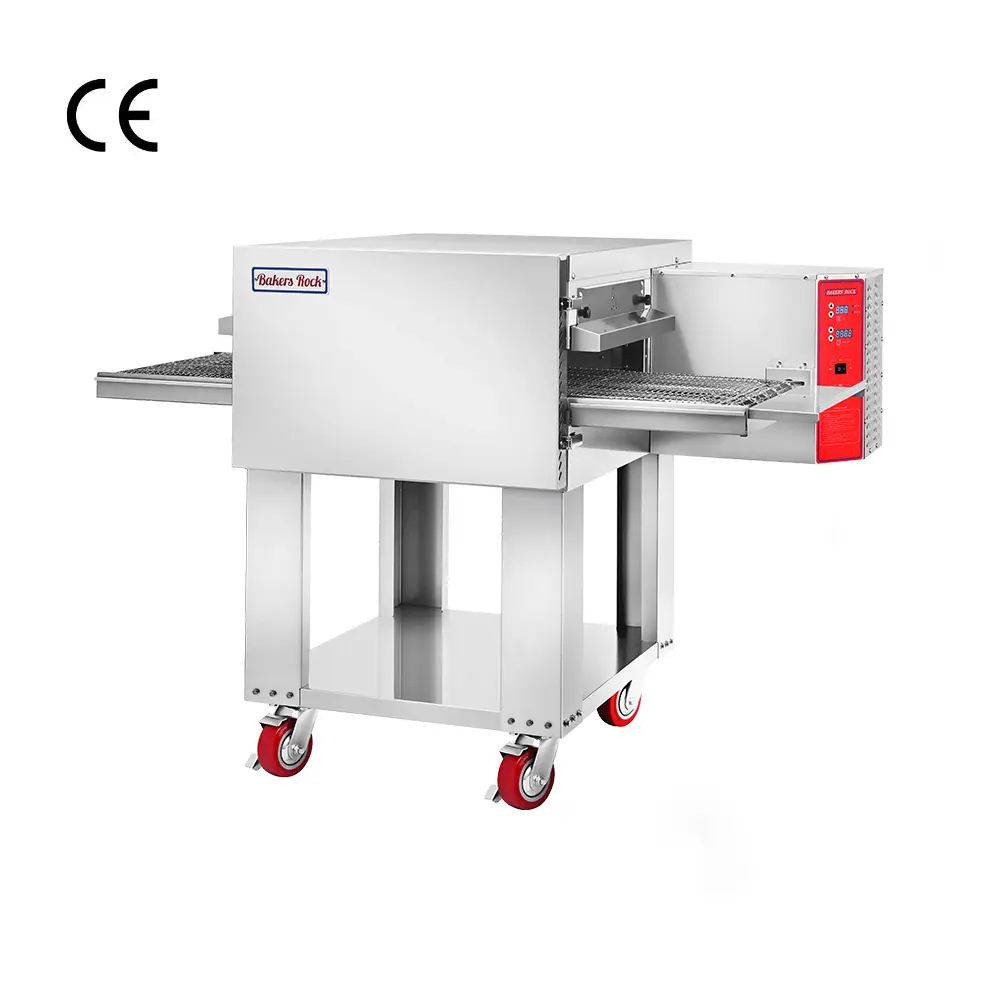
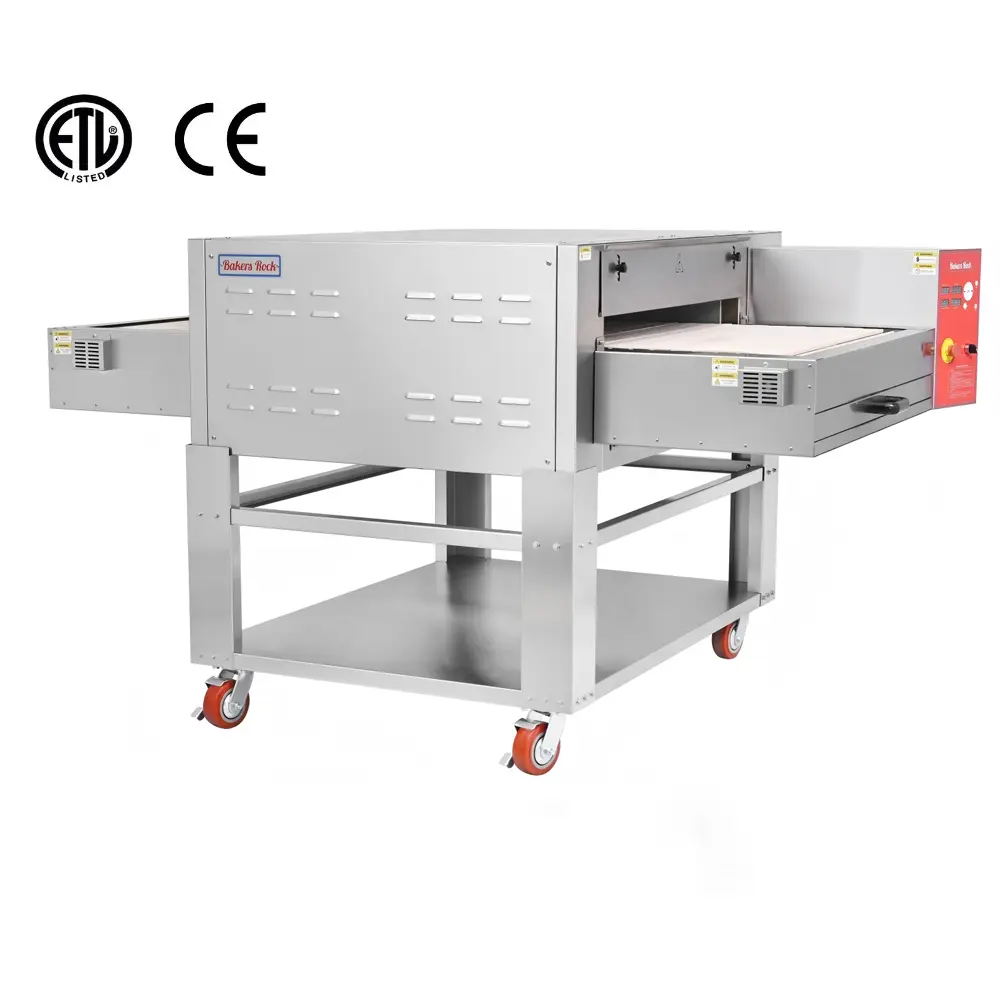
Bakers Rock publishes several conveyor oven categories for commercial foodservice applications. Buyers comparing electric conveyor pizza ovens should review the electrical supply, belt size, operating range, floor space, and target products against the final specification.
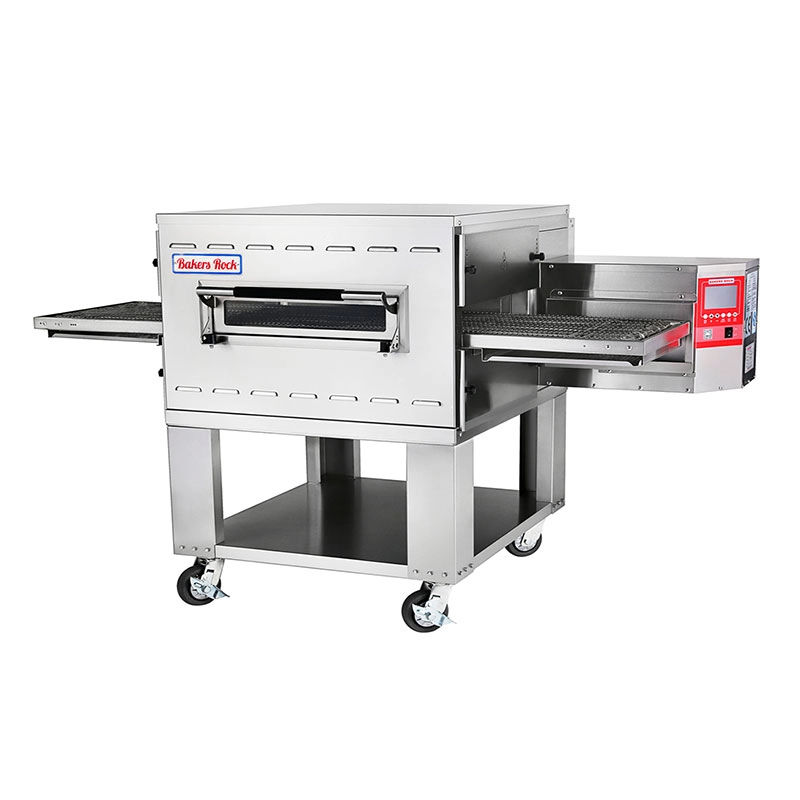
Buyers considering gas and LPG conveyor ovens should confirm fuel type, ventilation, local installation requirements, and the responsibilities of the supplier and installer.
Stone conveyor ovens should be evaluated according to the desired product style, belt material, operating conditions, cleaning requirements, and application testing. Product-category pages can narrow the equipment choice, but the RFQ should still control the final configuration.
Bakers Rock is the overseas brand of Shanghai QiangAn FoodService Equipment Co., Ltd., a commercial conveyor pizza oven manufacturer established in Shanghai in 2001. The company information identifies a wholly owned manufacturing operation in Nantong, a dedicated research and development team, and specialization in commercial air-impingement conveyor ovens.
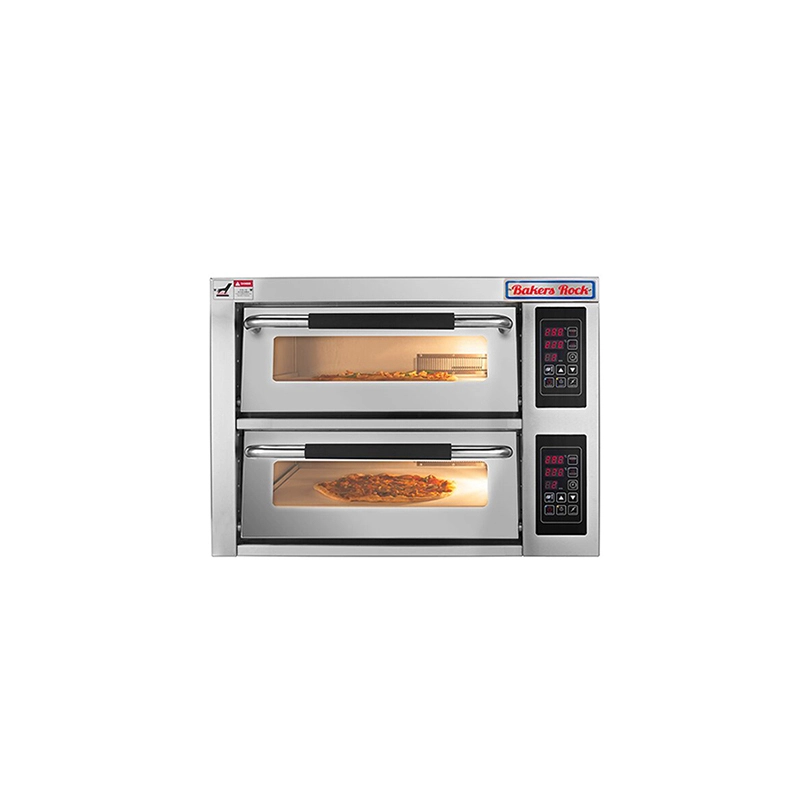
Its published range includes electric, gas/LPG, stone conveyor, deck, and dome ovens for applications such as pizza shops, restaurants, cafeterias, bakeries, food factories, and other foodservice operations. The company also states that it works with a global distributor network, so buyers should confirm whether a specific quotation is direct from the manufacturer or provided through a regional channel.
A comparable RFQ should include the application, product dimensions, target output, utilities, drawings or samples, destination, quantity, required documents, and service expectations. This gives the supplier enough information to recommend a configuration without relying on a generic price request.
The better buying channel is the one that gives the project a clear owner for product fit, installation, documentation, warranty, spare parts, and acceptance. Factory-direct sourcing can suit capable importers and repeat buyers, while a dealer may be more practical when local coordination reduces installation and service risk.
For a technical quotation, submit the application, product size, target capacity, heating method, utilities, site information, drawings or samples, target quantity, and destination through request a conveyor oven quotation.
No. The equipment price may be lower, but freight, duty, installation, documentation, spare parts, and downtime can change the total project cost.
The responsible party must be stated in the quotation or contract. It may be the buyer, a local installer, the manufacturer, or a dealer.
Request the final specification, utility requirements, operating instructions, wiring information, packing details, warranty terms, spare-parts list, and acceptance criteria.
A dealer may be more practical when the buyer needs local coordination, installation support, inventory access, or one point of contact. The actual service scope must be verified.
Include the application, capacity, belt width, product dimensions, utilities, heating method, site conditions, documentation, testing, warranty, spare parts, delivery terms, and acceptance requirements.