Nullam dignissim, ante scelerisque - это euismod Fermentum Odio sem semper the is Erat, a feugiat leo urna eget eros. Дуис Энеан непреодолимый риск.
Nullam dignissim, ante scelerisque - это euismod Fermentum Odio sem semper the is Erat, a feugiat leo urna eget eros. Дуис Энеан непреодолимый риск.
 автор
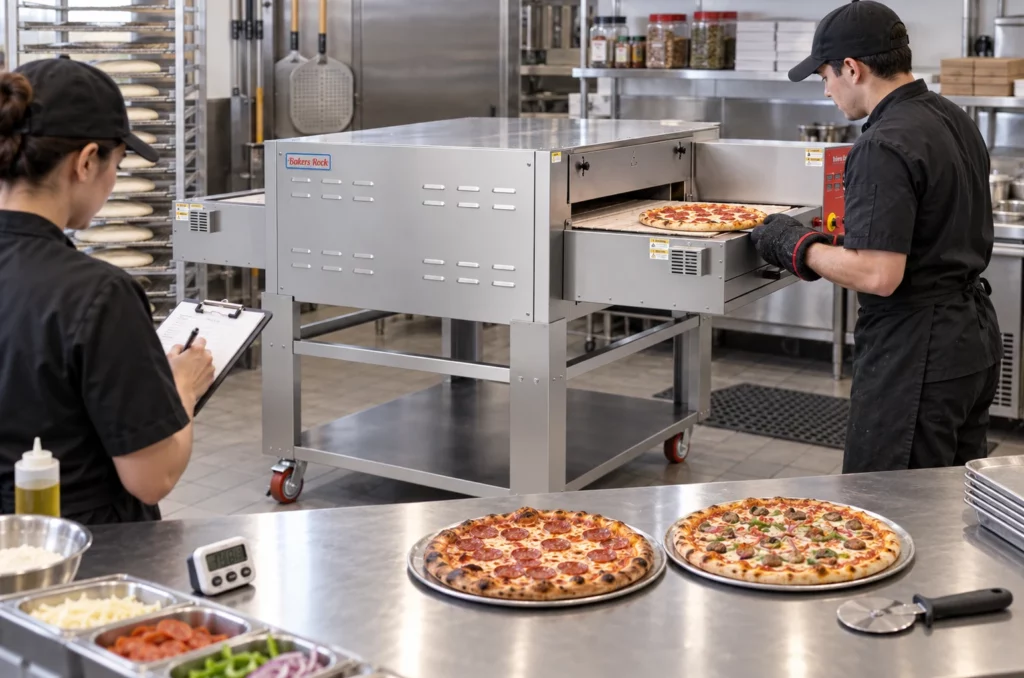
For a pizza chain, the stone-belt versus air-impingement decision should be made against the crust, menu load, and peak-line requirement – not by comparing maximum temperature or marketing labels. A stone belt adds direct contact and thermal storage under the dough. Air impingement delivers controlled jets of heated air above and below the product. Both can be repeatable; they control different parts of the bake.
The practical question is: which heat-transfer pattern can produce the approved bottom texture, topping finish, and saleable output at every store? Define those acceptance conditions first, then test the candidate configuration with the actual pizza, support, belt speed, and peak loading.
Write the product brief before choosing an oven. Record diameter, thickness, dough or base type, topping mass, sauce moisture, frozen or chilled starting condition, and the approved screen, tray, or direct-belt arrangement. A thin, dry base and a heavily topped, high-moisture product may need different heat balance even when their diameters match.
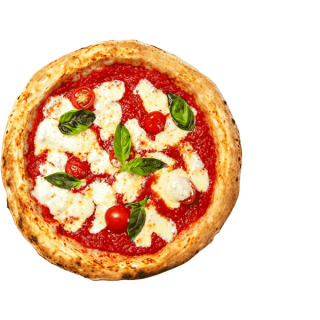
Specify what “crisp” means for the chain. It may be a firm underside that supports a slice after cutting, a defined contact color, a softer center, or a texture that survives the intended service hold. Separate bottom color, center set, rim development, and hold quality into measurable checks. Do not use a browned top as a proxy for a finished base.
Then define the operating envelope: target pizzas per hour, expected run length, spacing, allowed product variation, and the worst approved topping load. This prevents a small-batch demonstration from hiding recovery or loading limits that appear during lunch or dinner peaks.
A refractory stone belt or stone surface places the base in direct contact with a heated moving surface. Conduction and stored thermal energy can help set the underside and remove moisture at the contact zone. The surface becomes part of the recipe, so its preheat state, cleanliness, loading pattern, and recovery behavior need to be controlled.
This approach can suit a chain whose signature depends on a pronounced contact-baked base or a defined crispness. It can also be less forgiving when flour, crumbs, oil, or an overloaded product changes effective contact. A stone belt is not automatically a solution for a pale center or a burned bottom; heat balance and residence time still need validation.
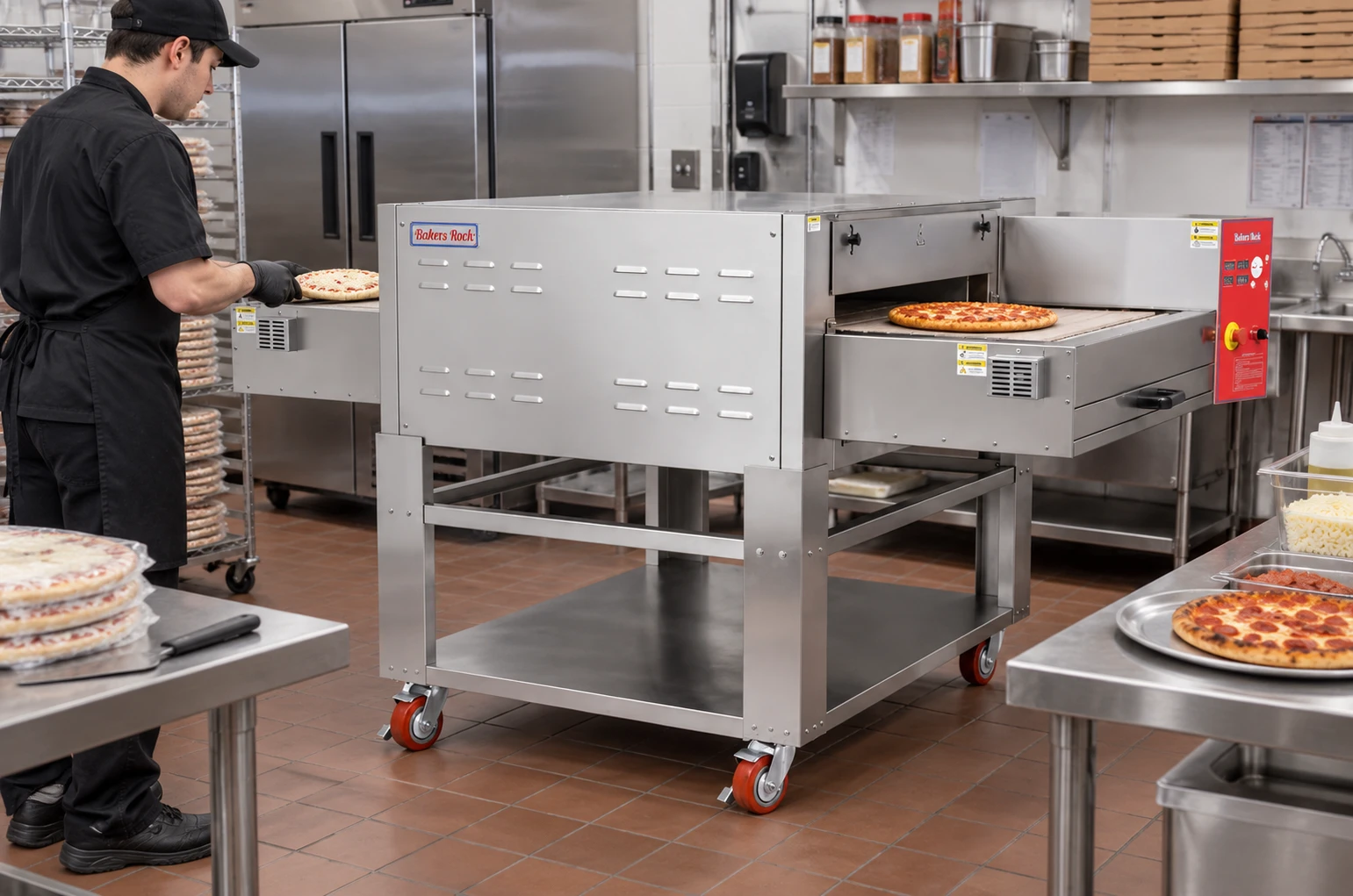
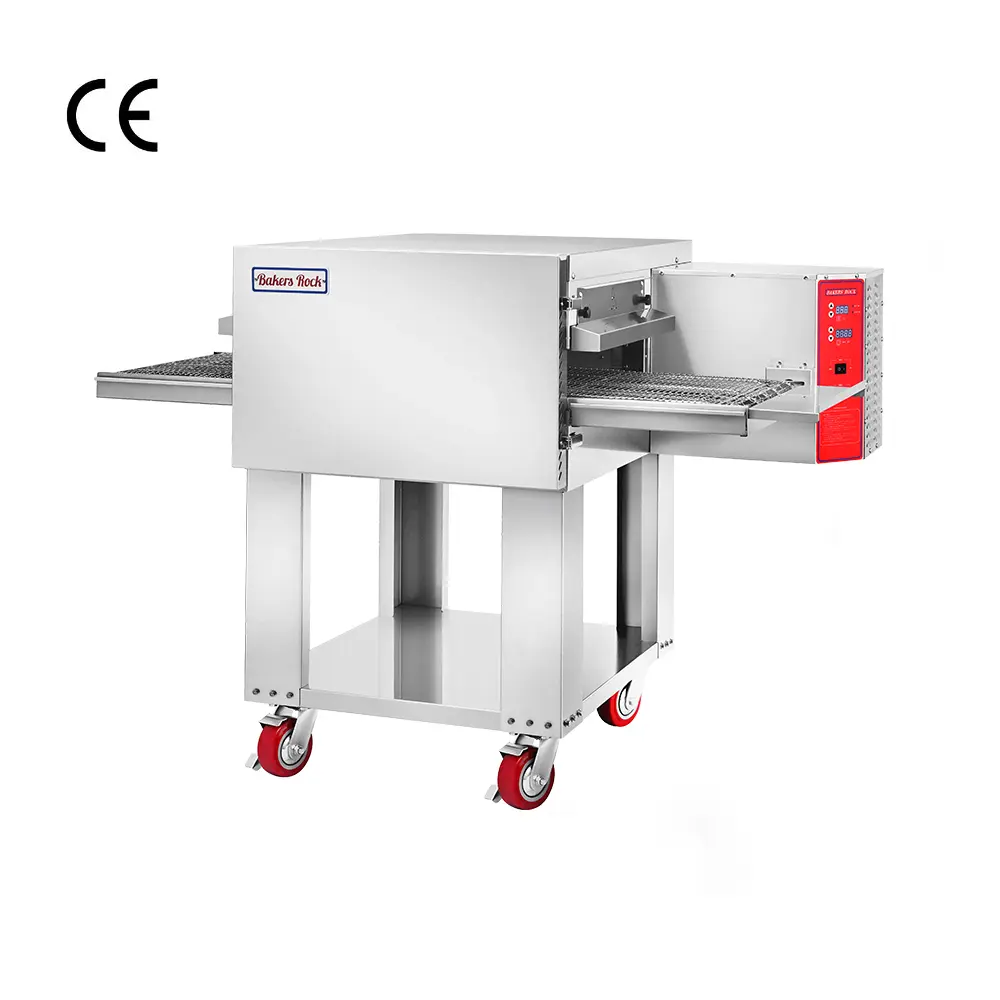
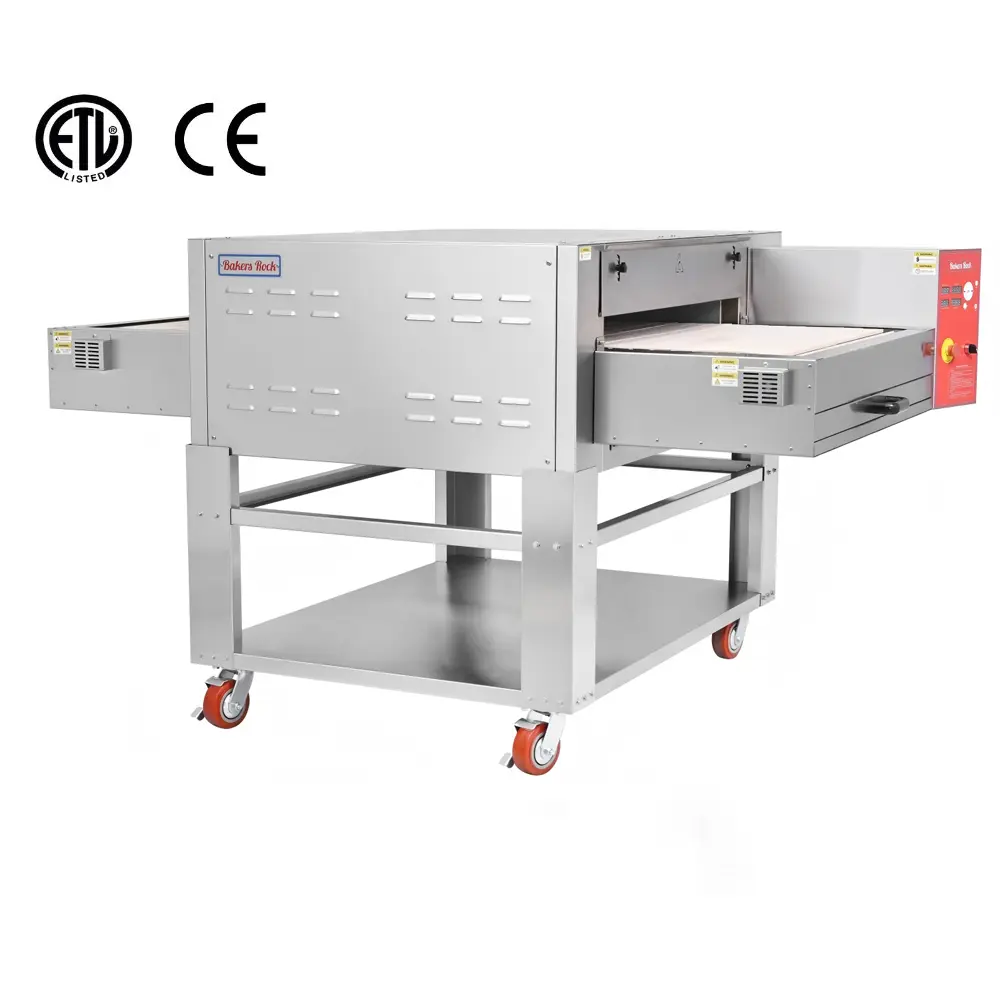
Бейкерс-Рок stone conveyor oven range includes stone-belt configurations. The S3240 stone-belt conveyor oven lists frozen pizza and pre-cooked bases among its applications, with adjustable timing from 1.5 to 18 minutes and dual heat-zone control. Treat those published capabilities as a starting point for a product trial, not as proof of a chain recipe.
Air impingement uses high-velocity heated air to transfer energy to exposed surfaces. The jet pattern, air temperature, belt speed, product height, and loading density affect how quickly the top and bottom surfaces respond. It can provide a flexible way to finish toppings and cook products with varied surface loads, provided the airflow is not blocked by the support or by adjacent pizzas.
For a chain, the important specification is not “impingement” alone. Ask for the usable belt width, heating-zone length, top and bottom control, speed or time range, airflow arrangement, and expected recovery under the stated loading. A recipe that works with an open belt may not transfer to a tray or screen that shields the lower jets.
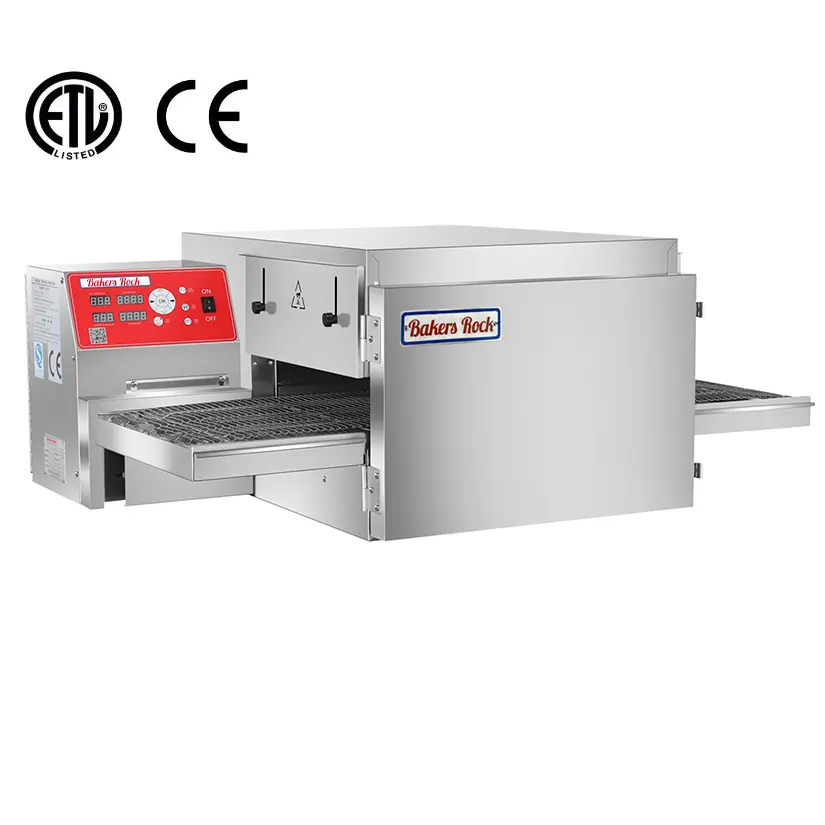
Бейкерс-Рок предоставляет electric impingement oven range и gas impingement oven range product paths. The H1624Pro countertop conveyor oven is an electric impingement candidate with independent top and bottom temperature control and adjustable conveyor time from 1.5 to 15 minutes. Confirm the exact voltage, phase, gas or electrical configuration, and usable opening for each destination before quoting.
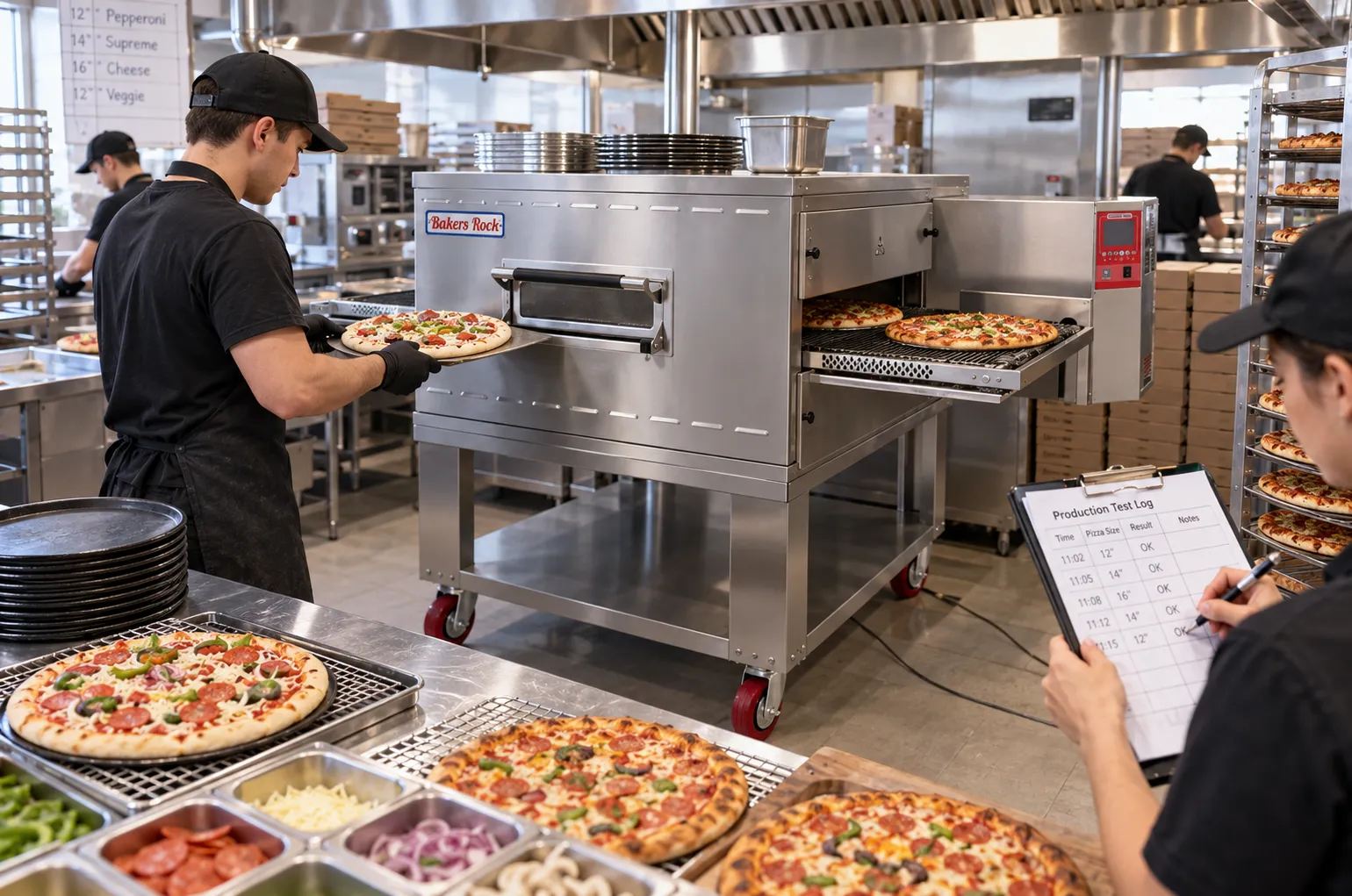
Run a side-by-side application test with the same product batch, support, starting temperature, spacing, and target output. Do not let one candidate use a fresh sample while the other runs a cold or partially thawed sample. Record the measured time inside the heated chamber rather than relying only on a controller display.
Use one-variable trials when a defect appears. If the stone candidate darkens the base before the center is set, verify support, contact cleanliness, and product thickness before reducing floor energy or changing belt time. If the impingement candidate finishes the top while the base remains soft, check lower airflow, support shielding, loading density, and residence time before raising the top zone.
A test pass should state the approved center endpoint, bottom and top appearance, service-hold result, loading pattern, measured belt time, and saleable output. “Looks good” is not a transferable acceptance criterion.
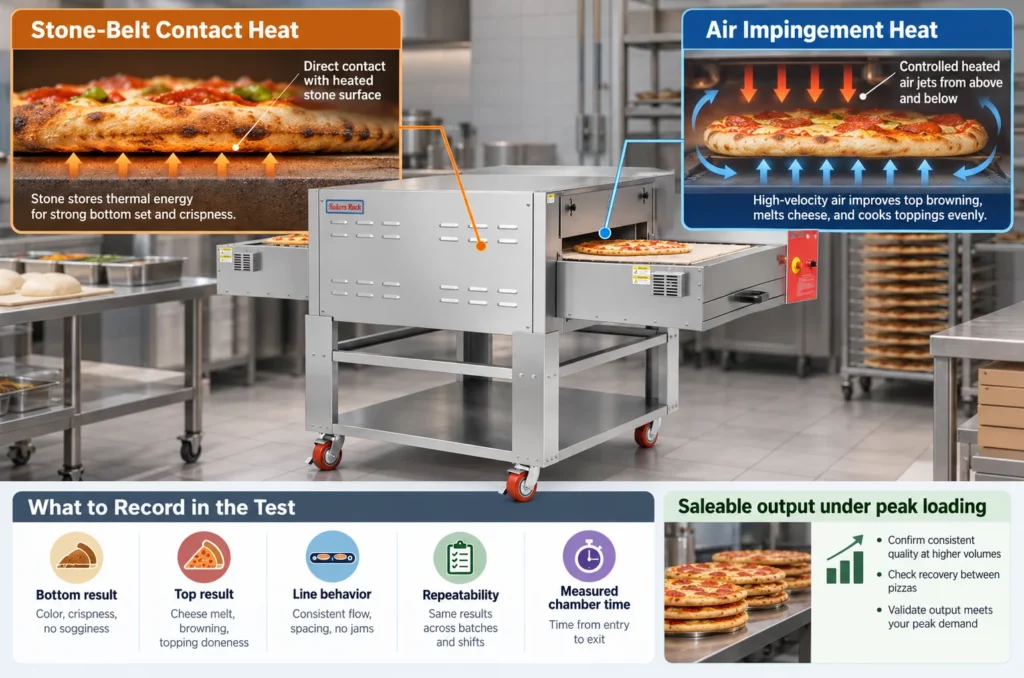
Capacity is the number of products that meet the approved result per hour, not the maximum number that can fit on a belt. Calculate the intended spacing and belt speed, then test that pattern continuously. Include the largest or heaviest approved pizza and the topping load most likely to absorb heat.
During the run, log preheat completion, product count, rejects, idle periods, recovery time, and operator interventions. A stone surface may show recovery effects after a dense load; an impingement chamber may show airflow or temperature changes when openings are crowded. These are commissioning observations, not universal claims about either technology.
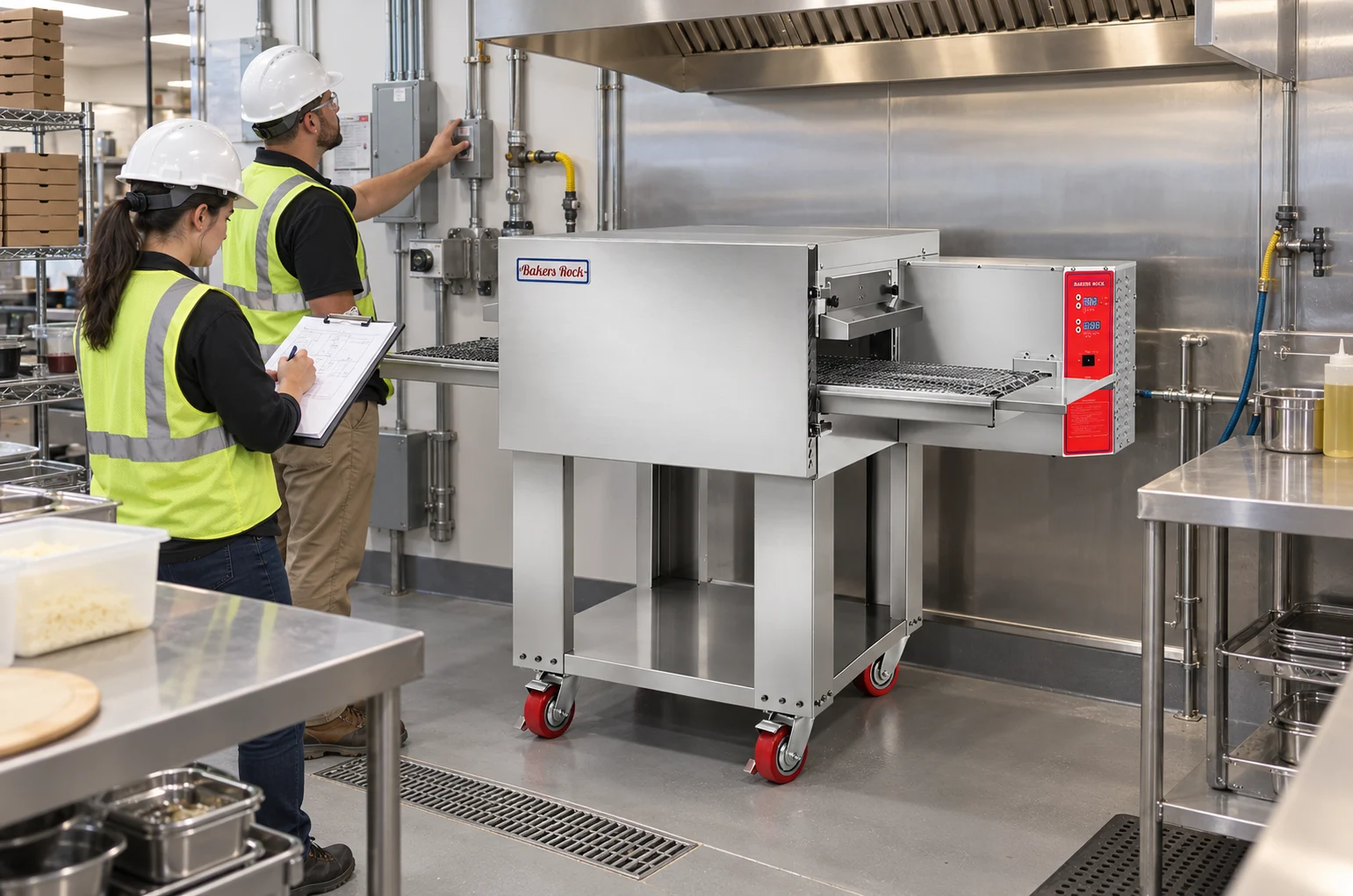
Size belt width and chamber length around the peak menu mix rather than the average pizza. Confirm that the quoted machine can accept the support, clearance, and product height without blocking airflow or creating unsafe handling. For rollouts spanning Europe, North America, the Middle East, and Southeast Asia, verify site utilities and installation requirements for the exact electric or gas configuration.
Every store should receive a recipe card that names the product code, support, preheat readiness, belt time, top and bottom settings, loading spacing, and first-product checks. Add cleaning instructions that protect the stone contact surface or keep impingement openings clear, as applicable to the model.
Require a timed belt check and a documented first-product review after installation, maintenance, recipe change, or an extended idle period. Define who may alter settings and when the store must escalate. Changes to supplier, base thickness, topping load, support, oven model, or configuration should trigger a risk review and, where needed, another application test.
This is how a chain standardizes the process without pretending the two technologies are interchangeable. Standardize the test method, records, and acceptance limits; keep the validated heat-transfer recipe specific to the product and machine.
Choose a stone belt when direct contact and a controlled refractory surface are central to the required crust. Choose air impingement when the menu and line benefit from configurable high-velocity heat around the product. In either case, approve the decision only after the same pizza, support, loading pattern, and peak run meet the chain’s written quality and safety limits.
No. Crispness depends on product moisture, contact, airflow, heat balance, residence time, and holding conditions. Validate the result on the actual menu item.
Treat it as a new process. The heat-transfer path and support can change the required settings, so run a controlled application test.
Start with the site utility, installation, ventilation, control, and service requirements, then compare validated product results on the available configurations.
Provide product dimensions, mass, topping load, starting condition, support, target output, store countries, utilities, and photos of the desired bottom and top results.
For a controlled comparison of stone-belt and air-impingement options, request an application test with the real product and peak-load requirements. Ask for the test record, configuration, measured belt time, and pass/fail criteria so the result can support a chain purchasing decision.