Nullam dnissim, ante scelerisque the is euismod fermentum odio sem semper the is erat, feugiat สิงห์ urna eget eros ดุส เอเนียน การเพิ่มขึ้นของความไม่แน่นอน
Nullam dnissim, ante scelerisque the is euismod fermentum odio sem semper the is erat, feugiat สิงห์ urna eget eros ดุส เอเนียน การเพิ่มขึ้นของความไม่แน่นอน
 ผู้เขียน
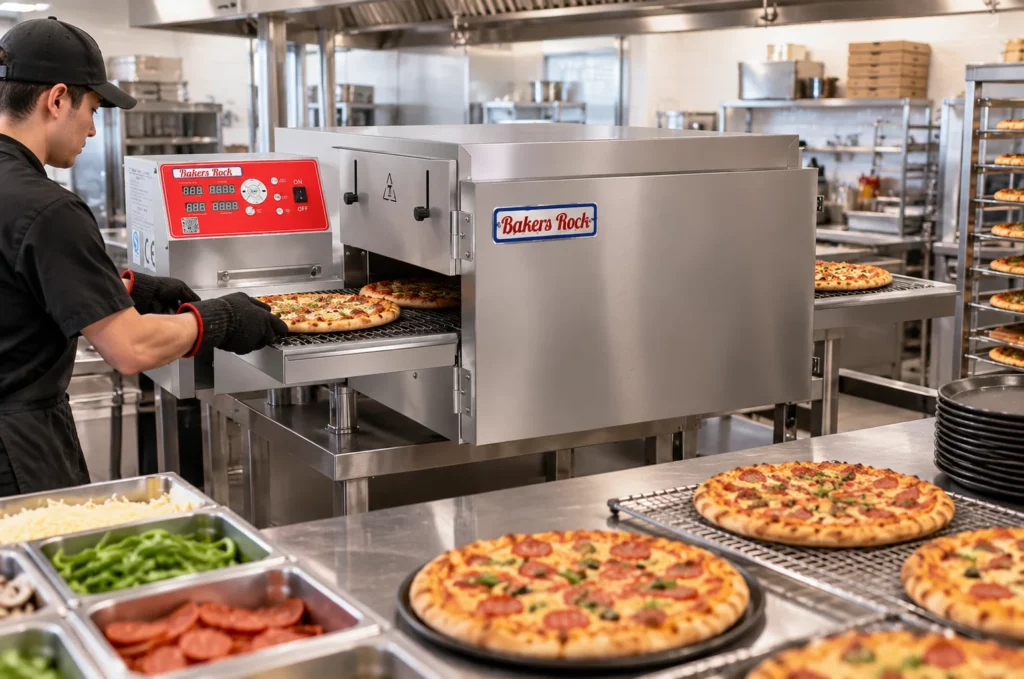
An air-impingement oven is a conveyor oven that directs high-velocity jets of heated air at the product as it travels through a controlled chamber. The jets increase the rate of heat transfer at exposed surfaces, while belt speed determines how long the product remains in the heated zones. For commercial pizza operations, the buyer must connect that airflow to product thickness, topping load, support, and repeatable output.
If a team already understands a conveyor oven, the useful distinction is not another definition of a moving belt. It is how the air jets change the heat balance around the pizza, what the lower jets can actually reach, and how the selected machine can be tested and standardized across stores.
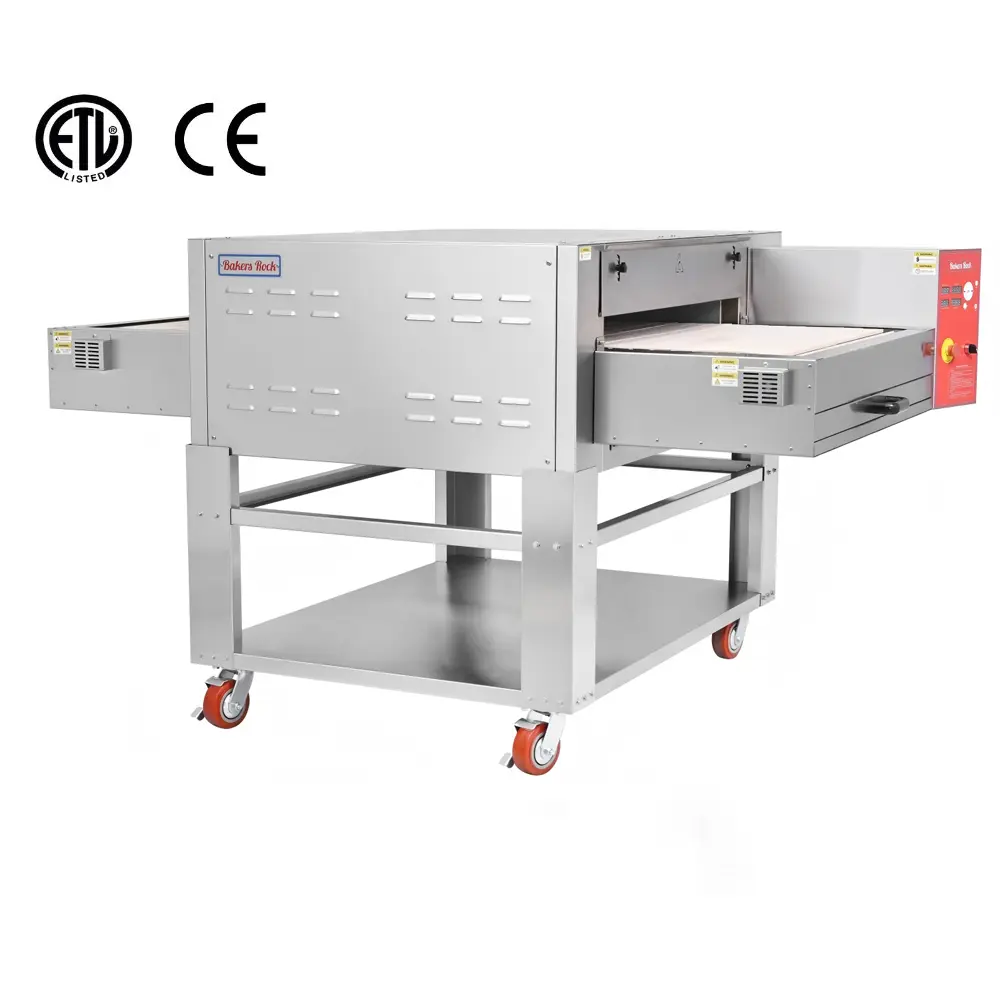
Inside an impingement chamber, a fan moves heated air through a plenum or nozzle arrangement. Openings direct the air toward the upper and, on suitable configurations, lower surface of the product. The moving air disrupts the relatively still boundary layer next to the food surface, allowing heat to reach the product more actively than in a simple low-velocity convection environment.
The useful result is a controlled heat-transfer rate, not a universal promise of faster cooking. Nozzle pattern, jet velocity, air temperature, chamber length, product height, belt opening, and loading density all affect the result. A tray or screen can shield the lower jets; adjacent pizzas can change the exposed airflow and the recovery demand.
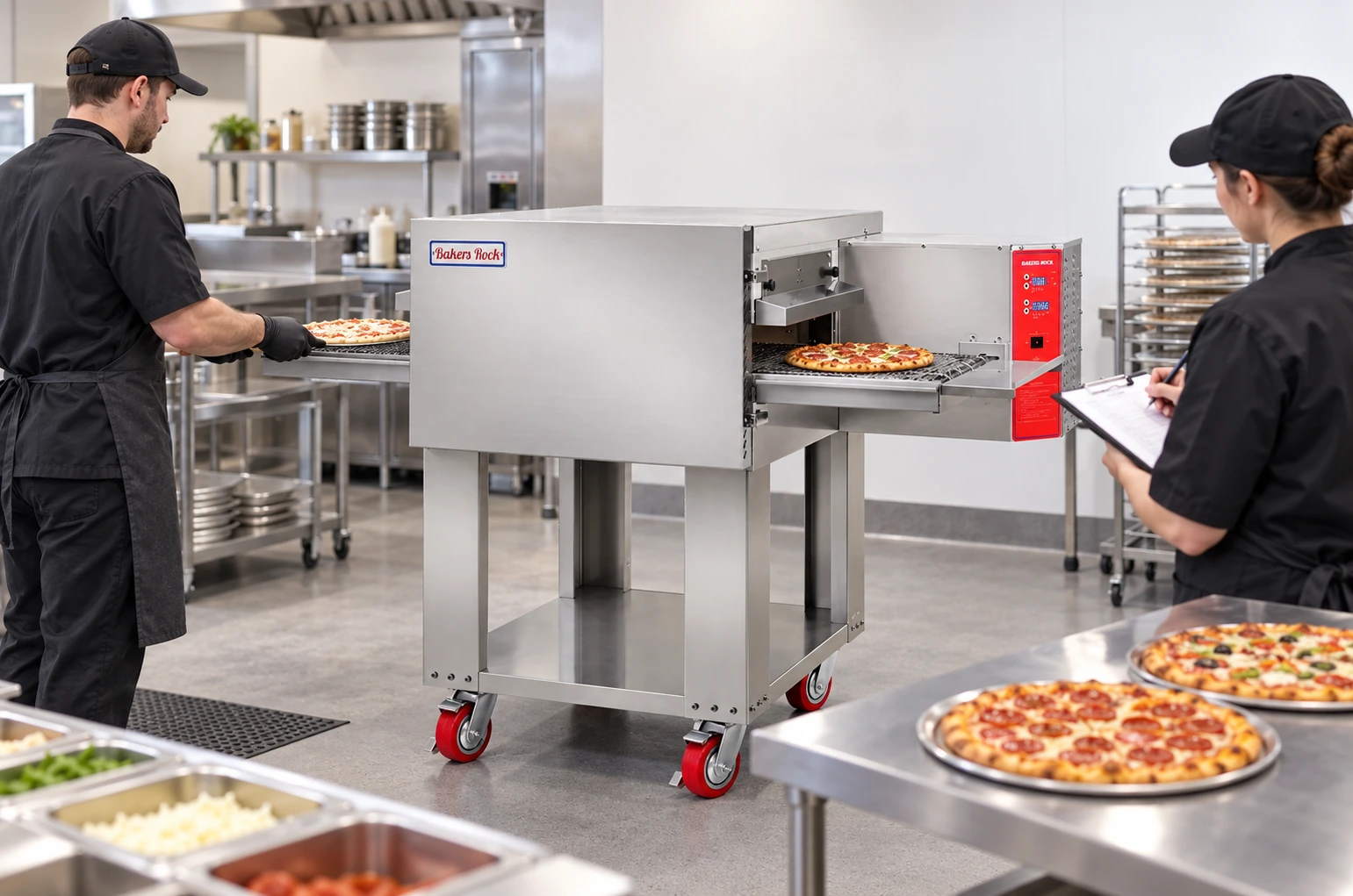
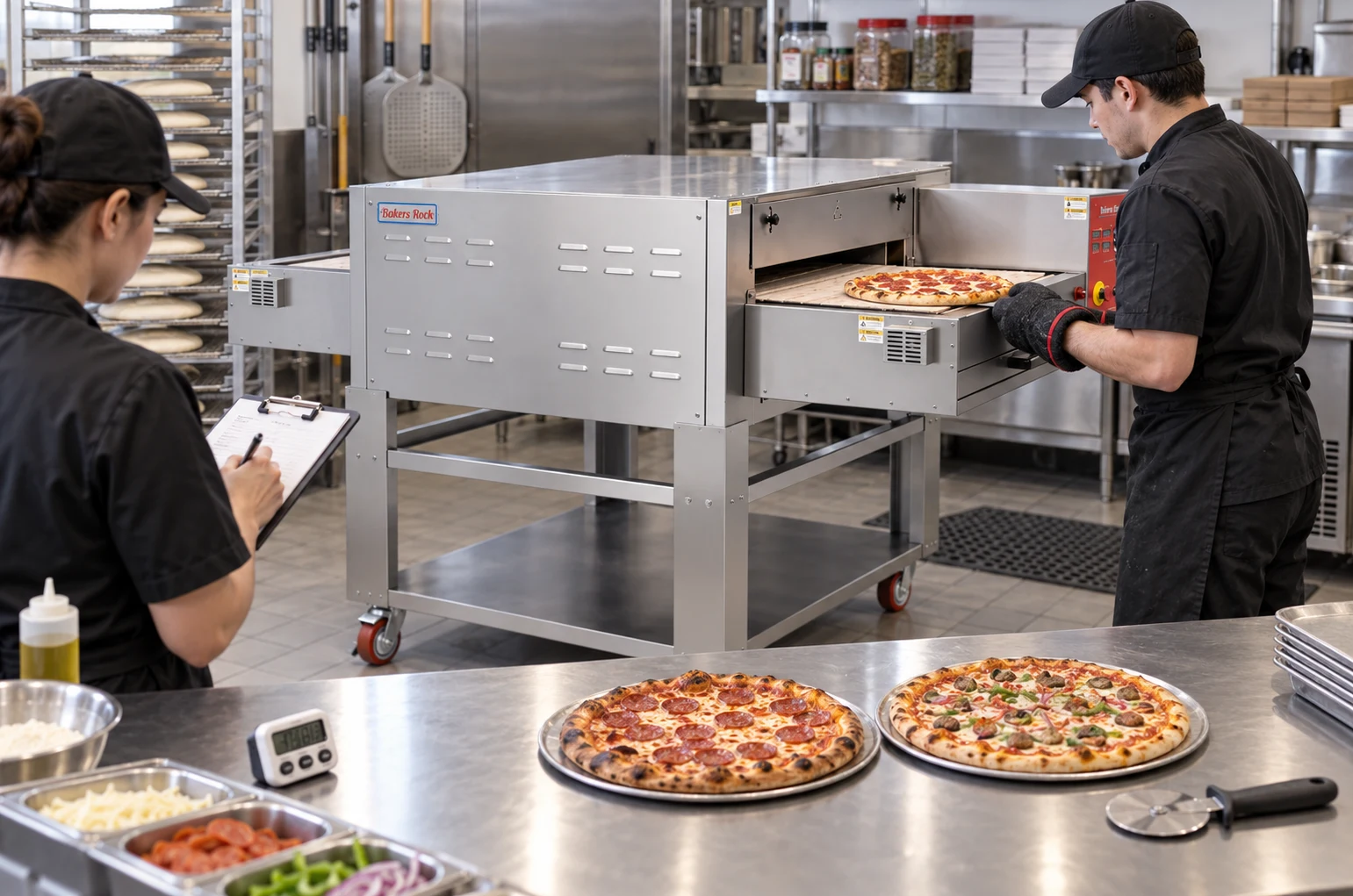
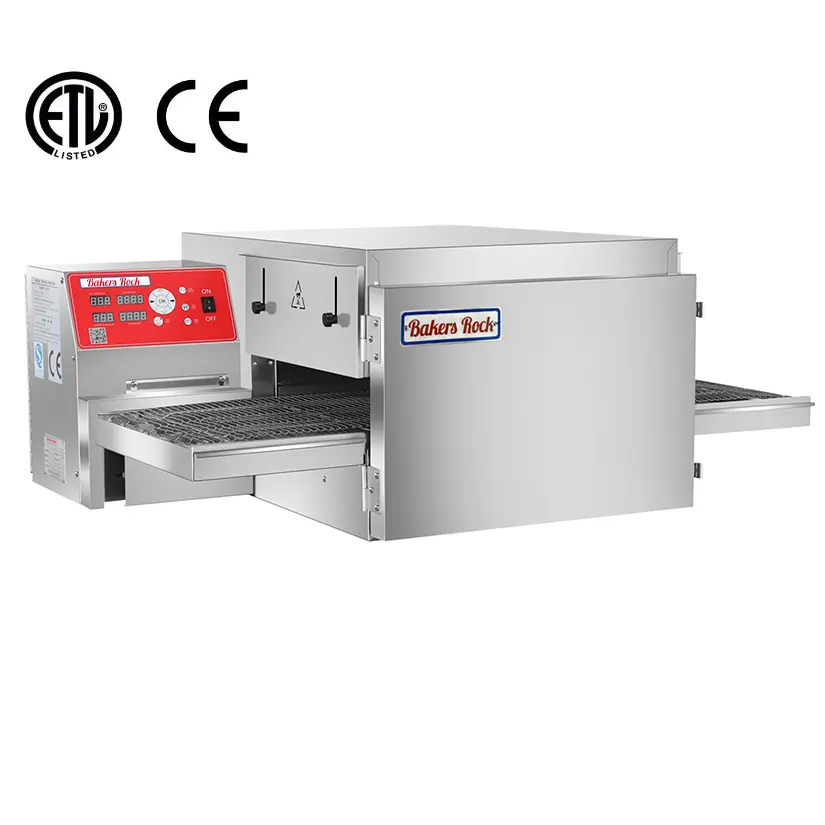
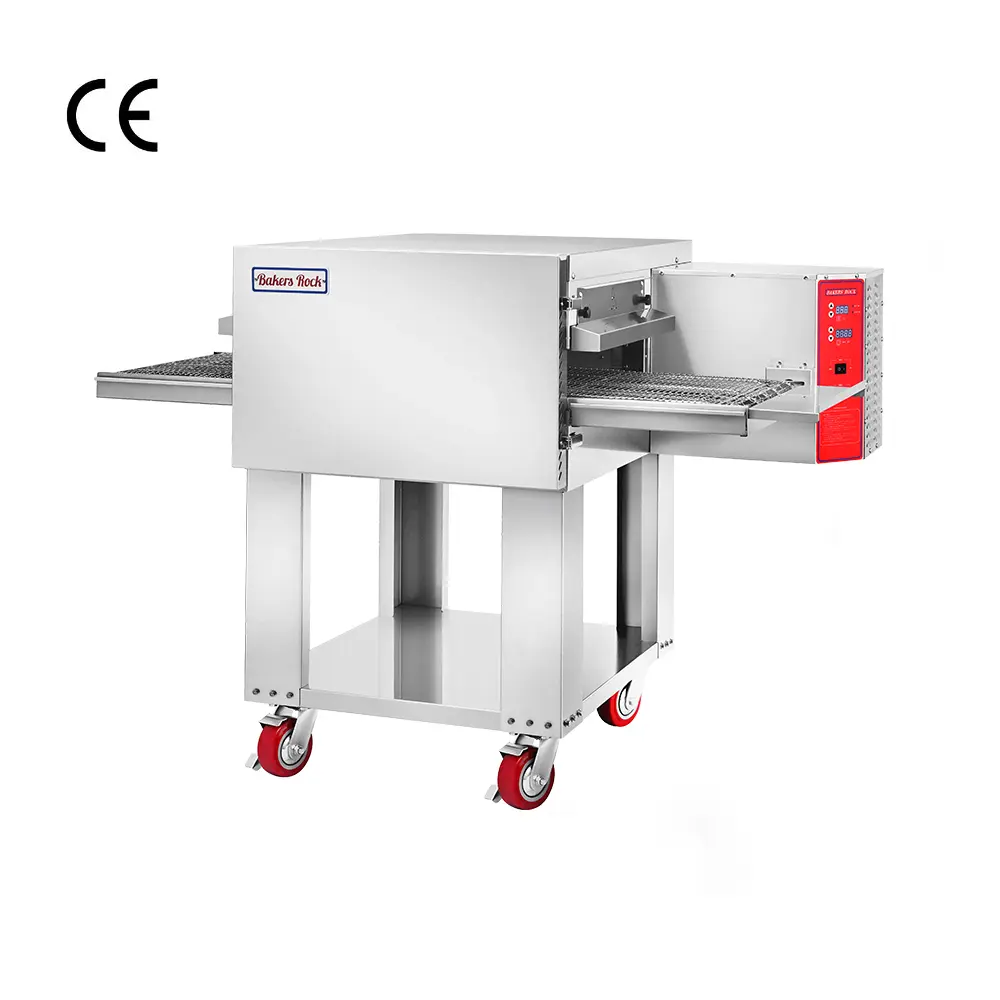
Bakers Rock describes its electric model family as an electric power hot-air-jet impinger conveyor oven. Its electric impingement oven range และ gas impingement oven range provide two equipment paths, but the correct choice still depends on site utilities, installation requirements, product testing, and the required operating window.
Pizza receives heat through several routes at once. Air impingement contributes forced convection at the exposed top and bottom surfaces. Direct contact with a screen, tray, belt, or stone can add conduction. Radiation from hot surfaces also contributes, especially as the chamber and product heat up. A buyer should ask how these routes are balanced rather than treating “impingement” as a complete recipe.
For a pizza with a moist center or heavy toppings, stronger upper transfer may brown cheese before the base is set. For a thin, dry base, excessive lower energy can darken the underside before the rim is finished. The product brief should therefore separate center set, bottom color, rim structure, topping finish, and texture after the intended hold.
The lower jet path deserves special attention. Confirm whether the quoted design has usable lower nozzles, what support is permitted, and how much of the belt opening remains available under the product. A recipe tested on an open mesh may not transfer to a solid pan or a screen with a small aperture.
In a conveyor impingement oven, belt speed is the practical process clock. Slowing the belt increases time in the heated chamber; increasing speed shortens it. The controller may display a nominal setting or an equivalent time, so commissioning should measure a fixed reference point from the defined chamber entrance to exit.
Specify heated travel length and measured chamber transit time separately from total conveyor length. Record the recipe’s air temperature, upper and lower settings, belt speed or time, support, loading spacing, and starting product condition. Use one change at a time when a trial fails. A useful temperature and belt-time guide can support the operating logic, but it cannot replace validation on the actual pizza.
Do not use a faster belt as a simple capacity upgrade. If residence time falls below the product’s validated window, the center may remain under-set or the base may retain too much moisture. If the belt slows to compensate, peak output can fall and a dense load may change chamber recovery. Capacity is saleable product per hour, not theoretical belt occupancy.
Thickness changes the distance heat must travel through the pizza and the amount of moisture that must leave before the center reaches its approved endpoint. A thin crust may tolerate a shorter chamber transit time but can overcolor quickly. A thicker or heavily topped product may need more residence time, a different support, or a different upper-to-lower heat balance.
Before comparing models, provide the supplier with diameter, thickness range, product mass, topping and sauce load, frozen or chilled starting condition, and the permitted tray, screen, or direct-belt method. Include the largest and heaviest approved version. Testing only an easy-to-bake sample creates a misleading purchasing result.
Define acceptance with the food-safety and product teams. Use the approved safety endpoint and measurement method for that product, then assess bottom color, center texture, rim, topping finish, and quality after the intended service hold. A browned topping is evidence about appearance, not proof that the center is ready.
Ask for a written specification that covers more than maximum temperature. At minimum, confirm usable belt width, heated chamber length, belt speed or time range, upper and lower control, nozzle or airflow arrangement, product clearance, support compatibility, preheat method, recovery expectations under the stated load, and cleaning access.
For an electric configuration, verify voltage, phase, frequency, connected load, and site clearances. For gas, verify fuel type, pressure, ventilation, extraction, electrical controls, and local installation requirements. These details are destination-specific across Europe, North America, the Middle East, and Southeast Asia; do not transfer a utility assumption from one store to another.
เบเกอร์ส ร็อคส์ H1624Pro countertop conveyor oven is listed with independent top and bottom temperature control and adjustable conveyor time from 1.5 to 15 minutes. That makes it a candidate for a controlled application review, not an automatic recommendation. Confirm the exact configuration and usable opening against the product and store plan.
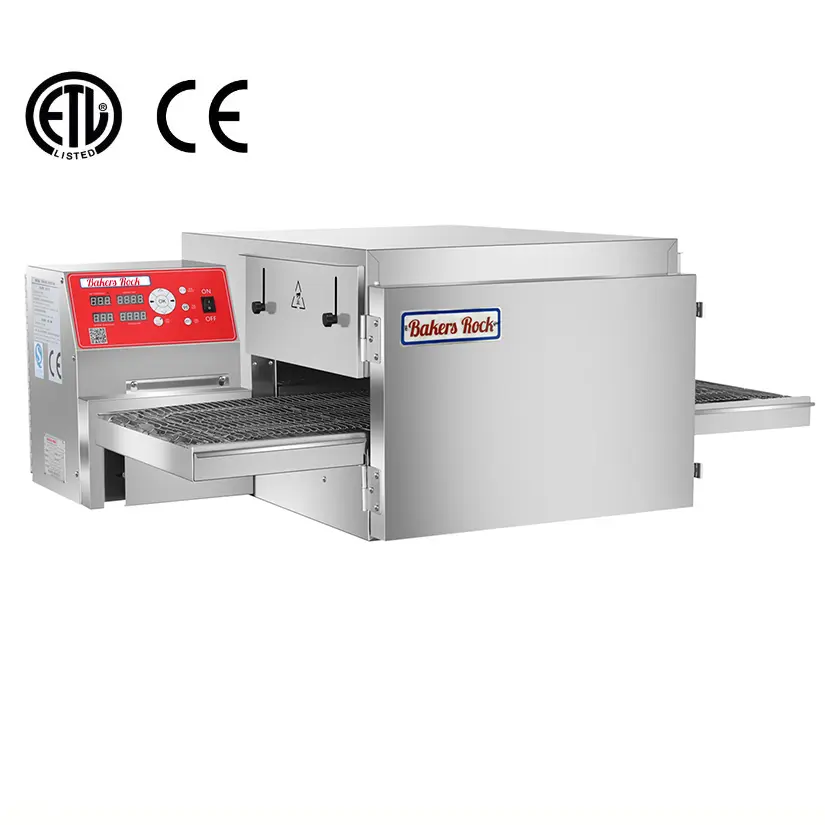
An air-impingement oven should be approved with the real product, not only a specification sheet. Agree on a written test before the quotation is finalized. Identify the oven configuration, support, product batch, starting condition, air settings, measured chamber time, loading pattern, and the pass/fail limits.
When the top is ready but the base is soft, verify lower airflow, support shielding, product thickness, loading density, and measured residence time before raising the top heat. When the base darkens first, check contact conditions and lower energy before simply slowing the belt. Keep food-safety decisions with the responsible team; an improvised second pass is not a substitute for a validated process.
Each store SOP should name the product code, support, frozen or chilled handling limit, preheat readiness, belt time, upper and lower settings, loading spacing, first-product check, and response to a failed result. Add cleaning instructions that keep nozzle openings clear and prevent residue from changing the support or airflow path.
Require a timed belt check after installation, maintenance, recipe change, or an extended idle period. Store managers should know which settings they may adjust and when to escalate. A new supplier, thickness, topping load, support, oven model, utility configuration, or control change should trigger a documented review and another test when it can affect heat transfer.
An air-impingement oven is best understood as a controllable heat-transfer system, not simply a faster conveyor oven. Air-jet pattern, lower-surface access, product thickness, belt time, support, and loading density work together. Buy the machine only after the actual pizza meets the written safety, quality, and saleable-output limits, then carry that measured recipe into every store.
Both move heated air, but impingement uses directed high-velocity jets aimed at the product. The nozzle pattern and usable lower airflow are key specification details.
Not necessarily. Product thickness, toppings, support, belt time, heat balance, and loading determine the validated result.
Specify a measured chamber transit time or a verified controller equivalent from the product test. Do not copy a number from another pizza or oven.
Test the real product at representative starting conditions and peak loading, then record center endpoint, crust and topping quality, recovery, rejects, and saleable output.
To confirm whether a Bakers Rock configuration fits your product, request an application test. Share product dimensions and thickness, mass, topping load, starting condition, support, target output, store countries, utilities, and current bake defects.