Nullam dignissim, ante scelerisque the is euismod fermentum odio sem semper the is erat, a feugiat leo urna eget eros. Duis Aenean một nguy cơ khẩn cấp.
Nullam dignissim, ante scelerisque the is euismod fermentum odio sem semper the is erat, a feugiat leo urna eget eros. Duis Aenean một nguy cơ khẩn cấp.
 tác giả
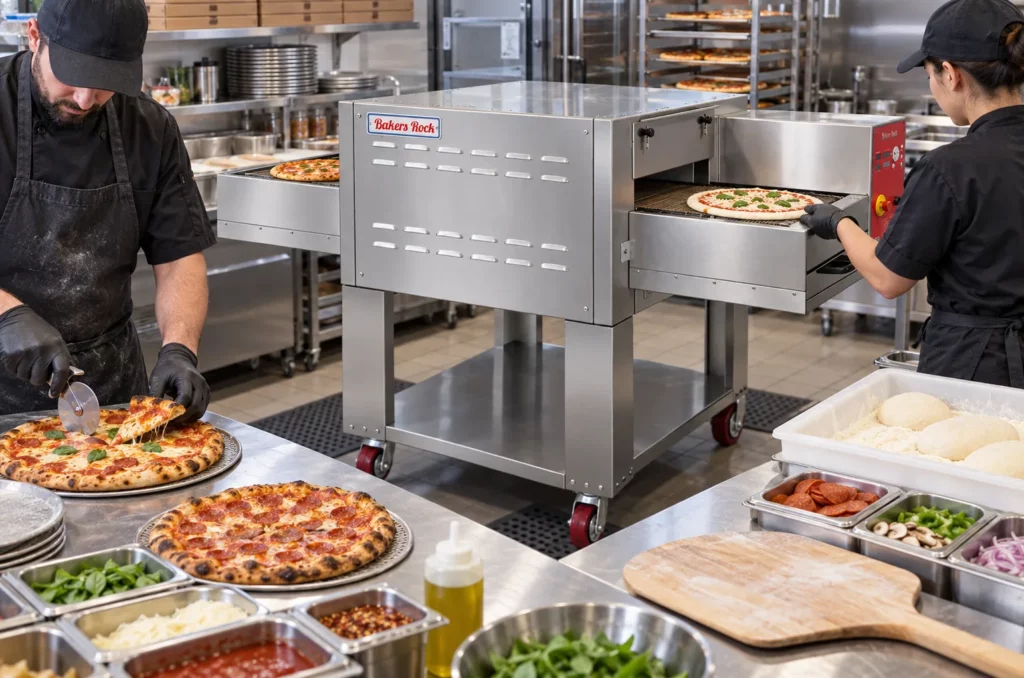
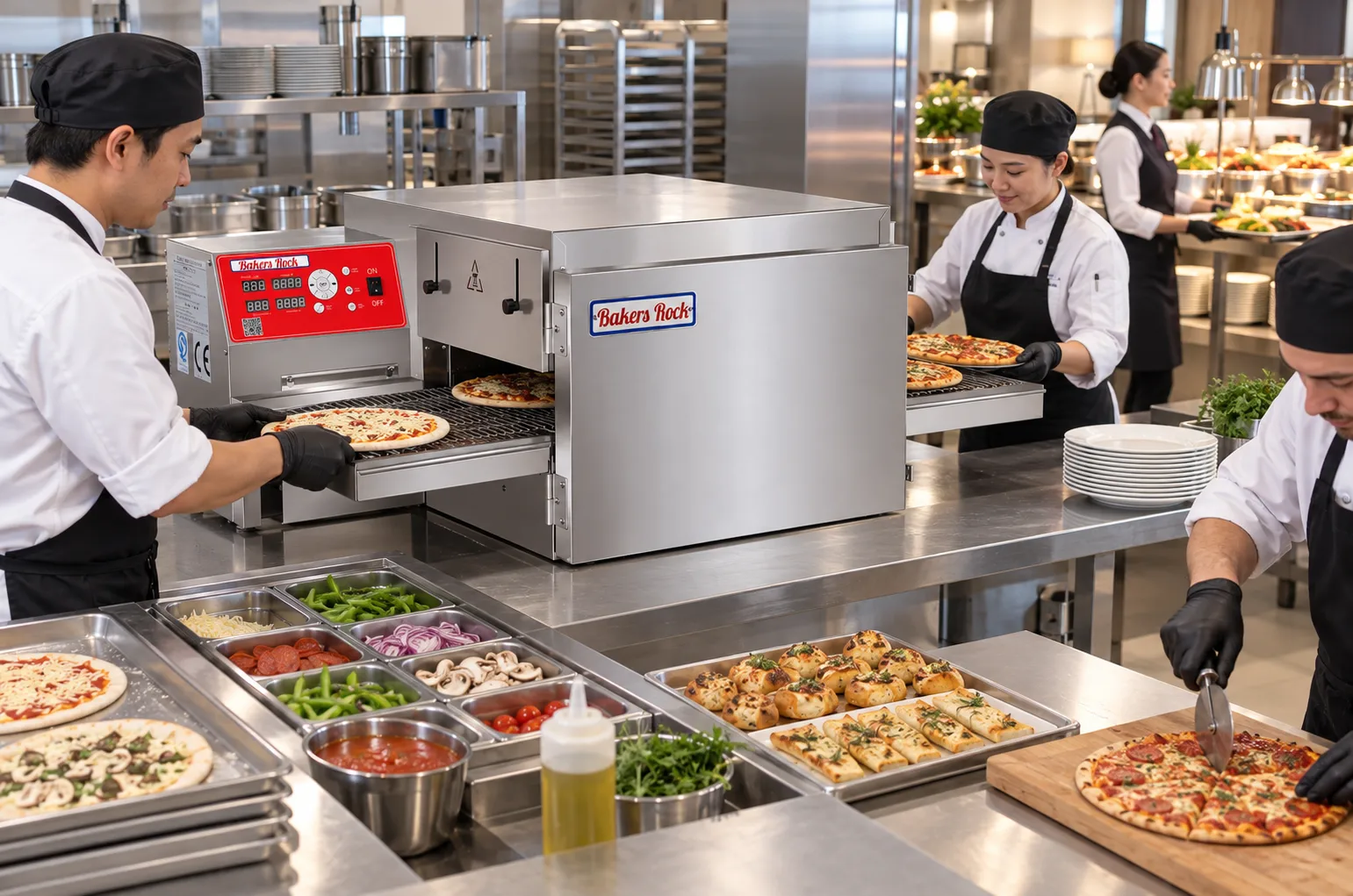
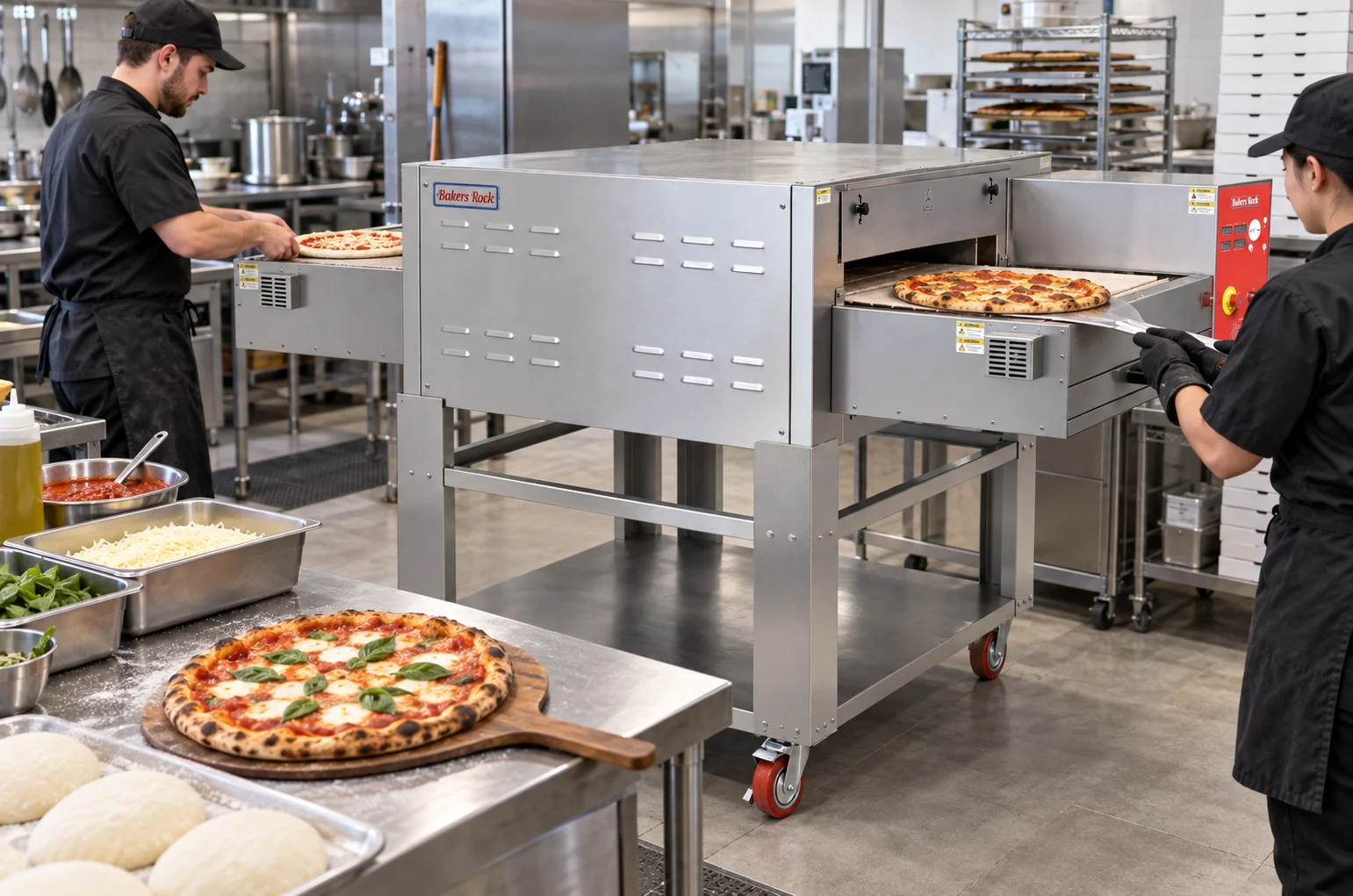
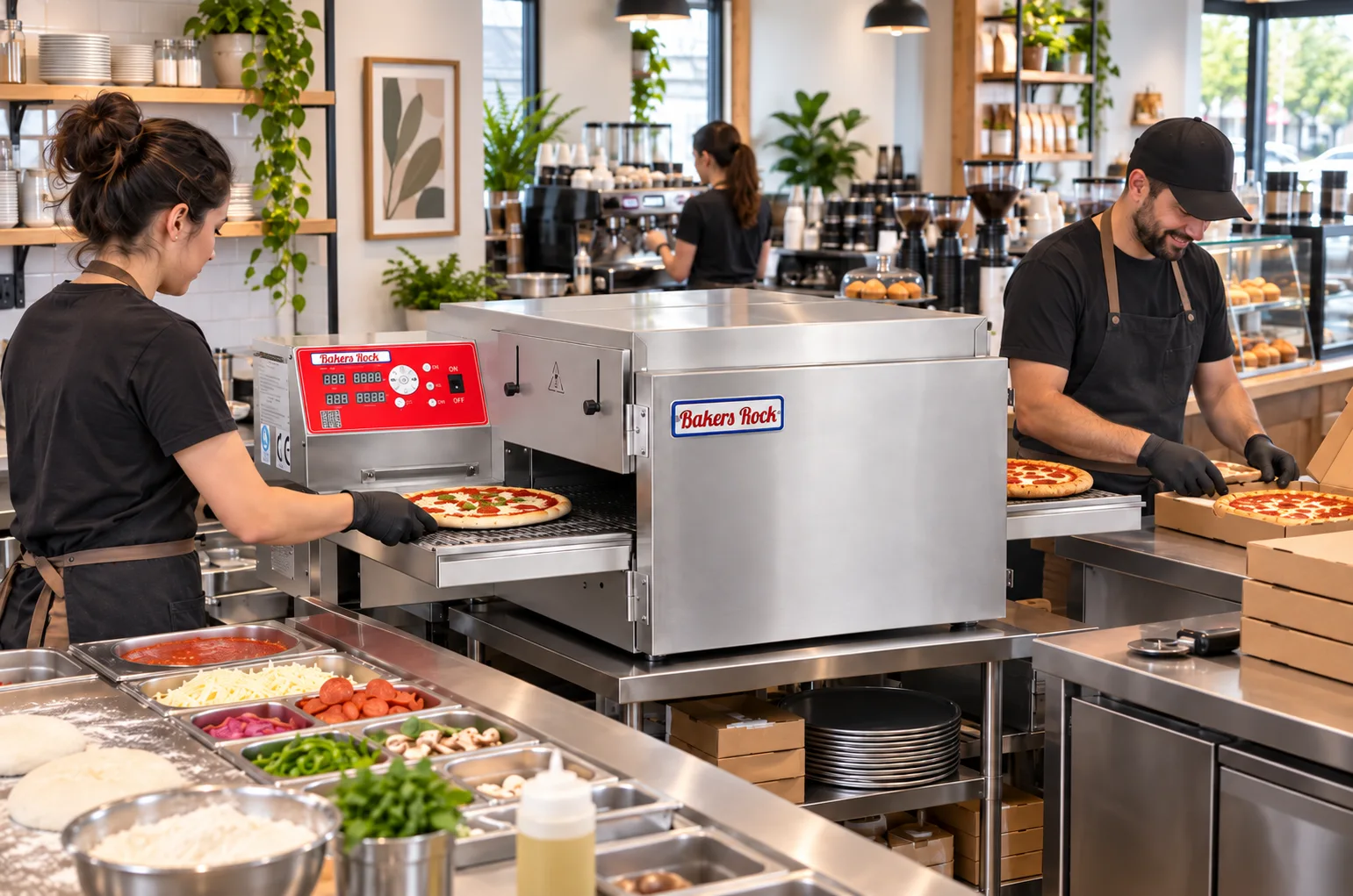
A crisp pizza base from a continuous line is created by managing three variables together: conductive heat from the baking surface, radiant heat from above, and the time the dough spends in the oven. A stone conveyor oven adds a fourth advantage: a refractory surface that transfers heat steadily while the belt moves. For commercial kitchens serving Europe, North America, the Middle East, or Southeast Asia, that combination can make a repeatable crisp crust possible at useful volume—provided the dough, toppings, temperature, and belt speed are matched.
A conventional stainless-steel conveyor belt mainly supports the product while heated air and top elements do most of the cooking. A stone conveyor oven replaces that belt, or the primary cooking section of it, with refractory stone fillets. The stone stores heat and returns it to each dough piece as it passes over the baking zone. That direct contact helps drive moisture out of the underside, set the crumb, and brown the base without requiring a separate deck-baking step.
The result is not automatically “better” for every pizza. It is better suited to operators who want a firmer, more structured base, an Italian-style bake, or a consistent floor texture across repeated cycles. Bakers Rock describes its stone conveyor platform as a high-temperature stone belt conveyor oven, with independent ceiling and floor temperature control and adjustable conveyor speed. Those controls let a production team tune the heat balance instead of relying on one fixed recipe.
When the dough lands on a hot refractory surface, heat moves directly into the dough by conduction. The contact zone begins to evaporate free water and firms the bottom layer. Because refractory stone has thermal mass, the surface can recover between products; recovery will still depend on preheat, loading rate, dough temperature, and oven configuration. A stone surface therefore supports a dry, browned underside without needing an extreme top heat setting.
Independent upper and lower temperature settings are important because the top of a pizza has a different job from the floor. Radiant and convective heat melt cheese, color the rim, and cook toppings, while the lower zone protects the base from staying pale or becoming brittle. If the top is too aggressive, cheese can brown before the center is baked; if the floor is too hot, the crust can darken before moisture has moved out of the crumb.
Continuous baking turns time into a production setting. A slower belt gives the center more time to set and the base more time to dry; a faster belt protects thin crusts and high-sugar toppings from over-browning. The correct setting is a process window, not a universal number. Bakers Rock application guidance lists examples such as Italian pizza at 245°C for about 4 minutes 50 seconds and other products at different times, but each shop should validate settings with its own dough thickness, topping load, and tray or screen.
Dough formulation comes first. Hydration, oil, sugar, fermentation, and dough temperature change how quickly the base dries. A wet, heavily topped pizza needs more drying capacity than a thin, lightly topped one. Docking or a controlled par-bake may be appropriate for some frozen or pre-cooked bases, but should be tested against the desired bite.
Next, control loading. Leave enough space for hot air to circulate and for the stone to contact the intended area of the base. Consistent placement reduces edge-to-center variation. If pizzas enter at different temperatures or with uneven topping weight, the oven may appear inconsistent even when its settings have not changed.
Finally, verify the exit product, not just the display. Check underside color, center set, rim structure, and the time the pizza remains crisp after cutting. Record the recipe, belt speed, upper and lower temperatures, product spacing, and ambient conditions. This simple bake log gives managers a repeatable baseline for shift changes and new staff.
A continuous line is valuable when the business needs predictable throughput: chain stores, delivery outlets, cafeterias, food factories, and multi-menu restaurants. A stone conveyor layout can also reduce the handoff between a loading employee and a finishing employee because the bake time is built into the moving belt. Stackable configurations allow capacity to grow when the kitchen, utilities, and ventilation plan support it.
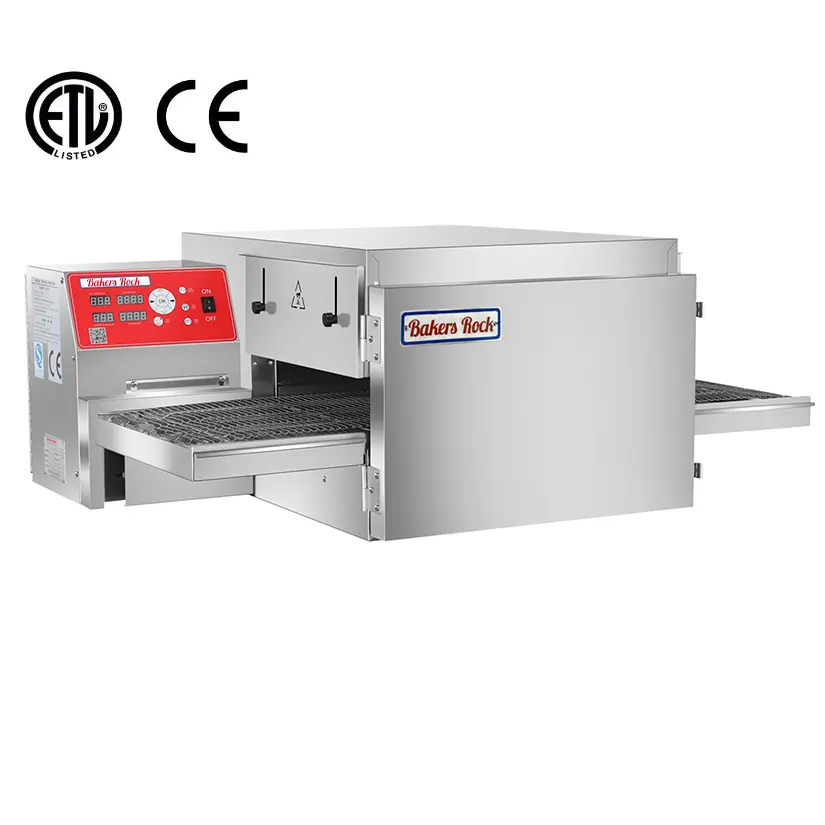
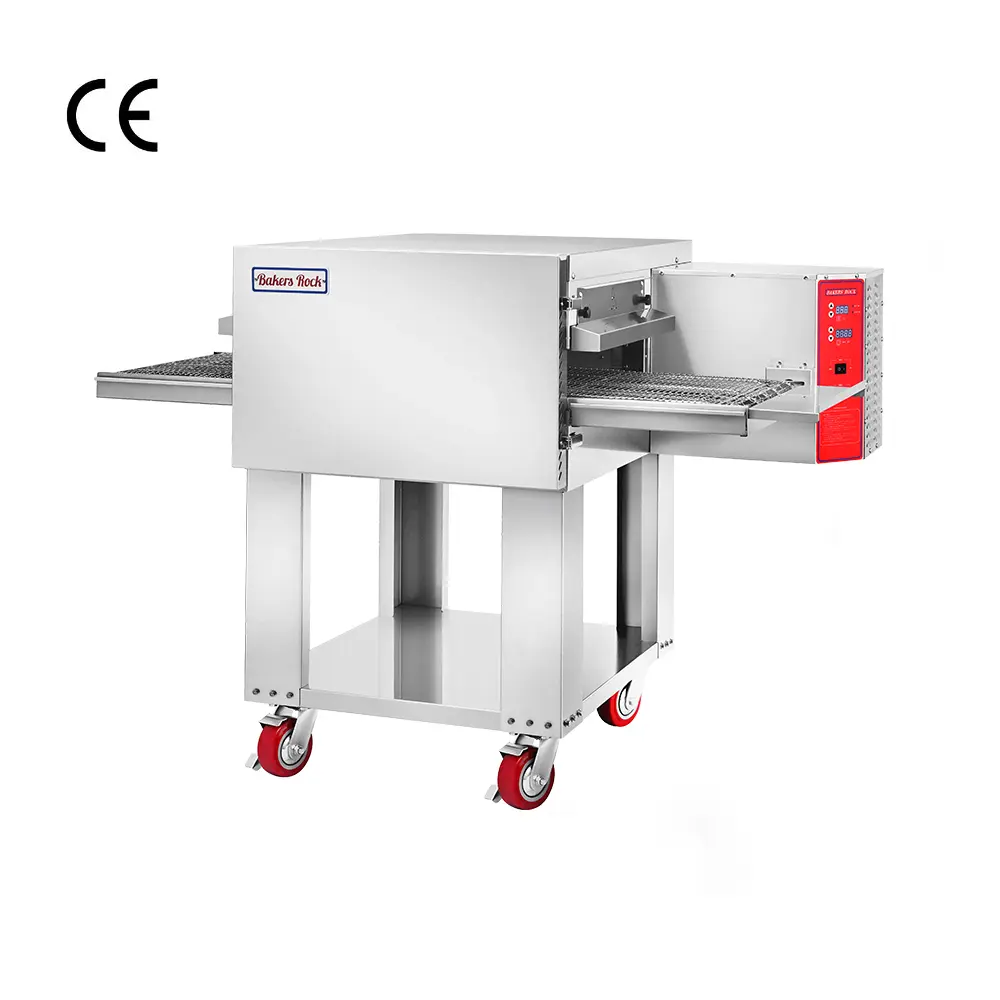
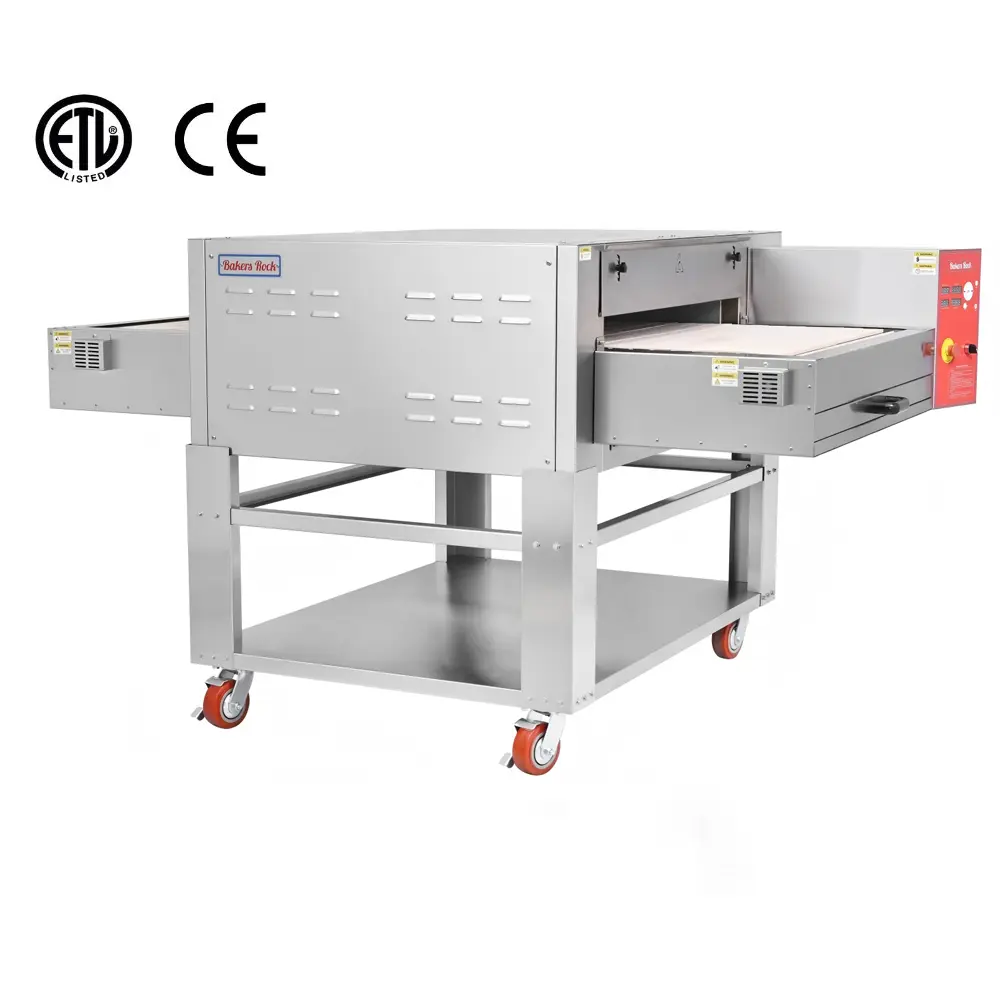
For a medium or large operation, belt width is a practical selection criterion. The 18-inch S1832 is listed for pizza chains, pizza factories, and baking plants, with a 450°C maximum setting, adjustable 1.5–18 minute timing, and an 18 by 32 inch heating area. The 32-inch S3240 is positioned for larger production and applications including pizza, frozen pizza, pre-cooked bases, burgers, tacos, and other foods. Treat these figures as model specifications to verify for the final electrical configuration and local installation requirements.
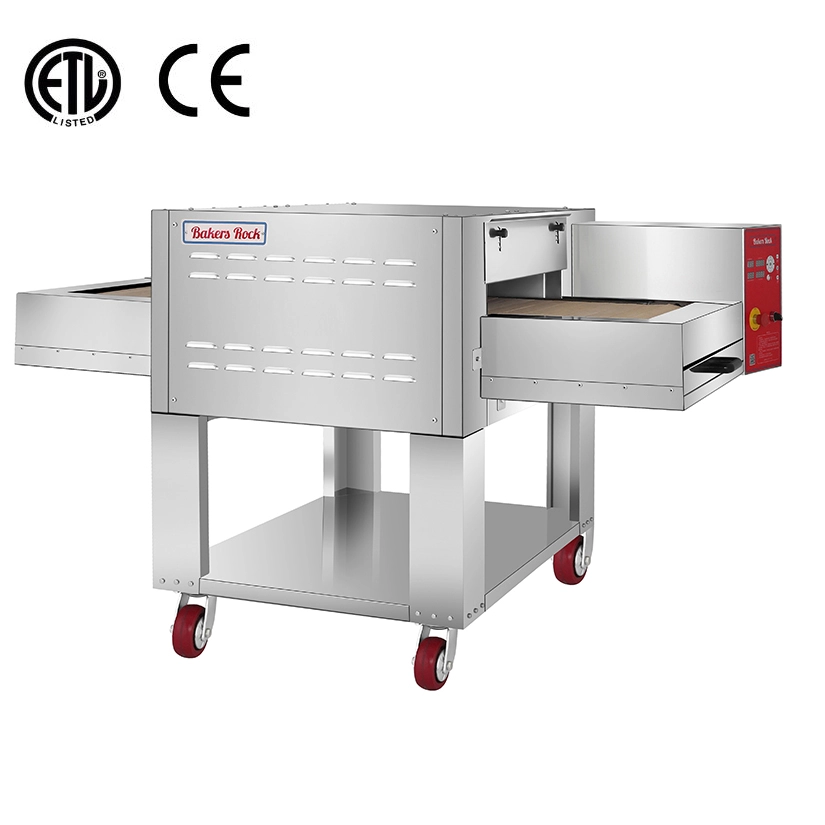
If the top looks ready but the base is soft, first check floor temperature, stone cleanliness, and belt speed. A buildup of flour or crumbs can reduce contact; a belt that is too fast can leave moisture in the center. If the base is dark before the toppings finish, reduce floor heat or shorten the contact time while preserving enough top heat to finish the rim.
Uneven browning often points to loading or airflow. Confirm that dough pieces enter square to the belt, that the stone path is clear, and that the recipe is not mixing different sizes in one setting. For a new menu item, change one variable at a time and keep a retained sample from each trial.
Before requesting an RFQ, prepare the information a supplier needs to size the process: pizza diameter and thickness, target pizzas per hour, fresh or frozen product, topping weight, desired bake time, available floor space, electrical or gas service, and whether the line must handle non-pizza items. Compare usable belt width, temperature range, speed range, independent top and bottom control, cleaning access, crumb collection, stackability, and service support.
Bakers Rock publishes a dedicated Stone Conveyor Oven product range and model pages for the 18-inch S1832 Và 32-inch S3240. Its application pages also show how temperature and time are set for specific foods. Ask for a fit check using your actual product samples before locking a line specification, especially when importing equipment into a market with different electrical standards.
Stone conveyor ovens create a crisp pizza crust by combining direct heat from a refractory surface with controlled upper heat and a precisely timed belt. The stone helps dry and brown the underside; independent zones protect the rim and toppings; and the moving belt turns a validated recipe into a repeatable production cycle. Crispness still depends on dough, load, spacing, and local operating conditions. When those inputs are documented and tested, a stone conveyor line can deliver the texture customers expect while supporting continuous commercial output.
Yes, stone conveyor models can be configured for frozen pizza, but the correct temperature and belt speed depend on the base, topping load, and whether the product is par-baked. Validate the full bake from frozen through holding time.
No. A deck oven holds pizzas on a stationary stone deck, while a stone conveyor oven moves products through controlled zones. The conveyor format is designed for repeatable flow and throughput.
Common causes include excessive topping moisture, a belt speed that is too fast, insufficient floor heat, or dough that entered colder or thicker than the validated recipe.
Share product dimensions, target hourly output, recipe details, utilities, available space, and any non-pizza applications. A supplier can then recommend belt width, heating configuration, and a test plan.
For a model recommendation or application trial, contact the Bakers Rock technical team with your pizza size, dough type, target output, available utilities, and a short description of the crust you want to achieve.