Nullam dignissim, ante scelerisque the is euismod fermentum odio sem semper the is erat, a feugiat leo urna eget eros. Duis Aenean un risus imperdibile.
Nullam dignissim, ante scelerisque the is euismod fermentum odio sem semper the is erat, a feugiat leo urna eget eros. Duis Aenean un risus imperdibile.
 autore
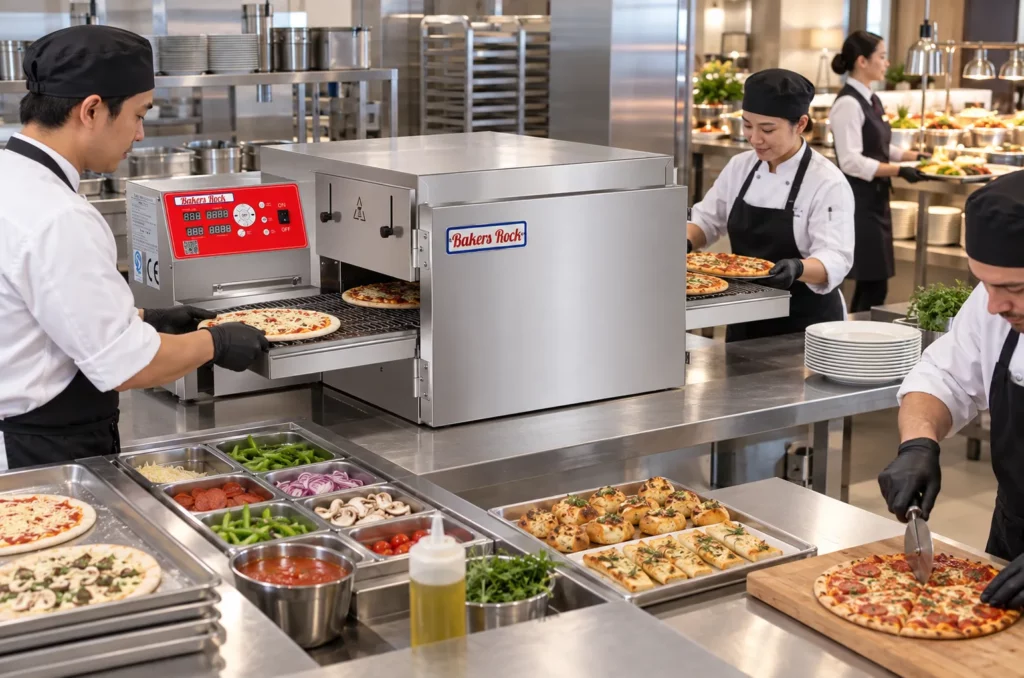
A hotel buffet conveyor oven can support consistent pizza, flatbread, and snack replenishment when the menu is organized into compatible bake programs and the oven is sized for the busiest refill window. The operational goal is not maximum hourly output. It is a predictable flow of small, fresh batches that reaches the buffet before trays run empty or product quality declines in holding.
Choose the oven only after testing the real recipes, service cadence, belt loading, utilities, ventilation, and handoff route. Repeatable settings still depend on disciplined preparation, loading, and coordination with the buffet team.
Guests experience consistency as availability and repeatable quality. A pizza should not disappear and return as an oversized batch that sits too long. Flatbread and snacks should retain the finish established during testing. Set a replenishment standard for quantity, timing, appearance, and acceptable holding time.
Set a target batch size for quiet, normal, and peak periods. Use occupancy forecasts, historical covers, group schedules, and live buffet observations to estimate demand, but adjust production from actual tray depletion. The oven schedule should respond to guest flow rather than run continuously at one fixed rate.
A conveyor oven is most efficient when products can share a validated combination of time, upper heat, lower heat, and belt loading. Group menu items by dough thickness, moisture, topping weight, cookware, and target finish. Pizza and some flatbreads may share a program after testing; heavily topped products, delicate pastries, or dense snacks may require separate settings.
Do not assume that similar dimensions mean identical baking behavior. A thin flatbread can dry before a thick pizza finishes, while a frozen snack may cool the chamber differently from a room-temperature product. If two products need incompatible programs, schedule them in separate replenishment blocks or evaluate whether another appliance should handle the lower-volume item.
Daily covers do not determine conveyor capacity. Measure how many portions must be ready during the busiest 15-minute and 30-minute refill windows. Convert portions into whole pizzas, flatbreads, or snack trays, then include realistic loading gaps and time for cutting, garnishing, and transport to the buffet.
Test consecutive loads after the oven has fully heated. Count acceptable finished products per interval rather than the number that can physically enter the chamber. Throughput may vary with product size, recipe, belt speed, temperature, loading pattern, chamber configuration, and operating conditions. Ask the supplier to state the conditions behind any capacity figure.
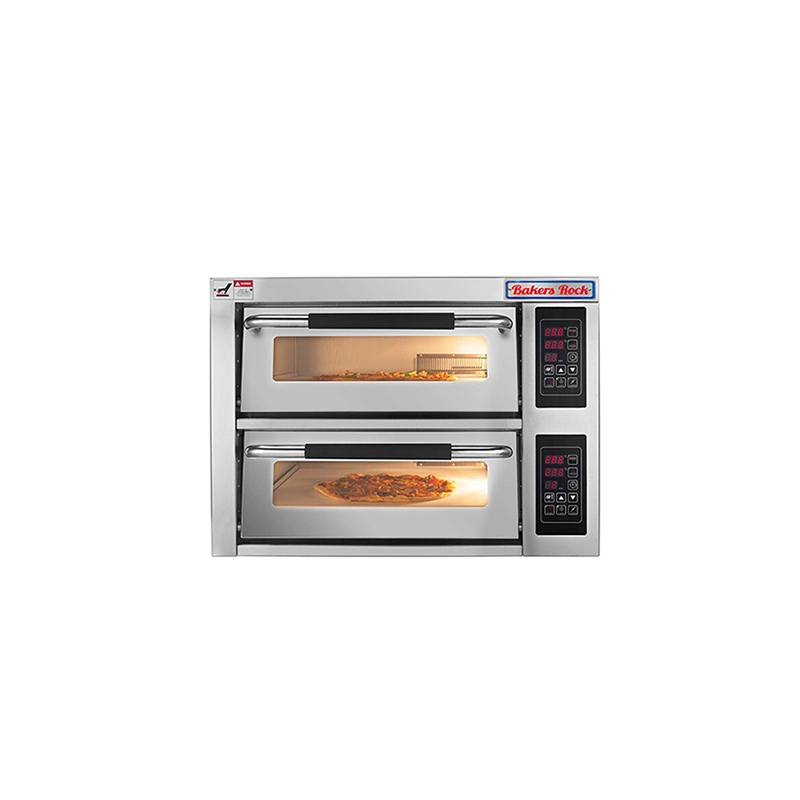
Oversizing can create larger holding batches and higher utility or ventilation demands. A smaller unit or approved stacked arrangement may be more responsive when demand changes between breakfast, lunch, events, and late service.
Arrange a one-direction production path from chilled or dry storage to assembly, loading, discharge, finishing, cutting, transport, and display. Protect landing space at both ends of the conveyor. The discharge area must accommodate hot trays without blocking the next product or forcing staff to cross the loading position.
Assign ownership for each refill signal. The buffet attendant should identify low stock early enough for the kitchen to complete the next batch, while the kitchen should confirm when it enters the oven and when it leaves. A simple visual ticket or digital cue can prevent duplicate batches and avoid gaps caused by verbal messages during a busy service.
Coordinate holding and discard limits with the hotel’s food-safety plan and applicable local requirements. The conveyor oven supports production; it does not replace temperature control, protected transport, allergen procedures, or buffet monitoring.
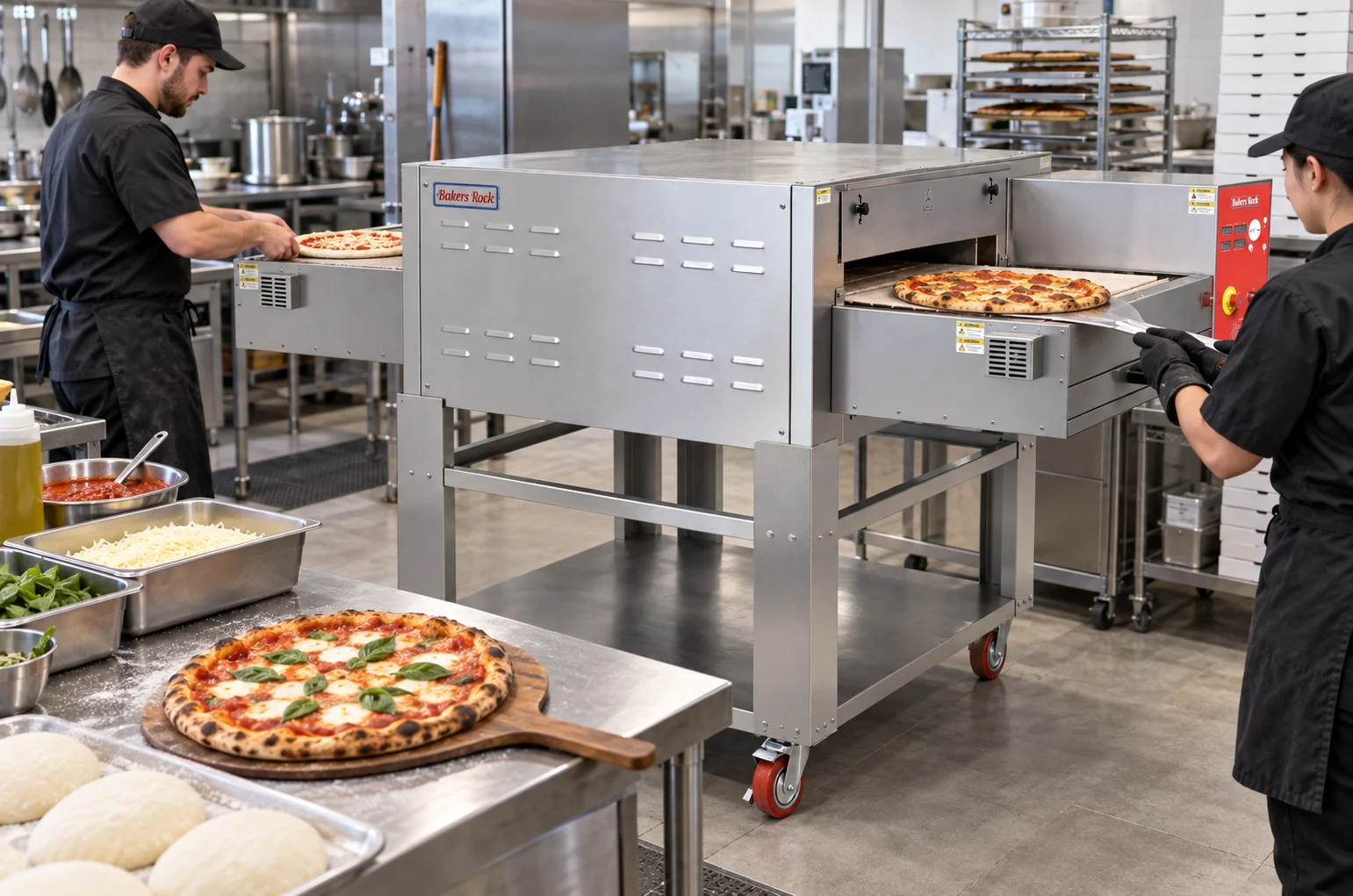
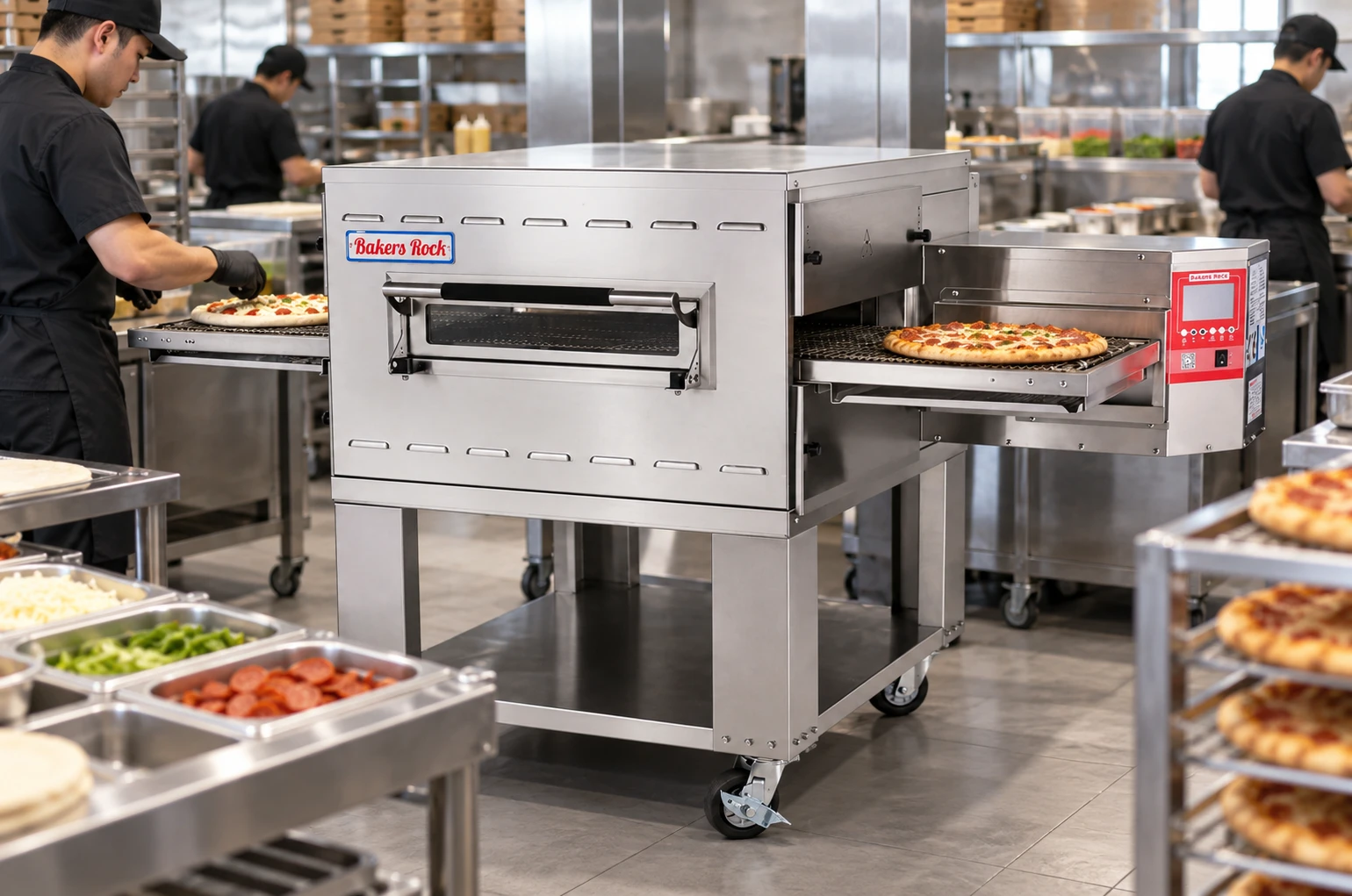
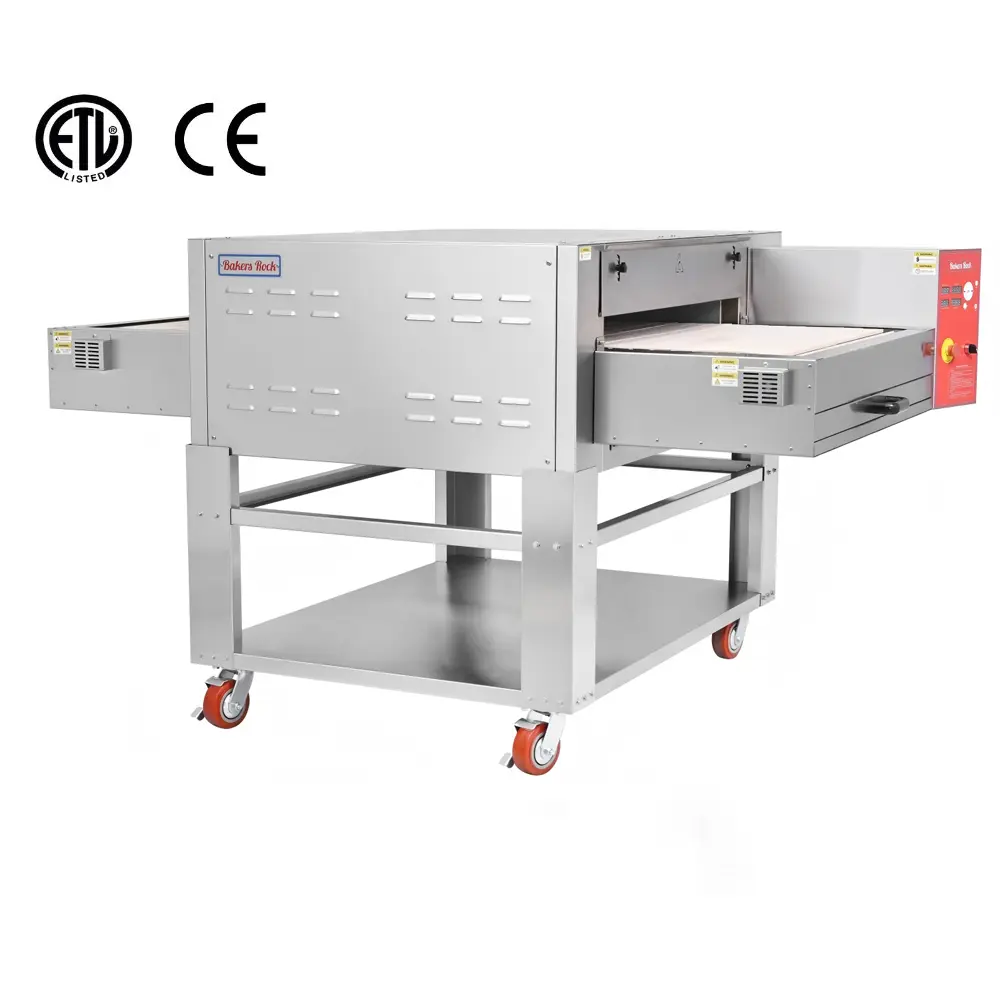
Start with usable belt width and chamber opening, then compare bake-time range, maximum temperature, controls, rated input, dimensions with trays, cleaning access, and service clearances. Bakers Rock’s electric impingement oven range provides a starting point for comparing electric conveyor formats, but each model still needs to be matched to the actual menu and site.
Include entrance and exit trays, ventilation provisions, landing surfaces, disconnect access, utility routing, and space to remove panels or the belt. A model can fit the schedule yet still interfere with preparation, holding, or staff circulation.
Europe, North America, the Middle East, and Southeast Asia do not share one electrical or approval standard. Confirm voltage, phase, frequency, rated load, connection type, available circuit capacity, and the destination-specific configuration before ordering. A voltage label alone is not enough to prove site compatibility.
Ventilation and fire-safety requirements can depend on the appliance, food, fuel, local authority, insurer, and hotel standards. Obtain written approval before finalizing the installation. Confirm how staff set time and heat, protect settings, operate standby modes, and access components for cleaning.
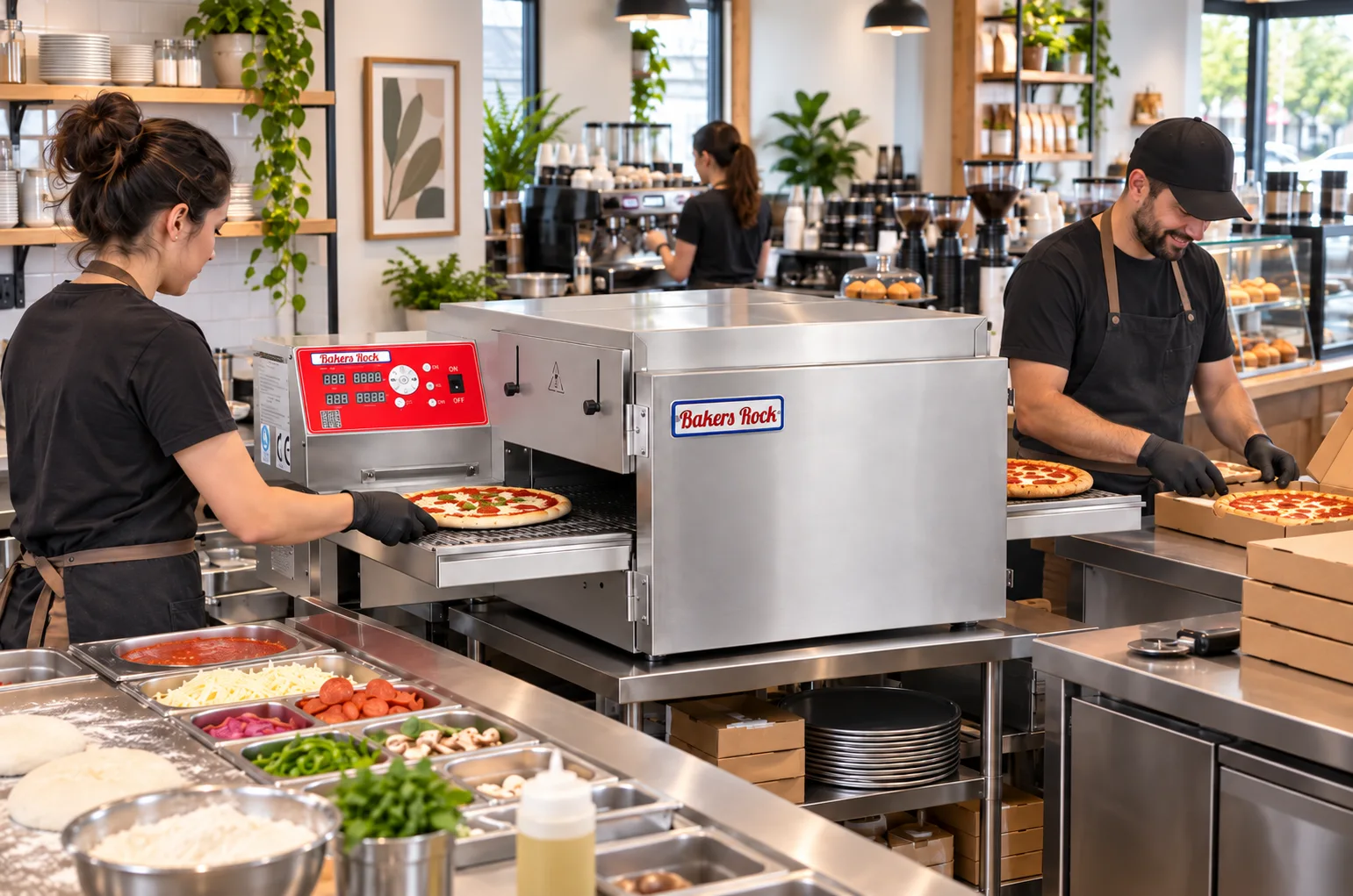
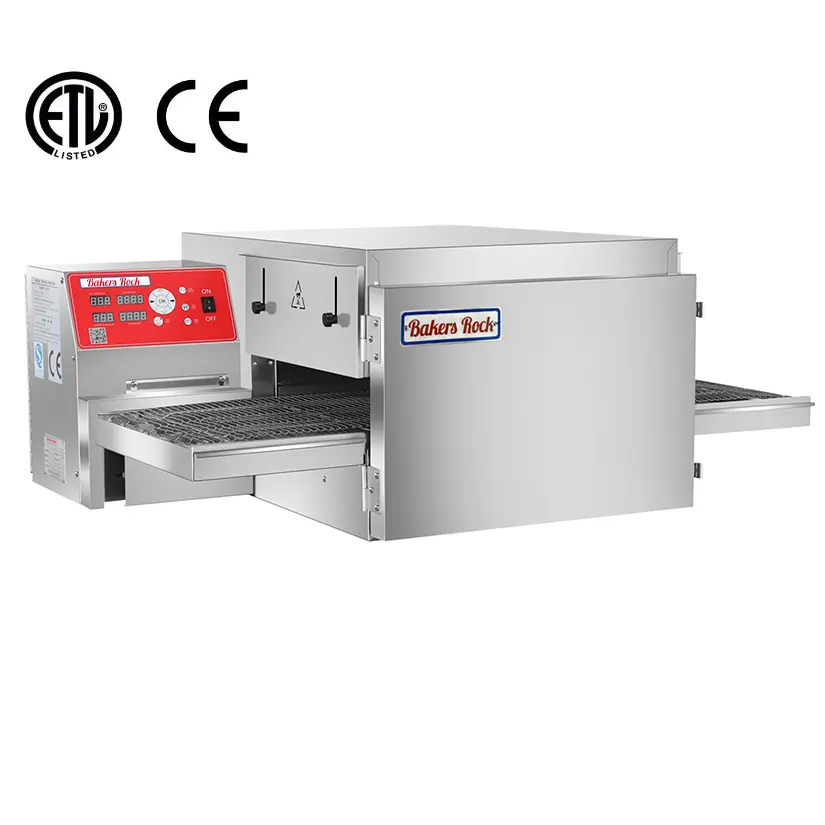
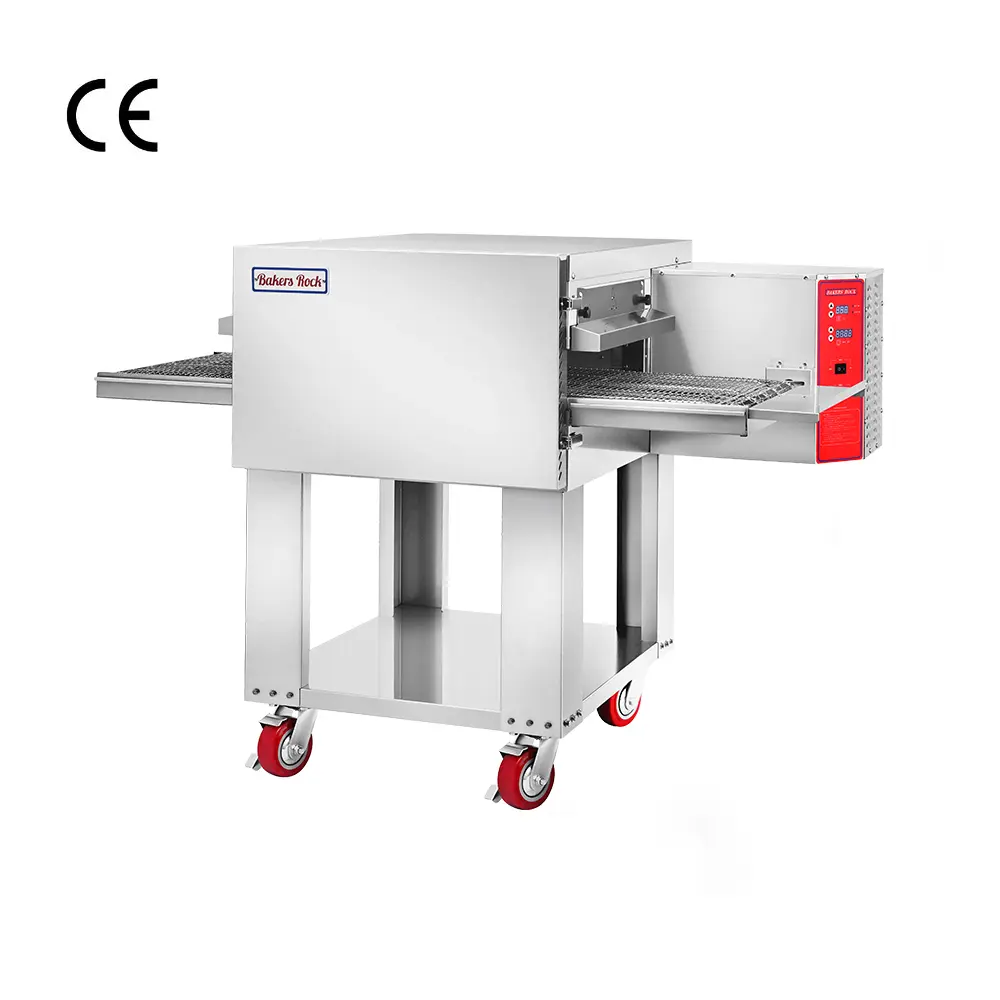
IL 16 Inch Countertop Conveyor Oven is presented for applications including buffets. Its official page lists a 16 x 24-inch heating area, main dimensions of 1215 x 850 x 481 mm, dimensions of 1600 x 850 x 481 mm with extension trays, 6.8 kW rated power, 220/380 V variants, an adjustable 1.5-15 minute setting time, and a maximum temperature of 320 ℃.
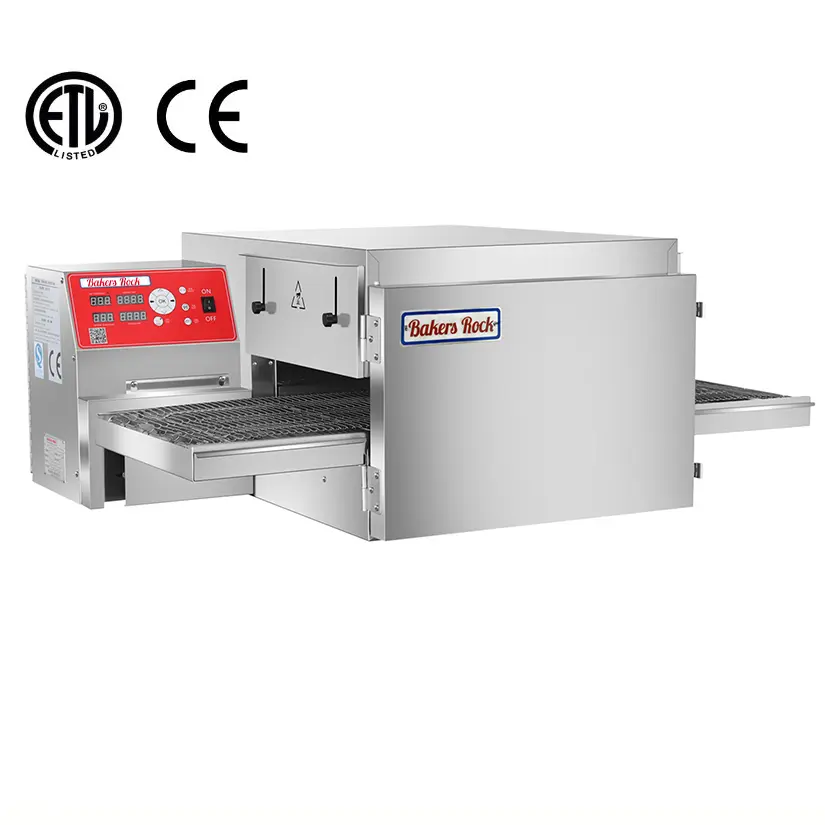
The page also describes independent upper and lower temperature control, an ECO mode, entrance and exit trays, button controls, maintenance-oriented features, and stackability. These are useful screening characteristics for a buffet, but they do not establish menu compatibility or output by themselves. Test the hotel’s pizza, flatbread, and snack products under consecutive loads and confirm stacking, clearances, ventilation, and utilities for the proposed installation.
Smaller buffet stations can use the countertop conveyor oven buying guide to review belt and footprint questions. A hotel should add its own replenishment schedule, product mix, engineering limits, and back-of-house travel time to that comparison.
Before procurement, test the highest-volume product, the hardest product to bake consistently, and at least one mixed replenishment sequence. Record warm-up, settings, load spacing, acceptable output, recovery, finishing time, and cleaning steps. Repeat the trial with the pans, screens, and starting temperatures planned for hotel service.
Send the supplier a menu matrix, product dimensions and weights, peak refill quantities, kitchen drawing, utility schedule, ventilation plan, destination market, quantity, and required technical documents. Request written test conditions so the culinary and engineering teams can evaluate the same configuration.
Consistent hotel buffet output comes from linking recipe control, refill cadence, equipment capacity, and staff communication. Group compatible products, size the oven around the busiest refill window, protect the kitchen-to-buffet handoff, and verify the complete installation. A conveyor oven is effective when it produces the right small batch at the right time, not simply when it runs at maximum speed.
Sometimes, but only after testing confirms compatible dough, moisture, topping load, cookware, and target finish. Products that need materially different time or heat settings should run in separate blocks or on another appliance.
Measure product demand during the busiest 15-minute and 30-minute refill windows, convert portions into whole products or trays, and test consecutive loads. Include finishing, transport, and holding limits in the calculation.
It may be suitable for a smaller station, a limited menu, or phased replenishment. The decision depends on tested output, installed footprint, utilities, service timing, and whether an approved stacked configuration is needed.
Approve the exact electrical or gas configuration, ventilation, fire-safety provisions, clearances, landing space, drainage or cleaning arrangements where relevant, service access, and the route for moving equipment into position.
To evaluate a specific buffet program, send the menu matrix, peak refill schedule, layout, utilities, and destination requirements when you request an application fit check from Bakers Rock. Final suitability should be confirmed against the current model specification and local approvals.