Nullam dignissim, ante scelerisque the is euismod fermentum odio sem sempre das ist erat, ein feugiat leo urna eget eros. Duis Aenean ein unverschämtes Risiko.
Nullam dignissim, ante scelerisque the is euismod fermentum odio sem sempre das ist erat, ein feugiat leo urna eget eros. Duis Aenean ein unverschämtes Risiko.
 Autor
Autor
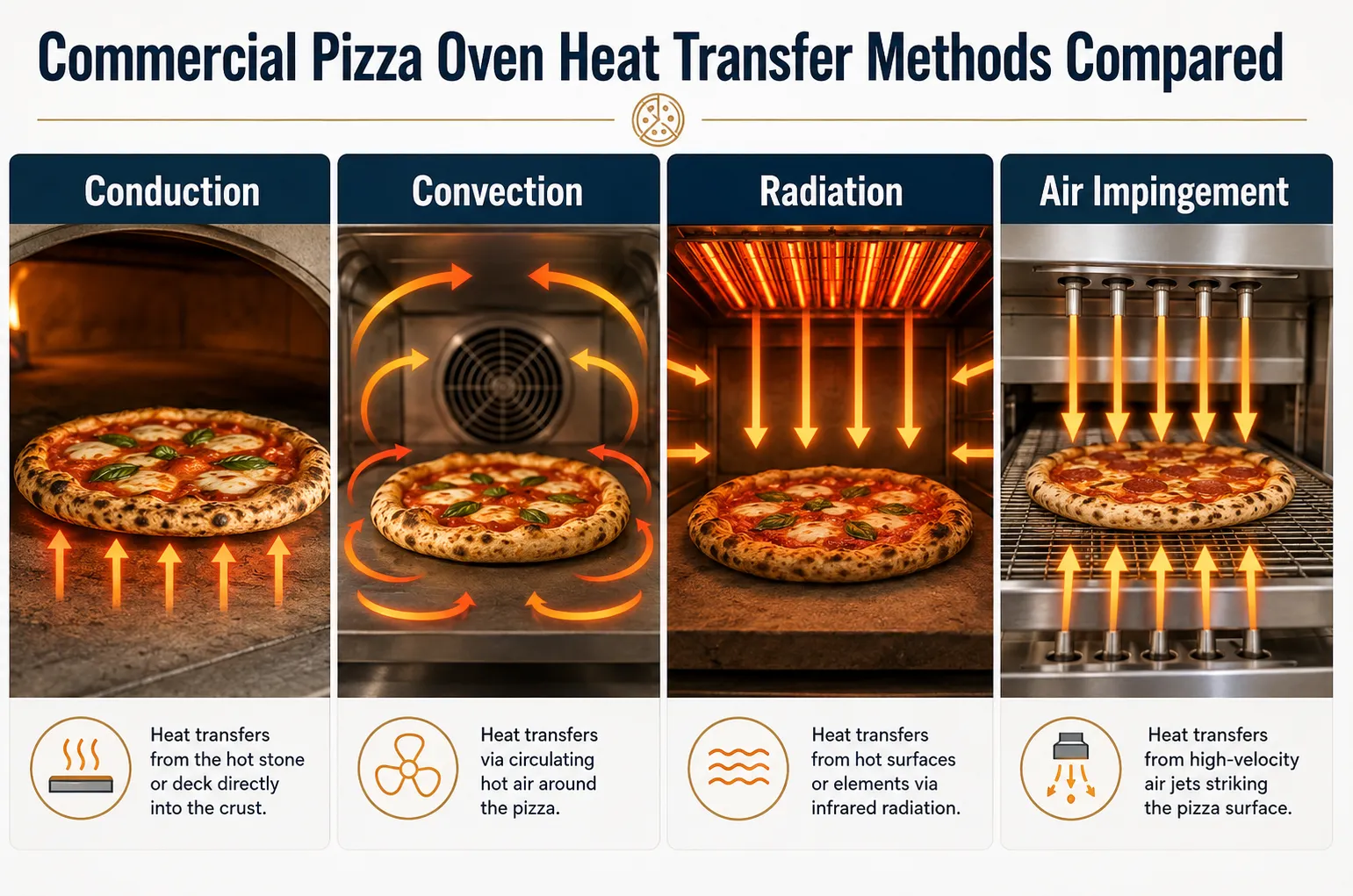
Die Wärmeübertragung in einem gewerblichen Pizzaofen wird nicht allein durch die Maximaltemperatur bestimmt. Für Restaurantbetreiber und Gerätekäufer ist vielmehr die Frage relevant, wie die Wärme die Pizza erreicht und ob dieser Wärmeweg den Anforderungen an Teig, Belagmenge, Produktionsmenge und Arbeitsablauf entspricht.
Wärmeleitung, Konvektion und Wärmestrahlung wirken beim Backen normalerweise gleichzeitig. Die Ofenkonstruktion beeinflusst deren relative Bedeutung, anstatt einen Mechanismus vollständig zu isolieren. Untersuchungen zum Pizzabacken zeigen, dass Wärmeleitung durch die Backfläche eindringt, während Wärmestrahlung und Konvektion zur Erwärmung der exponierten Oberflächen und der Umgebung beitragen.
Das Verständnis dieser Unterschiede hilft Käufern, Heizsysteme für gewerbliche Öfen intelligenter zu vergleichen und Aussagen der Anbieter wie „gleichmäßige Erwärmung“ unter realistischen Bedingungen zu überprüfen.
In einem gewerblichen Pizzaofen spielen drei grundlegende Wärmeübertragungsmechanismen eine Rolle.
Leitung geschieht durch direkten Kontakt, beispielsweise durch Hitze, die von einem heißen Stein oder einer Backfläche in den Pizzaboden übertragen wird. Konvektion Überträgt Energie durch bewegte Heißluft. Strahlung Die Energie wird von heißen Heizelementen und den Oberflächen des Backraums auf die freiliegenden Bereiche des Backguts übertragen. Untersuchungen zum Pizzabacken bestätigen, dass diese Mechanismen gleichzeitig ablaufen können.
Die Luftaufprallmethode ist eine spezielle Form der erzwungenen Konvektion. Anstatt sich hauptsächlich auf eine sanfte Luftzirkulation zu verlassen, wird die erhitzte Luft gezielt auf die Oberfläche des Backguts gerichtet, wodurch der konvektive Wärmeaustausch verstärkt wird. Untersuchungen zum Backen mit Luftaufprallmethode haben diesen Mechanismus speziell für dünne Backwaren analysiert.
| Heizpfad des Ofens | Haupteffekt zur Bewertung | B2B-Käufer sollten Folgendes prüfen |
|---|---|---|
| Leitung | Bodenflächenheizung | Backfläche, Rückgewinnung, Bodenoberfläche |
| Konvektion | Wärmebewegung um das Produkt herum | Luftstromkonstanz und Lastreaktion |
| Strahlung | Freiliegende Oberflächenheizung | Bräunung der Oberseite und Kammerbalance |
| Luftaufprall | gerichtete erzwungene Konvektion | Gleichmäßigkeit, gleichmäßige Zufuhr von oben/unten, gleichbleibende Leistung bei kontinuierlicher Belastung |
Das praktische Ziel besteht nicht darin, zu entscheiden, welcher Wärmeübertragungsmechanismus allgemein überlegen ist. Vielmehr geht es darum, diejenige Kombination zu finden, die zum Menü und zum Produktionsmodell passt.
Die Wärmeleitung spielt eine besonders wichtige Rolle, wenn die Pizza direkt auf einer heißen Backfläche liegt. Ein feuerfester Stein, eine Deckfläche, eine Pfanne, ein Sieb oder ein Metallförderband erzeugen unterschiedliche Kontaktbedingungen, sodass zwei Öfen, die mit ähnlichen Garraumtemperaturen betrieben werden, unterschiedliche Ergebnisse beim Boden liefern können.
Der Steinkontakt verdient eine genauere Betrachtung, wenn die Entwicklung der Bodenkruste für die Produktspezifikation von Bedeutung ist. Die Oberfläche speichert Wärme und überträgt die Energie direkt an den Boden, wo der Kontakt stattfindet. Bakers Rock führt Hochtemperatur-Steinbandöfen als eigenständige Produktkategorie, und auch die Etagenöfen des Sortiments nutzen eine andere Backarchitektur als die Heißluft-Durchlauföfen.
Allerdings sollte die Verwendung eines Pizzasteins nicht automatisch als Qualitätsgarantie verstanden werden. Käufer sollten sich nach dem tatsächlichen Produkttest, der Steintemperatur, der Formstabilität bei wiederholter Belastung, den Ausgangsbedingungen für die Pizza und danach erkundigen, ob der Test dem vom Restaurant vorgesehenen Rezept entspricht.
Zu viel Hitze von unten kann ebenfalls zu einem Ungleichgewicht führen, wenn der Boden schneller gart als der Belag oder die Mitte. Die entscheidende Frage ist daher, ob die Wärmeleitung an der Oberfläche dem gewünschten Garprofil entspricht – und nicht, ob ein Material traditioneller klingt.
Die Konvektion gewinnt an Bedeutung, wenn die erwärmte Luft die Pizza umströmt. In industriellen Förderanlagen kann ein gezielter Luftstrom genutzt werden, um die Geschwindigkeit zu erhöhen, mit der die Wärmeenergie die Oberfläche des Produkts erreicht.
Beim Prallbacken werden gezielte Luftstrahlen eingesetzt, anstatt sich nur auf die allgemeine Kammerzirkulation zu verlassen. Experimentelle Untersuchungen zum Prallbacken haben erforscht, wie diese Art der Luftströmung den Wärmeübergang und die Produktleistung beeinflusst.
Für ein Restaurant liegt der praktische Vorteil nicht einfach in „mehr Luft“. Gezielte Luftzirkulation ist besonders wertvoll, wenn es im Betrieb auf eine kontrollierte und reproduzierbare Garung ankommt, während die Produkte kontinuierlich durch den Ofen transportiert werden. Dies ist insbesondere für Lieferdienste, Restaurantketten und andere Küchen relevant, in denen die Produktion von verschiedenen Mitarbeitern oder an verschiedenen Standorten reproduziert werden muss.
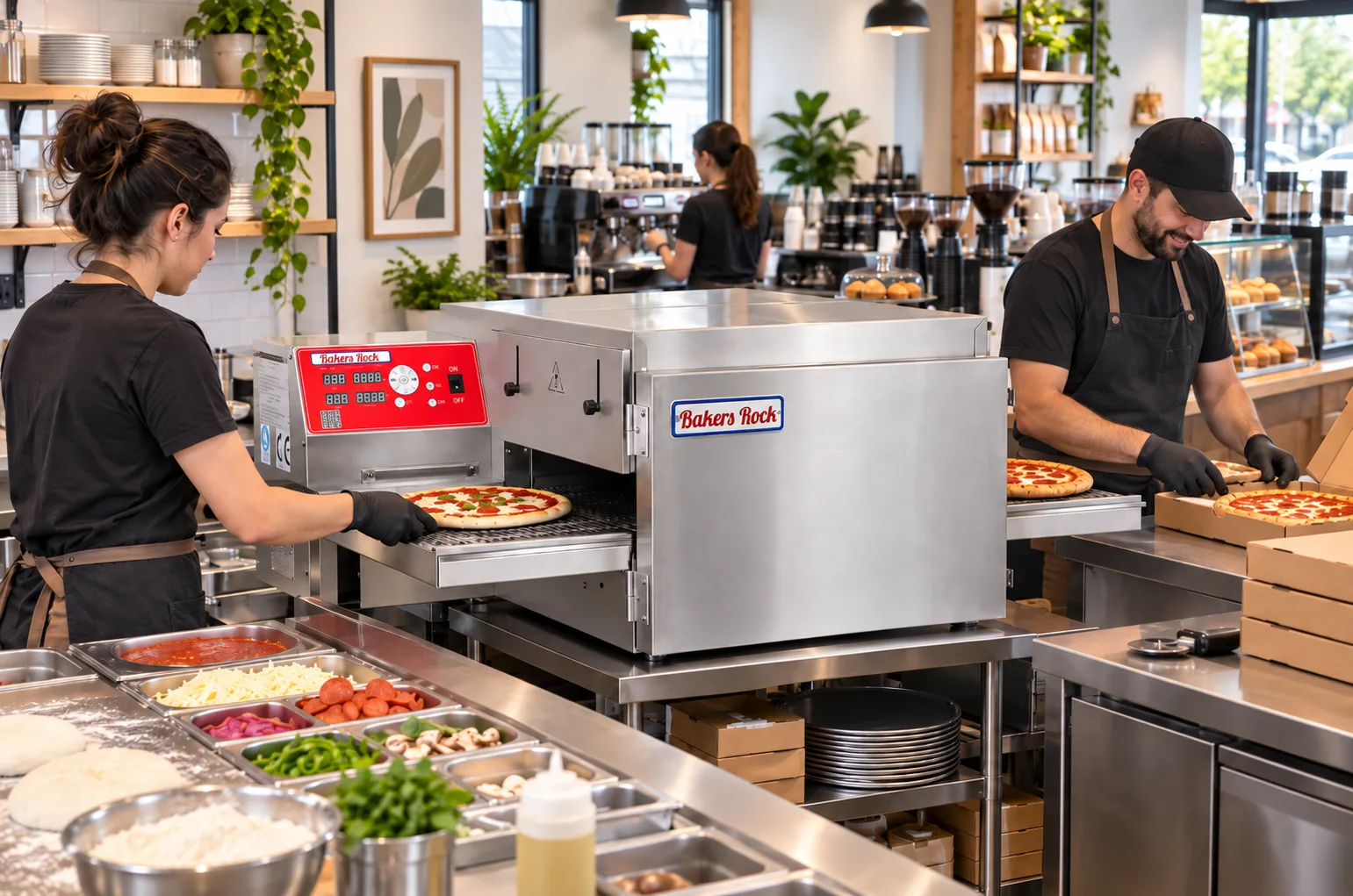
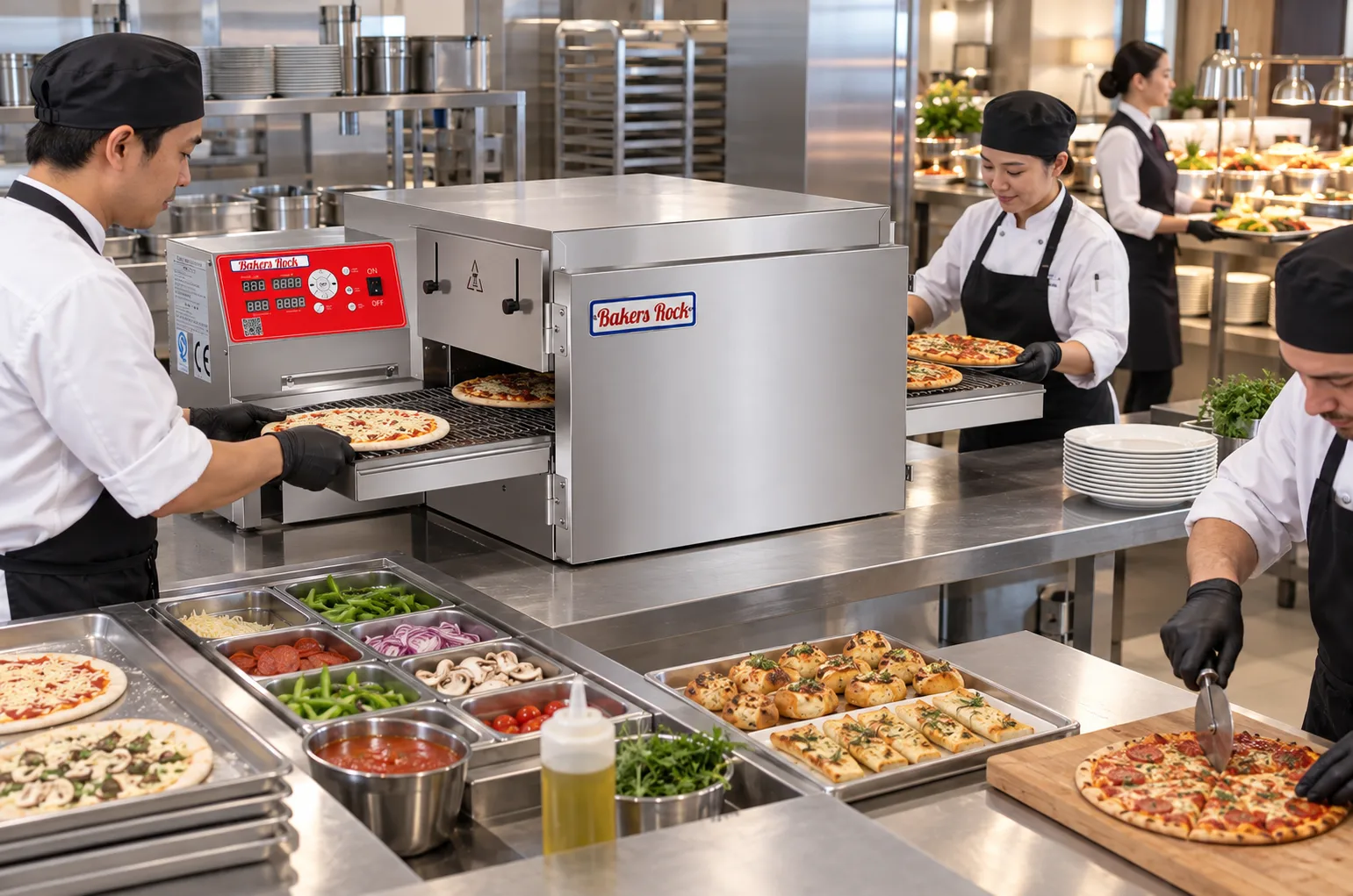
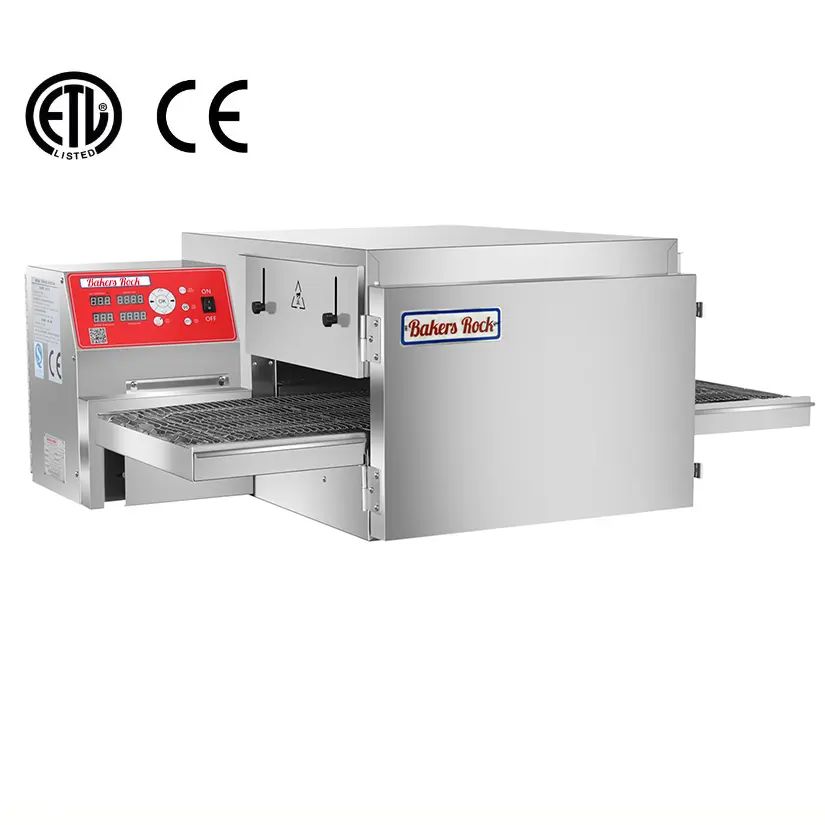
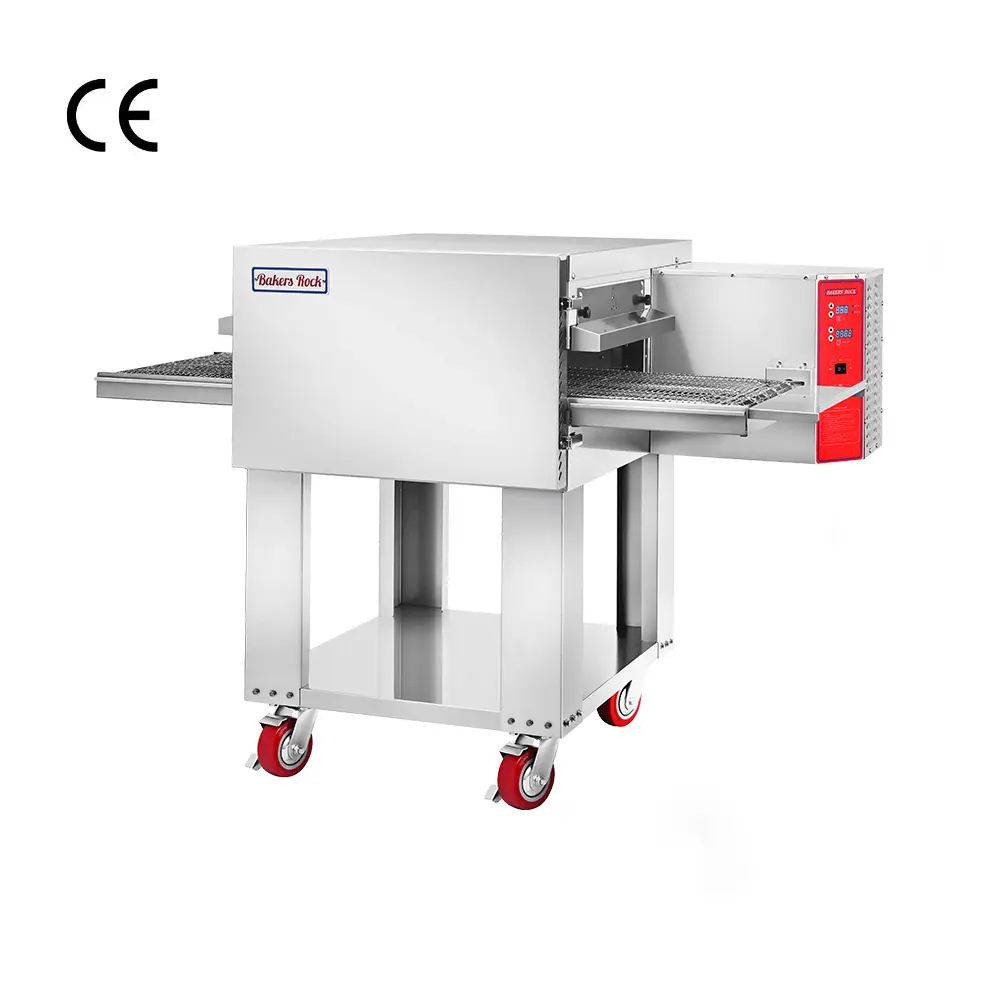
Bakers Rock klassifiziert seine elektrische Prall-Durchlauföfen als elektrische Heißluft-Jet-Impinger-Durchlauföfen und bietet innerhalb dieser Produktkategorie verschiedene Konfigurationen für die Arbeitsplatte und mit höherer Kapazität an.
Luftzufuhr ist nicht automatisch für jede Pizzasorte geeignet. Der Lieferant muss weiterhin Luftstrom, Produktbeschaffenheit, Backzeit und Hitzeverteilung von oben und unten an das jeweilige Rezept anpassen.
Eine Katalogaussage wie „gleichmäßige Wärmeverteilung“ reicht für die Auswahl von B2B-Geräten nicht aus.
Erkundigen Sie sich nach der Prüfung der Gleichmäßigkeit. Eine aussagekräftige Bewertung sollte identische Produkte an verschiedenen Positionen auf dem Förderband vergleichen, wobei Teig, Belag, Ausgangstemperatur, Förderzeit und Temperatureinstellungen konstant gehalten werden. Käufer sollten außerdem prüfen, ob die angebotene Konfiguration eine separate Steuerung für Ober- und Unterteil ermöglicht, falls dies anwendungsbedingt erforderlich ist.
Die maximale Temperatur allein sagt wenig über die gleichmäßige Backtemperatur oder das Verhalten des Ofens bei kontinuierlichem Beladen aus. Diese Eigenschaften sollten mit dem jeweiligen Modell und einem repräsentativen Produkt überprüft werden.
Strahlung bleibt auch in Öfen, die stark auf Luftzirkulation oder direkten Oberflächenkontakt angewiesen sind, Teil der Backumgebung. Heiße Oberflächen im Garraum und Heizelemente können Strahlungsenergie auf die freiliegenden Pizzaoberflächen übertragen und so die Bräunung und den Temperaturausgleich beeinflussen.
Untersuchungen zum traditionellen Pizzabacken haben gezeigt, dass Strahlung, Konvektion und Wärmeleitung alle messbare Beiträge leisten können, wobei ihre relative Bedeutung stark von der Ofenkonstruktion und den Betriebsbedingungen abhängt.
Für Beschaffungsteams ist die wichtigste Schlussfolgerung eindeutig: Vermeiden Sie es, einen Ofen als „nur Konvektion“ oder „nur Wärmeleitung“ zu kategorisieren. Vergleichen Sie den gesamten Wärmepfad, einschließlich der Backfläche, der Luftbewegung, der Kammergeometrie und der Ober-/Unterhitzeregelung.
Unterschiedliche Bauweisen von Industrieöfen betonen unterschiedliche Wärmeübertragungswege.
Ein Prallfördererofen legt größeren Wert auf gerichtete Zwangskonvektion, arbeitet aber dennoch in einer Kammer, in der Strahlungs- und Kontakteffekte auftreten. Sein Hauptvorteil liegt in der kontinuierlichen, wiederholbaren Produktbewegung durch eine kontrollierte Heizumgebung.
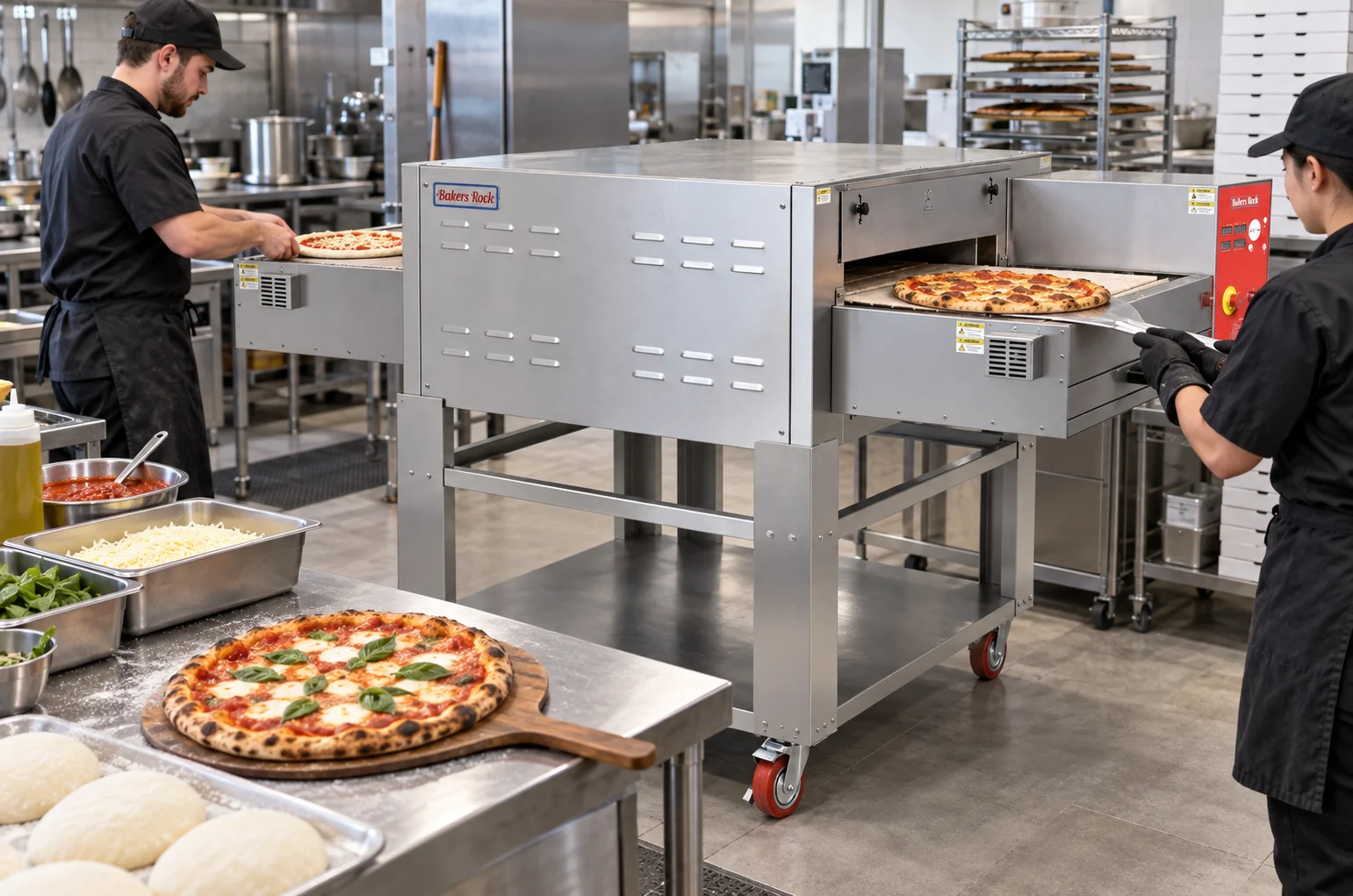
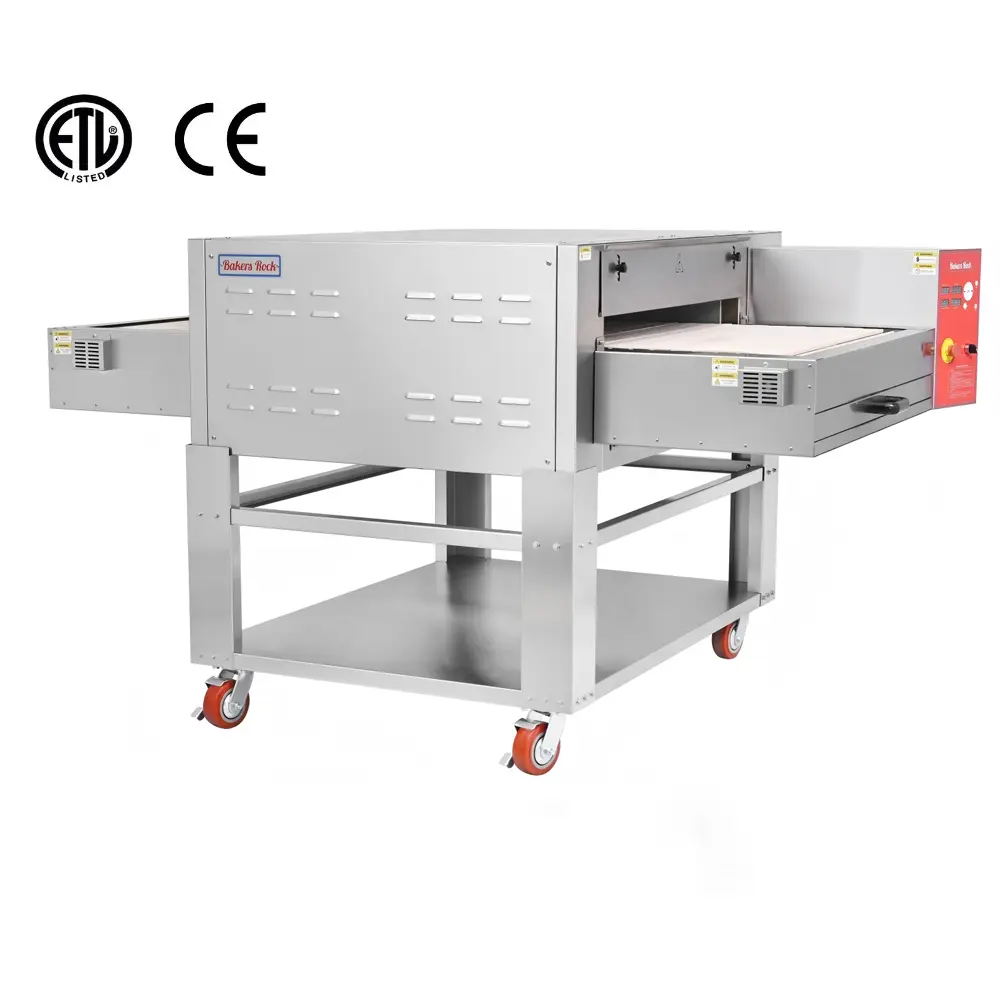
Ein Steinförderband ermöglicht den direkten Kontakt der feuerfesten Oberfläche im Förderprozess. Dies ist relevant, wenn das Produkt einen stärkeren Wärmekontakt von unten benötigt, ohne dass ein manuell beladenes Deckverfahren erforderlich ist. Bakers Rock führt Steinförderbandöfen separat von seinen elektrischen und gasbetriebenen Prallöfen.
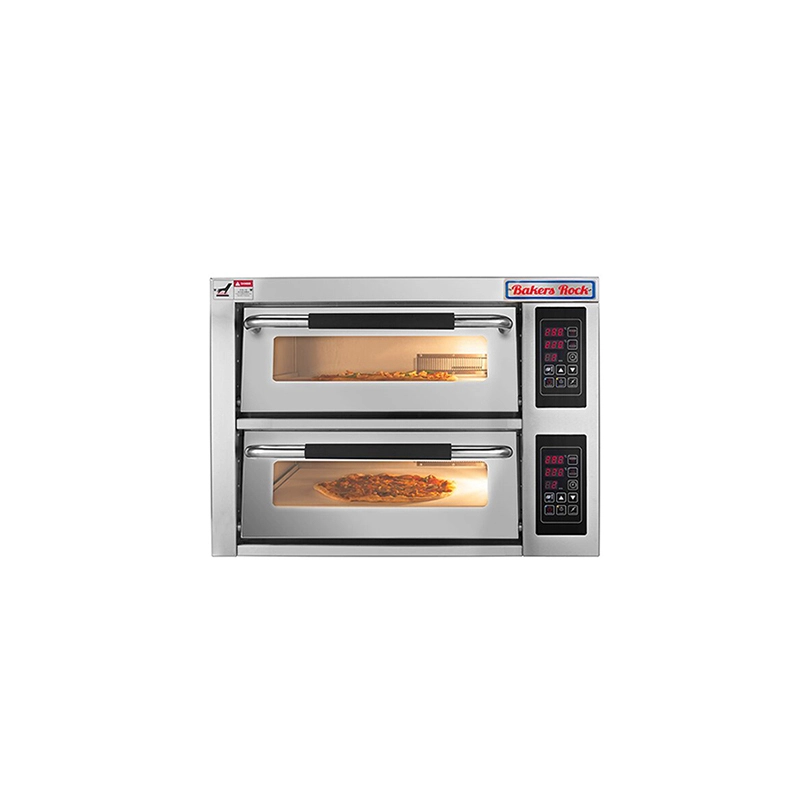
Decköfen legen größeren Wert auf die Wärmeleitung an der Backfläche und die Strahlung im Backraum und ermöglichen gleichzeitig eine bessere manuelle Kontrolle über Beladung, Positionierung und Backzeit.
Die richtige Wahl hängt von den Prioritäten des Restaurants ab. Eine standardisierte Massenproduktion kann den Betrieb mit kontinuierlichem Förderband begünstigen, während ein Konzept, das auf handwerklichem Backen basiert, den Fokus stärker auf die Kontrolle der Backfläche legt.
Die Wärmeverteilung wird im Produkt sichtbar.
Unzureichende Unterhitze kann dazu führen, dass der Boden blass bleibt, während der Belag bereits fertig aussieht. Zu viel Oberhitze kann dazu führen, dass Käse oder Belag schneller bräunen, als der Boden die gewünschte Bräunung erreicht hat. Ungleichmäßige Luftzirkulation oder Oberflächentemperatur können zu wiederkehrenden Unterschieden zwischen verschiedenen Positionen im Ofen führen.
Diese Symptome sollten als Problem der Wärmebilanz betrachtet und nicht durch eine sofortige Erhöhung der Gesamttemperatur behoben werden. Produktdicke, Feuchtigkeitsgehalt, Belagmenge, Ausgangsbedingungen und Backzeit können das Ergebnis beeinflussen.
Für Beschaffungszwecke ist daher ein Produkttest aussagekräftiger als ein bloßer Vergleich der Spezifikationen für die maximale Temperatur.
Bei Lieferantentests werden technische Spezifikationen zu nützlichen Kaufargumenten. Eine aussagekräftige Bewertung sollte das Produkt zunächst unter Kontrolle halten, verschiedene Ofenpositionen vergleichen und den Test anschließend unter realistischen Belastungsbedingungen wiederholen.
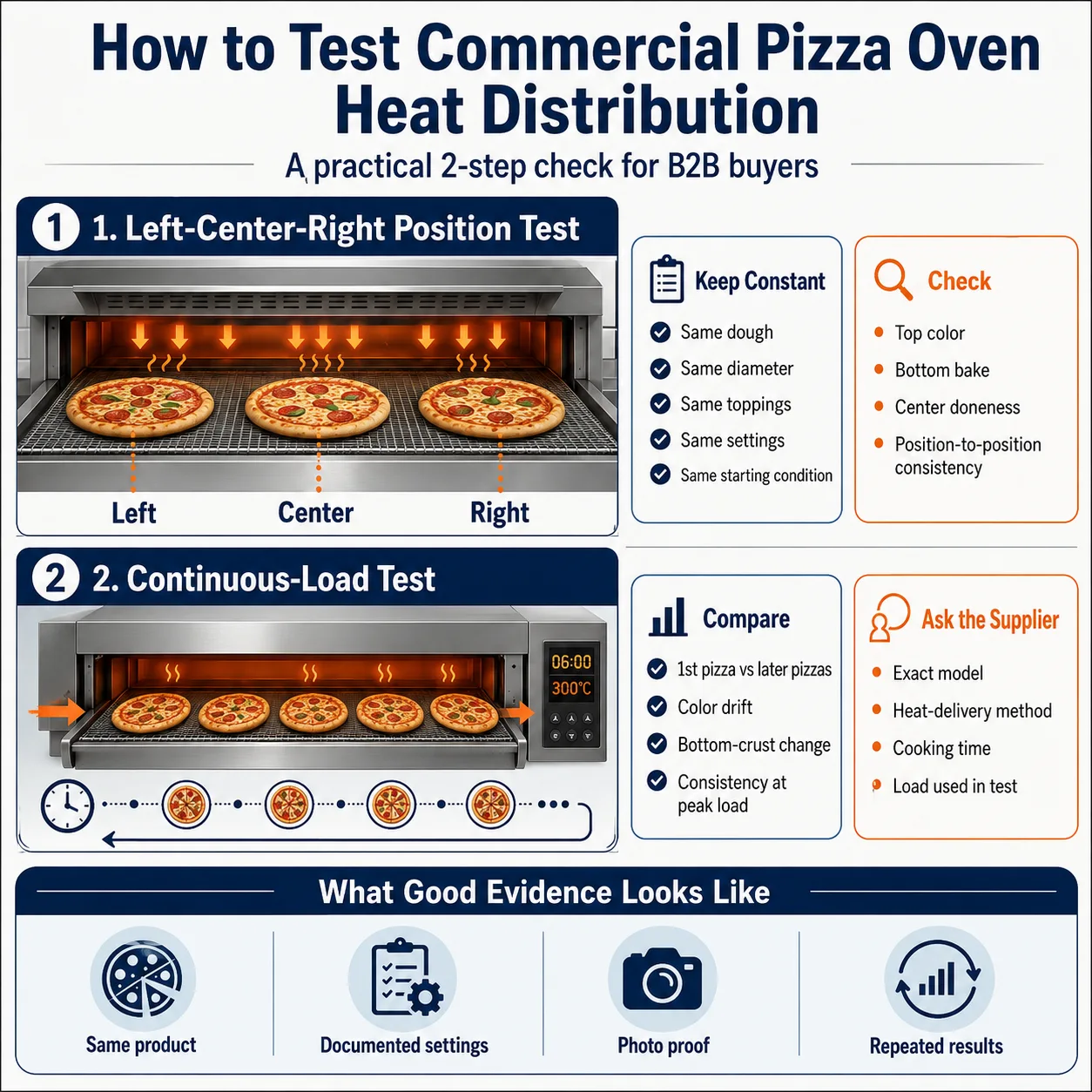
Ein einfacher Test zur Wärmeverteilung sollte als erstes durchgeführt werden. Verwenden Sie dieselbe Teigrezeptur, denselben Pizzadurchmesser, dieselbe Belagmenge, dieselbe Starttemperatur und dieselben Backeinstellungen. Backen Sie anschließend vergleichbare Pizzen in der linken, mittleren und rechten Position.
Fotografieren Sie die Ober- und Unterseite jedes fertigen Produkts und notieren Sie den Zustand der Mitte, die Farbe der Kruste und offensichtliche Unterschiede zwischen den Positionen.
Wenn sich ein Standort wiederholt anders verhält, bitten Sie den Lieferanten um eine Erklärung, ob die Ursache im Luftstrom, der Anordnung der Heizung, den Belastungsgrenzen oder einer anderen modellspezifischen Bedingung liegt. Ein Produktwechsel zwischen den Tests verringert die Aussagekraft des Vergleichs erheblich.
Eine einzelne Pizza ist kein Indiz für ein gut besuchtes Restaurant.
Nachdem ein akzeptabler Ausgangswert ermittelt wurde, wiederholen Sie die Bewertung mit aufeinanderfolgenden Produkten bei realistischer Beladungsrate. Vergleichen Sie das erste Ergebnis mit den späteren Ergebnissen und achten Sie auf Veränderungen in der Farbe der Oberseite, der Bodenbeschaffenheit, dem Garzustand in der Mitte oder der Garkonsistenz.
Für Restaurantketten und Lieferdienste sind Dauerlasttests besonders wichtig, da die Wärmerückgewinnung und das Lastverhalten die tatsächliche Produktion stärker beeinflussen als ein Wert für die maximale Temperatur im unbelasteten Zustand.
Empfiehlt ein Lieferant eine bestimmte Konfiguration für Spitzenlastbetrieb, sollten die Testbedingungen dokumentiert werden, damit der Käufer nachvollziehen kann, welches Produkt, welche Last, welche Zeit und welche Temperatur die Empfehlung stützten.
Nicht jedes ungleichmäßige Ergebnis bedeutet, dass die falsche Wärmeübertragungsarchitektur gewählt wurde.
Ein konstanter Hotspot von links nach rechts, eine instabile Förderbandbewegung, eine Heizzone, die nicht ordnungsgemäß auf Steuerungsänderungen reagiert, oder unvorhersehbare Ergebnisse bei identischen Produkten können eher auf ein Betriebs- oder Geräteproblem als auf ein normales Auswahlproblem hinweisen.
In diesem Fall kann eine kontinuierliche Temperaturerhöhung oder Backzeitverlängerung die Symptome verschleiern, ohne die Ursache zu beheben. Luftstrom, Förderbandbewegung, Heizelemente, Sensoren, Beladungspraktiken und das Verhalten der Steuerung erfordern möglicherweise eine separate Diagnose.
Durch die klare Abgrenzung wird verhindert, dass ein technischer Auswahlleitfaden zu einem Reparaturhandbuch wird, und die Bediener können besser entscheiden, wann die Rezepturanpassung beendet und die Fehlersuche an den Geräten begonnen werden sollte.
Aussagen zur Wärmeverteilung sollten bei der Lieferantenbewertung in überprüfbare Fragen umgewandelt werden.
Vor dem Testen benötigen wir vom Lieferanten folgende Informationen: Pizzadurchmesser, Teigdicke bzw. -gewicht, Ausgangszustand des Produkts, Belagmenge, gewünschte Krustenform, benötigte Backzeit und erwartete Nachfragespitze. Ohne diese Produktinformationen kann der Lieferant keine sinnvollen Empfehlungen zur Wärmeverteilung geben.
Fragen Sie dann nach dem genauen Ofenmodell, der Backfläche, der Wärmezufuhrmethode, der Konfiguration der oberen/unteren Steuerung, den Kocheinstellungen, der Beladungsposition und ob das Produkt wiederholt getestet wurde.
Bakers Rock ist die Auslandsmarke der Shanghai QiangAn FoodService Equipment Co., Ltd. Das veröffentlichte Produktportfolio umfasst elektrische und gasbetriebene Impingement-Öfen, Steinförderanlagen, Decköfen und Kuppelöfen. Das Unternehmen beschreibt Förderband-Pizzaofenlösungen als Kerngeschäft für Pizzaketten, Pizzerien, Restaurantgruppen und die Gemeinschaftsverpflegung. Weitere Informationen zum Unternehmen und zur Produktentwicklung finden Sie unter [Link einfügen]. Bakers Rock Herstellerprofil.
Für Käufer, die speziell Warmluftsysteme evaluieren, Bakers Rock Gewerbe-Pizzaöfen kann als Ausgangspunkt dienen, um die verfügbaren Kategorien von Gewerbeöfen zu überprüfen, bevor die Spezifikation eingegrenzt wird.
Eine Großküche oder ein Restaurant mit mehreren Standorten sollte zunächst prüfen, ob ein kontinuierlicher, kontrollierter Förderbandbetrieb zu ihrem Produktionsmodell passt. In diesem Fall kann die Wärmezufuhr durch Aufprall relevant sein, da die Anlagenarchitektur einen gerichteten Luftstrom mit kontrollierter Förderbandbewegung kombiniert.
Ein Restaurant, das eine stärkere direkte Bodenheizung bei gleichzeitig kontinuierlichem Förderbandbetrieb wünscht, könnte stattdessen eine Steinförderanlage in Betracht ziehen. Ein Konzept, bei dem die manuelle Positionierung und die vom Bediener gesteuerte Backweise im Mittelpunkt stehen, mag aus anderen Gründen einen Etagenofen rechtfertigen.
Bei der Bedienung gemischter Menüs sollte die Auswahl anhand der Ofenbezeichnungen vermieden werden. Führen Sie repräsentative Produkte in der vorgeschlagenen Konfiguration durch und überprüfen Sie, welcher Heizpfad unter normalen und Spitzenlastbedingungen zufriedenstellende Ergebnisse liefert.
Die Auswahl eines gewerblichen Pizzaofens sollte mit dem Produkt und dem Betriebsmodell beginnen und dann rückwärts zum erforderlichen Wärmeübertragungsverhalten erfolgen.
Wärmeleitung, Konvektion, Wärmestrahlung und Luftaufprall sind keine sich gegenseitig ausschließenden Systeme. Der praktische Unterschied liegt darin, wie stark eine bestimmte Ofenkonstruktion die einzelnen Wärmewege begünstigt und ob diese Kombination reproduzierbare Ergebnisse für die Pizza, das Beladungsmuster und das Produktionsvolumen des Restaurants liefert.
Bei der Bewertung der Ausrüstung geben Sie bitte die Pizzagröße, den Teigzustand, die Belagmenge, den gewünschten Gargrad, die benötigte Garzeit, den maximalen Produktionsbedarf, die benötigten Versorgungsanschlüsse und den verfügbaren Platz an. Käufer können Kontaktieren Sie Bakers Rock Anhand dieser Anwendungsdetails soll erörtert werden, welche Ofenarchitektur evaluiert werden sollte.
Beim Pizzabacken können Wärmeleitung, Konvektion und Wärmestrahlung auftreten. Wärmeleitung spielt eine wichtige Rolle an Oberflächen mit direktem Kontakt, Konvektion überträgt Wärme durch bewegte Luft und Wärmestrahlung überträgt Energie von heißen Oberflächen im Backraum oder von Heizelementen. Ihre relative Bedeutung hängt von der Ofenkonstruktion und den Betriebsbedingungen ab.
Durch die gezielte Luftaufprallung wird erhitzte Luft auf die Oberfläche des Garguts gerichtet, um die konvektive Wärmeübertragung zu verbessern. In einem gewerblichen Backofen hängt die tatsächliche Leistung jedoch weiterhin von der Luftstromverteilung, der Garzeit, dem Zustand des Garguts und der Gerätekonfiguration ab.
Ein erhitzter Stein bildet einen direkten Wärmeleitpfad zum Pizzaboden, wo der Kontakt stattfindet. Die Qualität der Kruste hängt von der Steintemperatur, dem Zustand des Pizzateigs, dem Kontakt, der Backzeit und den anderen im Ofen wirkenden Wärmeübertragungsmechanismen ab.
Es gibt keinen Ofentyp, von dem man ohne Tests des jeweiligen Modells annehmen sollte, dass er die gleichmäßigste Hitze erzeugt. Vergleichen Sie identische Pizzen an verschiedenen Positionen und wiederholen Sie den Test unter realistischer, kontinuierlicher Belastung.
Verwenden Sie für die Tests links, Mitte und rechts dieselben Pizzaspezifikationen und -einstellungen, fotografieren Sie die Ergebnisse oben und unten und wiederholen Sie den Test anschließend unter kontinuierlicher Beladung. Dokumentieren Sie das genaue Modell, die Temperatur, die Garzeit, den Produktzustand und das Beladungsmuster, um die Ergebnisse objektiv vergleichen zu können.