Nullam dignissim, ante scelerisque the is euismod fermentum odio sem semper the is erat, a feugiat leo urna eget eros. Duis Aenean a imperdiet risus.
Nullam dignissim, ante scelerisque the is euismod fermentum odio sem semper the is erat, a feugiat leo urna eget eros. Duis Aenean a imperdiet risus.
 author
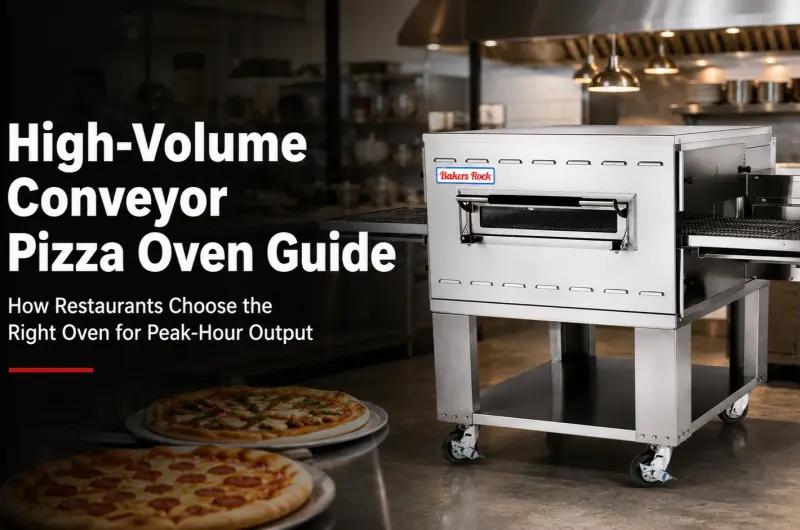
It is not true that an industrial-scale pizza oven is bought just because the restaurant owner wishes to have a bigger unit. An industrial-scale pizza oven is often bought when the capacity during peak hours becomes a bottleneck for the business. Orders come in faster than pizzas are baked, employees require more manual control, pizza color varies according to shifts, and the existing oven fails to meet delivery, dine-in, or store targets.
For restaurants, pizzerias, coffee shops, cafeterias, food courts, hotel kitchens, pizza chains, and food manufacturing businesses, the question to ask is not “Which commercial conveyor pizza oven is bigger?” but rather, “Which oven system is able to cope with peak hours’ demands in terms of consistent baking time, reliable quality of the product, efficient energy consumption, and manageable labor needs?”
The definition of a high-volume restaurant does not revolve around daily sales. A restaurant may not sell large quantities of pizzas daily but may have significant congestion during a two-hour lunch, dinner rush or deliveries. Peak-hour efficiency is critical when it comes to equipment choice rather than daily efficiency.
A high-volume pizza oven should be determined based on the quantity of pizzas, snacks, baked rice, sandwiches or other products the oven will produce during the most productive hours of operation. This depends on the size of the pizza, baking time, conveyor width, product line, production process and kitchen floor space among others.
Day-to-day sales will not reflect any underlying production issues. A restaurant that serves 120 pizzas daily may require minimal production during off-times but may require production of up to 50 pizzas or more during a single dinner shift. The variation makes an enormous difference in selecting an oven.
The output capacity during the peak hour needs to be determined before comparing different conveyor ovens. It is essential for buyers to calculate the number of pizzas that have to be made during the busiest hour of the day, the number of pizza sizes available in the menu, whether appetizers or side dishes will also be prepared using the same oven, and whether extra space will be required to accommodate late orders, reorders, increased deliveries, or promotions. A commercial conveyor pizza oven should be selected for the rush, not the average.
The oven might be creating problems if there is an ongoing issue of delay in ticketing as pizzas take long time to get into the oven. There are several other indicators such as variations in color of the crust while in operation, employees being involved in rotating or inspecting pizzas too often, long waits for delivery orders, and poor results in the absence of seasoned employees.
Another sign of a small restaurant is when there is addition of labor but there is no significant improvement in production by management. In case the oven becomes the bottleneck, increased labor will only become effective if the baking process is made fast, continuous and controlled.
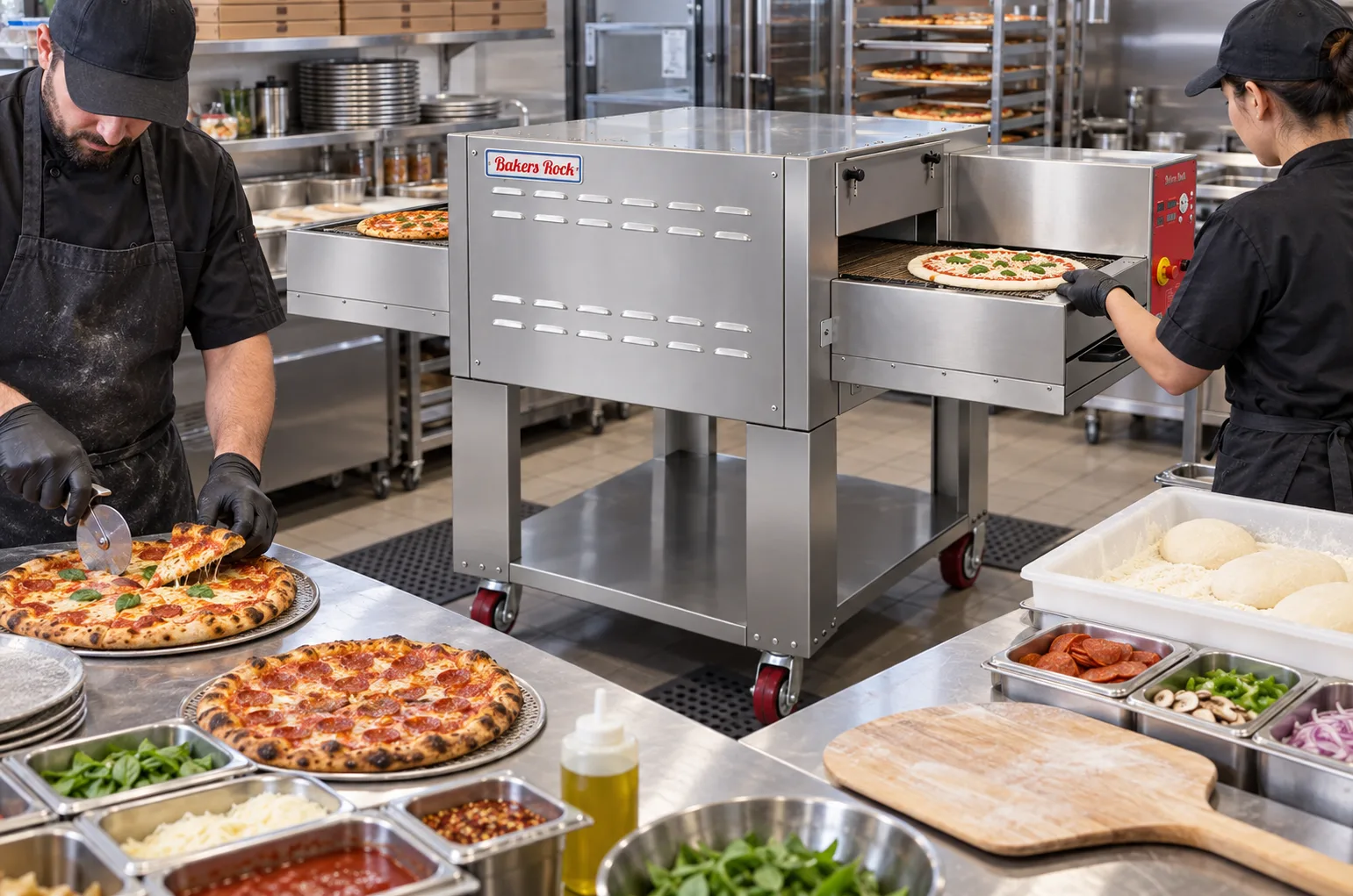
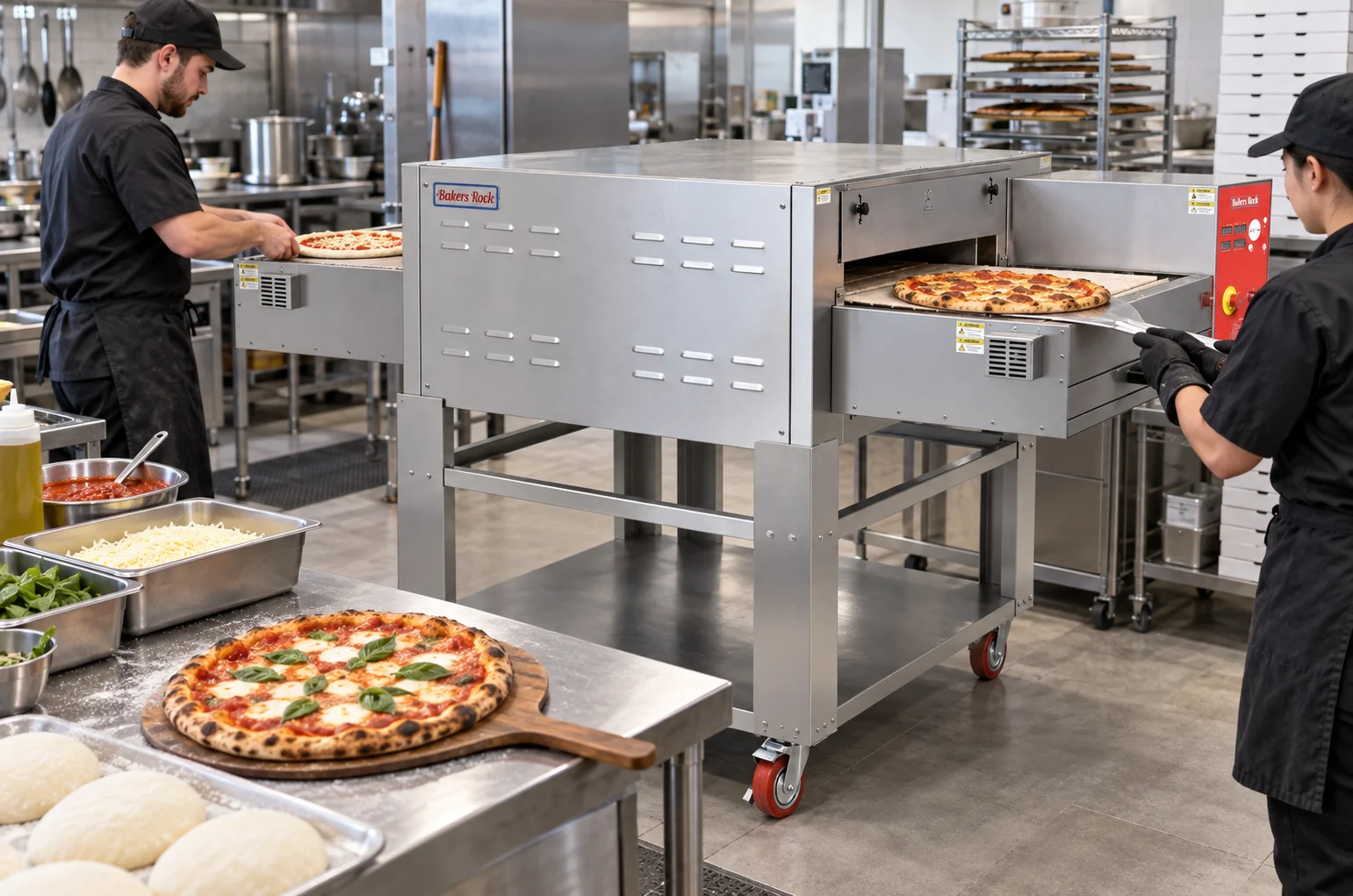
Conveyor pizza ovens are preferred for high volume foodservice operation as they facilitate continuous cooking. Unlike the conventional oven where food is cooked in different batches where one has to load, check, turn and unload frequently, the conveyor system ensures that the food goes through the oven at a regulated pace.
This is important in high volume restaurant operations because the process of cooking becomes predictable. The time and temperature being regulated for a specific menu, one will have an easy way to go about it. This works better for pizza chains, take out restaurants, malls, cafes, cafeteria and western restaurants where staff turnover can be high and production consistency is important.
The issue during the busiest times is that batch baking can produce a queue. There will be people waiting for space in the oven and product competition, where the delay of one product could affect subsequent several orders. The solution here is using the conveyor oven when there is no need to stop entering and leaving the products from the oven.
It does not imply that each conveyor oven would fit any production goal because the belt width, chamber length, method of heat transfer, bake time, and stacking methods should all be matched with the demand. It just means that the conveyor oven is suitable for restaurants that require constant production of multiple orders.
In many restaurants, the most expensive baking problem is not only heat. It is dependency on skilled staff. A deck oven may produce excellent results in experienced hands, but it often requires close attention to loading position, rotation, visual judgment, and timing.
A conveyor pizza oven can reduce training difficulty by turning the baking process into a standard operating procedure. Staff place the product on the belt, follow the approved setting, and remove the product after it exits the chamber. This supports consistent pizza production in chain stores, delivery kitchens, cafés, and food courts where employees may not have professional baking experience.
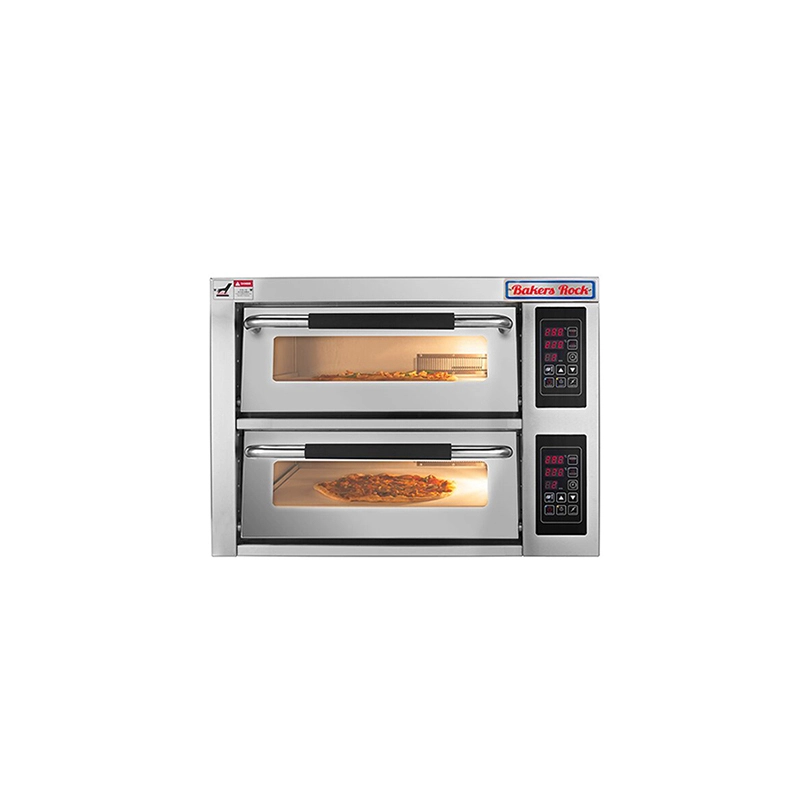
The selection of a conveyor pizza oven vs. deck oven must consider business needs, not just baking tradition. While deck ovens are good for businesses valuing control of baking processes, artisanal placement, or certain crust types, conveyor ovens make more sense where speed, consistency, and labor control are more business-critical factors.
The key considerations for B2B purchasing include productivity, employee skills, consistency, menu diversity, kitchen flow, and risks associated with replacing the equipment.
A conveyor oven is usually the better direction when the restaurant must bake many similar items during short peak periods. This applies to pizza chains, delivery kitchens, cafeterias, fast casual restaurants, western restaurants, food courts, and large stores where standardized operations are important.
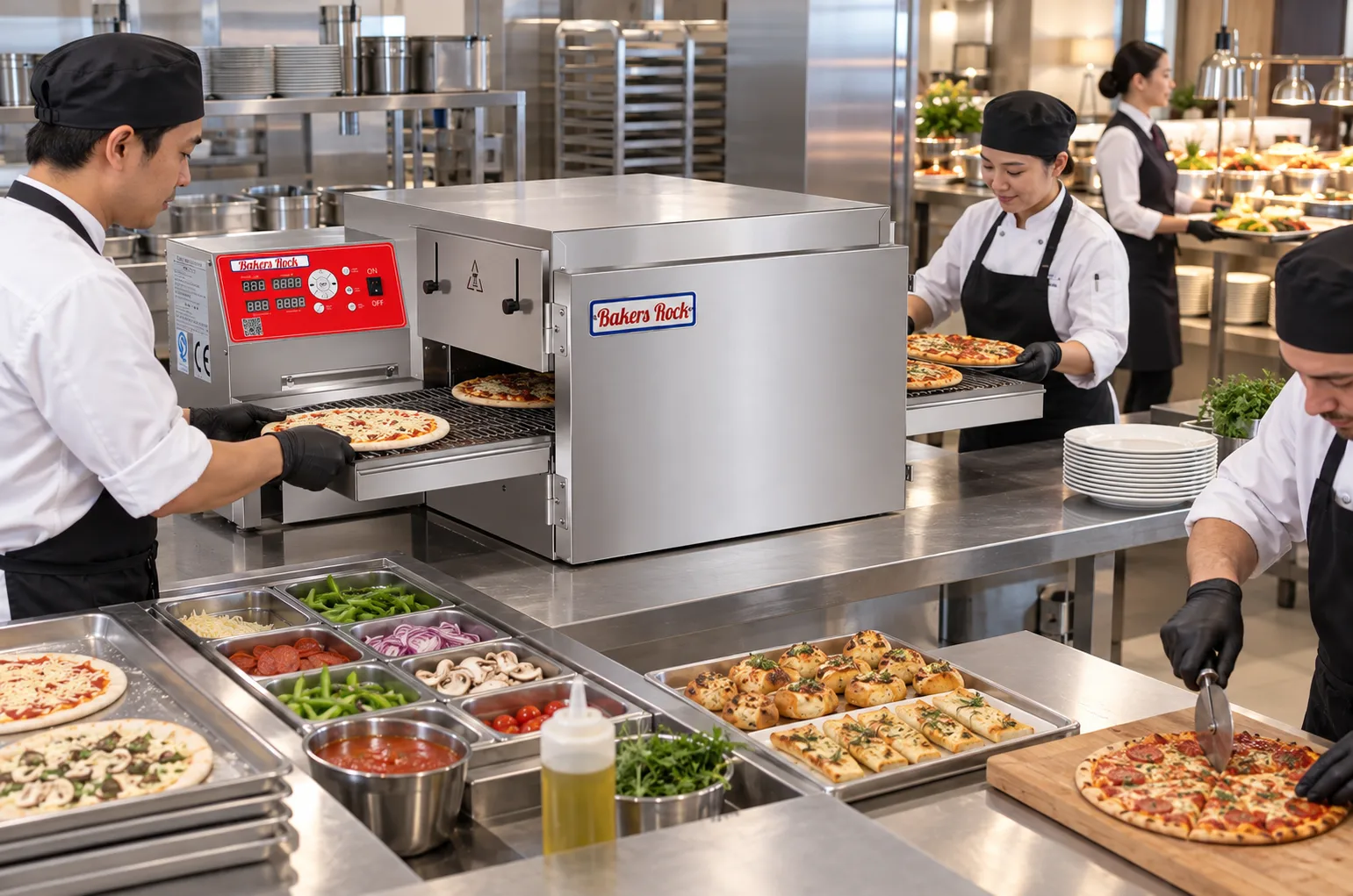
For these users, a conveyor oven helps reduce manual intervention. It can also support menu expansion because the same equipment may be used for pizza, snacks, steak, baked rice, noodles, desserts, sandwiches, or similar products, depending on temperature range, belt speed, product height, and actual oven specification.
A deck oven may still be suitable when the kitchen wants more manual control over crust development, product positioning, and bake judgment. This can matter for certain artisan pizza concepts or restaurants where the baking process is part of the brand experience.
However, when the main challenge is peak-hour output, staff turnover, delivery speed, and standardized quality across multiple stores, a high-volume conveyor pizza oven is usually easier to manage. The decision should be tied to the restaurant’s operating model rather than a general belief that one oven type is better in every case.
Capacity should be estimated before requesting a quotation. Without a clear output target, buyers may choose an oven that looks attractive on price but cannot handle peak demand. They may also over-buy and end up with unnecessary energy use, installation complexity, and floor space pressure.
The first capacity factor is pizza size. A 10-inch pizza, 12-inch pizza, 14-inch pizza, and 16-inch pizza do not use the same belt space. A wider belt can carry more products side by side, but the exact number depends on product diameter, spacing, tray use, and loading pattern.
Bake time also matters. A faster bake time can increase output, but only if the product quality, crust color, cheese melt, and moisture control remain acceptable. The correct setting depends on dough type, topping load, product thickness, temperature, and oven configuration. These details should be tested against the product specification before final purchase.
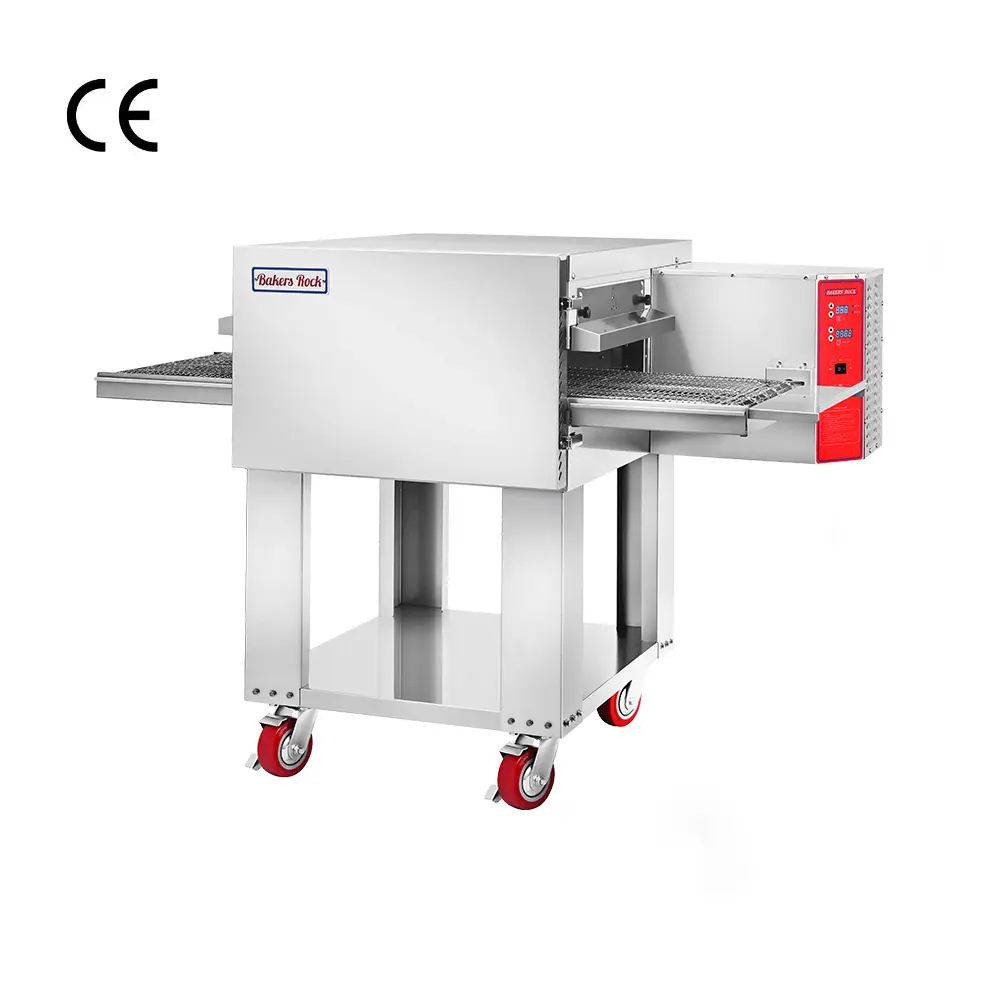
Stackable conveyor ovens are valuable when floor space is limited but peak-hour output must increase. Instead of expanding horizontally, a restaurant can increase production vertically by using double-stack or triple-stack configurations, when the model and installation conditions allow it.
Stacking should not be treated as a simple space-saving decision. Buyers should verify ventilation, clearance, staff loading height, cleaning access, power or gas supply, and service access. For chain restaurants, a stackable conveyor pizza oven can also help standardize store layouts across locations with different kitchen sizes.
A practical starting formula is:
Estimated hourly output = pizzas per belt load × 60 ÷ bake time in minutes × number of oven decks
This formula is only a planning tool. Real output may vary by product size, spacing, belt loading habits, staff speed, menu mix, and whether other food items share the oven. Still, it gives purchasing teams a better way to compare conveyor oven capacity than simply looking at chamber size or overall equipment dimensions.
The right fuel or baking surface depends on site conditions, menu positioning, energy cost, installation limits, and output requirements. A buyer should not choose electric, gas, or stone conveyor technology based only on price. Each direction fits a different operating environment.
Electric conveyor ovens are often practical for indoor restaurants, malls, cafés, food courts, and stores where gas installation is limited or not preferred. They can support standardized settings, repeatable baking, and compact kitchen layouts when the electrical supply is suitable.
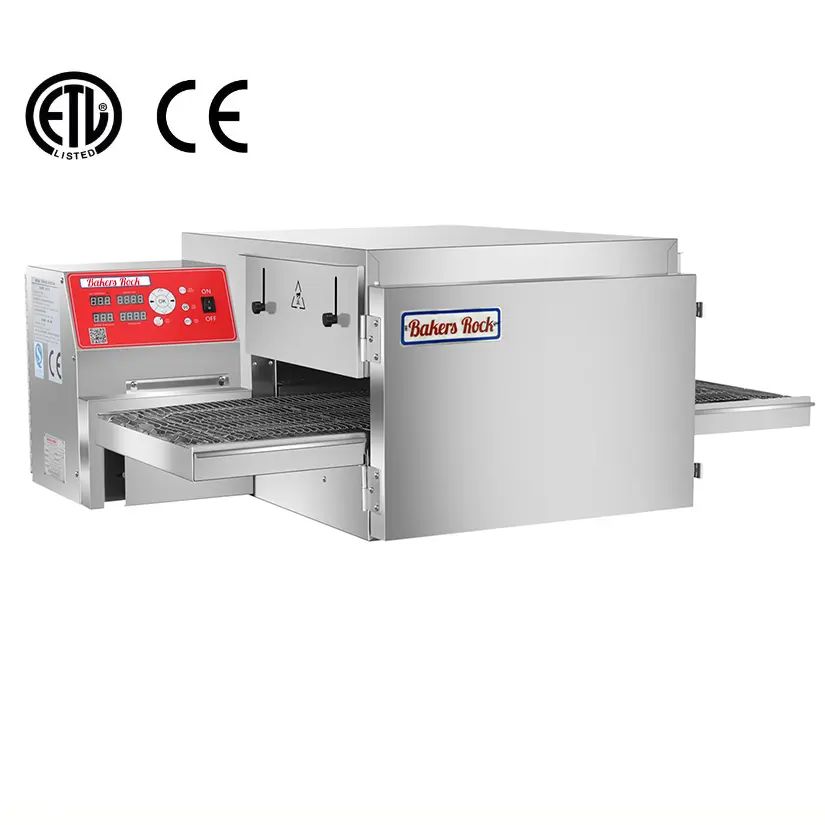
Bakers Rock offers electric impingement conveyor ovens for foodservice operators that need hot-air conveyor baking across different restaurant formats. Buyers should still verify voltage, phase, rated power, heat output, belt size, product height, and installation requirements against the specific model before purchase.
Gas or LPG conveyor ovens may be suitable when natural gas or LPG is available and local energy cost favors gas operation. This direction can be attractive for restaurants with long daily operating hours, larger peak-hour demand, or kitchen layouts designed for gas equipment.
Bakers Rock also provides gas impingement conveyor ovens for operators comparing gas-powered hot air jet impingement solutions. For any gas oven purchase, buyers should confirm fuel type, gas pressure, ventilation, local installation codes, maintenance access, and total operating cost.
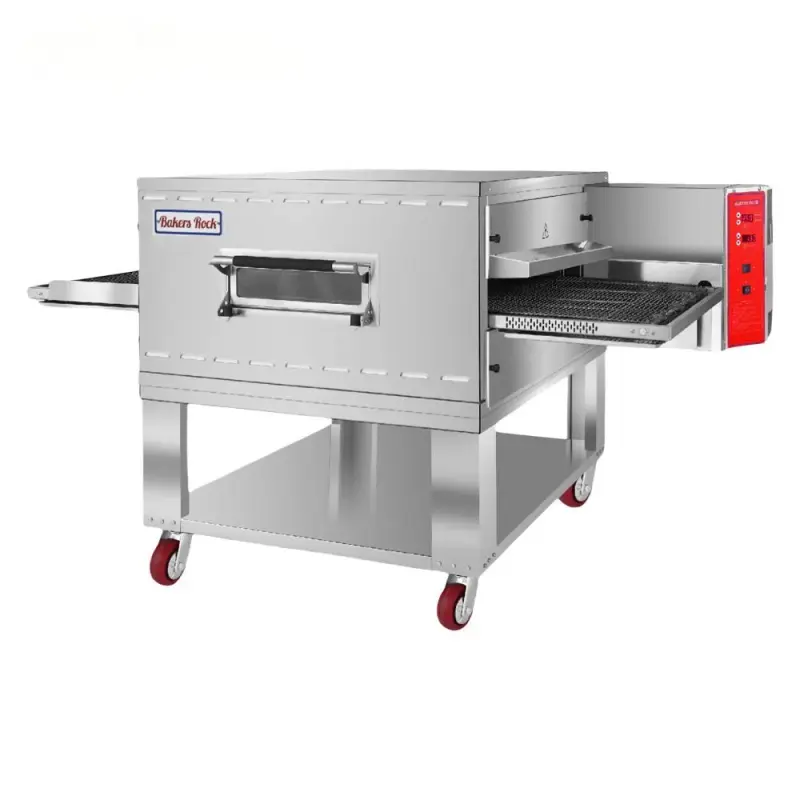
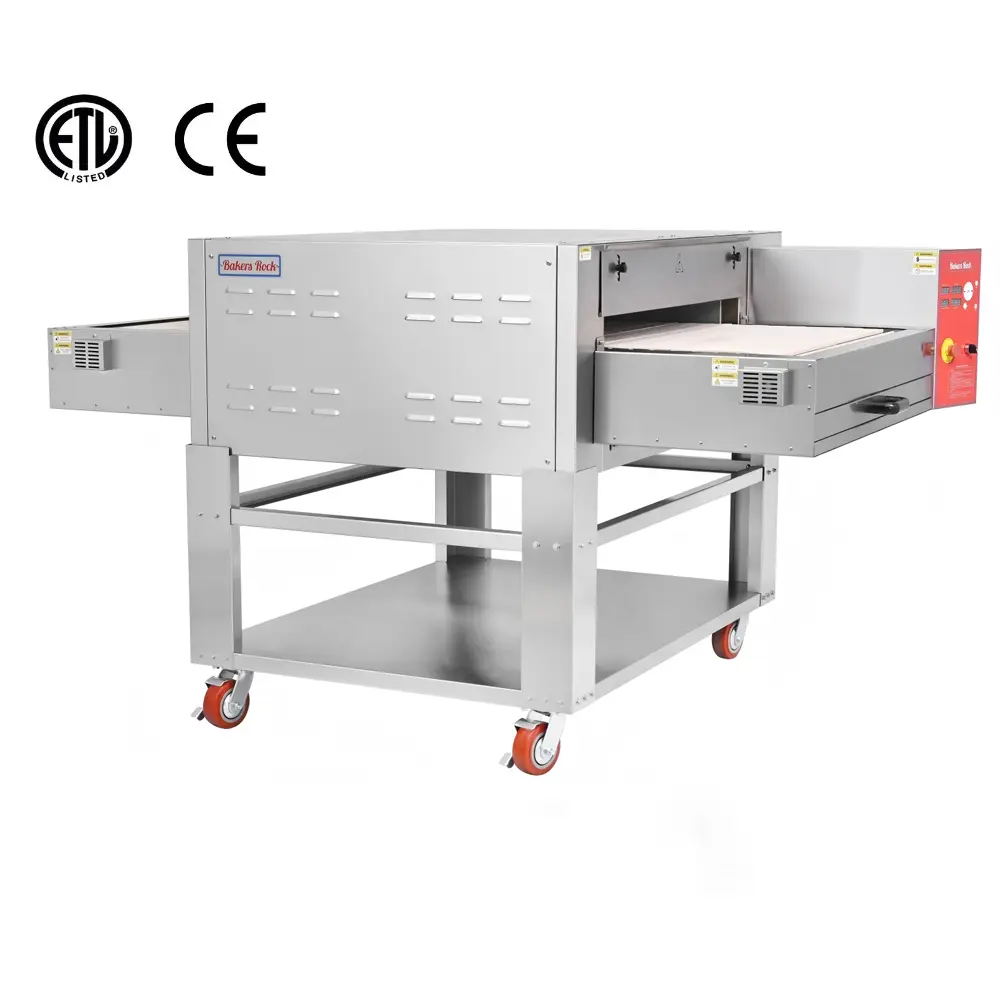
Stone conveyor ovens are used when a buyer wants continuous baking but also cares about stronger crust texture. Instead of using only a metal conveyor surface, stone belt systems are designed to support a different baking effect on the base of the pizza.
For pizza chains, western restaurants, food production businesses, or large baking plants, stone conveyor ovens may be considered when crust character and repeatable output both matter. The final decision should be based on product testing, pizza style, temperature requirement, cleaning process, and production volume.
A conveyor pizza oven quotation is only useful when the buyer provides enough operating details. A supplier cannot recommend a suitable oven based only on the phrase “high-volume restaurant.” The more specific the application data, the more accurate the selection can be.
The oven size should match the busiest production period, not the quietest period. Buyers should share the target number of pizzas per hour, pizza diameter, average bake time target, menu mix, and whether the oven must also handle snacks, sandwiches, baked rice, wings, or desserts.
For multi-store operators, the same model may not fit every location. A flagship store, mall store, delivery kitchen, and compact café may require different belt widths, stack configurations, or fuel options.
Kitchen space is a technical constraint, not just a layout preference. Before ordering, buyers should check the available floor area, counter or stand requirement, loading and unloading clearance, staff working space, hood or exhaust condition, and maintenance access.
Electric ovens require suitable voltage, phase, current, and power capacity. Gas ovens require fuel availability, gas pressure, safety clearance, and local installation compliance. These factors should be confirmed early to avoid choosing an oven that matches production needs but does not fit the site.
B2B buyers should evaluate more than the oven body. Certifications, documentation, spare parts availability, cleaning access, and after-sales support can affect long-term ownership. For distributors and restaurant groups, these factors are especially important because one equipment issue can affect multiple stores or customers.
Shanghai QiangAn FoodService Equipment Co., Ltd. operates Bakers Rock as an overseas brand focused on commercial conveyor pizza oven solutions. The Bakers Rock manufacturing background is relevant for buyers who need to understand the supplier’s product scope, company history, and service capability before discussing a project.
The wrong conveyor oven size creates long-term cost. Under-sizing hurts service speed and revenue potential. Over-sizing can waste space, energy, and installation budget. The right approach is to match output, menu, and site conditions before selecting a model.
An under-sized oven may look cost-effective at purchase, but it can quickly become expensive during operation. If the oven cannot keep pace with peak orders, staff may rush loading, reduce quality checks, delay delivery tickets, or limit menu promotion because production cannot support demand.
Under-sizing is common when buyers estimate capacity based on average daily sales or assume that a small oven can handle all future growth. A safer approach is to calculate the busiest hour, add a reasonable buffer, and consider whether stacking or a larger belt width will be needed as the store grows.
A larger conveyor oven is not automatically the right choice. Over-sizing may increase energy use, require more ventilation, occupy valuable kitchen space, and create a more complex installation. It may also reduce flexibility in compact stores where staff movement, cleaning, and service access are limited.
The correct oven should meet peak-hour output without creating unnecessary operating burden. For restaurants with uncertain future demand, a stackable design or scalable equipment plan may be more practical than buying a much larger oven immediately.
The following matrix can help narrow the first selection direction before discussing exact specifications with a supplier.
| Business Type | Main Need | Recommended Oven Direction |
| Small café or snack bar | Add pizza without a specialized pizza chef | Compact electric countertop conveyor oven |
| Delivery pizzeria | Fast, repeatable production during order surges | Electric or gas impingement conveyor oven |
| Pizza chain | Standardized operation across different stores | Stackable conveyor oven with digital controls |
| High-volume restaurant | Peak-hour output and labor control | Larger belt-width commercial conveyor pizza oven |
| Pizza factory or central kitchen | Continuous production and repeatability | Large-capacity conveyor oven or stone conveyor oven |
A supplier can give a more useful recommendation when the inquiry includes real operating data. Buyers should prepare the pizza diameter, target pizzas per hour, expected bake time, menu items, fuel type, voltage, available kitchen space, ventilation condition, destination country, certification needs, and whether the oven is for a single restaurant, chain project, distributor order, or production facility.
For projects involving replacement, photos of the existing oven area, current bottleneck description, and target improvement can also help. For new stores, layout drawings, planned menu, and expected peak-hour ticket volume are useful. Buyers can contact Bakers Rock for oven selection after preparing these details so the quotation discussion starts with practical selection criteria rather than only a model name.
Choosing a high-volume conveyor pizza oven is a production decision, not only an equipment purchase. The right oven should match peak-hour demand, pizza size, bake time, fuel condition, kitchen space, labor structure, and future growth plans. A restaurant that needs fast, repeatable output should focus on belt width, continuous baking capacity, stackable options, control settings, energy conditions, and supplier support before comparing price alone.
Bakers Rock provides Bakers Rock commercial conveyor pizza ovens for restaurants, pizza chains, cafés, cafeterias, western restaurants, distributors, and food production operators. To request a practical recommendation, buyers should prepare peak pizzas per hour, pizza diameter, menu type, preferred fuel, voltage or gas condition, available floor space, target quantity, destination market, and any installation constraints.
The hourly output depends on pizza diameter, belt width, bake time, loading pattern, number of stacked decks, and whether other food items share the oven. A simple estimate is pizzas per belt load × 60 ÷ bake time × number of decks, but the result should be verified through product testing and the specific oven specification.
A conveyor pizza oven is often more practical for high-volume restaurants that need speed, consistency, and lower staff training requirements. A deck oven may be suitable when manual baking control and a specific artisan baking style are more important than continuous peak-hour output.
Electric conveyor ovens are often suitable for indoor restaurants, malls, cafés, and stores where electrical installation is more practical. Gas or LPG conveyor ovens may fit kitchens with available fuel supply and favorable energy cost. The decision should consider fuel access, voltage, ventilation, local installation rules, operating hours, and output target.
A pizza chain should select oven size based on peak-hour demand, pizza diameter, store layout, staff workflow, and expansion plan. Stackable conveyor ovens can help increase output while controlling footprint, but ventilation, access, and installation conditions should be checked before final selection.
Yes, a conveyor pizza oven can produce consistent crust quality when time, temperature, airflow, product loading, and recipe are correctly matched. For restaurants that want stronger crust texture with continuous production, a stone conveyor oven may also be considered, depending on pizza style and production requirements.