Nullam dignissim, ante scelerisque the is euismod fermentum odio sem semper the is erat, a feugiat leo urna eget eros. Duis Aenean a imperdiet risus.
Nullam dignissim, ante scelerisque the is euismod fermentum odio sem semper the is erat, a feugiat leo urna eget eros. Duis Aenean a imperdiet risus.
 author
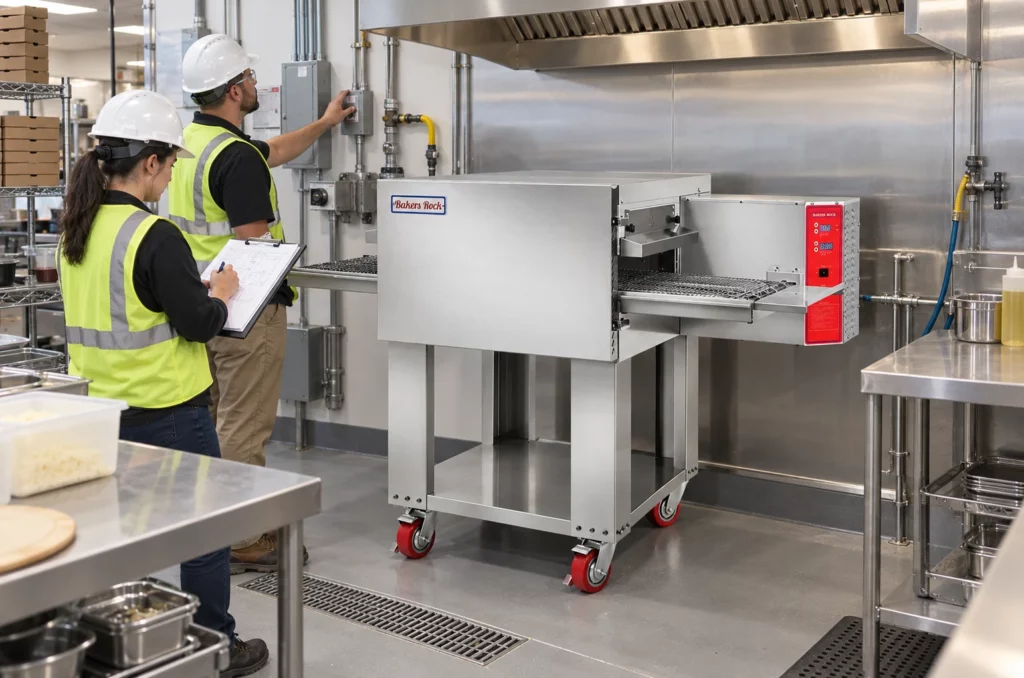
For a multi-unit chain, the decisive question is whether each site can support the ordered oven without a service upgrade, fuel-system redesign, or late ventilation change. Electric can simplify rollout where adequate three-phase capacity exists. Gas can reduce the main electrical load, but it still needs electricity and adds fuel, combustion-air, and gas-safety checks.
Approve the fuel type only after the electrical, gas, ventilation, access, and approval fields are complete. Across Europe, North America, the Middle East, and Southeast Asia, record local conditions rather than regional assumptions.
The first unavailable utility usually determines the practical choice. A low gas tariff does not help if LPG storage is prohibited, and spare panel space does not prove that the building service can carry the load.
| Readiness check | Electric oven | Gas oven | Chain rollout implication |
| Main energy input | Electrical connected load | Natural gas or LPG | Record the exact ordered configuration, not a family-level label. |
| Auxiliary power | Included in main connection | Still required for controls, fans, and conveyor | No site should be marked gas-ready without a compatible outlet or circuit. |
| Capacity proof | Service, panel, phase, voltage, and spare capacity | Gas type, pressure under load, pipework, regulator, and storage | A utility bill or fuel statement is not capacity proof. |
| Ventilation review | Heat, vapor, grease, menu, and local rules | The same factors plus combustion products and gas-safety controls | Confirm the hood and replacement-air concept for each model and stack. |
| Retrofit risk | Service upgrade, cable route, disconnect, and panel work | Pipe route, meter or LPG system, interlocks, and approval | Compare installed scope and schedule, not equipment price alone. |
Record voltage, phase, frequency, neutral, earthing, panel location, breaker space, and confirmed spare capacity. The electrical designer should assess the feeder and building service with the oven, HVAC, refrigeration, and other coincident loads. A nameplate rating sizes the connection; it does not predict hourly energy use.
Connected load sizes the supply, protection, cable, isolator, and upstream capacity. Consumption varies with setpoint, product load, idle strategy, and operating hours. A lower estimated average does not reduce the required connection. A gas input figure and an electric nameplate value also do not form a valid operating-cost comparison by themselves.
If a rollout may use double or triple stacks, calculate the final concurrent load during planning. Reserving floor space without reserving electrical capacity can turn a later stack into a service-upgrade project. Include disconnects, cable routes, upstream panels, and backup-power policy.
Use the supplier’s electric impingement oven range to identify candidate configurations, then size the site against the final technical sheet for the exact voltage and stack.
Gas-ready means more than having a connection. Record the fuel category, pressure while other appliances operate, meter or LPG-system capacity, pipework, regulator, shutoff, detection, and interlock. A licensed local gas professional should confirm these conditions against the ordered appliance and local rules. Do not assume field conversion between natural gas and LPG is allowed without manufacturer confirmation.
For LPG sites, document storage location and limit, manifold or vaporizer, refill access, supplier reliability, ambient temperature, and peak draw. The system must maintain the required inlet condition during the meal peak. Landlord, fire, and authority restrictions can make LPG approval schedule-critical.
A gas conveyor oven still uses electricity for controls and conveyor operation. Its branch circuit may be small compared with electric heating, but voltage, phase, frequency, neutral, plug or isolator, and backup-power treatment still need confirmation.
Do not approve either fuel from a generic hooded or ventless claim. The ventilation designer should review the model, fuel, stack, menu, production rate, heat release, grease and vapor load, hood capture, duct route, discharge, and replacement air. Gas adds combustion considerations, while electric equipment can still produce substantial heat and cooking effluent.
This UK HSE catering kitchen ventilation guidance assigns responsibilities to the caterer, building manager, designer, and installer. It is a UK reference, not a substitute for local rules elsewhere.
Define a standard oven configuration and survey, but do not force every building into the same utility answer. Classify each store as Ready, Conditional, or Blocked. Ready means verified capacity and an approved path. Conditional means a priced upgrade or approval remains. Blocked means a constraint defeats the schedule or budget.
Log service upgrades, fuel changes, hood work, landlord consent, access limits, and permit dependencies before purchase orders are released. Procurement can then compare total installed cost and schedule risk, rather than equipment price alone.
For retrofits, measure the delivery path, doorways, lifts, turns, stand, hood position, and space for cleaning and service. Check utility termination points. For future stacking, confirm support, working height, hood coverage, maintenance access, and utility expansion before the first installation.
Regional labels are too broad for approval. European sites can cross national gas and electrical practices, while North American projects may need different ordered electrical configurations. LPG arrangements, utility reliability, landlord rules, and ventilation constraints also vary across the Middle East and Southeast Asia. Use one survey structure, then obtain local signoff.
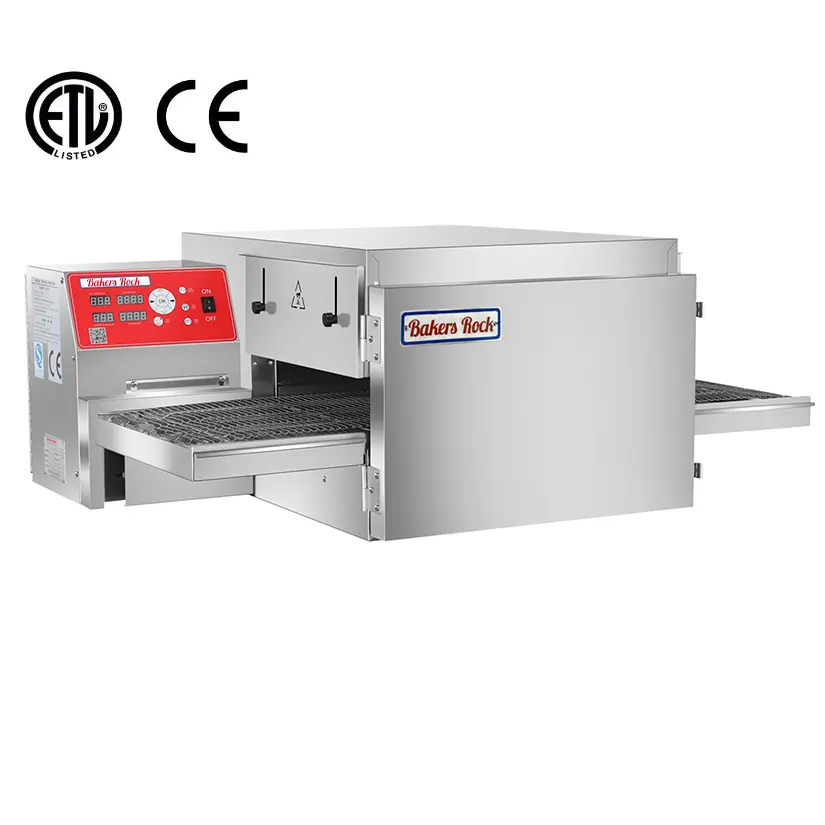
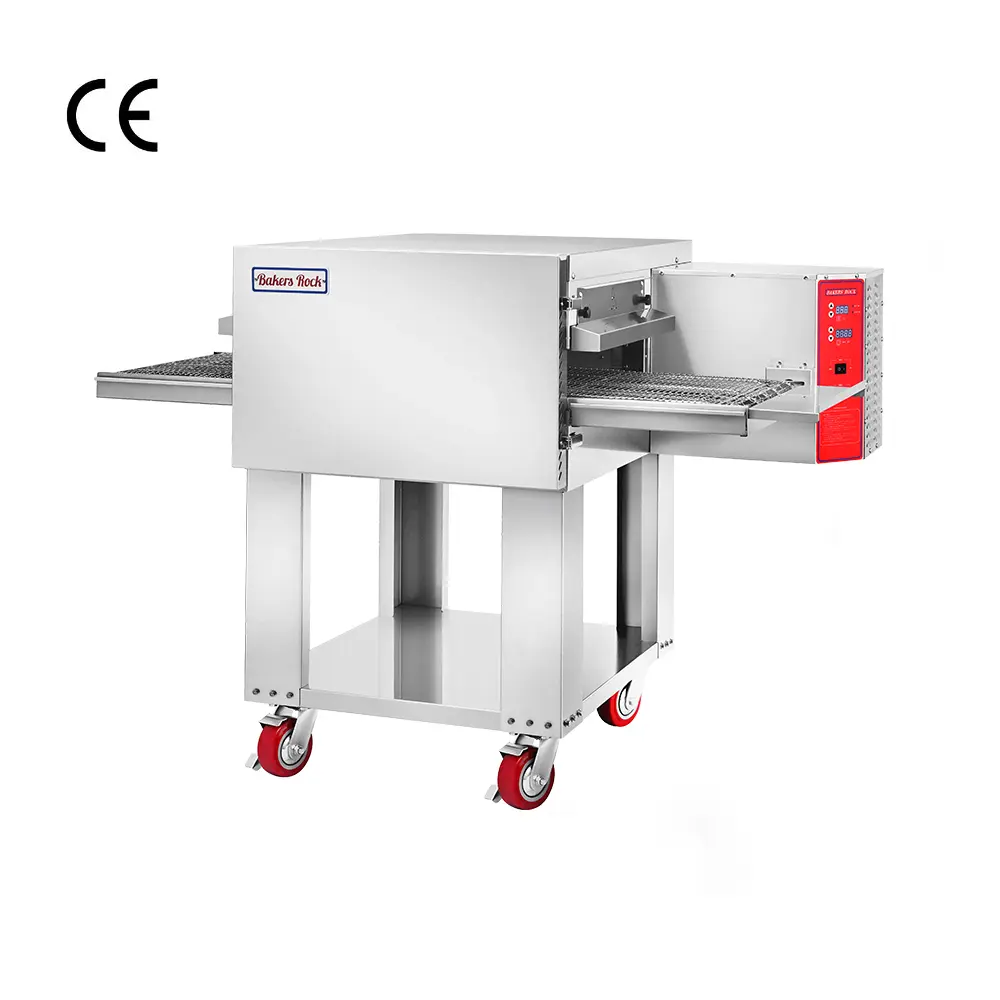
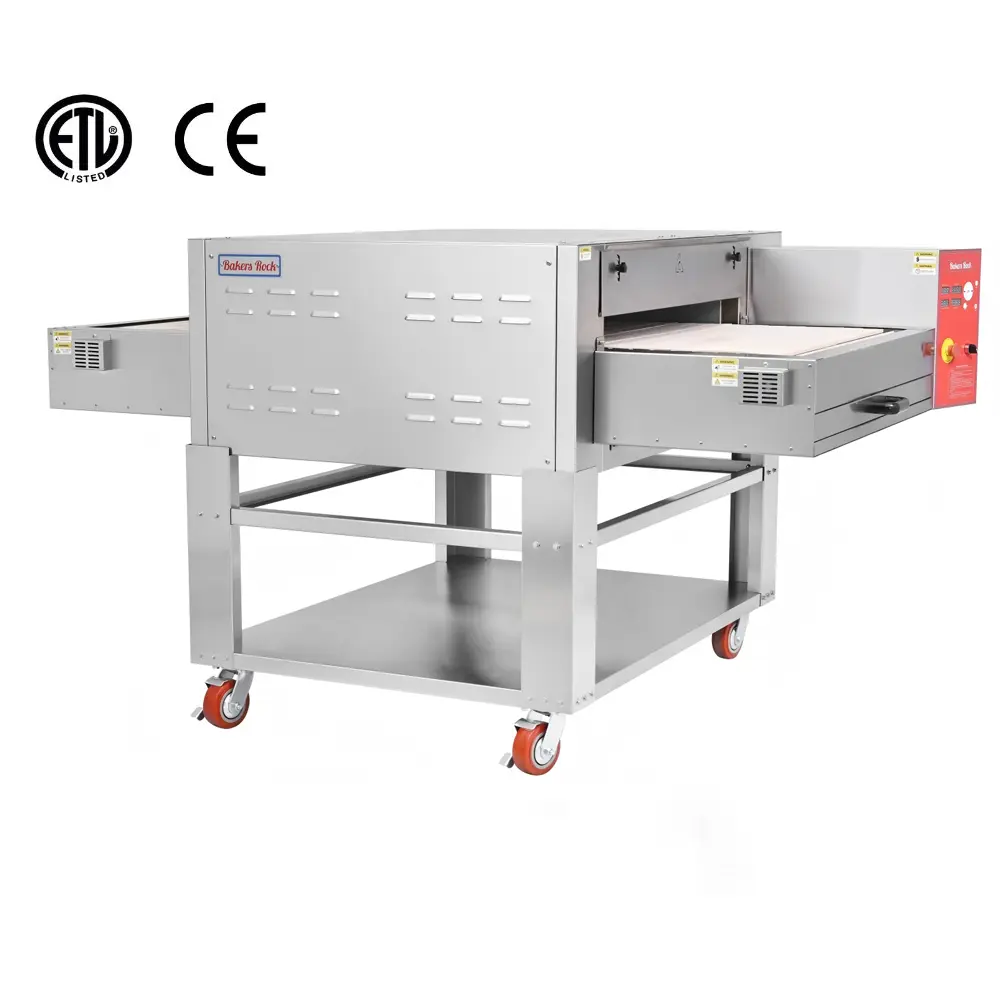
Bakers Rock lists electric and gas conveyor options. These examples show why the RFQ must include the exact utility configuration; they are not universal installation values.
The H2028 electric conveyor oven lists 15.5 kW and, for one 380 V three-phase configuration, 23.5 A per line plus a neutral. Check these example figures against the ordered version and local connection design.
The G2028 gas conveyor oven is offered for natural gas or LPG and lists 300 W of auxiliary power, with single-phase options at 110 V, 127 V, and 220 V. Confirm the gas category, burner input, inlet condition, connections, and electrical version.
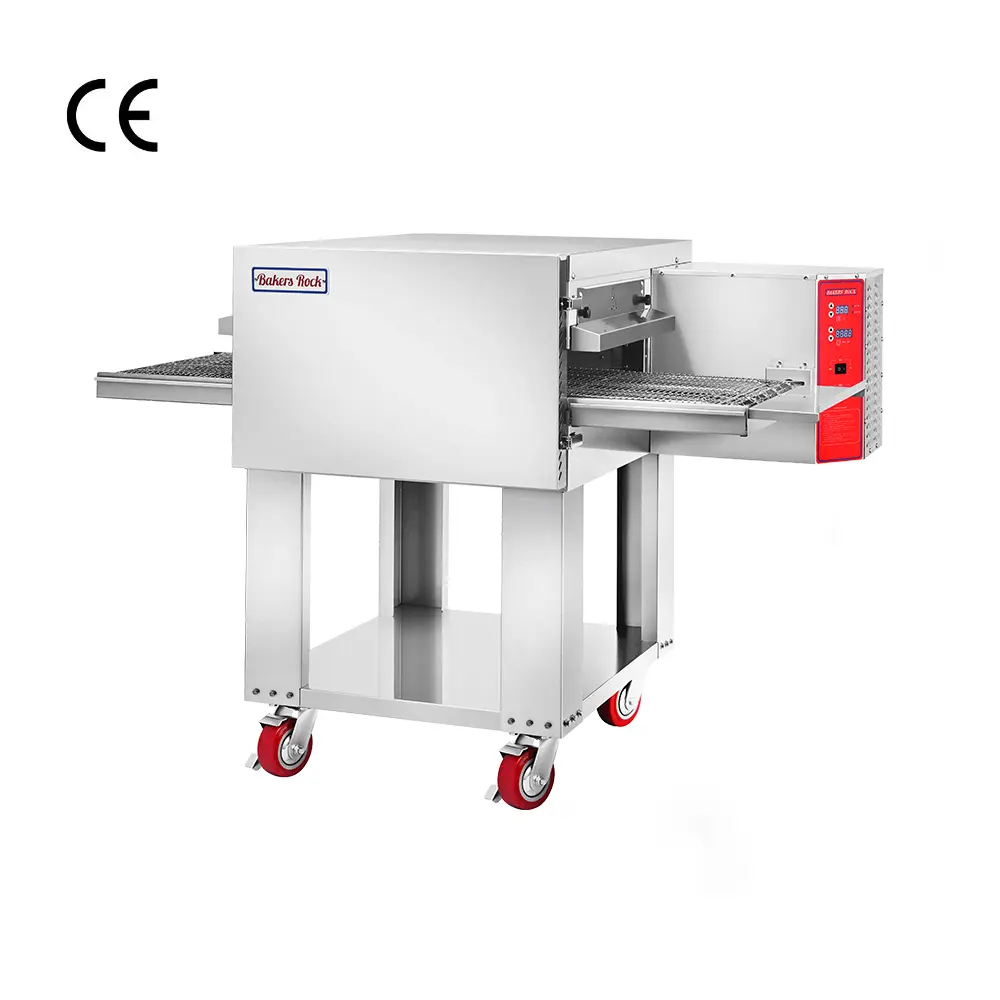
One utility sheet per store should identify location, new build or retrofit, target throughput, menu, belt direction, stack, operating hours, and opening date. Record these verified fields:
This lets Bakers Rock distinguish an available model from one the store is ready to install, while giving the chain a consistent basis for exceptions.
Electric versus gas is a site-readiness decision. Electric depends on verified capacity for the ordered load. Gas depends on a confirmed fuel system and still requires electricity. Both require model-specific ventilation, access, approval, and future-stack planning.
Do not assume that it does. Gas conveyor ovens typically need auxiliary electricity for controls and conveyor operation. Confirm the exact electrical requirement and any approved backup-power approach for the ordered model.
No. Connection design uses the model’s specified connected load and local electrical requirements. Average consumption may support cost analysis, but it should not replace the nameplate and engineering data used for supply design.
Only after local review. The exact oven, stack, menu, production rate, hood geometry, duct path, replacement air, fire protection, and local code can change the result. Use a standard survey, then obtain site-specific approval.
A site is conditional when an upgrade, approval, or missing verification still affects installation. Examples include an unpriced electrical upgrade, an unconfirmed LPG system, incomplete hood calculations, or unresolved landlord consent.
For a model fit check, send the completed utility sheet to the technical team with quantity, drawings, photographs, throughput, menu, stack plan, and opening schedule. Bakers Rock can then recommend a configuration against documented conditions, subject to local engineering and approval.