Nullam dignissim, ante scelerisque the is euismod fermentum odio sem semper the is erat, a feugiat leo urna eget eros. Duis Aenean a imperdiet risus.
Nullam dignissim, ante scelerisque the is euismod fermentum odio sem semper the is erat, a feugiat leo urna eget eros. Duis Aenean a imperdiet risus.
 author
The labor costs associated with commercial conveyor pizza ovens go beyond the acquisition cost. In a busy pizza restaurant, the key issue is whether the oven will help in reducing the repetitive labor, make training easy, be consistent in its output, and keep the cost of labor per pizza during peak hours low.
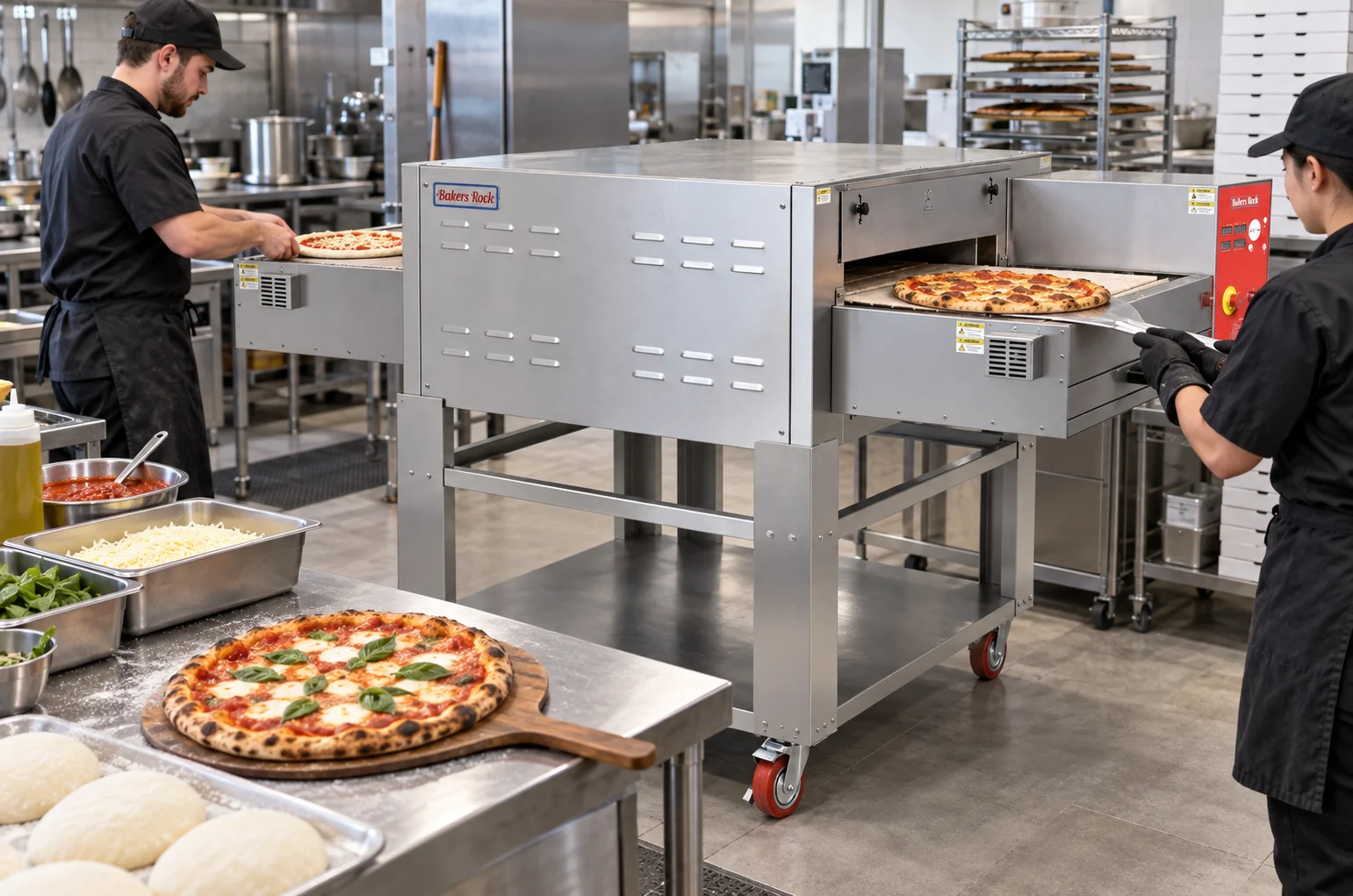
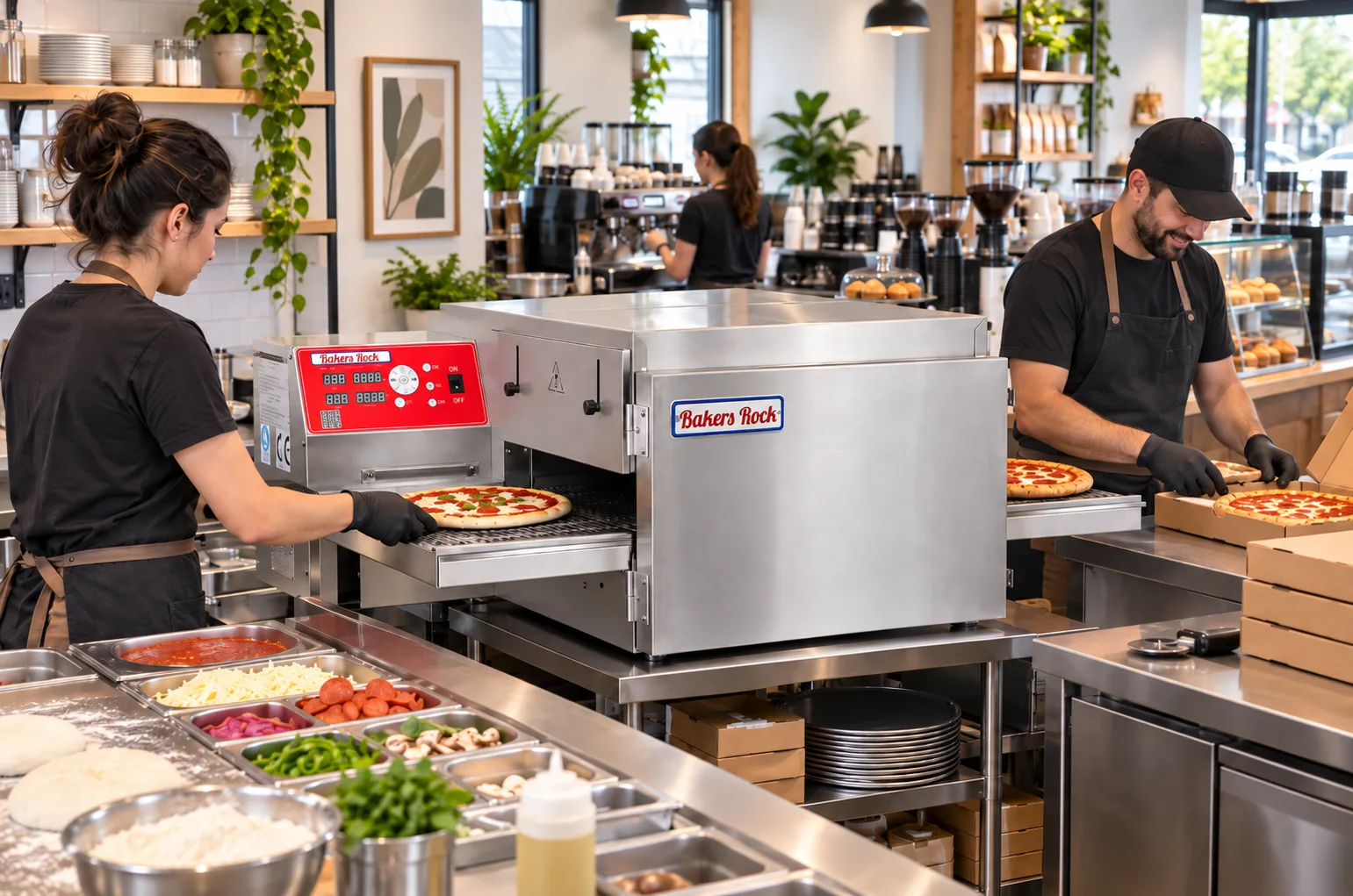
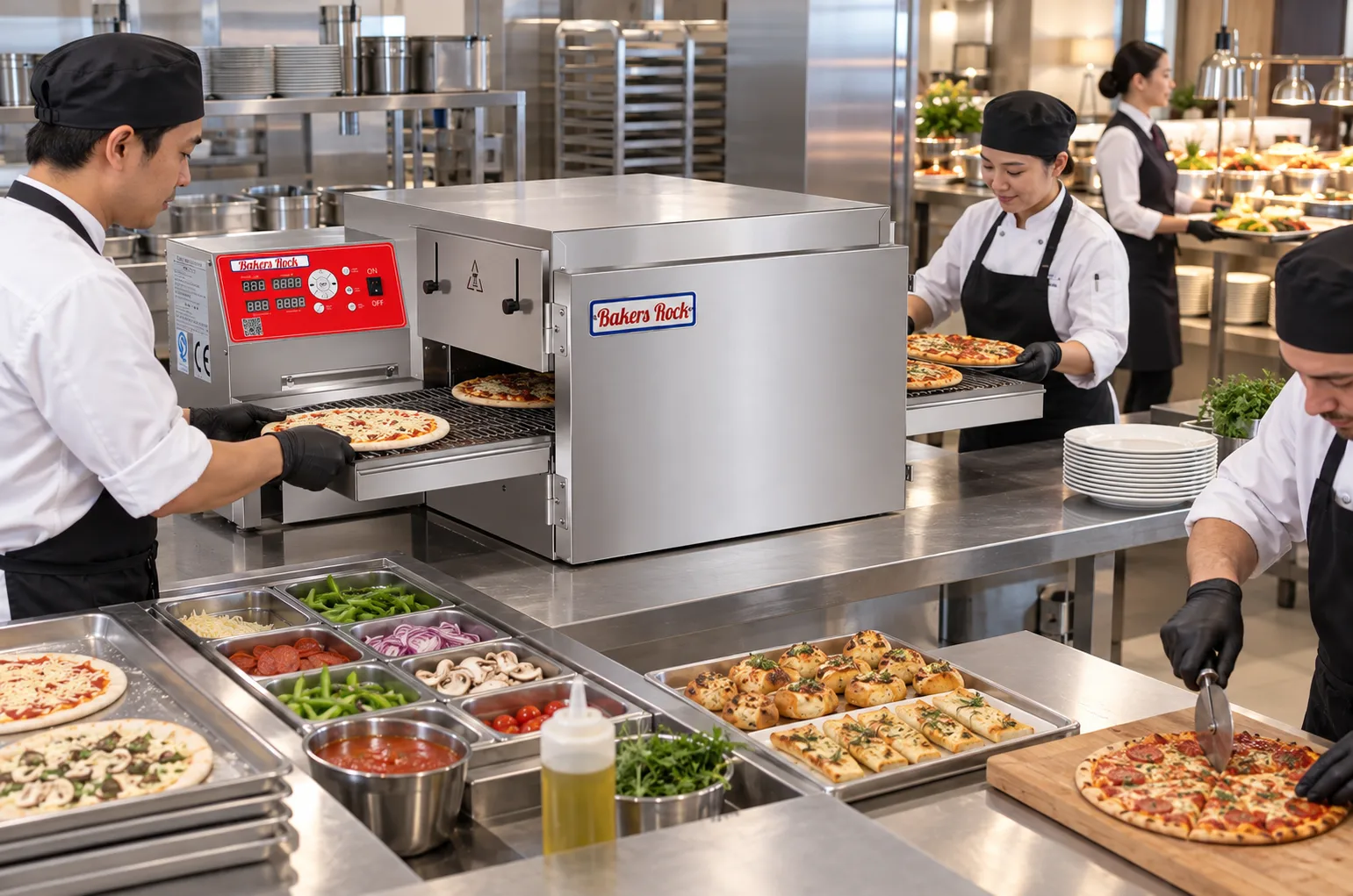
A conveyor oven does not eliminate labor. Employees must still prepare, load, unload, inspect, and clean. Its value comes from making the baking stage more repeatable. Restaurants comparing Bakers Rock commercial pizza oven solutions should therefore examine their current workflow, peak-hour demand, menu consistency, and staffing pressure before selecting a standard model.
High-volume pizza production is costly when there is a need for constant supervision of the oven station. The person operating may have to put in each batch, turn the pizzas, observe their color, determine the level of doneness, pick the products at different times, and even make setting changes between batches. During a rush, those tasks compete with preparation, finishing, packaging, and order coordination.
Labor costs also rise when results depend heavily on an experienced operator. New employees take longer to train, while differences between shifts can lead to inconsistent products, remakes, and customer complaints. Adding another employee may improve output temporarily, but it does not correct an inefficient baking process.
Before purchasing new equipment, measure the existing process during a representative peak period. Record how many saleable pizzas leave the kitchen per hour, how much time employees spend watching or adjusting the oven, how often products require turning, and how many orders need remaking.
A conveyor oven is most relevant when repeatable products are delayed by batch handling or constant supervision. It may offer less value to a low-volume restaurant with a highly variable menu, frequent recipe changes, or a baking style that depends on manual positioning and visual judgment. The decision should be based on actual workflow data rather than total sales alone.
Conveyor pizza oven labor savings usually come from simplifying the baking stage. After the appropriate temperature and conveyor time have been established for a repeatable product, employees can load items at one end and retrieve them after a controlled baking cycle.
This approach can reduce manual turning, individual timing decisions, repeated door opening, and continuous oven observation. It may also make pizza oven staffing requirements easier to manage because employees follow documented settings rather than relying entirely on personal experience.
Automated pizza baking is most useful for restaurants with standardized dough portions, toppings, pizza sizes, and bake profiles. In these conditions, a controlled conveyor speed and temperature can make the process easier to teach across different shifts.
The oven should not be treated as a substitute for process control. Excessive toppings, inconsistent dough thickness, incorrect loading gaps, or products that exceed the oven’s intended inlet dimensions can still produce poor results. Buyers should confirm available temperature controls, conveyor-time ranges, usable baking dimensions, power requirements, and menu compatibility against the selected model’s specification.
A commercial stone conveyor oven may be considered when the menu and desired baking result suit a refractory stone conveying surface. The appropriate configuration still depends on pizza style, size, production volume, and kitchen utilities.
Remakes consume ingredients and employee time without creating saleable output. A repeatable baking process may reduce this loss when the main causes are inconsistent timing, missed rotations, or different decisions between operators.
However, uneven results do not always indicate an oven problem. They can also come from irregular dough weight, changing sauce or topping quantities, poor preparation temperatures, or inconsistent product placement. Restaurants should standardize these inputs before estimating potential labor savings.
Daily operating procedures should specify the product recipe, loading pattern, approved oven settings, inspection points, and response to an out-of-spec pizza. This allows the restaurant to distinguish equipment performance from preparation errors and reduces the risk of overstating conveyor oven labor efficiency.
A restaurant should establish a current baseline before estimating conveyor pizza oven ROI. Calculate the labor used during a representative production period, including oven handling and any directly related finishing or rework. Use the fully loaded hourly labor cost where available.
Labor cost per pizza =
Total applicable labor cost during the period
÷ Number of saleable pizzas produced
The same calculation can then be applied to a proposed workflow. Savings may appear as fewer oven-handling hours, more pizzas produced by the same team, less overtime, or fewer remakes. Not every restaurant will reduce its headcount; some will gain more value by reallocating employees to preparation, packaging, service, or other revenue-producing work.
A realistic analysis should include the oven purchase, installation, required electrical or gas work, ventilation considerations, routine maintenance, cleaning time, and expected operating costs. These inputs may vary by model and location and should be verified before ordering.
Estimated payback period =
Total equipment and installation cost
÷ Verified monthly operating benefit
Use several scenarios rather than one optimistic estimate. A conservative case can assume limited labor reallocation and current sales volume. A higher-volume case can evaluate additional output during peak periods. If the result depends on sales growth that has not yet occurred, the buyer should treat that benefit separately from verified current savings.
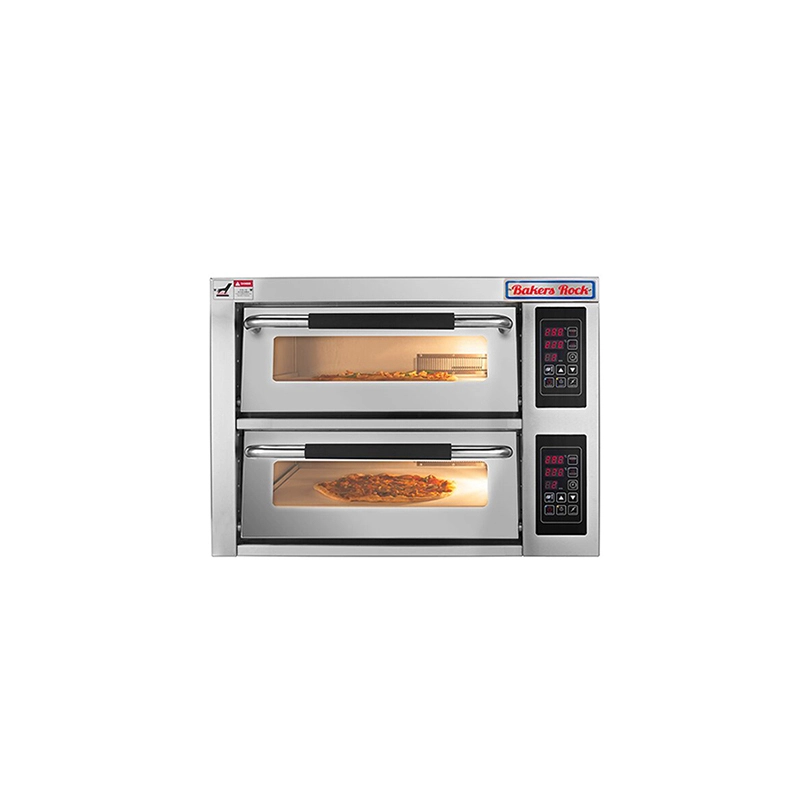
The choice between conveyor and deck equipment should reflect the restaurant’s operating model. Neither format is automatically better for every menu.
| Decision factor | Conveyor oven | Deck oven |
|---|---|---|
| Operator attention | Less continuous observation after settings are established | Often requires more individual monitoring |
| Training | Easier to standardize for repeatable products | More dependent on baking judgment |
| Production flow | Continuous loading supports peak-hour output | Batch production may suit lower or variable volume |
| Manual handling | Can reduce turning and separate timing decisions | May require rotation and manual removal decisions |
| Menu flexibility | Strong fit for consistent products and bake profiles | Often suitable for products needing individual control |
| Labor value | Highest when the oven station is a proven bottleneck | May be economical when volume is lower and skilled labor is available |
A replacement decision should consider more than labor. Product style, desired crust characteristics, kitchen space, utility supply, ventilation, and production patterns also matter. A restaurant should not replace a functioning deck oven solely because conveyor operation appears simpler.
An oversized oven can increase investment and operating costs without producing proportional labor benefits. An undersized model may remain a bottleneck during the busiest service period. Capacity should therefore be evaluated against peak-hour demand, not daily averages.
Before requesting a recommendation, buyers should document pizza diameter, menu range, expected pizzas per hour, current bake time, available kitchen dimensions, local power supply, and preferred energy source. Selection should be made among suitable standard models rather than assuming that belt width or oven length will be customized.
Even an appropriate commercial conveyor pizza oven cannot compensate for an uncontrolled preparation process. Restaurants should define dough weight, topping limits, loading intervals, product spacing, approved settings, and responsibility for checking finished products.
Cleaning and preventive care also affect labor efficiency. Crumb accumulation, restricted airflow, worn components, or unplanned downtime can reduce throughput and add emergency work. Buyers should review the manufacturer’s cleaning instructions, routine inspection points, replacement-part availability, and service process before purchase.
This operating discipline is particularly important for restaurant chains, where the value of a conveyor system often comes from reproducing the same workflow across employees and locations.
A commercial conveyor pizza oven supplier should help the buyer match a standard model to the application rather than make an unsupported labor-saving promise. The proposal should identify the model, usable baking area, accepted pizza size, control functions, utility requirements, equipment dimensions, installation considerations, and the conditions behind any stated capacity.
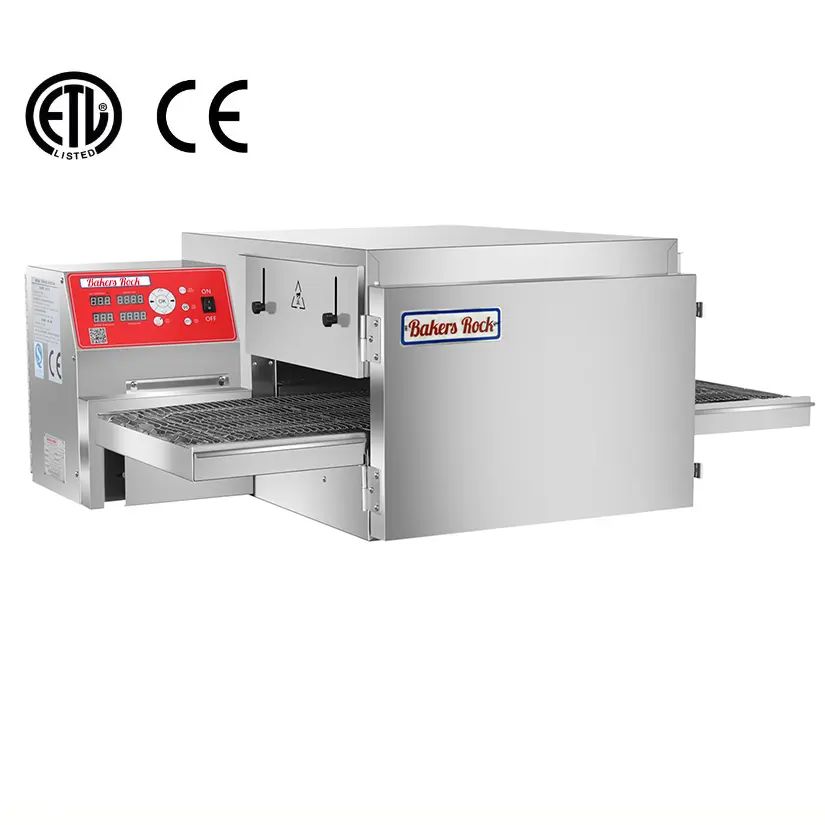
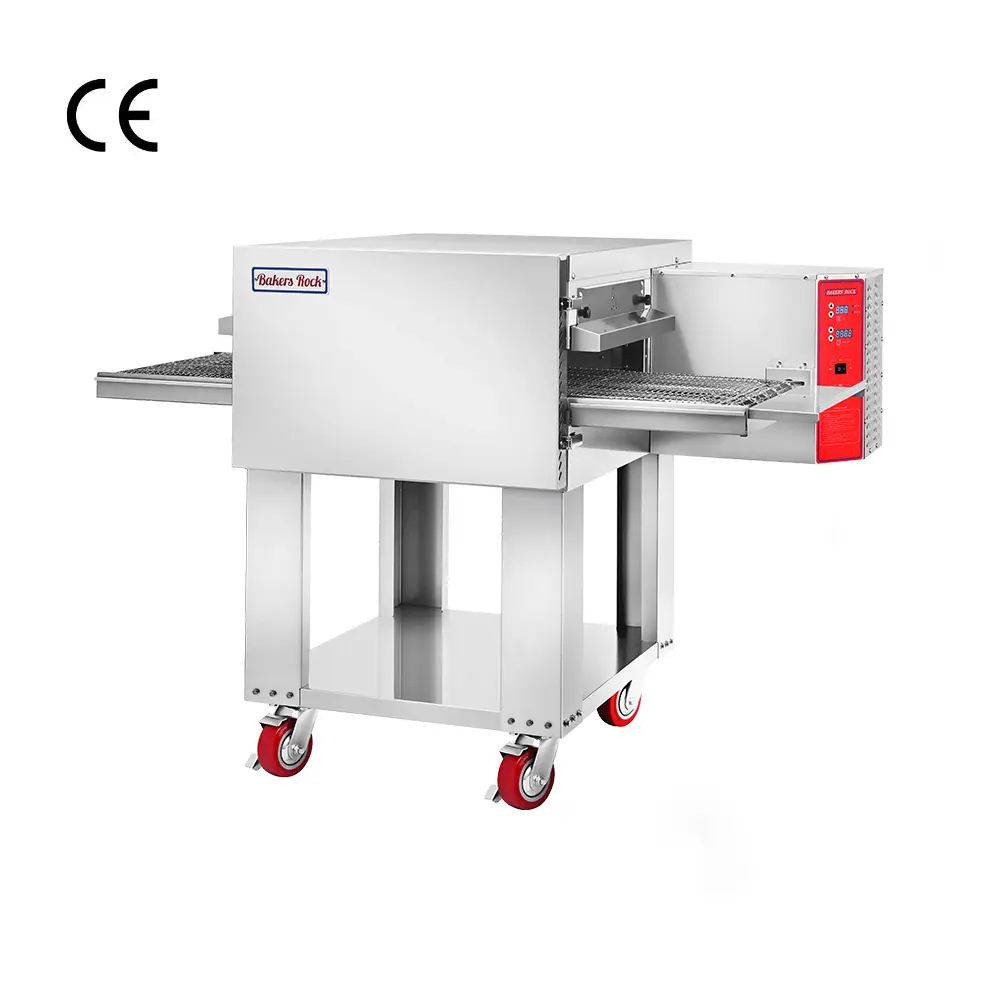
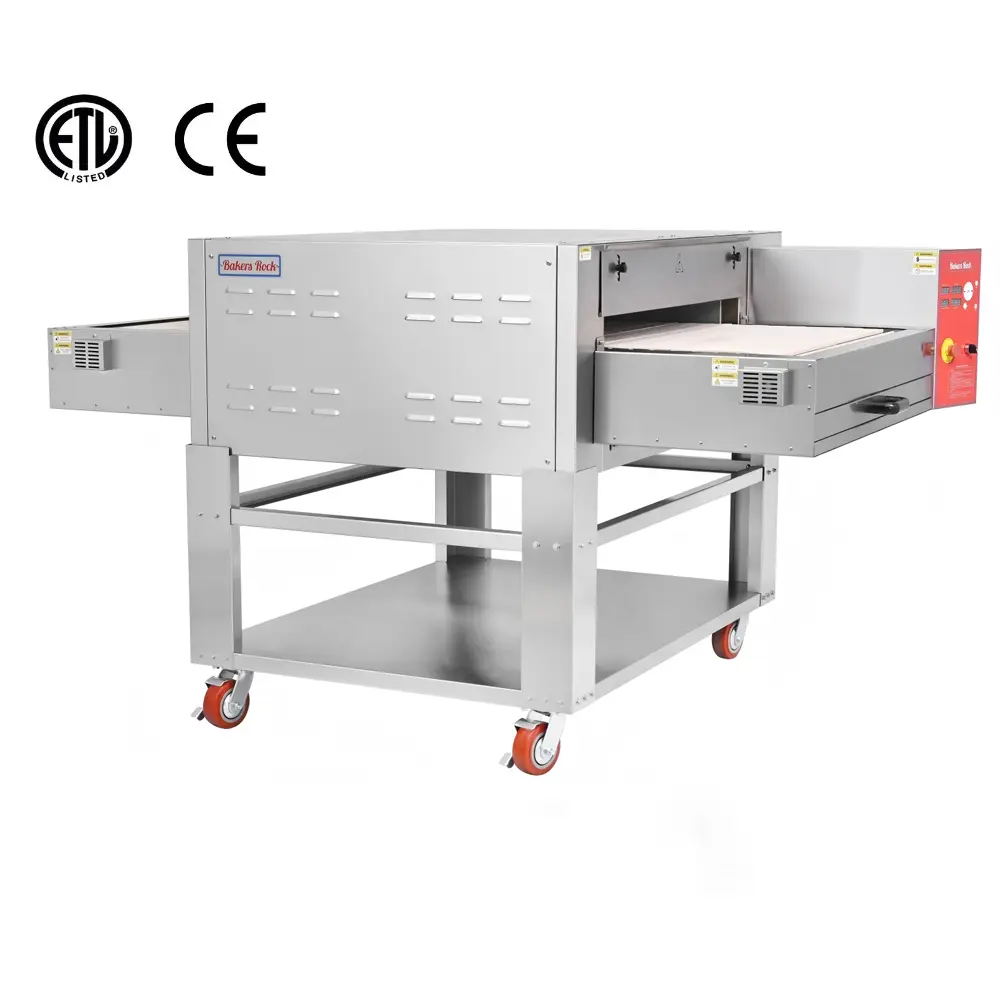
Bakers Rock offers commercial air-impingement conveyor ovens in electric, gas, and stone-conveyor categories. Public product information should be checked against the intended menu and local operating conditions.
For restaurants requiring consistent baking performance and high-volume production, a 32-inch stone belt conveyor oven provides a continuous baking solution with a refractory stone belt and stable heat control.
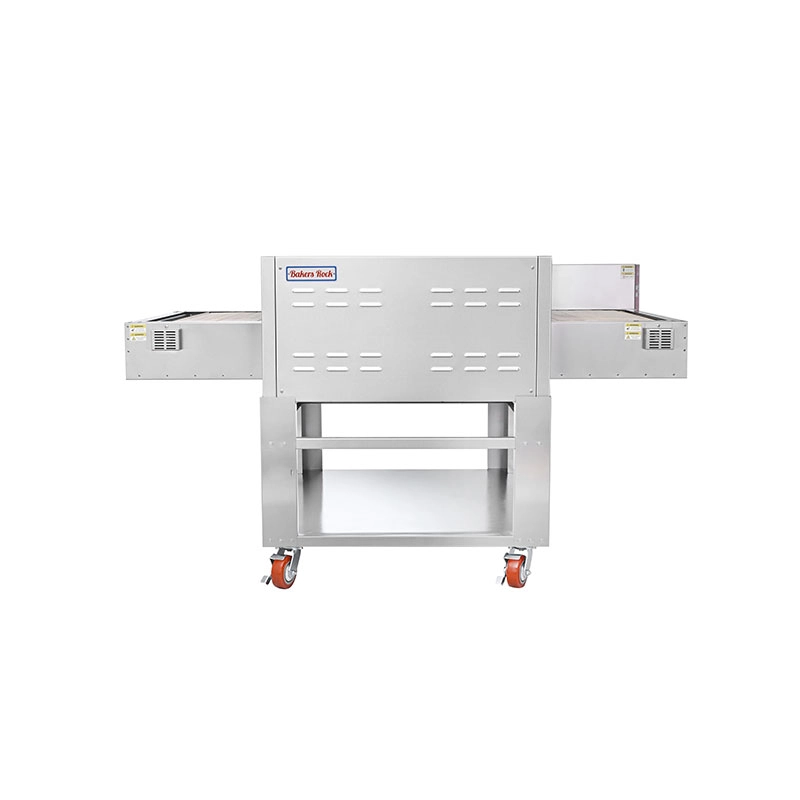
Buyers evaluating the company can review Bakers Rock’s commercial oven manufacturing background before comparing individual models.
Supplier evaluation should also cover:
A useful quotation request describes the operating problem as clearly as the desired equipment. “Reduce labor” is too broad. Current staffing, peak-hour production, pizza size, kitchen space, utility conditions, and the steps causing delays give the supplier enough context to recommend a suitable model.
A commercial conveyor pizza oven may lower labor cost per pizza by reducing manual supervision, simplifying training, supporting continuous production, and limiting avoidable rework. The strongest business case occurs when a restaurant has repeatable products, sustained peak demand, and a measurable oven-station bottleneck.
Actual savings depend on the menu, current workflow, employee costs, selected model, and operating conditions. Restaurants should calculate a baseline, compare realistic scenarios, and confirm product specifications before making a purchasing decision.
For a model review, buyers can request a conveyor oven recommendation and provide the pizza size, expected peak-hour output, available kitchen space, power or gas supply, menu application, and current workflow constraints.
No. The benefit depends on production volume and the tasks currently performed by employees. A low-volume restaurant or a highly variable menu may not achieve the same conveyor pizza oven labor savings as a busy operation with standardized products.
There is no universal number. Staffing depends on preparation, loading, unloading, finishing, packaging, cleaning, and order volume. Buyers should compare total labor hours per saleable pizza rather than focus only on the employee standing near the oven.
A conveyor system can reduce dependence on individual baking judgment after suitable settings and operating procedures have been established. Employees still need training in preparation consistency, safe loading, finished-product inspection, cleaning, and responding to abnormal results.
It may be suitable when the restaurant has repeatable products, concentrated peak demand, and sufficient kitchen space and utilities. A small operation with low volume or highly individualized baking may find another oven format more practical.
The calculation should include current labor hours, fully loaded labor cost, saleable pizzas per hour, remakes, overtime, equipment and installation costs, expected operating expenses, and realistic production demand. Model-specific figures should be confirmed in the product specification and quotation.