Nullam dignissim, ante scelerisque the is euismod fermentum odio sem semper the is erat, a feugiat leo urna eget eros. Duis Aenean a imperdiet risus.
Nullam dignissim, ante scelerisque the is euismod fermentum odio sem semper the is erat, a feugiat leo urna eget eros. Duis Aenean a imperdiet risus.
 author
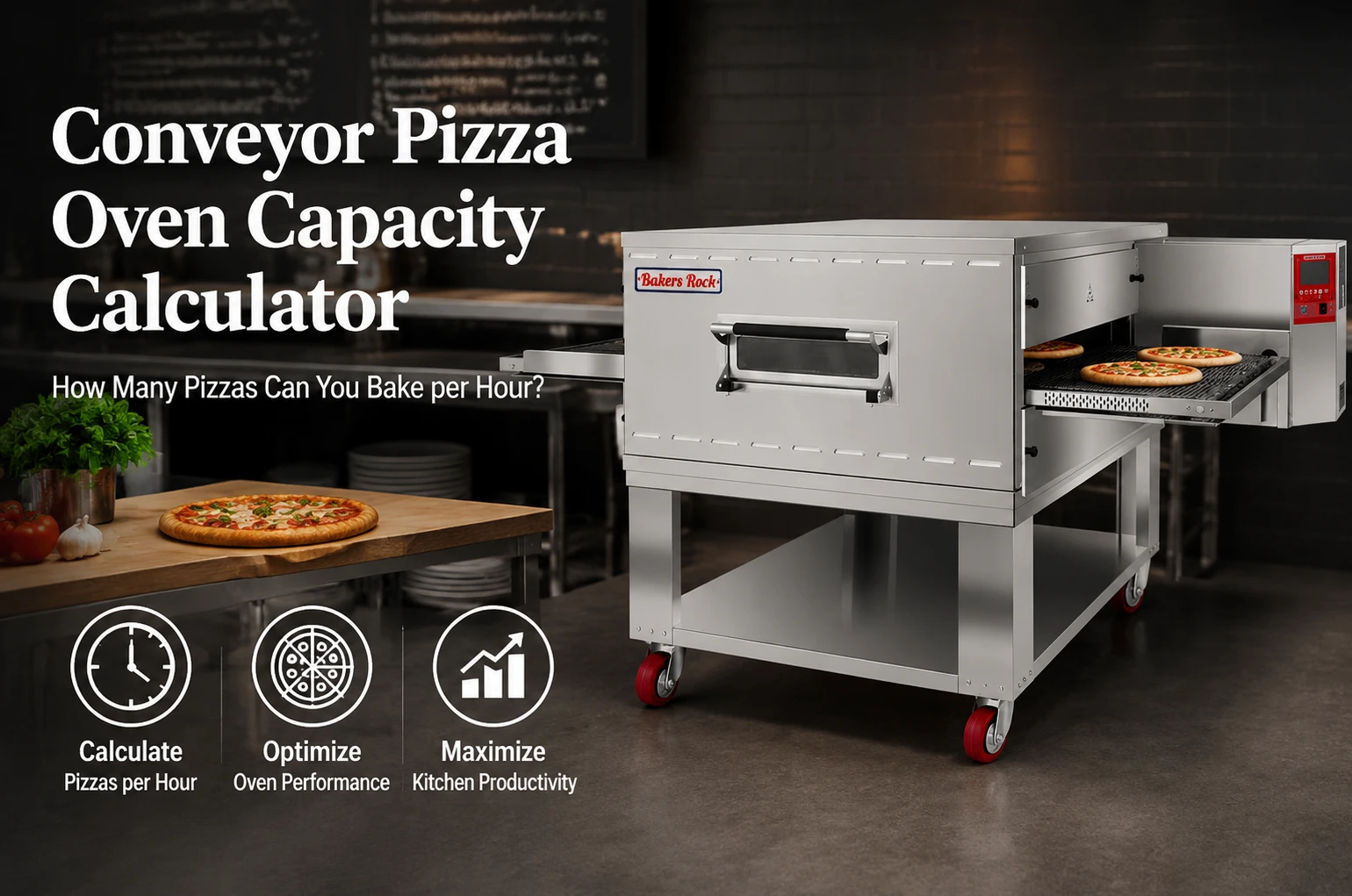
A conveyor pizza oven capacity calculator estimates how many pizzas an oven can bake per hour under defined operating conditions. For a useful result, the calculation must include pizza diameter, bake time, usable belt width, loading pattern, baking chamber length, and the number of stacked ovens. A published maximum without these inputs is not a reliable basis for equipment selection.
Theoretical output can be estimated from the number of pizzas placed in each loading row and the interval between rows:
Pizzas per hour = pizzas per row × 60 ÷ loading interval in minutes
The loading interval depends on belt speed, baking chamber length, pizza diameter, and the clearance required between products. For example, a belt that accepts two pizzas side by side may produce substantially more than a single-file layout, but only when both pizzas remain within the usable heated width.
The result should be treated as theoretical conveyor oven output. A practical pizza per hour calculator should also apply a capacity allowance for irregular loading, product variation, short stoppages, and peak-hour workflow. Buyers should therefore compare three figures:
Operations that have not selected a model can begin by reviewing commercial conveyor pizza ovens across different sizes. The final calculation should then be verified against the specification and test conditions of the selected oven.
Pizza diameter determines how many products fit across the usable belt and how closely consecutive rows can be loaded. A nominal 32-inch belt, for example, should not automatically be assumed to accept every combination of two large pizzas. Pans, screens, product overhang, and the clearance needed for even airflow can reduce usable space.
Single-file loading may suit large pizzas or narrow countertop ovens. Side-by-side loading is more appropriate when the belt provides sufficient clearance around both products. A staggered pattern may increase conveyor oven production rate, but it should be validated through a continuous test rather than assumed from physical dimensions alone.
When comparing electric conveyor pizza ovens, buyers should confirm usable baking width, chamber length, maximum product height, permitted pan size, and the loading layout used for published capacity figures.
Shorter bake time generally increases pizza oven throughput because products move through the chamber faster. However, increasing belt speed without adjusting heat transfer may produce a pale crust, cold center, or uneven toppings. The correct setting depends on dough thickness, starting temperature, topping load, pan or screen use, and the desired finish.
Fresh thin-crust pizza, refrigerated dough, frozen pizza, deep-dish products, and heavily topped pizzas should not share the same capacity assumption. A supplier’s output figure is meaningful only when the test product resembles the buyer’s menu.
Before purchasing, provide the supplier with pizza diameter, dough condition, typical topping weight, target bake time, and required crust finish. A test bake under continuous loading is the practical next step when menu conditions differ from published data.
A kitchen may miss its rated pizzas-per-hour target even when the oven is operating correctly. Irregular gaps between pizzas, delays at the prep station, slow unloading, and frequent setting changes can leave sections of the belt empty. Cold or heavily topped products may also require more bake time than the assumptions behind the rated capacity.
The first diagnostic step is a timed peak-load test. Record prepared pizzas entering the belt, completed pizzas leaving it, empty belt space, rejected products, and any waiting time at prep or finishing stations. If the belt repeatedly runs empty, the bottleneck is likely upstream. If it remains fully loaded but finished pizzas do not meet quality requirements, the oven setting, product specification, or equipment capacity requires review.
Mechanical faults and component replacement belong in a separate troubleshooting process. They should not be diagnosed from a capacity calculation alone.
Commercial pizza oven capacity should be selected from peak-hour demand rather than average daily sales. A kitchen that sells most of its pizzas during a short dinner rush needs enough working capacity for that period, plus reasonable headroom for demand variation and operational delays.
Standardized pizza size, topping portions, loading gaps, and recipe settings help maintain repeatable output. Periodic timed tests can identify declining performance before it causes missed orders. Staff also need enough space and preparation capacity to keep the belt supplied and remove finished pizzas promptly.
When demand grows, adding a stacked oven may increase production within a limited footprint. A wider model may be more suitable when larger pizzas must be loaded side by side. The choice depends on available utilities, ventilation, kitchen height, workflow, and whether production redundancy is required.
The correct size depends on peak pizzas per hour, pizza diameter, bake time, and site conditions—not restaurant labels alone.
| Operating situation | Configuration to evaluate | Main purchasing check |
| Café or limited pizza menu | Countertop single oven | Future demand and available electrical service |
| Independent pizzeria | Medium conveyor or stackable configuration | Pizza diameter and continuous working output |
| QSR or delivery kitchen | Wide-belt or double-stack system | Peak loading workflow and ventilation |
| Pizza chain or production facility | Multiple or stacked high-capacity ovens | Redundancy, utilities, and repeatable test data |
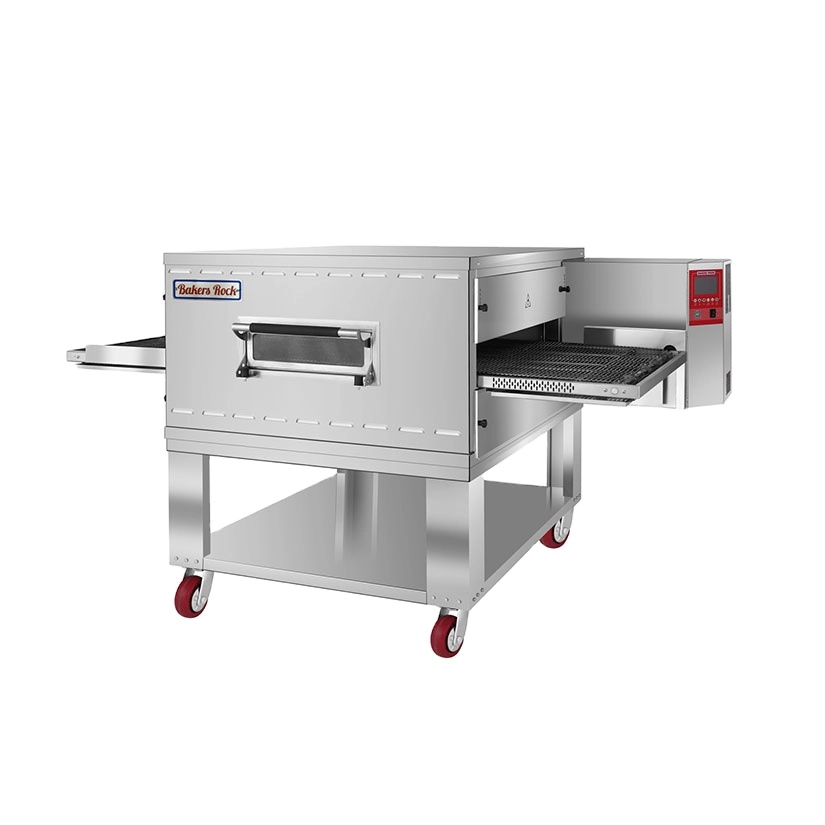
For operations that need large pizzas loaded side by side, the 32-inch high-capacity conveyor oven provides a 32-by-40-inch baking area and is designed to accommodate two 15-inch pizzas across its width. Actual pizzas per hour still depend on bake time, loading clearance, and product conditions.
A larger oven is not automatically the better purchase. Excess capacity can increase installation requirements and leave equipment underused during normal service. Conversely, buying for present average volume without growth allowance can force an early replacement or additional installation.
Capacity claims should state the pizza diameter, bake time, dough condition, loading pattern, and number of ovens used. Figures that omit these conditions cannot be compared directly.
A qualified commercial conveyor pizza oven manufacturer should be able to discuss application requirements, provide relevant specifications, explain test conditions, and identify where estimates may vary. Buyers should also confirm voltage, phase, frequency, gas or LPG requirements where applicable, ventilation, product dimensions, warranty terms, spare-parts support, and required market documentation.
Bakers Rock is the overseas brand of Shanghai QiangAn FoodService Equipment Co., Ltd. The available product range includes countertop and larger electric impingement models, gas/LPG conveyor ovens, and stone conveyor ovens. Further company information is available through About Bakers Rock.
For an accurate recommendation, an RFQ should include:
A reliable conveyor pizza oven capacity calculation connects menu conditions with equipment size. Pizza diameter, bake time, belt layout, product condition, and peak-hour workflow must all be considered before comparing models.
Bakers Rock can review these application details against available configurations. Buyers can contact a conveyor oven specialist with pizza size, target hourly output, product condition, utility information, available space, and destination market to request a capacity-matched recommendation.
Q1: How many pizzas can a conveyor oven cook per hour?
A: The answer depends on pizza diameter, bake time, usable belt width, loading pattern, and the number of stacked ovens. Published output should be checked against the product and test conditions.
Q2: How do you calculate conveyor pizza oven capacity?
A: Multiply the number of pizzas in each loading row by the number of rows that can pass through the oven per hour. Then reduce the theoretical result to allow for loading gaps and workflow delays.
Q3: Does a double-stack conveyor oven double pizza output?
A: It may approach twice the theoretical oven capacity when both units run under the same conditions. Actual output can still be limited by utilities, ventilation, preparation speed, and unloading workflow.
Q4: What size conveyor oven is needed for 100 pizzas per hour?
A: Pizza diameter and required bake time must be known first. The same target may require a wide single oven, a stacked configuration, or another setup depending on the loading layout and site conditions.
Q5: Why is actual pizza output lower than rated capacity?
A: Common causes include longer real-world bake times, cold or heavily topped products, irregular loading gaps, insufficient preparation capacity, and slow unloading. A timed continuous-load test can identify the limiting step.