Nullam dignissim, ante scelerisque the is euismod fermentum odio sem semper the is erat, a feugiat leo urna eget eros. Duis Aenean a imperdiet risus.
Nullam dignissim, ante scelerisque the is euismod fermentum odio sem semper the is erat, a feugiat leo urna eget eros. Duis Aenean a imperdiet risus.
 author
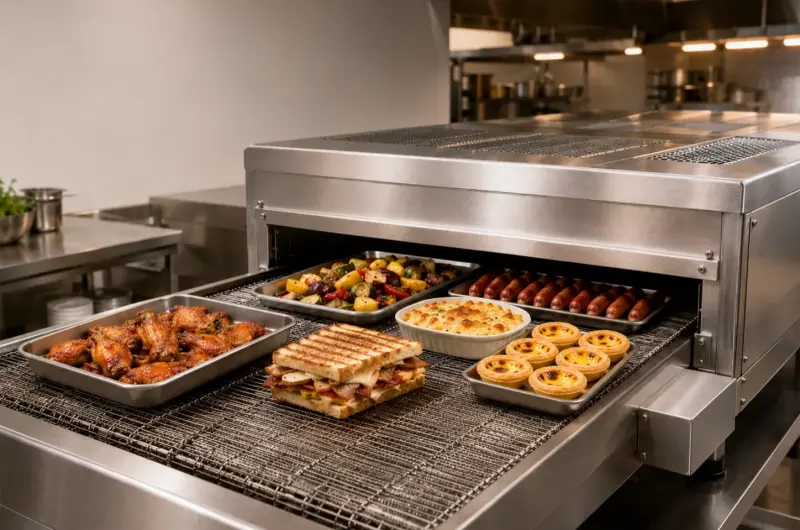
A commercial conveyor pizza oven can cook much more than pizza. Suitable menu items may include sandwiches, flatbreads, chicken wings, portioned meat, seafood, vegetables, baked pasta, rice dishes, cookies, and pastries. However, the oven’s ability to process a food does not automatically make that food suitable for continuous commercial production. Product size, starting temperature, moisture, container, chamber clearance, belt speed, airflow, and required internal temperature must all be considered before adding a new item to the menu.
The most suitable non-pizza foods have repeatable dimensions, weights, and starting conditions. They can move through the chamber at a fixed speed and reach the required finish without turning, stirring, or frequent manual inspection.
| Food category | Commercial examples | Typical format | Main condition to verify |
| Toasted foods | Subs, panini, flatbreads, garlic bread | Screen or shallow tray | Product height and topping stability |
| Appetizers | Wings, tenders, nachos, potato wedges | Tray or approved basket | Drippings and internal temperature |
| Proteins | Portioned meat, seafood, precooked products | Pan or grill plate | Thickness and food-safety validation |
| Side dishes | Vegetables, baked pasta, rice dishes | Rigid pan | Container depth and center heating |
| Bakery items | Cookies, pastries, selected desserts | Baking tray | Recipe response to airflow and heat |
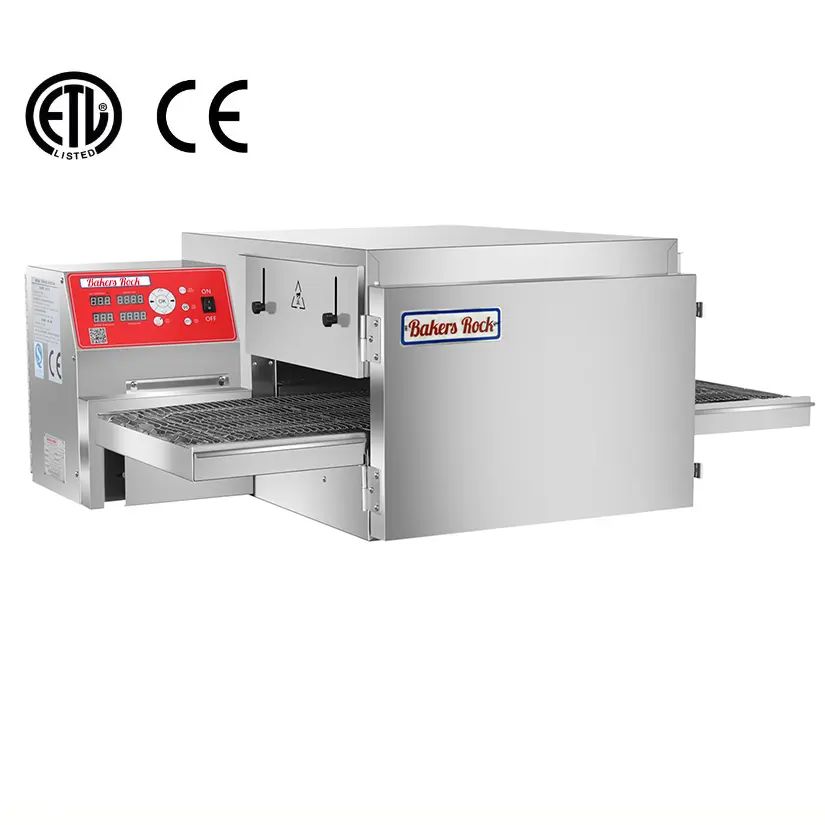
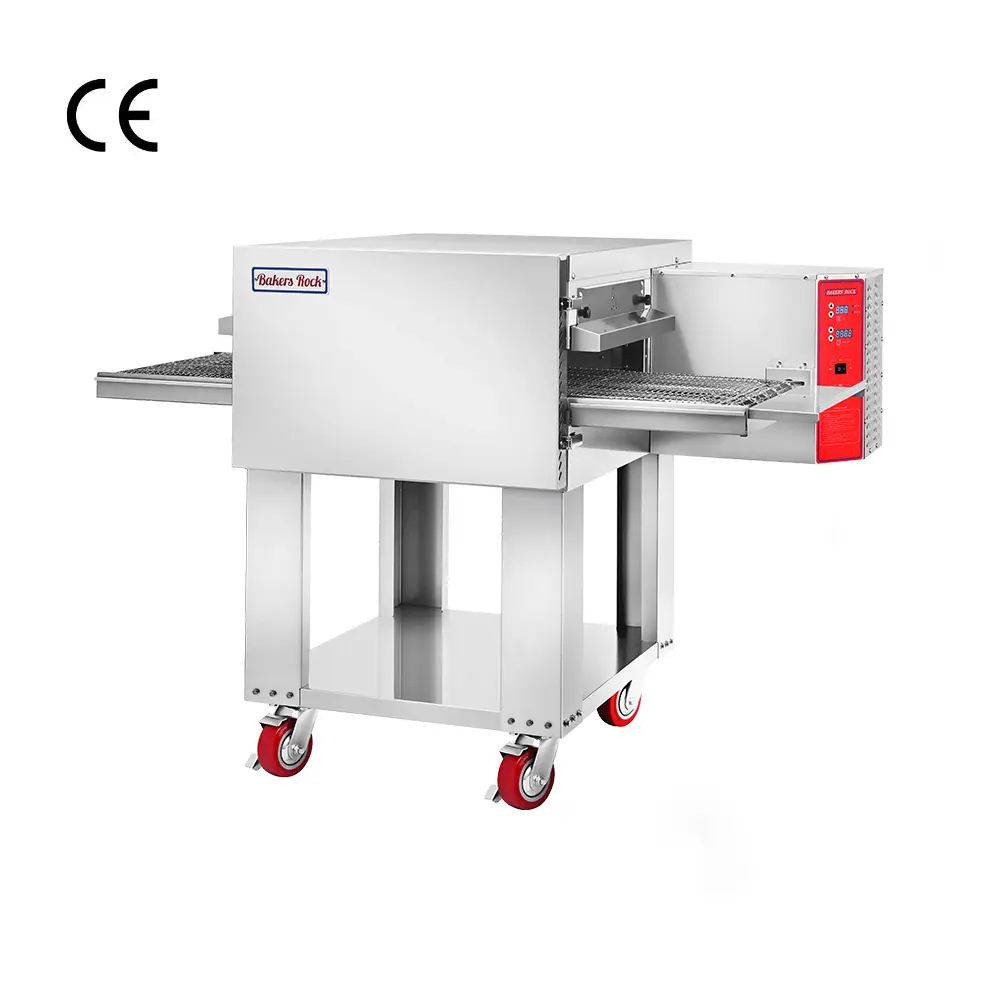
This range makes conveyor equipment useful in pizzerias, cafés, snack bars, delivery kitchens, cafeterias, and other foodservice operations that need to produce several standardized menu items. Buyers can review the broader Bakers Rock commercial conveyor oven range before narrowing their options by energy source, belt size, and application.
Sandwiches and flatbreads are among the easiest conveyor oven menu ideas to test because their dimensions and cooking results can usually be standardized. Panini, open-faced sandwiches, garlic bread, tacos, bagels, and similar items may work well when their loaded height fits the chamber opening and their toppings remain stable under moving air.
Loose cheese, light herbs, and excessive sauce can move or drip in an impingement oven. A screen or shallow tray may be needed, depending on the food and belt design. Before production, test whether the center heats sufficiently without overbrowning the bread. Pizza and sandwiches should share one conveyor setting only when their time, temperature, and airflow requirements are compatible.
Can you cook chicken wings in a conveyor pizza oven? In many commercial applications, the answer is yes, but the product condition matters. Raw, chilled, frozen, and precooked wings require different profiles. Portion thickness, bone content, load density, and starting temperature affect whether the product can reach a safe internal temperature during one pass.
Use a suitable pan or basket to control grease and food particles. The same principle applies to chicken tenders, portioned steak, fish fillets, shrimp, and other seafood. Thick cuts or products that require turning, basting, steaming, or variable finishing may be poor candidates for a fixed conveyor process.
Surface color is not sufficient evidence that poultry is safe. For U.S. operations, USDA guidance specifies an internal temperature of 165°F for poultry; requirements should be verified against the food-safety rules applicable to the operation. Raw proteins must also be separated from ready-to-eat foods to reduce cross-contamination.
Uniformly cut vegetables can be roasted in a conveyor oven when their size, moisture, and loading depth are controlled. Baked pasta, lasagna, rice dishes, and casseroles may also be suitable, but they require rigid oven-safe pans that contain liquids and fit through the chamber opening. The center of a deep portion may heat more slowly than its surface, so testing must measure the actual finished product rather than relying only on belt time.
Can you bake cookies in a conveyor oven? Selected cookies, pastries, and desserts can be tested, but recipes may respond differently to high-velocity airflow and short cooking cycles. Light dough pieces may move, while sugar-rich products may brown before the center is ready. A dedicated tray and separate cooking profile may be necessary.
A conveyor oven works most predictably when every portion enters in the same condition and follows the same heat path. Product thickness, weight, moisture, density, and required center temperature should remain within a controlled range. Variation in any of these factors can produce inconsistent results even when the oven settings remain unchanged.
Foods that require steam, frequent turning, stirring, long braising, or individual visual judgment are generally less suitable. Large whole proteins and products with highly variable thickness may brown externally before reaching the required internal condition. They may need a different appliance, preliminary processing, a second cooking stage, or multiple passes validated through testing.
Before selecting pans for a conveyor oven, confirm the external dimensions, loaded height, material, coating, handles, and temperature rating. The container must pass through the entrance without contacting the chamber and should allow the intended airflow around the food.
Small ingredients should not be placed directly on a mesh belt if they can fall through. Foods with oil, sauce, cheese, or liquid need containment that prevents spills and belt contamination. Stone conveyor surfaces may also require different loading and cleaning practices from stainless-steel mesh belts. Compatibility depends on the oven model, container, food, load, and operating temperature and should be checked against the relevant specifications.
Do not begin by copying a temperature and belt speed found online. Conveyor oven settings vary with chamber design, airflow, product load, starting condition, and desired result.
Start with a controlled sample:
The approved profile should document preparation, portion size, container, loading pattern, temperature, conveyor time, and finished-product checks. This gives kitchen staff a repeatable process and provides useful evidence when discussing equipment with a supplier.
Different foods can be cooked in the same conveyor oven, but simultaneous production requires more than available belt space. Products should have compatible cooking profiles and must not create unacceptable allergen, odor, grease, or cross-contamination risks.
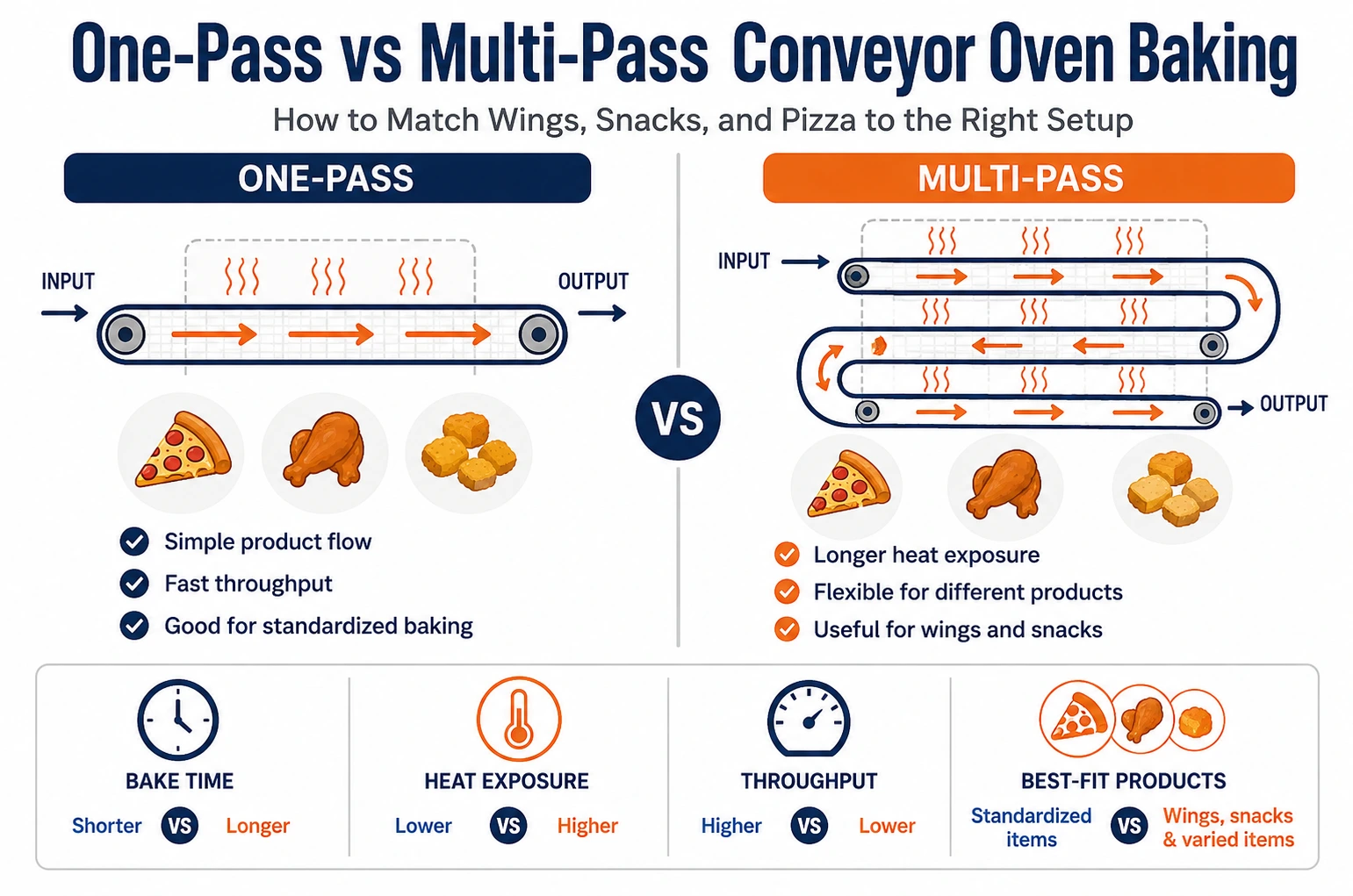
Raw poultry, seafood, ready-to-eat sandwiches, and bakery products may require separate production periods, different trays, or dedicated equipment. Cleaning time between products should be included in the operating plan. If two major menu items need substantially different belt speeds, buyers may need stacked chambers, separate ovens, or a confirmed split-belt configuration. Split belts and independent cooking controls are not standard on every model.
Electric, gas, and stone conveyor ovens serve different operational priorities. Electric impingement conveyor ovens are worth evaluating where appropriate electrical service is available and the menu depends on controlled hot-air cooking. The buyer should compare voltage, phase, chamber dimensions, airflow control, and production requirements.
Gas impingement conveyor ovens may suit higher-volume kitchens with a compatible natural gas or LPG supply. Fuel type, ventilation, installation conditions, required throughput, and local operating costs should be confirmed before selection.
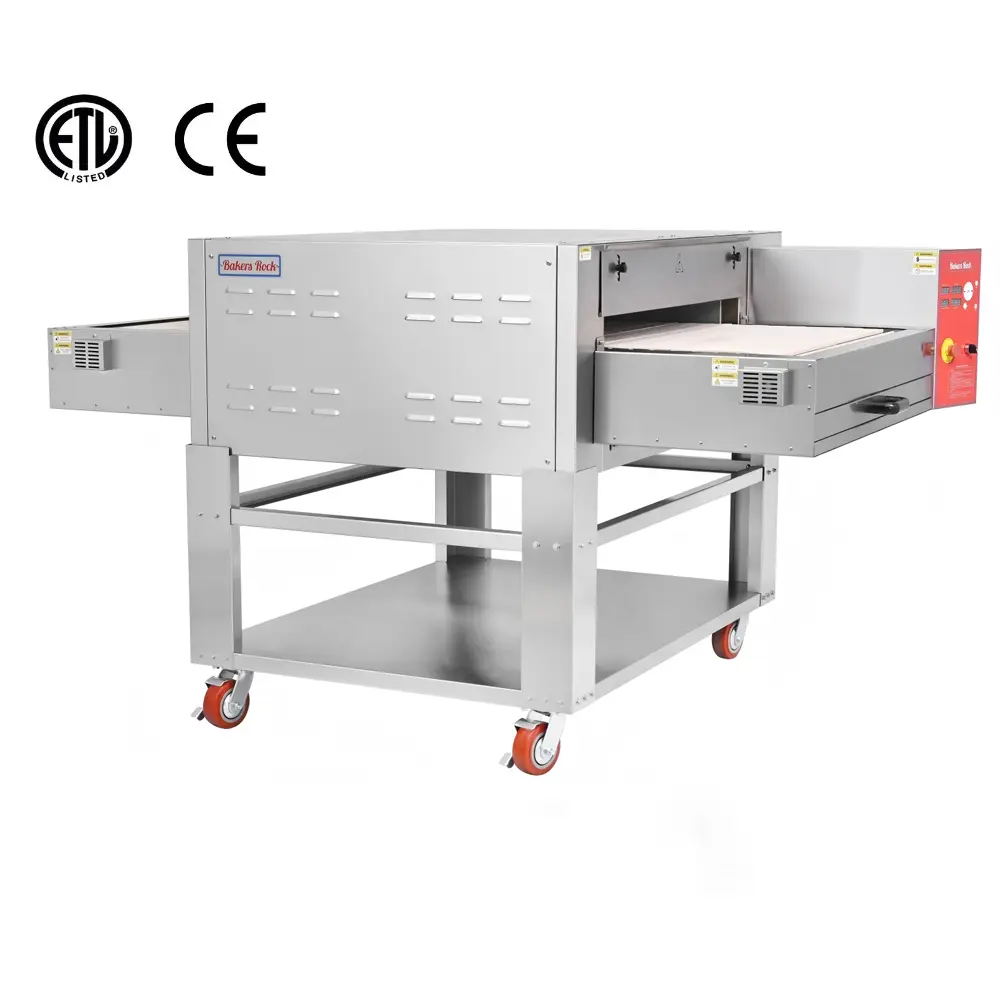
For flatbreads, bread products, and menus that place greater emphasis on bottom heat or crust character, stone conveyor ovens may be considered. A stone belt does not automatically make every non-pizza food suitable; container compatibility, cleaning procedures, and the intended food profile still require evaluation.
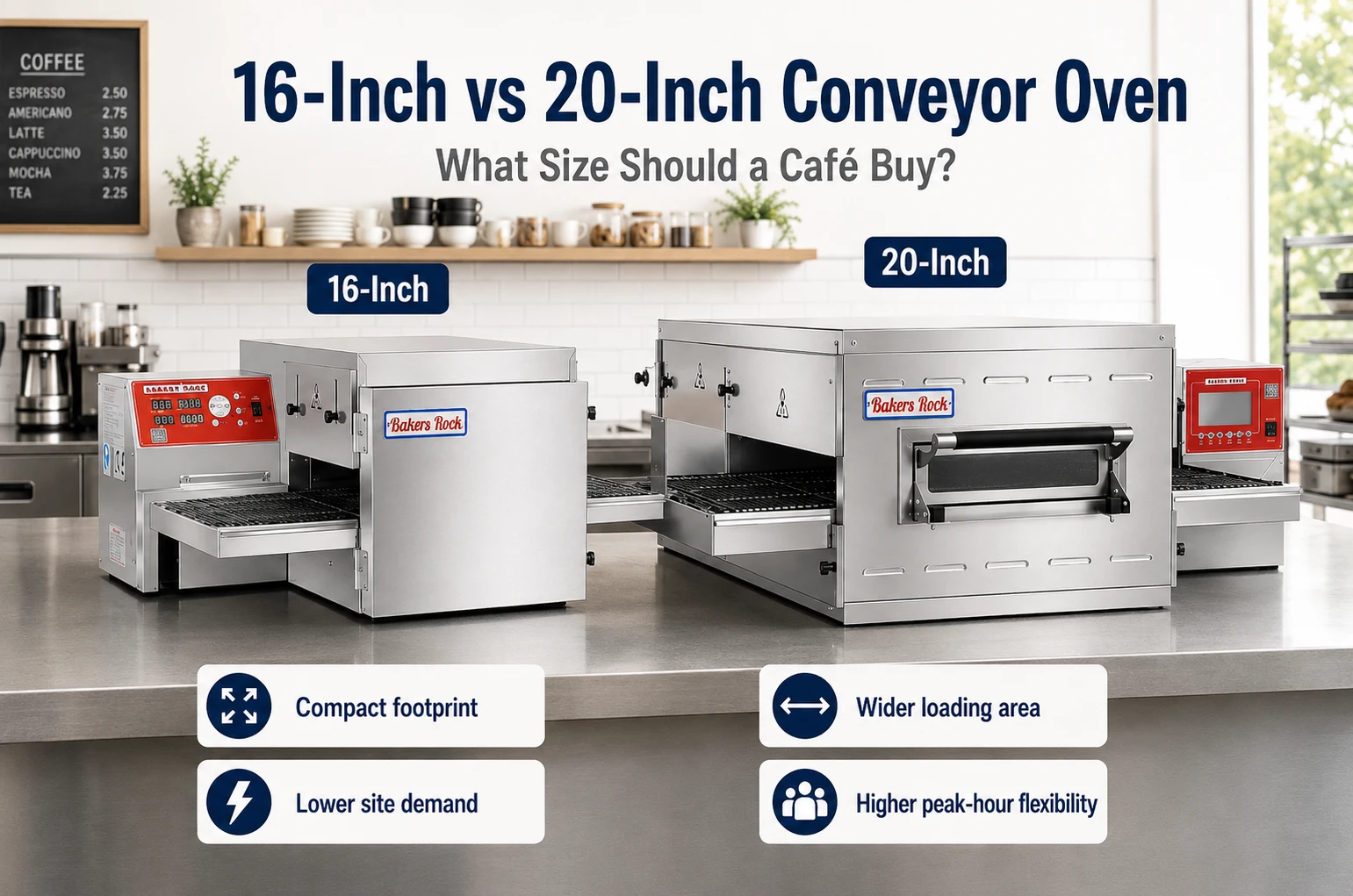
A multi-purpose commercial conveyor oven should not be sized only by pizza diameter. Buyers should identify the largest food item, the largest pan or basket, the loaded product height, and the number of servings required during peak periods.
Capacity planning should also reflect the product mix. An oven capable of meeting pizza demand may become a bottleneck when wings and sandwiches require longer profiles. Stacked ovens can support separate settings or additional capacity where the installation allows it. Compact operations may instead evaluate a 16-inch countertop conveyor oven for foods such as pizza, burgers, baked rice, lasagna, tacos, chicken wings, panini, potato wedges, and seafood, subject to actual product testing and utility requirements.
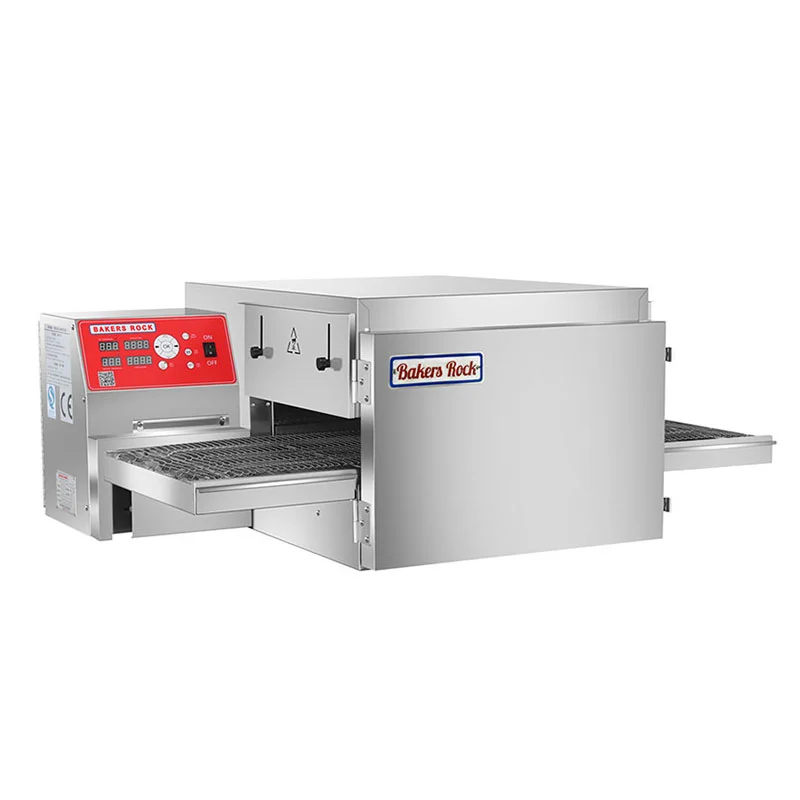
A supplier’s general statement that an oven can cook “many foods” is not enough for a purchasing decision. The test should use the buyer’s normal product size, formulation, starting condition, and intended container. Results from one lightly loaded sample may not represent continuous peak-hour production.
A useful evaluation records cooking temperature, actual belt time, loading pattern, top and bottom appearance, center condition, internal temperature where applicable, and results across repeated batches. Buyers should also ask whether the tested settings can be reproduced on the quoted configuration.
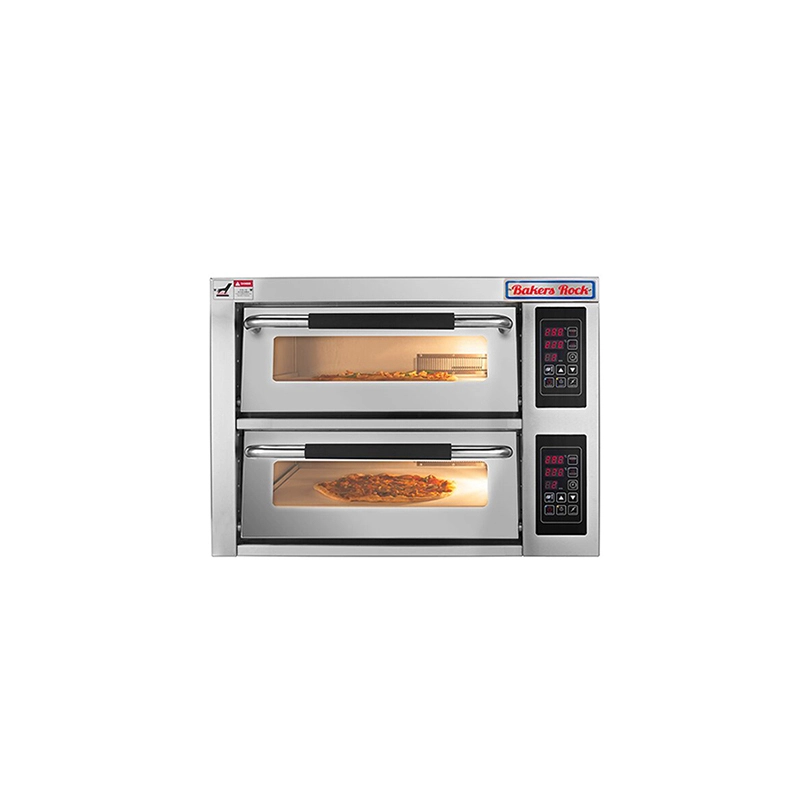
Bakers Rock supplies electric impingement, gas impingement, and stone conveyor oven categories for different foodservice requirements. The appropriate model depends on the target menu, utilities, product dimensions, throughput, and installation environment—not on a general claim of versatility.
A qualified supplier needs more than a requested belt width. A useful RFQ should include:
Providing this information helps Bakers Rock assess whether the application calls for a countertop unit, a larger oven, a different heating category, or further product testing.
A conveyor pizza oven can support sandwiches, wings, seafood, vegetables, baked dishes, cookies, and other non-pizza foods when the products are compatible with continuous cooking. Commercial success depends on standardized portions, suitable containers, adequate chamber clearance, verified belt speed, controlled temperature, and food-safety checks.
For an application review, buyers can contact Bakers Rock with menu items, product dimensions, starting conditions, containers, target output, available utilities, installation space, and sample photographs. These details provide a practical basis for comparing configurations without assuming that one oven suits every menu.
Q1: Can you cook chicken wings in a conveyor pizza oven?
A: Yes, if the oven, tray, cooking profile, and load are suitable. Raw and precooked wings need different settings, and raw poultry must reach the internal temperature required by applicable food-safety rules.
Q2: Can you cook burgers in a conveyor oven?
A: Yes, portioned burger patties can be cooked on a suitable pan or grill plate when thickness, starting temperature, grease control, belt time, and required internal temperature are validated. Raw and precooked patties need different settings, and a pizza profile should not be assumed to work.
Q3: Can pizza and sandwiches use the same conveyor setting?
A: Only when their required temperature, belt time, and airflow are compatible. Otherwise, use separate production periods, programs, chambers, or an appropriate split-belt configuration.
Q4: What pans can be used in a conveyor oven?
A: Use oven-compatible pans whose material, coating, dimensions, handles, and loaded height suit the specified model. The pan must contain drippings without blocking necessary airflow.
Q5: How do I choose a conveyor oven for multiple menu items?
A: Start with the products, containers, peak output, utilities, and available space. Compare chamber clearance, belt width, heat delivery, controls, cleaning requirements, and the supplier’s ability to demonstrate the intended menu.