Nullam dignissim, ante scelerisque the is euismod fermentum odio sem semper the is erat, a feugiat leo urna eget eros. Duis Aenean a imperdiet risus.
Nullam dignissim, ante scelerisque the is euismod fermentum odio sem semper the is erat, a feugiat leo urna eget eros. Duis Aenean a imperdiet risus.
 author
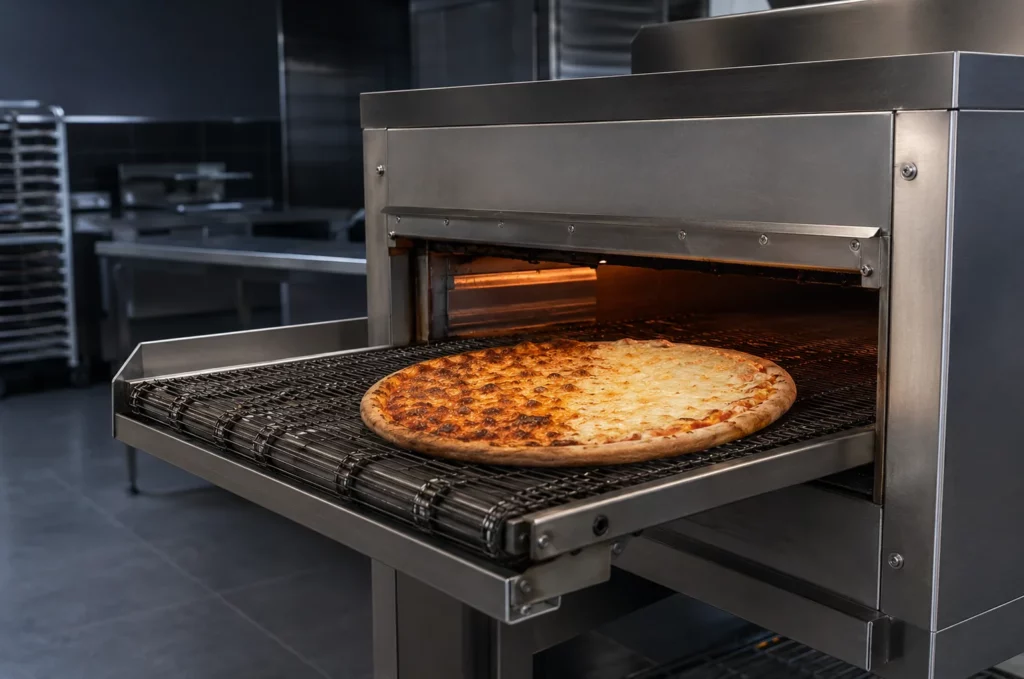
A conveyor pizza oven cooking unevenly usually has a problem with airflow, conveyor movement, heat control, product loading, or operating settings. The visible result may be a burnt edge, a pale bottom, or inconsistent pizzas from one batch to the next.
Do not compensate immediately by raising the temperature or slowing the belt. That may hide one symptom while creating another. A controlled test can identify whether the problem comes from the product, the operating process, or the oven itself.
Uneven cooking patterns provide useful diagnostic clues. Before changing any setting, record where the pizza is undercooked or overcooked and whether the problem occurs continuously or only during busy periods.
| Cooking pattern | Likely causes | First check | Next action |
| One side burns faster | Blocked air finger, belt tracking, uneven airflow | Test the left, center, and right belt positions | Inspect airflow and belt alignment |
| Top cooks but bottom stays pale | Upper/lower heat imbalance, finger layout, belt condition | Compare top and bottom browning | Verify heat delivery above and below the product |
| Results change between batches | Belt speed, sensor, controller, inconsistent loading | Run identical test pizzas | Measure actual travel time and record settings |
| Problem occurs at peak load | Overloading, weak heat recovery, restricted airflow | Reduce the load temporarily | Compare demand with oven capacity |
A fixed hot or cold area often points to restricted airflow, an incorrectly installed air finger, uneven heat delivery, or belt misalignment. Test identical pizzas at the left, center, and right positions. If the cold area remains in the same part of the chamber, inspect the relevant airflow path. If it follows the product position or loading pattern, inconsistent placement may be responsible.
Rotating pizzas during baking is not a practical long-term fix for a commercial conveyor oven. Persistent side-to-side variation should be corrected at its source.
When toppings brown before the base is cooked, check the balance between upper and lower heat delivery. Dirty or misplaced air fingers, an unsuitable configuration, or belt-surface problems may affect bottom baking. The required configuration depends on the oven and product profile and should be verified against the operating manual.
If results vary between batches, measure the actual conveyor travel time rather than relying only on the controller display. Problems that appear only during peak production may indicate excessive loading, inadequate spacing, slow heat recovery, or an oven that no longer matches required output.
The nine most relevant causes fall into three systems: airflow, conveyor movement, and heat control.
The first three causes are blocked air fingers, incorrectly reinstalled fingers, and restricted return airflow. Grease, crumbs, and carbon deposits can change the direction or strength of the hot-air jets. Air fingers may also have different internal configurations, so they should not be exchanged without checking the correct layout.
If uneven cooking begins immediately after cleaning, verify that every finger was returned to its documented position. Staff may clean accessible components after shutdown and cooling, following the manufacturer’s instructions. Persistent weak airflow or a fixed cold zone may require a technician to inspect the blower, fan wheel, plenum, or internal passages.
The next three causes are an incorrect speed setting, unstable belt movement, and improper alignment or tension. Check that the selected recipe has not been changed, then time how long a marked point or test product takes to travel through the baking chamber.
A difference between displayed and measured travel time may indicate belt slippage, drive wear, a motor problem, or a controller issue. Visible wandering, edge wear, hesitation, or jumping also deserves attention. Do not over-tension the belt in an attempt to correct tracking; the correct adjustment depends on the conveyor design.
The final three causes are inaccurate temperature sensing, uneven heater or burner output, and insufficient blower performance. A normal control-panel reading does not prove that heat is distributed evenly throughout the chamber.
For an electric unit, a technician may need to examine the sensor, heating elements, relays, or electrical supply. For a gas unit, the relevant checks may include burner output, fuel supply, modulation, and combustion airflow. Abnormal blower noise, repeated overheating, slow warm-up, electrical trips, or gas-related symptoms require professional service. Operators should not dismantle high-voltage components, gas controls, or safety interlocks.
Use pizzas with the same diameter, dough weight, thickness, topping load, and starting temperature. Record the set temperature, conveyor time, preheat period, belt position, and final top-and-bottom appearance.
Run separate tests on the left, center, and right sides. Change only one variable at a time. Adjusting temperature, conveyor speed, loading, and finger configuration together makes it difficult to identify the real cause. Photographs and test records also give a service technician or supplier better evidence than a general description such as “the oven cooks unevenly.”
Begin with recipe settings, full preheating, product spacing, and visible belt condition. After safe shutdown and cooling, clean accessible components according to the oven manual and confirm that removable air fingers are in their correct positions. Retest with the same controlled product.
Stop operator-level troubleshooting if the oven has a fixed cold zone after cleaning, unstable belt speed, repeated shutdowns, a burning smell, unusual blower noise, or suspected gas or electrical faults. These symptoms require qualified diagnosis.
Daily cleaning should remove crumbs and visible debris before deposits obstruct airflow or belt movement. Staff should also confirm that approved recipes and conveyor settings have not been changed.
At scheduled intervals, inspect belt tracking, document air-finger positions before removal, and compare actual conveyor time with the displayed value. Periodic professional service should cover sensors, blowers, heaters, burners, and controls as applicable. Maintenance frequency depends on operating hours, food load, cleaning practices, and the equipment configuration.
For multi-location operators, a standard record for temperature, belt time, product weight, loading position, and cleaning procedures helps separate equipment problems from process variation.
Repair remains reasonable when the fault can be isolated to a serviceable component, replacement parts are available, and the oven still meets production requirements. A sensor, belt, drive, heater, or control component may justify repair if the chamber, conveyor structure, and airflow system remain suitable.
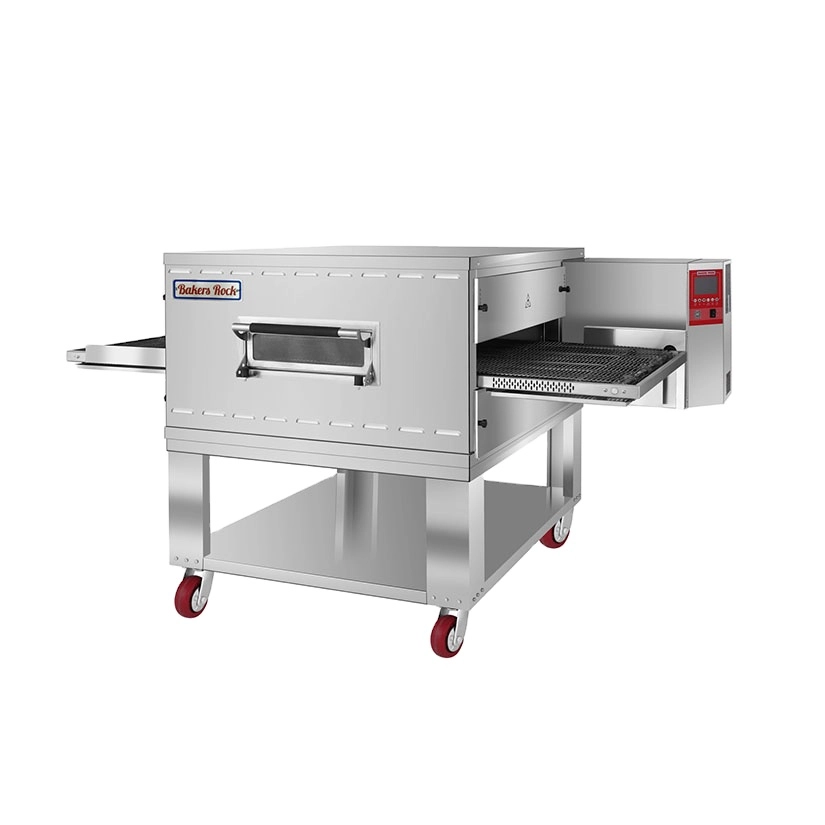
Replacement deserves consideration when several systems fail repeatedly, parts are difficult to obtain, peak-hour output is inadequate, or product waste and downtime continue after repair. Buyers should compare total operating impact—not only the latest service invoice.
When replacement is appropriate, the energy source and baking requirement determine the next step. An electric impingement conveyor oven may suit locations with an appropriate electrical supply and a need for controlled impingement baking. A gas impingement conveyor oven may fit higher-volume operations that already have a compatible natural gas or LPG installation. Where bottom heat and crust characteristics are central to the application, a stone conveyor pizza oven may warrant evaluation.
A replacement oven should be matched to pizza diameter, product range, target bake time, peak-hour volume, belt width, chamber opening, available utilities, ventilation, installation space, and future capacity. Every value should be verified against the product specification and local installation requirements.
A qualified supplier should be able to discuss the application rather than recommend equipment from oven size alone. Useful RFQ information includes the current oven model, fault pattern, product dimensions, desired output, gas type or electrical supply, available space, operating hours, and photographs of uneven test results.
Bakers Rock supplies commercial electric impingement, gas impingement, and stone conveyor oven categories. Buyers can review the broader Bakers Rock commercial pizza oven range before narrowing the choice by energy source and baking profile. Supplier discussions should also confirm installation requirements, warranty scope, replacement-part availability, technical documentation, and after-sales communication. For an application-specific review, buyers can contact Bakers Rock with operating conditions and current fault evidence.
A conveyor oven not heating evenly should be diagnosed through the cooking pattern, controlled testing, airflow inspection, actual belt-time measurement, and safe component checks. Cleaning or adjustment may correct minor problems, while persistent airflow, drive, heating, or control faults require professional service.
If replacement is being considered, submit the existing model, pizza size, target output, utility supply, installation space, operating conditions, and fault photographs. This allows the supplier to assess whether repair, a different configuration, or a new conveyor oven is the more practical next step.
Q1: Why does my conveyor oven cook one side faster?
A: Common causes include a blocked or misplaced air finger, uneven airflow, belt misalignment, or inconsistent product placement. Test identical pizzas at different belt positions to determine whether the problem stays with the chamber zone.
Q2: Can dirty air fingers cause uneven cooking?
A: Yes. Deposits can obstruct the air openings and create hot or cold areas. Clean them according to the oven manual and return each finger to its documented position.
Q3: How do I know if the conveyor speed is correct?
A: Measure the actual time required for a marked point or test product to travel through the baking chamber. Compare it with the displayed bake time and check for hesitation, slippage, or unstable movement.
Q4: Should I raise the temperature if the pizza bottom is undercooked?
A: Not automatically. Increasing temperature may overcook the toppings or hot side. First check belt time, upper-to-lower heat balance, air-finger layout, loading, and belt or stone condition.
Q5: When should a commercial conveyor pizza oven be replaced?
A: Consider replacement when faults recur across several systems, parts are unavailable, production capacity is inadequate, or downtime and inconsistent output continue after reasonable repairs.